

Christensen: Medicare Part B experiment threatens community cancer clinics
Put yourself in the shoes of a cancer patient in rural Colorado. If she’s lucky, she has a cancer clinic somewhat close to home with an oncologist she knows well (and who knows her well). Less lucky are the patients who make an arduous trip across the state, often driving hundreds of miles round trip on a weekly basis. Thanks to an ill-considered Medicare Part B experiment proposed by the Centers for Medicare and Medicaid Services (CMS), those long drives to get life-saving treatments could likely become the norm.
Putting budgets and bean-counting ahead of the needs of older patients, federal bureaucrats have proposed cutting the reimbursements to providers for Medicare Part B. As many seniors know firsthand, Medicare Part B is one of the most successful programs in our nation’s history, providing medically necessary treatments and supplies.
Not surprisingly, chemotherapy and other cancer treatments are a major focus of the Medicare Part B program.
Older patients often tell us that they prefer the smaller, more personal setting of independent community cancer clinics for treatment rather than going to an outpatient hospital setting. But for more than a decade, Washington bureaucrats have been squeezing Medicare reimbursements and the results have been clear. In 2004, 84 percent of chemotherapy treatments were administered in physicians’ offices or treatment centers. By 2014, that number had dropped to 54 percent, with hospitals picking up the difference. This is, of course, before the effect of the proposed Medicare Part B cuts. And so the trend toward hospital chemotherapy treatment would greatly accelerate.
It is also worth noting that with the significantly higher overhead costs at a hospital versus a doctor’s office or a community cancer clinic, it is more expensive to Medicare for patients to be treated at hospitals. So the major concern that Washington has – rising costs – is actually made worse by their own rules.
Why are these proposed rules so problematic for rural treatment centers?
According to the Community Oncology Alliance, the new Medicare Part B rules will cause practices to lose money on nearly 50 of the more commonly used cancer drugs. That is just one example of how the cuts would be felt. Expecting a business to lose money on a core service and just carry on doesn’t match reality.
The challenge is that rural clinics are more difficult to staff and operate on a far smaller volume of patients than clinics in suburban areas. And they are much smaller than the outpatient facilities at hospitals. This is the attraction of community treatment centers for patients, but also their great challenge, since many of the rural clinics today operate at either a break-even or small loss.
Sadly, you can track the drop in Medicare reimbursements by the number of rural clinics that close. The proposed Medicare changes will be no exception.
The trend away from smaller, community-based cancer treatment practices is growing. According to the American Society of Clinical Oncology, the percentage of oncology practices with one to five doctors dropped from 64 percent in 2014 to 41 percent in 2015. That’s a massive drop in just 12 months, and our concern is that the proposed changes will cause that number to fall very rapidly. Today, I can count the number of independent community cancer clinics in Colorado on one hand.
This is the reality that rural cancer patients face. In our case, we have a patient who drives to our Littleton facility for treatment from Rifle on a regular basis. A 400 mile roundtrip is a tough ride for anybody, but particularly arduous for someone suffering the effects of cancer, and the chemotherapy required to treat it.
Bureaucrats in Washington don’t often have to face the consequences of the rules they draw up in large buildings back east. But by threatening the future of cancer care for rural Americans, whether intended or not, this Medicare experiment would have dire consequences indeed. CMS should listen to the countless patients, physicians and bipartisan Members of Congress who all agree the Medicare Part B cuts equates to bad medicine and should fully withdraw the proposal.


Colorado can’t forget the lessons of COVID | Jon Caldara
Jon Caldara
jon-caldara@coloradopolitics.com
Updated 3 days ago
We are finally getting a clearer picture of what happened during COVID. Not because the people who locked us up, masked our faces and forced unproven chemicals into our bodies have suddenly become transparent, but because Anthony Fauci’s COVID-era diary...
Historic preservation supporters organize to oppose Trump changes | Bob Loevy
Tom Cronin
tom-cronin@coloradopolitics.com
Updated 2 days ago
Historic preservation organizations in Colorado Springs, the remainder of Colorado and across the nation are organizing to resist a recent effort to relax and weaken historic preservation laws in the United States. In Washington, D.C., the Advisory Council on Historic...
The primary political reform and precondition for all others | SONDERMANN
Eric Sondermann
eric-sondermann@coloradopolitics.com
Updated 4 days ago
In its current state, the American political system has no end of ailments. Far too many factors accelerate polarization and work against moderation and narrowing the differences. Media, and the way so many citizens limit themselves to agreeable, reinforcing sources,...
Pueblo mayor, council concoct Trumpian Texas Two-Step | Dennis Maes
Dennis Maes
dennis-maes@coloradopolitics.com
Updated 3 days ago
Several weeks ago, an article was published positing Pueblo Mayor Heather Graham is a disciple of the calamitous Donald Trump school of governance — specifically as it related to questionable ethical practices and the misuse of public funds. Recently, Graham...
Colorado can’t afford to turn its back on proven public safety technology | GUEST COLUMN
Colorado Politics
colorado-politics@coloradopolitics.com
Updated 3 days ago
By Samuel G. Michael I recently saw a report that said Colorado is leading the way in artificial intelligence adoption for businesses. Across our state, more business owners and employees than ever before use AI for their everyday functions —...
As education conflicts abound across Colorado, who puts the kids first? | Paula Noonan
Paula Noonan
paula-noonan@coloradopolitics.com
Updated 4 days ago
Elected school boards and the Colorado Department of Education (CDE) have hit the headlines with fired superintendents, superintendent resignations, failures of oversight, and misdirected dollars. Cherry Creek School District’s superintendent was fired. Jefferson County Schools’ superintendent found a less stressful...
Clock is ticking on Colorado’s new AI rules | PODIUM
Colorado Politics
colorado-politics@coloradopolitics.com
Updated 4 days ago
By Aashis Luitel On Jan. 1, organizations using covered automated systems must begin complying with Senate Bill 26-189, Colorado’s new Automated Decision-Making Technology Act. They can identify those systems and start building the processes the statute clearly requires. What they...
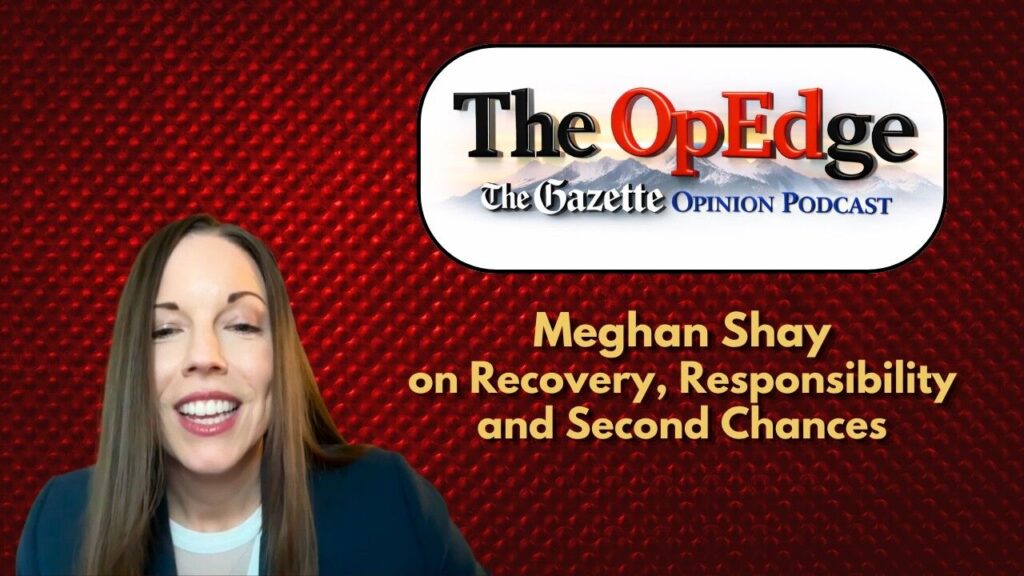
Meghan Shay on recovery, responsibility and second chances | The OpEdge Podcast
Tony Olivero
tony.olivero@gazette.com
Updated 5 days ago
Step Denver and Step Springs CEO Meghan Shay joins The OpEdge to explore addiction recovery, homelessness, and the role of accountability in lasting change. Shay tells host and investigative columnist Jimmy Sengenberger why she believes recovery is built on personal...
The outrages mount | Hal Bidlack
Hal Bidlack
hal-bidlack@coloradopolitics.com
Updated 5 days ago
My kindly and forgiving editors understand that, from time to time, I can’t help myself from leaping atop my rickety soapbox to vent. And, like many other political commentators have already done, I could easily fill this entire missive with...
Rural Colorado deserves a tax holiday | GUEST COLUMN
Eric Mulder
jstooksberry@gmail.com
Updated 6 days ago
Spend enough time in Colorado’s Eastern Plains, the San Luis Valley, or the Western Slope, and you’ll see boarded-up storefronts, schools consolidating classrooms, and small rural communities stretching every dollar to keep basic services afloat. Once the backbone of Colorado’s...
PREV
PREVIOUS
Helton: Vote 'yes' on Amendment 69 to control health care spending
ColoradoCare, Amendment 69 on the ballot this November, represents a positive change to health care financing in Colorado. However, the media have published assertions made by the Colorado Health Institute that are misleading. As a citizen of the state, a retired health executive and a health economist, I am concerned that the media is echoing […]

Hudson: Colorado plays host to those tolling for the future
Almost any weekday this summer, you could spot Denver conventioneers on 16th Street Mall shuttles by the colorful lanyards adorning their necks. It’s usually easy to discern whether these are visiting dentists, geologists, accountants or lawyers after a quick glance at their badges. But the recent 84th Annual Meeting of the International Bridge, Tunnel and […]