

GOP consultant Dustin Olson stresses authenticity, ability to connect with stories
Republican political consultant Dustin Olson has been at the center of national politics and numerous local campaigns – he and his wife, Carolyn, just celebrated the 10th anniversary of Olson Strategies & Advertising, their Colorado-based firm – but it was a few days he spent touring Civil War battlefields and shopping at Wal-Mart with a comic actor who once wrote speeches for Richard Nixon that propelled him on his path.
Along the way, he’s managed nationally prominent gubernatorial and congressional candidates, some who won – including U.S. Rep. Joe Wilson’s reelection bid in 2010 just after the South Carolina Republican was thrust into the national spotlight when he yelled, “You lie!” during President Barack Obama’s address to Congress about the Affordable Care Act – and some who lost, like Bob Beauprez’s run against Gov. John Hickenlooper in Colorado in 2014.
Olson, 37, came close this year to helming what almost certainly would have been one of the higher profile races in the country, a campaign by Republican Ben Higgins, better known as the most recent incarnation of ABC-TV’s “The Bachelor,” in a heavily Democratic North Denver house district, all while Higgins and his fiancée, Lauren Bushnell, filmed a reality television show that’s set to start airing in early October. (In a twist, his network producers derailed the campaign in late July, less than a week after Higgins had won the nomination.)
Honing in on politics
At the end of the last century, Olson was in his final undergraduate years at Washington and Lee University, a small liberal-arts school in Virginia’s Shenandoah Valley, about three hours southwest of Washington, D.C. He’d always had an interest in politics and had volunteered on some local campaigns but was changing majors regularly, from journalism to economics, psychology to neuroscience.
“I wasn’t quite sure what I was going to do,” Olson said in a recent interview with The Colorado Statesman at a Denver coffee shop. “Anybody who knew me knew that politics was what I should’ve been doing the whole time. Anytime there was a student election, I didn’t want to be the person running, I always wanted to be the one running the campaign.”
Olson worked to bring speakers to the isolated campus, and three guest lecturers, one after the other, helped solidify his interest in politics and opened the doors that led to his career.
The first was Lech Wa??sa, the former president of Poland and founder of that country’s Solidarity union, one of the key figures in the downfall of Soviet communism.
“The idea that a dockworker could have such a huge influence in the world had a big influence on me,” Olson says. “He made me start thinking about politics.”
The next was Dick Morris, the former top adviser to President Bill Clinton who had become embroiled in a prostitution scandal – “after the fall,” Olson says with a smile, “probably at the lowest point in his life” – only to emerge as a conservative political luminary.
Ben Stein the career maker
Then came Ben Stein, host of the popular “Win Ben Stein’s Money” television show, still glowing from his turn in “Ferris Bueller’s Day Off,” although few knew at the time he was a serious economist and had cut his teeth in politics, writing speeches in the Nixon White House.
It turned out Stein wanted to spend some time at the college, and Olson wound up as his companion, driving him to nearby towns and landmarks. “Who would’ve thought this Jewish economist from Maryland would’ve had as his hero Robert E. Lee?” Olson laughs, recalling visits to nearby battlefields and Stein’s first encounter with a Wal-Mart, where he bought local bestselling books and every copy of his iconic 1980s movie.
Olson grew up in Limon, where his father is a physician. “It has the best fourth of July celebration in the whole state,” he noted. Due to those Colorado roots, Olson says he’d been considering an internship with one of the state’s two Republican U.S. senators, Wayne Allard or Ben Nighthorse Campbell, but Stein told him he didn’t think that was ambitious enough.
President George W. Bush had just taken office, and Stein offered to put Olson in touch with “his friend Karl,” who turned out to be Karl Rove, the new president’s chief political strategist.
“Ben sent my resume to Karl Rove, who sent it to (Republican National Committee Chairman) Ken Mehlman, who sent it to someone else, who sent it to someone else,” Olson says. “It turned out to be about as far down the totem pole as possible, but I got a call saying, ‘Why don’t you come work for us as an intern in the Political Affairs office?'”
So in the spring of 2001, just a couple months into the new administration, he went to work at the White House and right after that at the RNC.
“It was crazy,” Olson says. “You’ve heard the stories about how the Clinton people had popped the ‘W’s out of the White House keyboards – that one’s absolutely true, because the low guys on the totem pole got those keyboards. I’d be writing, it’d be like a birthday greeting from President Bush, and I’d get to the signature and have to pull out my pen and go, ‘W,'” he says, miming a careful poke on a keyboard.
After the internships, Olson worked on local campaigns and then returned to Colorado in 2002 to do field work for the GOP, helping Ed Jones win a pivotal state Senate seat that swung the majority back to the Republicans after a term in the minority.
“That was an impactful election for me because helping us win the state Senate and then seeing the good work that was done after that, that gives you a high seeing how you could have an impact,” he says.
Olson held jobs on Capitol Hill for a time, then worked some elections in Virginia and a gubernatorial campaign in West Virginia, and then worked on the 2004 Bush reelection campaign. After a stint crafting agriculture policy in the White House, he returned to Colorado and took a job as political director for the state GOP under Chairman Bob Martinez and hasn’t looked back since.
“The bug had bit me, and I wanted to get back into campaigns as soon as possible,” he says. He worked in 2006 to help get his friend Jeff Crank elected to the open 5th Congressional District seat, but after Crank lost in a bitter primary to Doug Lamborn, Olson launched his firm.
Blogonowski
The national mood had shifted, the Iraq War wasn’t going well and Bush was plumbing new depths of unpopularity. So naturally Olson took a job running a special congressional election campaign in deep-blue Massachusetts. The candidate was Jim Ogonowski, whose brother had been an American Airlines pilot on one of the planes flown by terrorists into the World Trade Center.
It was one of the first campaigns to make pervasive use of social media, including posting videos of nearly every turn on something new called a blog, which Olson dubbed “Blogonowski.”
“No one was covering the race, so the only place anybody could go to find out about the race was Blogonowski,” he says with a smile.
While the campaign turned what had been an expected rout into a squeaker, Ogonowski lost to Democrat Niki Tsongas, the widow of Massachusetts Sen. Paul Tsongas, by 4 points.
‘You lie!’
But it was the next major race he ran, following a few other congressional races across the country, that brought him in contact with the most important contact he’s made on a campaign.
After Joe Wilson’s “disagreement with the president” – the South Carolina lawmaker shouted, “You lie!” during Obama’s address to a joint session of Congress – the Republican immediately became famous and his reelection bid immediately was targeted nationally. Nearly as quickly, Olson came aboard as a consultant and then was named the campaign manager for a candidate who had only recently been somewhat obscure even in his home state.
“He just happened to be one of the few people who had read the (Affordable Care Act) bill,” Olson says. “He’d been on a trip to Afghanistan, took the bill with him and read it the whole way there and the whole way back. He was probably jet-lagged a little bit, but he knew that wasn’t true, about the illegal immigrants getting health care under Obamacare, and then came the retort, ‘You lie!’ and we all knew about him. His polling had turned upside down and he was in a real race.”
While it turned into the country’s most expensive congressional race that year, all the money in the world wouldn’t help without the right message, Olson says, and that’s where he got to work.
“We wanted to take Joe from the guy who said, ‘You lie!’ to the locally focused representative,” he says. “We changed it to ‘Joe means jobs.’ We’d take him to work in various businesses around the district for a day, and we’d get that all on video and we’d put that out on social media, and that became a whole thing. Then Rob Miller,” his Democratic opponent, “unfortunately, supported Obamacare and a couple other policies that were, in my opinion, job killing. Having the name ‘Rob Miller’ that rhymes with ‘job killer’ – we did a whole campaign with ‘Rob Miller job killer,'” Olson recalls with a grin.
Olson says he realized what kind of an impact the phrase had – beyond helping Wilson to a nearly 10-point win – when he read a woman’s letter to the editor complaining about Wilson’s campaign.
“She was at her son’s junior varsity football practice and the quarterback said, ‘Rob Miller job killer! Rob Miller job killer on one!’ – that was the call. So the kids had picked it up. That’s when you knew it had gone through,” Olson says with a laugh.
“But the biggest thing from that race was that I met Carolyn, which had a life-altering affect on me,” he adds, his chuckle turning into a broad smile. They got married about a year and a half later.
The local work
Trump’s agility
Still, with a bit of distance and some perspective on his home state – “We work on the campaigns we care about, but I can look around here and call it as I see it” – Olson says this cycle, dominated by reality television star and brash billionaire Donald Trump, is already yielding lessons.
“This election has unique aspects to it,” he says. “Having worked in other states, there are places where Donald Trump has amazingly strong support. In northeast Ohio, people there love him, Democrats there love him. But Colorado seems like a state that is just not attuned to him.”
Olson isn’t worried that a poor showing by Trump in Colorado could damage the Republican Party’s fortunes, but he is concerned that the state GOP could be missing opportunities and wounding itself.
“I don’t think in a future election that transfers to Republicans,” he says. “But I do feel we have a slow slide happening to the left. It’s been a long time since there were more Democrats than Republicans in Colorado, and that just changed. One thing Trump has done other places, and in Colorado too, is bringing more people into the party, but the party doesn’t have it organized here to register the voters. The truth is, you can’t just start now. You have to start January of last year.” Citing Colorado’s campaign spending limits, he adds, “We just don’t have these resources to do these huge voter registration campaigns, and if we don’t change that, we’re going to be in a world of hurt in coming elections.”
As far as Trump’s appeal, running nearly neck-and-neck with Democrat Hillary Clinton, Olson says figuring out the candidates’ psychology is key to understanding how the campaigns have gotten to where they are – and where they might be headed.
“I feel that Trump is very agile, he’s not necessarily constrained by the past, whatever you think of that,” Olson says. “Hillary is not agile at all, she’s set in stone. They’ve tried to reintroduce her time and again, but she can’t change. I feel she’s been on a slow decline through this whole process. Trump’s been up and down. At the end of the day, it’s up to Trump, if he’s able to make some things happen between now and election day, he’ll be able to pull this off. I believe Clinton’s in a better position now, but he’s agile.”
It comes down to Trump’s “amazing ability to garner attention,” Olson says. “The key to any kind of communication is that people can hear you. It’s worn off a little through the cycle, but he’s able to do it. If he uses it wisely over the next month, it can change things quickly. I don’t think Clinton changes anything, this slow decline she’s on.”
Trump has a “unique ability” to grab attention and communicate with voters who are harder than ever to reach, Olson says.
“One of the main things that’s really changed” in the 10 years since starting his firm, Olson says, “is the Balkinization of information. … For a campaign, you have to have 50 percent plus one of the votes, and it’s almost impossible to get 50 percent plus one of the people with any one medium. You have to come up with a mix of all sorts of things. Most people have tuned out to politics, they don’t want anything to do with politics. What Donald Trump understood is that earned media is higher-value than paid media. You’re going to get them on their TVs, you’re going to get them on the Internet – when you make news, you’re on traditional media, you’re on social media, you cut through.”
Acknowledging that he supported Cruz at the end, Olson adds, “I recognized Donald Trump had these abilities. First, you have to have an audience to be able to communicate to them, you have to have the audience’s attention to communicate to them, and you have to keep it simple.”
That means picking “very visual or very emotional” issues and hammering them, Olson says, citing the wall at the Mexican border as a perfect example.
Not a lot of Ben Higginses
Olson got the chance to work up close with another reality television star with political aspirations earlier this year, after an ABC-TV producer stumbled on the “Political Trade Secrets” podcast and gave Olson a call, saying that Higgins was interested in running for office.
“We’re not going to be able to find a lot of Ben Higginses like that to run for office around the country,” Olson says. “But elements of what he has are important. He has integrity, and that’s very important – politics is corrupting, so you have to have integrity. He’s thoughtful. That was very clear from the first time I talked to him. He’s very sincere – that’s very important, he knew who he was. But one of the things more candidates need to do – he was prepared to communicate to voters, because he’d been communicating to viewers on his shows for two seasons. He was comfortable in front of a camera, he was comfortable answering questions.”
Even though Higgins dropped out of the race – his producers had asked if he might run as an independent but then threatened to pull the plug on the show he and his fiancée have been filming about their life after “The Bachelor,” potentially costing him millions of dollars – Olson says Trump’s rise and Higgins’s brief foray on the political stage helps point the way for candidates.
“You don’t necessarily have to be on a nationally televised reality TV show that’s been popular for umpteen seasons, but you have to have some of those components,” he says. “You can learn why it was they were able to cut through.”
It comes down to authenticity and the ability to communicate that in the modern media environment.
“Having issues that you care about, but being able to connect with stories and being able to say why this matters in people’s everyday lives, that’s what matters,” Olson says.
When deciding whether to take on a client – the firm represents candidates at all levels, “no job too big, no job too small,” Olson smiles – he says the crucial question is often one candidates either take for granted or simply can’t answer.
“When we first talk with somebody, we have a battery of questions to get at why they’re running,” he says. The main thing is, if they don’t know why they’re running, we don’t work with them, because that’s all the message, that’s the things we’ll focus on. It’s all going to draw from that one answer to that question. It doesn’t have to be a polished answer, but they have to have a reason why they’re doing it.”

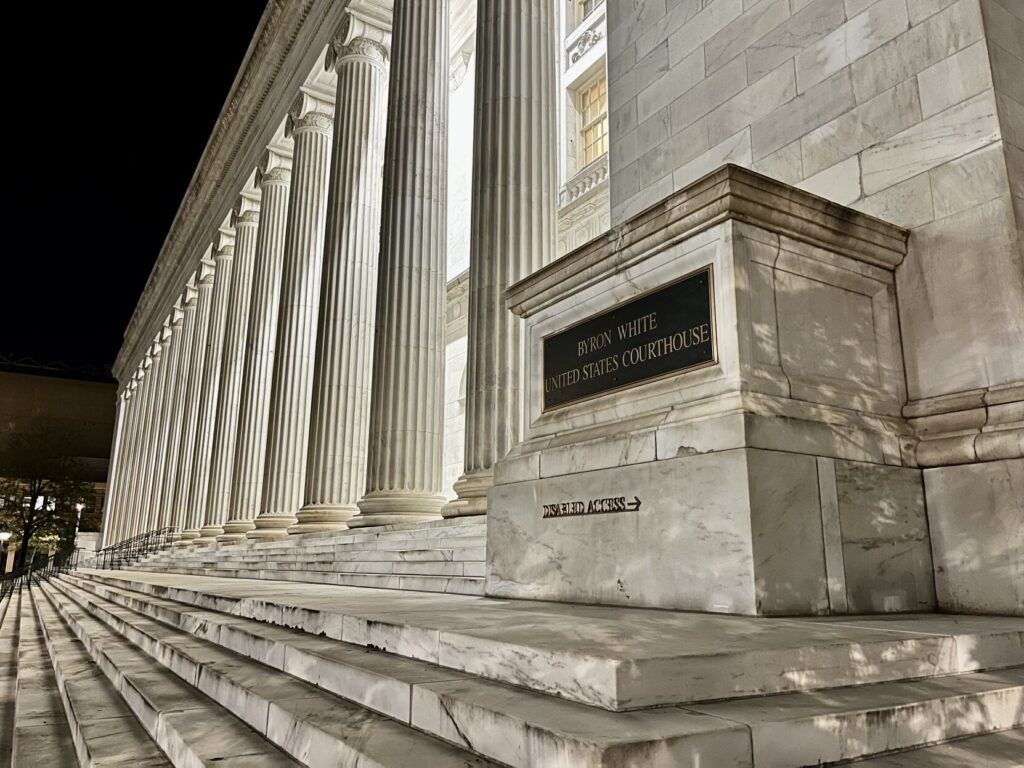
10th Circuit orders second look at immunity for Kiowa County deputy over fatal vehicle crash
Michael Karlik
michael.karlik@coloradopolitics.com
Updated 13 minutes ago
The Denver-based federal appeals court directed a trial judge on Tuesday to further analyze whether a Kiowa County deputy and the sheriff’s office may be sued for a fatal vehicle collision. The Colorado Governmental Immunity Act generally shields government entities and public...
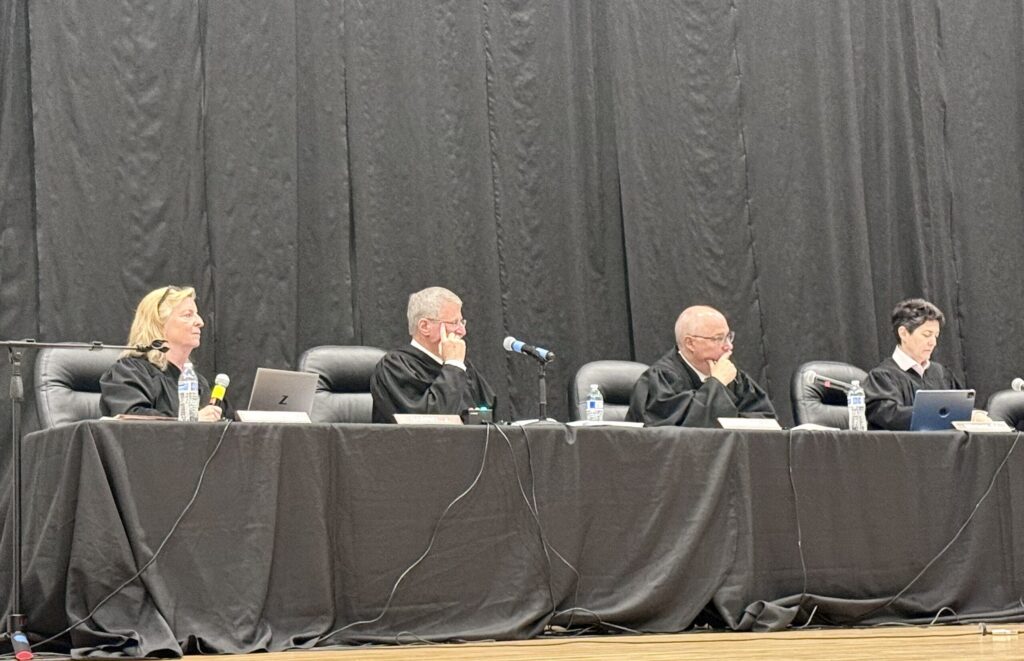
Colorado justices to hear appeal in Kendrick Castillo death lawsuit, ‘fugitive’ rule
Michael Karlik
michael.karlik@coloradopolitics.com
Updated 18 hours ago
The Colorado Supreme Court announced on Tuesday that it will decide whether it was proper to dismiss a lawsuit over the 2019 shooting death of Kendrick Castillo after the defendants paid the maximum amount of damages available to Castillo’s parents,...

Two more wolves killed by Colorado wildlife staff
Marianne Goodland
marianne.goodland@coloradopolitics.com
Updated 19 hours ago
Two yearling wolves from the Copper Creek and Three Creeks packs in Pitkin and Rio Blanco counties, respectively, were killed by Colorado Parks and Wildlife staff on Monday. That brings to 19 the number of wolves that have died under...
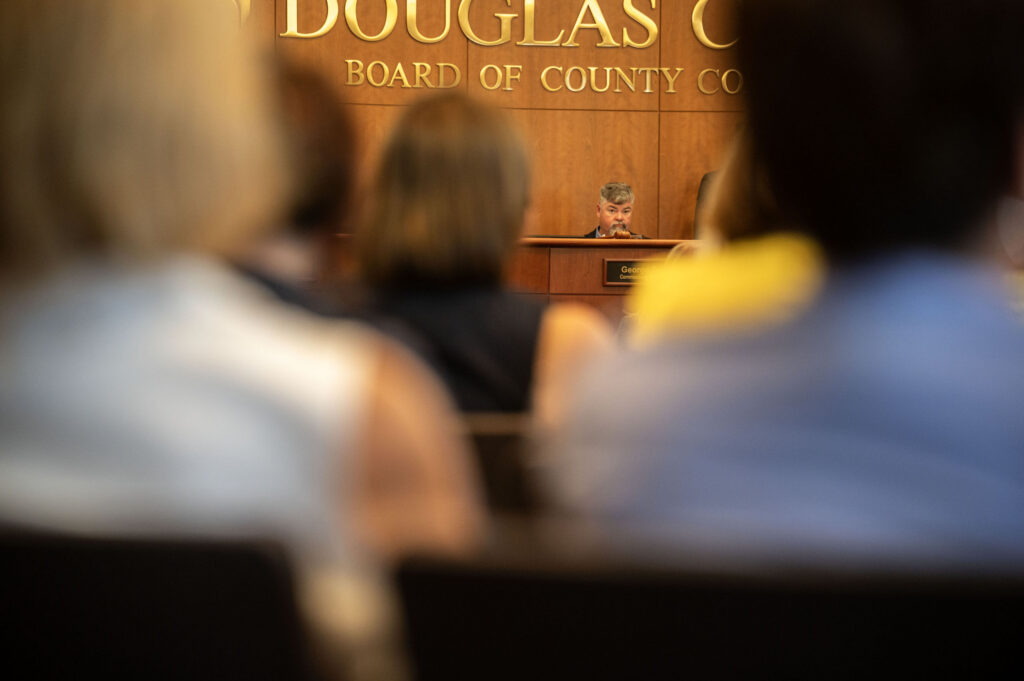
Federal judge dismisses Douglas County’s challenge to collective bargaining law
Nicholas Fogleman
nicholas.fogleman@denvergazette.com
Updated 3 hours ago
A federal judge dismissed claims brought by the Douglas County Board of Commissioners alleging that a state law granting county employees the right to organize and join labor unions violates free speech protections and conflicts with federal labor law. Douglas...

U.S. Rep. Lauren Boebert calls Trump’s 90-day wolf-delisting review ‘real progress’
Marianne Goodland
marianne.goodland@coloradopolitics.com
Updated 17 hours ago
President Donald Trump has directed Interior Secretary Doug Burgum to launch a 90-day review on whether gray wolves and Mexican wolves should be removed from Endangered Species Act protections. The order drew mixed reactions for Colorado’s wolf-reintroduction effort, with ranchers...
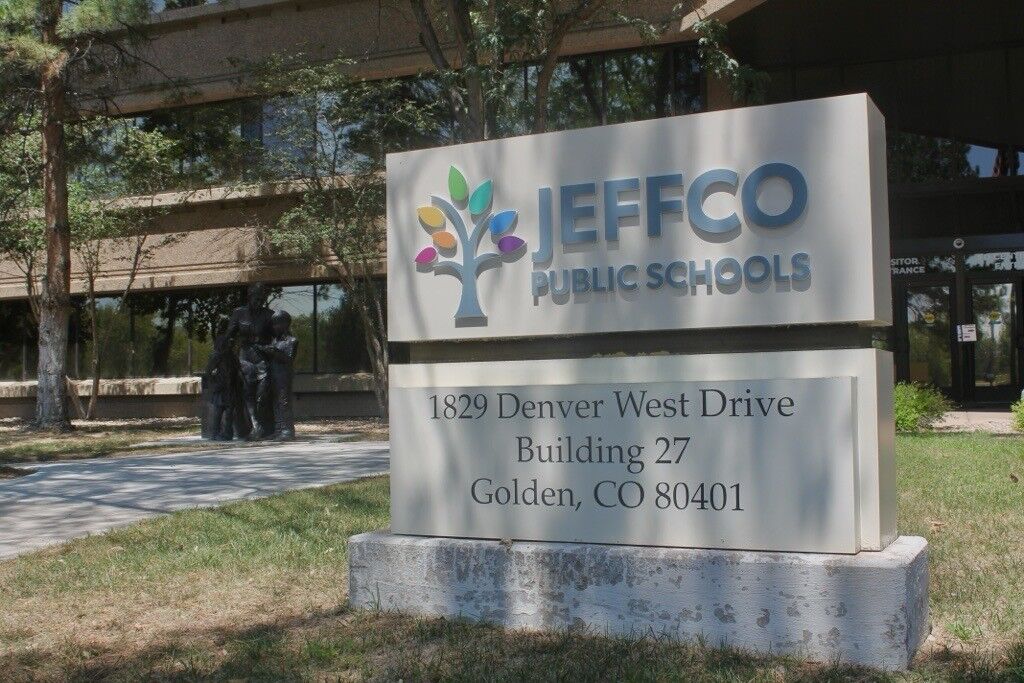
Jeffco Public Schools eliminated 350 jobs as part of budget cuts
Matt Kyle
matt.kyle@denvergazette.com
Updated 3 hours ago
Jeffco Public Schools eliminated 350 full-time positions as part of ongoing budget cuts between last school year and this school year. The district has operated in a budget deficit in the range of tens of millions of dollars over the...
Arapahoe County judge’s frustration with defense lawyer not grounds for new trial
Michael Karlik
michael.karlik@coloradopolitics.com
Updated 19 hours ago
Colorado’s second-highest court decided last week that an Arapahoe County judge’s repeated rebukes of a defense attorney and orders to “be quiet” did not rise to the level of bias or a violation of the defendant’s due process rights. A...
Divided appeals court upholds vehicle theft conviction despite unclear origin of car’s value
Michael Karlik
michael.karlik@coloradopolitics.com
Updated 16 hours ago
Colorado’s second-highest court upheld a defendant’s conviction for aggravated motor vehicle theft last week, even though it was unclear how the Thornton Police Department estimated the value of the stolen car. Officer Marc Faivre encountered Ashley Shelee Gibbens-Martinez in a...
Disgraced ex-CBI analyst Missy Woods sentenced to prison in DNA scandal
Jenny Deam
jenny.deam@gazette.com
Updated 19 hours ago
A Jefferson County district court judge on Tuesday sentenced a disgraced former Colorado Bureau of Investigation DNA analyst to a decade in prison for altering and deleting data in scores of criminal cases over several years. Jefferson County District Judge...
Lindsay Clancy’s attorney makes plea for pardon from Trump
Emily Hallas
emily-hallas@coloradopolitics.com
Updated 1 day ago
Lindsay Clancy’s attorney urged President Donald Trump on Tuesday to give her a pardon before her murder case could head for another trial. Clancy is a Massachusetts woman who admitted to strangling her three young children in 2023 but argued...