

Senate debates state budget: Opens with battle over Clean Power Plan

Neville, Woods team up to target contraception, immunization, bike path spending
(5:30 p.m.) Sens. Tim Neville, R-Littleton, and Laura Woods, R-Arvada, are staunch social conservatives. Neville is running in a crowded Republican primary for the U.S. Senate. Woods holds one of the key swing seats that will determine which party controls the Senate in the years to come. She’s up for reelection in 2018.
The two lawmakers partnered to introduce a suite of headline-ready amendments. One would remove $2.5 million from a state family planning program that provides long-lasting contraceptive services that Neville described as “temporary sterilization.”
“Birth control is already free to anyone who needs it who qualifies,” he said. “This is not an issue of necessity. This is an issue of long-lasting birth control, from $200 to $800 a shot for long-lasting contraception. The problem here, of course, is this is basically temporary sterilization. Parents don’t always have to be notified if their children receive this. These IUD and other issues do nothing to prevent the spread of STDs. There’s nothing to suggest that the psychology and medical risks and costs associated with the increase of sexual activity would be managed or addressed by these funds or this legislation.”
Other amendments Woods and Neville introduced included one that would ban universities in the state from using public money for fetal tissue research. Another, which failed, would have stripped more than $937,000 in funding for the state’s Public Health and Environment immunization operating expenses and move it transportation. Another, also failed, would have cut more than $1.1 million from the state’s electronic medical records program for local health departments and move that to transportation. Another would have kept the department of transportation from spending any funding on bike paths.
Debate on the budget continues in the Senate on Thursday morning.
— john@coloradostatesman.com— ramsey@coloradostatesman.com
Neville ‘moral fetal tissue’ amendment that failed in House, wins in Senate
(5 p.m.) If at first you don’t succeed, enlist your father to try again for you in the upper chamber controlled by Republicans.
Sen. Tim Neville, R-Littleton, successfully amended the state budget for now to include a footnote to Department of Education spending section that explicitly stipulates tax money cannot be used by public universities for activities related to the sale of fetal tissue.
Neville’s son, Rep. Patrick Neville, R-Castle Rock, tried and failed to attach the same footnote to the budget during debate last week in the House. He was ruled out of order and was clearly upset. “You want to play games. I can play games, too,” he said, and then called for the House clerk to read the entire 500-plus page budget bill out loud. He later relented and called the reading off, but no one in the House was unclear about the fact that he was frustrated.
Sen. Neville argued that he was tired of hearing legislators talk about the budget being a “moral document” only to turn around and say the budget isn’t the place to deal with moral issues.
“I don’t know how many times I’ve heard in this building this is a moral document. Now we’re hearing it’s not a moral document,” Neville said. “As a body, we have an opportunity to send a message. I urge you to vote your conscience.”
Sen. Pat Steadman, D-Denver, argued that the long bill is no place for a debate over the issue. He extolled the medical benefits of fetal tissue research.
“This is very meaningful, very exciting scientific medical research that I don’t think any of us want to stand in pathway of,” Steadman said. “This is a debate that should be held in another forum.”
Republicans prepared for Democrats to call a formal division vote to get them on the record on the issue. Their votes could be used in election-year campaign ads. But Democrats didn’t call for a division vote. Debate moved on.
— john@coloradostatesman.com— ramsey@coloradostatesman.com
‘The Problem is we’re insulating universities from the market’
(4 p.m.) Democrats keep trying to increase education funding by cutting other programs. Republicans have rejected every attempt.
Sens. Morgan Carroll, D-Aurora, and Andy Kerr, D-Lakewood, were the latest lawmakers to try and fail. Their amendment would have increased funding for higher education by $56.6 million. They proposed taking the money from construction funding from the departments of Education, Higher Education and Personnel. Projects that would have been hit included wok at the Capitol and at the Colorado Center of the Blind.
“This amendment is not necessarily an easy way to get the funding. But we we have a choice between people and buildings. Is it the Capitol roof and improvement in the House and Senate chambers or is it blocking tuition increases to students?” Carroll asked her colleagues. “I would say at the end of the day we need somebody fighting for Colorado students with the same degree of fervor as (we fight) for buildings.”
Senate President Bill Cadman, R-Colorado Springs, said the problem of increased tuition was a market problem. He argued that colleges and universities should be operating in the private sector.
“We’re treating the symptoms. The problem is these institutions aren’t basing their fees on reality. We’re insulating them from market,” he said. “We need to stand strong and say ‘You have to get into the marketplace just like every other business.’”
Sen. John Kefalas, D-Fort Collins and member of the Senate Capital Development Committee, joined with Republicans in speaking out against the amendment. He said the need for capital construction funds was critical.
— john@coloradostatesman.com— ramsey@coloradostatesman.com
Budget debate pattern: Minority party pleas for more education spending go nowhere
(2:50 p.m.) Sen. Michael Merrifield went 0-3 early in the upper chamber budget debate battle.
The Colorado Springs Democrat attempted twice to put $10 million in private prison payments toward higher education and district k-12 schools. Then he tried to move $5 million from the state’s general fund to school districts.
“There’s no reason at all to oppose this amendment,” Merrifield said about his last amendment. “I happen to know from deep study of the budget, going through it page by page, that there’s enough money to cover this $5 million. It will not be detrimental to some or all of the programs we hold so dear.”
Budget debate at the Legislature falls into patterns. Last week in the House, where Democrats are in control, it fell to minority party Republicans to push for more education spending. That effort failed, too.
— john@coloradostatesman.com— ramsey@coloradostatesman.com
‘Like like our own mini-version of Washington’
(2:15 p.m.) The amendment that started off debate in the Senate on the state budget passed by the House last week came from Sen. Jerry Sonnenberg, R-Sterling. His amendment proposed to add back into the state budget all but $365,953 of the $8.472 million Republicans on the Senate appropriations committee earlier this week had stripped from the state Department of Health and Environment.
The $365,953 is the best guess Republicans could make on how much the department’s Air Quality division was spending to meet the carbon reduction targets put in place by the Obama administration’s Clean Power Plan.
Republicans have strongly opposed the plan as an executive office overreach that would remake the energy industry.
It’s a politicized budget game that has see-sawed for weeks.
Republicans strip out funding for the air quality division. Democrats add it back in.
Republicans warn about job loss and call into question the science of climate change. Democrats celebrate the health and economic benefits of clean air and the advantages of getting out in front of the energy-market and public policy evolutions in the era of a warming planet.
So Democrats naturally responded to Sonnenberg’s amendment with their own, which called for full restoration of the division budget. The funds are generated by business licensing and inspection fees.
The battle in the Senate came just hours after Gov. John Hickenlooper told reporters at a weekly press conference that the “defunding” politics over the budget was “like our own mini-version of Washington.”
The air quality division staffers, he said, “work in teams on different things. It’s almost impossible to measure which parts goes to (the Clean Power Plan directly).” Hickenlooper said state plans for cleaner air and the federal plan for cleaner power simply dovetail.
“If they’re working on that (a Colorado air plan), is that also working on the Clean Power Plan?” he asked. “I think that the whole thing is ridiculous, to be perfectly blunt. It’s like a shell game of who’s doing which work. But we’re working toward clean air. That’s what we’re doing. That’s what the people want us to do. You know, we can get into semantic battles over this but it’s pretty straight forward: cleaner air at no additional cost.
“If they make this cut, we’ll have less people working on cleaner air, which I don’t think is a great idea.”
Sonnenberg argued that the legislative power of the purse is the most effective way of checking the power of the executive branch. He said Gov. Hickenlooper seemed determined to move forward on meeting the Clean Power Plan targets even though the U.S. Supreme Court has stayed the plan pending lower court decisions.
“These numbers aren’t punishment,” he said. “These numbers are what (the Health and Environment Department) said they spent on man hours, the legal costs that they spent on the Clean Power Plan and that they continue to spend and would continue to spend even though the Supreme Court asked us to put it on hold.”
Sen. Kevin Lundberg, R-Berthoud, spoke several times during floor debate against what he characterized as the bad science behind climate change. He cited research done by outlier atmospheric scientist Dr. John Christy to say changes in climate were a natural process.
Democrats told the Republicans that they were talking about cutting 2.4 full-time employees from the air quality division.
“I’m a little perplexed on why it is we need to make this cut,” said Pat Steadman, D-Denver. “I guess we want to have two-and-a-half people laid off because of the Clean Power Plan.”
Steadman and Sen. Matt Jones, D-Louisville, pointed out that the division issues clean air permits to businesses across the spectrum in the state and needs the to be fully staffed. What’s more, they said hobbling work being done by Colorado regulators will force federal regulators to do the work later.
Jones offered the chamber’s Republicans an “I Love the EPA” pin to make his point.
Majority party Republicans didn’t budge. The Sonnenberg amendment passed. But the debate is sure to continue when the budget bill heads back over to the House to be approved.


Colorado Politics Calendar July 27-Aug. 2
Rachael Wright, Special to Colorado Politics
rachael.wright@coloradopolitics.com
Updated 4 days ago
CoPo’s weekly political calendar will help you find political and public-policy events throughout Colorado. It includes candidate and issue campaign events, public policy meetings, court hearings, state and local party conventions, assemblies, debates, rallies, parades, speaking engagements, traveling dignitary appearances,...

The through line from Donald Trump to Victor Marx | SONDERMANN
By Eric Sondermann
by-eric-sondermann@coloradopolitics.com
Updated 4 days ago
Over 10 years ago, before Donald Trump could ever defeat Hillary Rodham Clinton, he had to first engineer a hostile takeover of the Republican Party. Prior to his descent of that golden escalator, the previous seven Republican presidential nominees had...

Colorado districts prepare for school year amid mental health cuts. But will less cellphone distractions help?
Marissa Ventrelli
marissa.ventrelli@coloradopolitics.com
Updated 2 days ago
The signs of a new school year are everywhere — buses in the shop, teachers unpacking boxes, families ticking through supply lists — but behind the familiar rituals, Colorado districts are preparing for a year defined less by routine than...
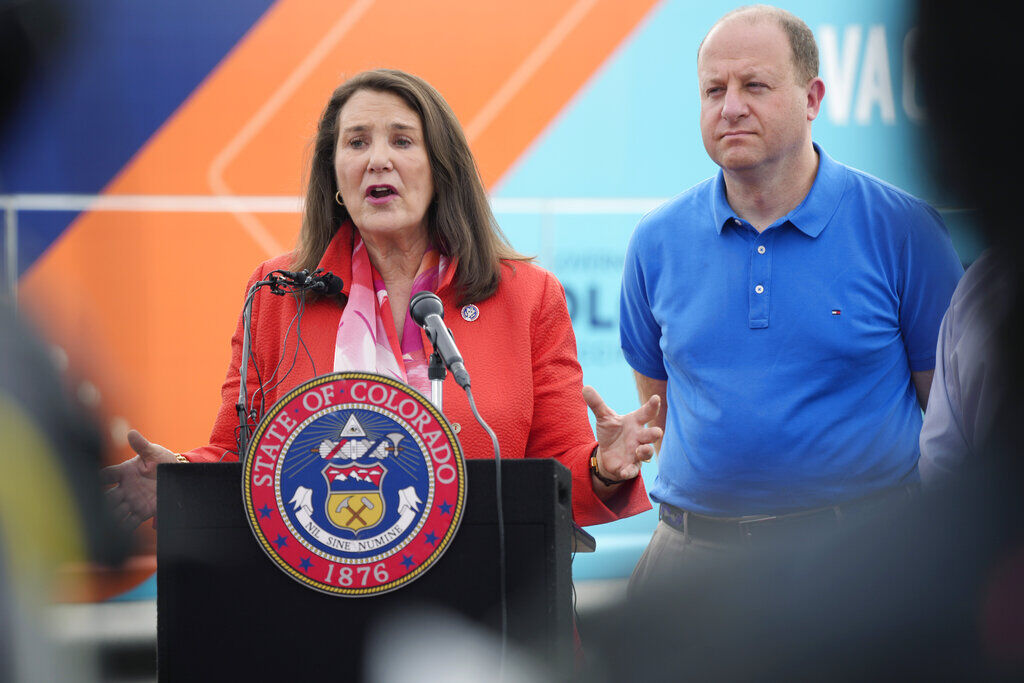
Armstrong staffer considers congressional bid, DeGette angers rural communities with wilderness act | A LOOK BACK
Rachael Wright, Special to Colorado Politics
rachael.wright@coloradopolitics.com
Updated 3 days ago
Forty-five years ago this week: If the lines were drawn just right, Republican Sen. Bill Armstrong stood the chance of losing his office manager, Ruth Fountain. Fountain admitted she was seriously thinking about running for Colorado’s new congressional seat in...
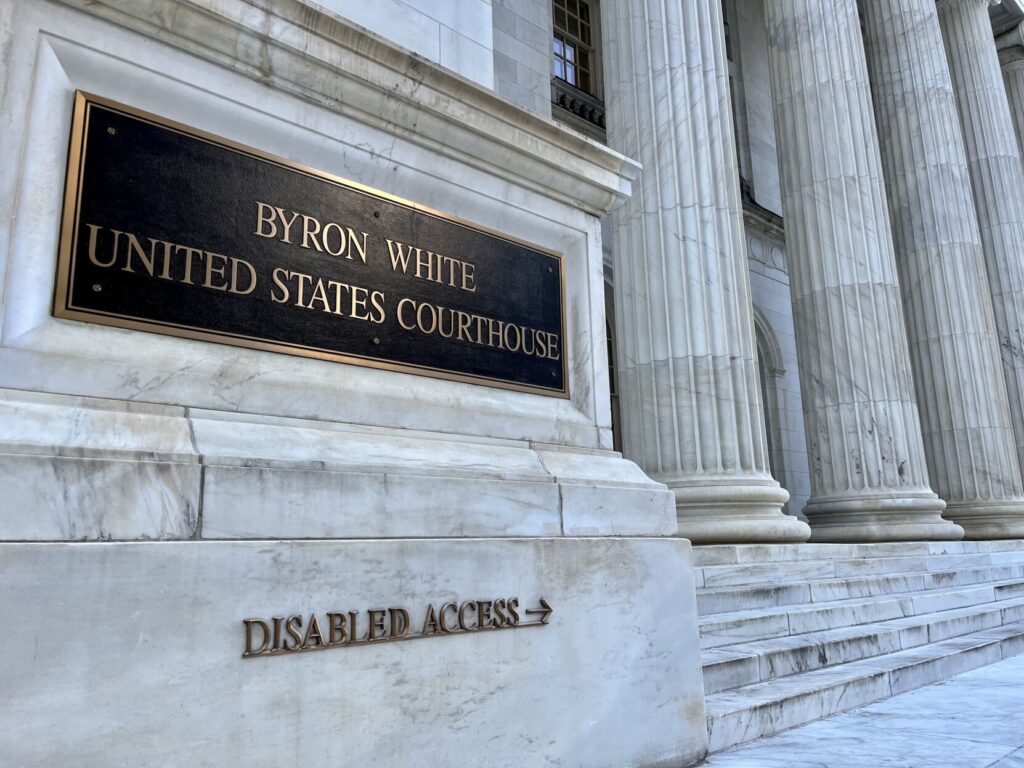
10th Circuit dismisses woman’s lawsuit following 10-year attempt to undo restraining order
Michael Karlik
michael.karlik@coloradopolitics.com
Updated 2 days ago
The Denver-based federal appeals court rejected a woman’s challenge on Friday to a restraining order imposed on her more than a decade ago, finding that she cannot credibly claim she will be prosecuted for violating the restraining order through her...
10th Circuit dismisses woman’s lawsuit following 10-year attempt to undo restraining order
Michael Karlik
michael.karlik@coloradopolitics.com
Updated 2 days ago
The Denver-based federal appeals court rejected a woman’s challenge on Friday to a restraining order imposed on her more than a decade ago, finding that she cannot credibly claim she will be prosecuted for violating the restraining order through her...
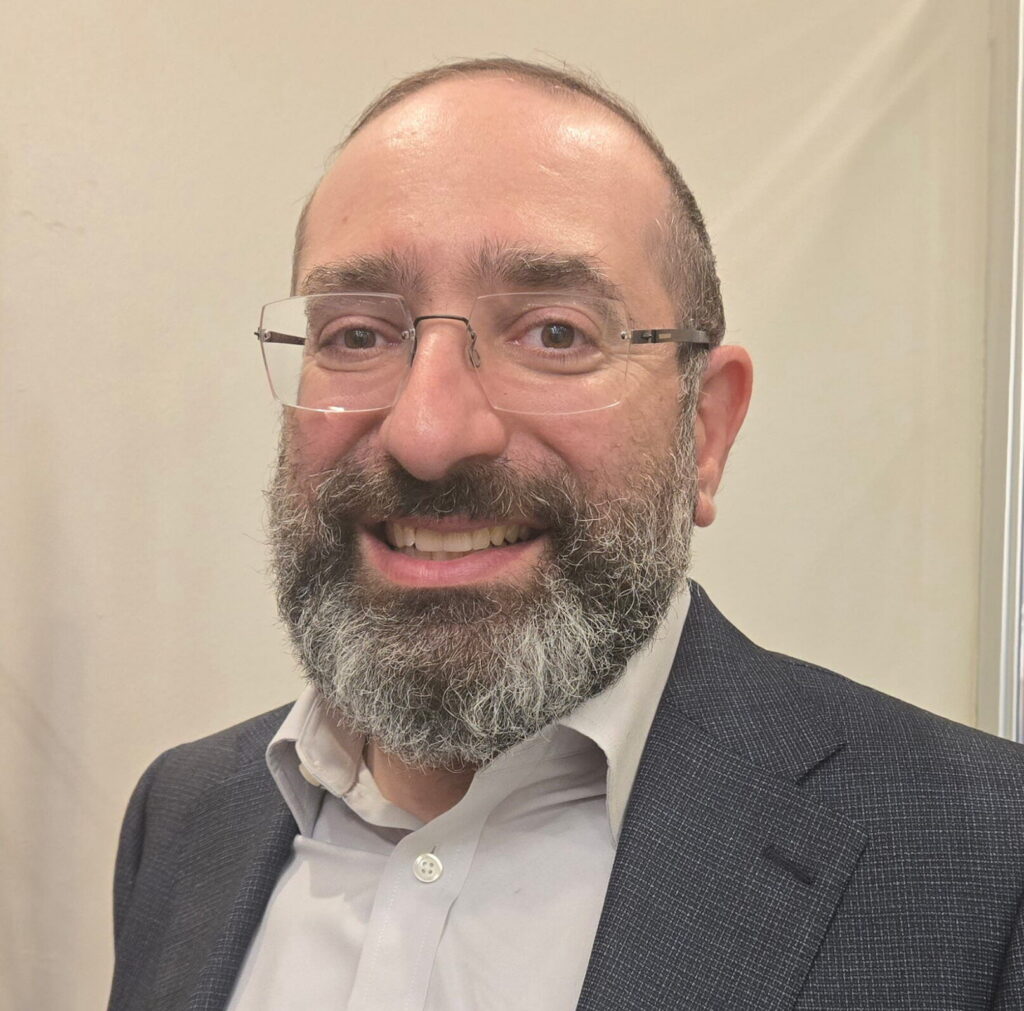
Surprise candidate Shimon Blau cleared to face off against Melat Kiros in November
Ernest Luning
ernest.luning@coloradopolitics.com
Updated 2 days ago
Unaffiliated congressional candidate Shimon Blau, a Denver doctor, has qualified by petition for the general election in Colorado’s 1st District, where Democrat Melat Kiros defeated 15-term U.S. Rep. Diana DeGette in last month’s primary, the Colorado Secretary of State’s Office...

Colorado produce not tied to nationwide cyclospora outbreak, agriculture officials say
Marissa Ventrelli
marissa.ventrelli@coloradopolitics.com
Updated 1 day ago
There is no indication that the recent outbreak of cyclospora, a fecal parasite that has contaminated food and water across nearly every state, can be linked to produce grown in Colorado, according to the state’s Department of Agriculture. “Colorado growers...

UNC opens College of Osteopathic Medicine
Marissa Ventrelli
marissa.ventrelli@coloradopolitics.com
Updated 2 days ago
The University of Northern Colorado held a grand opening for its new College of Osteopathic Medicine on Friday, with Gov. Jared Polis in attendance to celebrate the culmination of a two-year, $127.5 million project. The project was funded through legislation...
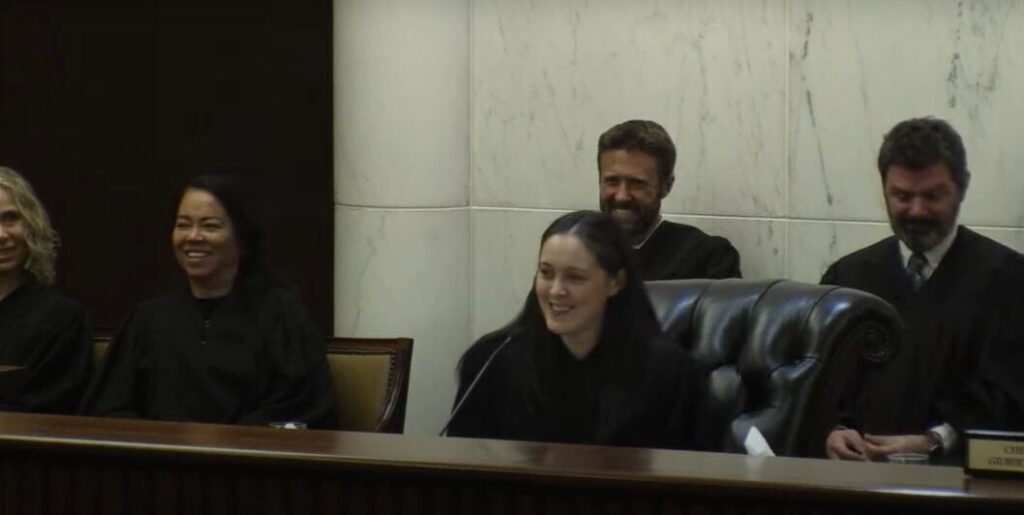
Colorado equal pay law does not require plaintiffs to allege gender-based retaliation, appeals court finds
Michael Karlik
michael.karlik@coloradopolitics.com
Updated 1 day ago
The 2019 Colorado law aimed at rooting out pay discrimination on the basis of sex does not require a plaintiff to allege their employer retaliated against them for sex- or gender-related reasons, the state’s second-highest court decided on Thursday. Lawmakers...
PREV
PREVIOUS

BARTELS: Mesa County Clerk Sheila Reiner raves about Dominion after Tuesday’s municipal elections
(An earlier video from the Mesa County clerk’s office about Dominion.) After tabulating the results of four municipal elections Tuesday night, Mesa County Clerk Sheila Reiner has even more good things to say about Dominion Voting Systems. “In 2012 and 2014 we tabulated and tested for the same four municipalities but didn’t pull out […]

Crowder wants to be really clear about how he sees the hospital provider fee, you follow?
“The thing I’m trying to impress on people is we got to come out and have to have an adult conversation in this state about what direction we want to go,” said state Sen. Larry Crowder, standing on the steps of the Capitol last week. Crowder was talking about his support for House Bill 1420, […]