

Guv plays down GOP effort to defund air quality division: ‘Lots of opportunity to find compromise’

At the Colorado Legislature, it is budget season, it is defunding season.
Taking up where Republicans on the Joint Budget Committee left off last week, Republicans on the state House Appropriations Committee Tuesday morning voted against an amendment to the “long bill” that would have returned to the state budget $8.5 million used to fund the Colorado air quality division.
The Republican vote to effectively eliminate the division was symbolic. Democrats enjoy a seven-to-six majority on the Appropriations Committee and they voted to pass the amendment.
Most observers, including Gov. John Hickenlooper, see the clashing as flashy but fleeting.
“There are a lot of other industries that count on the air quality division to do their business,” Hickenlooper said at a news conference Tuesday. “Not just oil and gas facilities. It’s gas stations. It’s, my goodness, breweries — they all need to make sure they have air quality certificates. There’s a whole array of industries that would be affected, so I think there will be a lot of opportunity to find a compromise.”
The budget long bill, HB 1405, now goes to the House floor, where it is sure to pass with the air quality division money included. Then the bill heads to the Senate where majority-party Republicans hold sway. So the battle may get hotter before it fades.
Republicans have targeted the air quality division as part of a campaign to oppose any movement made by the state to implement the Obama administration’s Clean Power Plan, which aims to slash carbon emissions tied to the power industry.
The Clean Power Plan was drawn up by the Environmental Protection Agency as the main pillar of the president’s program to combat climate change. Even as it was being formulated, the plan drew attacks on the right. When it was unveiled, fossil fuel industry groups and conservative attorneys general, including Colorado’s Cynthia Coffman, filed lawsuits against it. Those lawsuits led the U.S. Supreme Court in February to stay implementation of the plan pending a ruling expected later this year.
But states such as Colorado, which have taken up work to tailor their own approach to meet the federal emissions targets, have continued to do preliminary research and planning. And, at the same time, sympathetic political leaders have worked to stymie legislative efforts to stall progress.
The air quality division defunding move is the latest broadside launched by Colorado’s Republican lawmakers, who know that the bills they have introduced this year targeting the plan face little chance in the divided Legislature of passing into law.
The idea is to strip the air quality division only of money that pays for work developing the state’s Clean Power Plan compliance program. Republicans have asked for an amount and have failed to get an answer.
The air quality division told them that work on the Clean Power Plan is tied to the division’s larger, everyday work, and so difficult to price accurately.
That led frustrated Republicans, seeking in part to pressure the division for a figure, to vote to defund the entire division — a move many have seen from the beginning as just an opening gambit in a game of legislative poker.
To move the budget bill out of the Republican-controlled Senate, Democrats may have to agree to strip some funding from the division. The question is how much funding.
Hickenlooper said the “state would not stand by” and let the division go unfunded, because killing the air quality division would be bad now for state businesses and in the future would result in less effective Clean Power Plan regulations.
“Basically we’d be turning over our (Clean Power Plan development) to the EPA, and the EPA is certainly not going to have the same attention to local (needs),” he said. “In general, local regulation is always going to be better regulation.
“We’re a mile high,” Hickenlooper continued. “We have higher vulnerability to air pollution than do cities at lower elevation. We already know that we’re out of compliance on a variety of air quality measures. If we can move toward having cleaner air and not raise people’s utility bills by more than 1 percent or 2 percent — and hopefully come in flat and have cleaner air for the same cost, why wouldn’t we do that? That’s the goal.”
Besides, he said, the total number of people working on the Clean Power Plan in the air quality division of the state is “something like a couple people in that division.”
“To try to take out the whole air quality division, it’s a little like the baby and the bathwater, except,” the governor was rooting around for a proper metaphor. “Maybe a baby with the gas — the baby with the oxygen? I don’t know.”


Judge grants partial injunction to GEO in fight against state health inspection law
Kyla Pearce
kyla.pearce@gazette.com
Updated 9 hours ago
A judge ruled Thursday that The GEO Group does not have to follow parts of a new state law requiring more frequent health and safety inspections at the U.S. Immigration and Customs Enforcement processing center in Aurora. Under the order...

Parker man faces 20 years to life for serial sexual assaults
Nicholas Fogleman
nicholas.fogleman@denvergazette.com
Updated 11 hours ago
A 25-year-old Parker man who sexually assaulted three women in 2025 pleaded guilty Wednesday and will serve 20 years to life in prison. Javier Rodriguez-Andrade pleaded guilty to charges stemming from three sexual assaults involving women ages 19 to 24. ...

Buttigieg performs best among Democrats against Rubio or Vance in possible 2028 contest: Poll
David Zimmermann
david-zimmermann@coloradopolitics.com
Updated 13 hours ago
Former Transportation Secretary Pete Buttigieg appears to be the Democratic Party’s best chance at winning the presidency against Secretary of State Marco Rubio or Vice President JD Vance in 2028, according to a poll released on Thursday. In hypothetical matchups...

Douglas County moves to Stage 1 fire restrictions following recent rain
Nicholas Fogleman
nicholas.fogleman@denvergazette.com
Updated 11 hours ago
Douglas County has downgraded its fire restrictions from Stage 2 to Stage 1 on Thursday following recent rainfall and moderate fire conditions, according to the Douglas County Sheriff’s Office. The change applies to unincorporated Douglas County, as well as the...
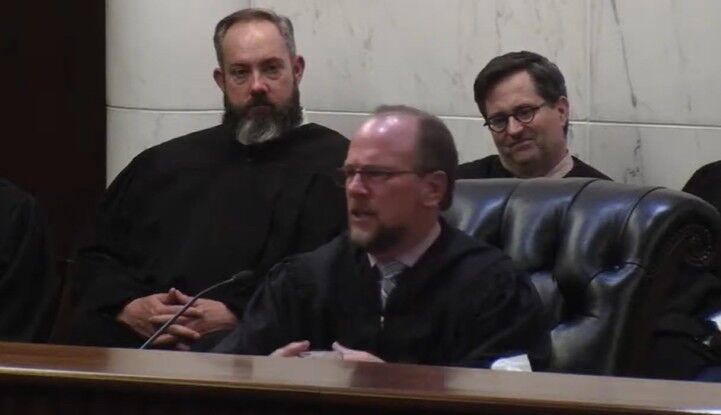
Divided appeals court upholds warrantless DNA collection in Colorado cold case, cautions of government overreach
Michael Karlik
michael.karlik@coloradopolitics.com
Updated 10 hours ago
Colorado’s second-highest court upheld the warrantless collection of a suspect’s DNA from a discarded soda can as constitutional on Thursday, while warning about potential abuse of DNA privacy in the absence of further guardrails. By 2-1, a three-judge Court of...

Democratic gubernatorial candidate Phil Weiser promises to appoint rural outreach director, water adviser
Marianne Goodland
marianne.goodland@coloradopolitics.com
Updated 10 hours ago
Democratic gubernatorial candidate and current Attorney General Phil Weiser told the Colorado Water Congress Thursday he intends to appoint a rural outreach director and a water policy adviser should he win the election in November. Weiser’s speech at the Steamboat...
Man charged in Northglenn homicide of wife
Matt Kyle
matt.kyle@denvergazette.com
Updated 11 hours ago
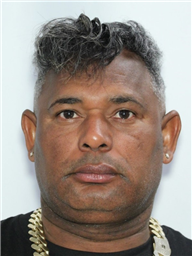
A man has been formally charged with murder and burglary relating to a homicide last week in Northglenn. Alexei Munive-Rodriguez, 48, was arrested Sunday after he was at large following the homicide, which occurred Friday. Police were dispatched around 10:30...
Attorney General candidates present priorities at Colorado Water Congress
Marianne Goodland
marianne.goodland@coloradopolitics.com
Updated 10 hours ago
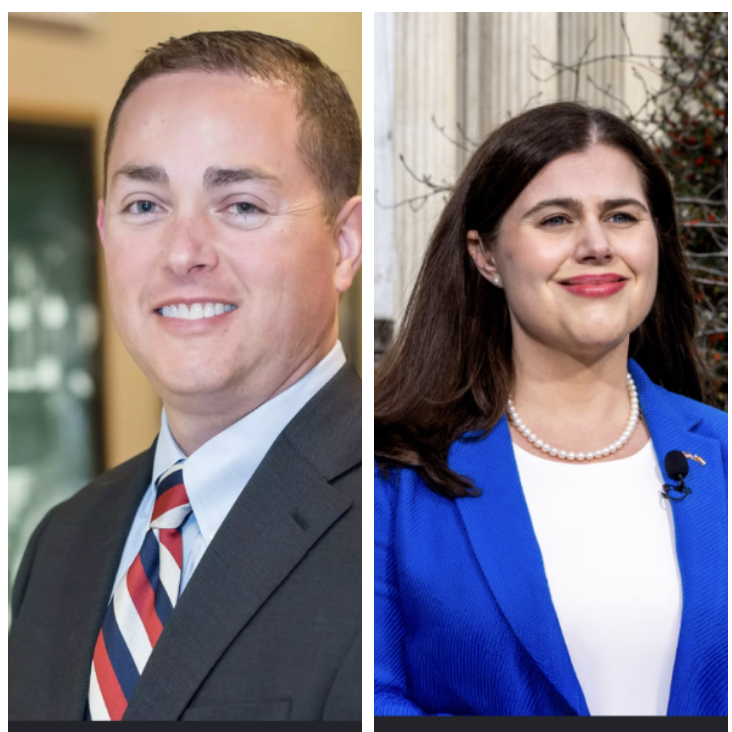
The two major-party candidates for attorney general — Republican Michael Allen, the district attorney for Teller and El Paso counties, and Democratic Secretary of State Jena Griswold — on Thursday outlined their priorities at the Colorado Water Congress. Griswold attended...

US aircraft carrier arrives in Middle East, relieving long-deployed USS Lincoln
The Associated Press
the-associated-press@coloradopolitics.com
Updated 15 hours ago
WASHINGTON (AP) — The Asia-based USS George Washington aircraft carrier is now operating in the Middle East, the U.S. military said Thursday, relieving a long-deployed carrier following reports of mental health challenges and supply shortages aboard while it was supporting...

Denver named finalist for 2028 Democratic Convention site
Thelma Grimes
thelma.grimes@coloradopolitics.com
Updated 9 hours ago
The Mile High City competes with Boston and Philadelphia The list of cities being considered to host the 2028 Democratic National Convention has narrowed even further, with Denver making the cut as one of the final three, along with Boston...
PREV
PREVIOUS

Actions speak louder than corporate promises (advertisement)
In case you were wondering how much effort big-box retailers would put into supporting local brands, here’s a solid indicator: They recently started a new front group — in addition to some serious spin and creative data analysis — they took our logo and made an exact copy! Because why put effort into it when they […]

BARTELS: Wayne Williams’ new title — Grandpa
Colorado Secretary of State Wayne Williams this month added another title to his name: Grandpa. Mikaya Rose Williams was born March 11, weighing in at 7 pounds 14 ounces and measuring 20 inches. Her parents, Gregory Alaric and Cassidy Williams, could not be more excited. The secretary and his wife, Holly, traveled to Utah last week […]