

Nicolais: Supreme Court might scuttle teacher union influence
Last year, school board races dominated the Colorado political universe. Usually sleepy affairs drawing ballots from only the most steadfast voters, the off-off-year election in 2015 drew national attention thanks to the recall of three school board members in Jefferson County. Throw in the biennial battles in education hotbeds such as Douglas County and the secretary of state’s election updates became must-see-television on election night.
By the next day, it became clear that teachers unions had a very good night. Two years before, the three-member reform majority swept into Jeffco while their neighbors to the south defended every seat in Douglas County. This year, teachers unions gathered signatures to recall members of the Jeffco board in record time. They re-doubled efforts and, not only won all five Jefferson County school board seats, but also all three Douglas County seats bringing that board to a razor-thin 4-to-3 precipice.
Of course, running up to the election, the unions bristled at any suggestion that the campaigns were anything but a pure “grassroots” movement. It was “for the kids!”
In December, after mandatory Department of Labor filings and local campaign finance complaints revealed huge sums of cash flowing from unions to the campaigns, the war had already been won. When it became public that the “grassroots” were as real the AstroTurf in New Orleans’ Superdome — the National Education Association, Colorado Education Association, and Jefferson County Education Association gave nearly $300,000 to the pro-recall JeffCo United organization, or 99.9% of its total contributions — the new board members had already been seated.
That’s just politics. The teachers unions played their hand, and they played it beautifully.
But the United States Supreme Court may be about to rain cold water on their parade. As the calendar turned over to 2016, the Supreme Court heard oral argument in Friedrichs v. California Teachers Association. At stake are the member dues that allow the unions to make the massive political contributions like those made in Colorado. An adverse ruling could cripple teachers unions.
Brought by a California teacher, and supported by education reform advocates, the case centers on mandatory “agency fees.” In many states, teachers must pay these fees to unions to cover the cost of collective bargaining benefiting all teachers. In theory, because every teacher gains the benefit of collective bargaining, each should be required to contribute their “fair-share.” At the same time, teachers can usually request to “opt out” of dues paid to support union political causes.
For example, a teacher paying $1,000 per year in dues may be paying $650 per year in agency fees and $350 in political support. While the teacher may opt out of the $350, the annual $650 is mandatory. The Friedrichs case could make the full $1,000 optional.
If the Supreme Court rules in favor of Friedrich, teachers unions fear a substantial exodus of members and funds. Individual teachers could still reap the benefit of collective bargaining while letting others pay for it and pocketing $650 for themselves — a pretty hefty portion of many teachers’ salary. According to union advocates, that is the “free-rider” effect agency fees prevent. A single teacher stopping dues payments won’t make a substantial difference, but the aggregate of thousands could bleed the union dry.
In Colorado, the case will not have the same dramatic individual effect as in California. While not a pure right-to-work state, Colorado generally allows much more freedom for employees to choose whether to pay dues or not. But money is fungible. Should the court rule in Friedrich’s favor, the $300,000 spent on recalls may be needed elsewhere in 2017 and end up cutting the teachers unions’ current party short.
Mario Nicolais, an attorney and legal scholar, is general counsel at Vivage Quality Health Partners.

The primary political reform and precondition for all others | SONDERMANN
Eric Sondermann
eric-sondermann@coloradopolitics.com
Updated 3 days ago
In its current state, the American political system has no end of ailments. Far too many factors accelerate polarization and work against moderation and narrowing the differences. Media, and the way so many citizens limit themselves to agreeable, reinforcing sources,...
Pueblo mayor, council concoct Trumpian Texas Two-Step | Dennis Maes
Dennis Maes
dennis-maes@coloradopolitics.com
Updated 2 days ago
Several weeks ago, an article was published positing Pueblo Mayor Heather Graham is a disciple of the calamitous Donald Trump school of governance — specifically as it related to questionable ethical practices and the misuse of public funds. Recently, Graham...
Colorado can’t afford to turn its back on proven public safety technology | GUEST COLUMN
Colorado Politics
colorado-politics@coloradopolitics.com
Updated 2 days ago
By Samuel G. Michael I recently saw a report that said Colorado is leading the way in artificial intelligence adoption for businesses. Across our state, more business owners and employees than ever before use AI for their everyday functions —...
As education conflicts abound across Colorado, who puts the kids first? | Paula Noonan
Paula Noonan
paula-noonan@coloradopolitics.com
Updated 3 days ago
Elected school boards and the Colorado Department of Education (CDE) have hit the headlines with fired superintendents, superintendent resignations, failures of oversight, and misdirected dollars. Cherry Creek School District’s superintendent was fired. Jefferson County Schools’ superintendent found a less stressful...
Clock is ticking on Colorado’s new AI rules | PODIUM
Colorado Politics
colorado-politics@coloradopolitics.com
Updated 3 days ago
By Aashis Luitel On Jan. 1, organizations using covered automated systems must begin complying with Senate Bill 26-189, Colorado’s new Automated Decision-Making Technology Act. They can identify those systems and start building the processes the statute clearly requires. What they...
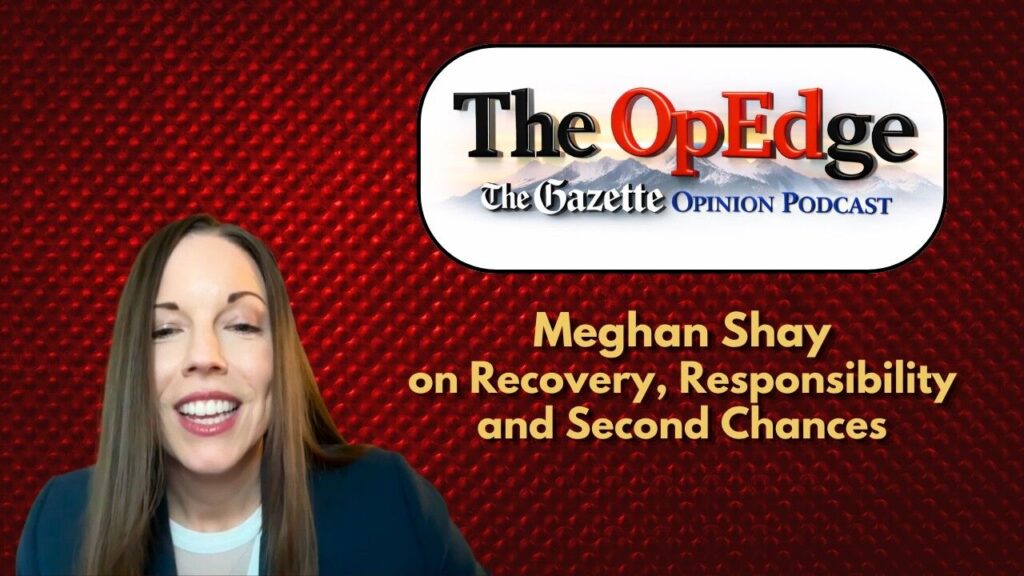
Meghan Shay on recovery, responsibility and second chances | The OpEdge Podcast
Tony Olivero
tony.olivero@gazette.com
Updated 4 days ago
Step Denver and Step Springs CEO Meghan Shay joins The OpEdge to explore addiction recovery, homelessness, and the role of accountability in lasting change. Shay tells host and investigative columnist Jimmy Sengenberger why she believes recovery is built on personal...
The outrages mount | Hal Bidlack
Hal Bidlack
hal-bidlack@coloradopolitics.com
Updated 4 days ago
My kindly and forgiving editors understand that, from time to time, I can’t help myself from leaping atop my rickety soapbox to vent. And, like many other political commentators have already done, I could easily fill this entire missive with...
Rural Colorado deserves a tax holiday | GUEST COLUMN
Eric Mulder
jstooksberry@gmail.com
Updated 5 days ago
Spend enough time in Colorado’s Eastern Plains, the San Luis Valley, or the Western Slope, and you’ll see boarded-up storefronts, schools consolidating classrooms, and small rural communities stretching every dollar to keep basic services afloat. Once the backbone of Colorado’s...

Weiser’s leadership crucial for rural win-win | Rachel Gabel
Rachel Gabel
rachel-gabel@coloradopolitics.com
Updated 1 week ago
Attorney General Phil Weiser is going to win the gubernatorial election. That said, Colorado agriculture and rural communities have a 30-year track record of finding the win-win be it for species or industries or habitat. Former Governor Roy Romer possessed...
A Colorado history lesson for Victor Marx | Dick Wadhams
Dick Wadhams
dick-wadhams@coloradopolitics.com
Updated 1 week ago
Victor Marx, who narrowly won the Republican nomination for governor by one half 1% after boasting of a massive 44-point lead, is just as misguided on Colorado political history. During the primary, Marx made a clumsy attempt to denigrate his...
PREV
PREVIOUS

Norton: Colorado Supreme Court should stop illegal abortion funding
Something odd happens when some judges consider cases involving the issue of abortion. The legal principle of stare decisis — the idea that a principle or rule established in a previous legal case should be binding or at least persuasive in a later case — seems to fly out the window and pro-abortion emotions take […]
SLOAN: Don’t underestimate chances of ColoradoCare at ballot box
A new legislative session has commenced in Colorado, and with it the state can expect a slew of new laws to be written into the tablets. But it is unmistakable that a good deal of the major legislation in the state does not emanate from under the gold dome but from the ballot box. Consequently, […]