

Hudson: Low morale, pay strain state workers
Colorado WINS, the state employee labor union simulacrum created by Gov. Bill Ritter through an executive order, held its “third triennial constitutional member convention” this past weekend at the Crowne Plaza in Denver. After several years of struggle, Colorado WINS has been enjoying slow-but-steady growth in its membership. A not-so-coincidental leak of a March 2015 survey conducted by Colorado WINS appeared in Friday’s Denver Post, reporting that parole officers feel “overworked and underpaid.” Some 95 percent of parole officers reported they did not believe their supervisors cared about them, while 91 percent felt that neither did management care about compensating them fairly. Just 1 percent said they are receiving the support they need to perform their jobs successfully. Presumably, enthusiasm in other state departments — those results have yet to be leaked — could reflect similar morale problems.
These results relied on a random sampling and run contrary to the happy-camper report issued several years ago by the Department of Personnel and Administration based on an internal and discretionary online poll. Tim Markham, Colorado WINS executive director, said Friday that his survey results had been shared last spring with Gov. John Hickenlooper’s chief-of-staff, Doug Friednash. Despite expressions of surprise and a promise that the governor’s office would develop an action-plan, Markham said, the channel fell silent. Members report the coordinating committees that are supposed to be discussing and implementing employee suggestions have also fallen dormant, particularly in the Departments of Corrections and Human Services.
Colorado WINS was originally created as a joint effort sponsored by the Service Employees International Union, the American Federation of State, County and Municipal Employees and the American Federation of Teachers, but AFSCME has dropped out and Colorado WINS has organized as SEIU Local 1876 with continuing support from AFT. WINS has also participated in the recent “Campaign for 15” hike in the minimum wage. An estimated 3,000 state workers, or about 10 percent of civil service employees, earn less than $15 an hour but are prevented from applying for food stamps or other social service supports by state law. This means these employees can’t access the taxpayer subsidies enjoyed by employees of fast food and other lower-wage retailers, which can average nearly $7,000 per family. Colorado WINS argues it is embarrassing for state government to be paying wages that leave workers otherwise eligible for state assistance. Interestingly, the highest concentrations of these lower-paid state employees can be found in the institutions of higher education, where compensation for janitors, groundskeepers and kitchen personnel contrast with some of the highest salaries, paid to faculty and professional staff. A similar discrepancy at Yale University led to a successful student strike on behalf of its maintenance workers.
DPA recently issued its Annual Compensation Report, the foundation for each year’s employee compensation recommendations. Following more than a decade without pay raises to keep pace with inflation, and five years when no increases were awarded at all, another “negative factor” lurks in the state budget. Salary compression, the failure to provide promotional advancement through the state’s authorized employee salary ranges, is just waiting on a lawsuit against the state. For the time being, that plaintiff is unlikely to be Colorado WINS. Both WINS and the governor need each other. Without a legislative authorization designating WINS the legal representative of state workers, the “union” must cling to the executive order lifeline extended by Ritter. Hickenlooper or a future governor could emasculate WINS with the stroke of a pen.
Taking this into account, the 2015 compensation report recommends a 2-percent across-the-board pay raise for all state employees and a 3-percent merit-pay pool to help advance employees towards median pay for their jobs. None of this helps to catch employees up for lost wages or to close their real gap with the private sector. For the first time, the salary survey estimates the non-wage benefits offered to state workers at 24 percent of their total compensation, allegedly 11.6 percent better than in the private labor market. At the same time, State Treasurer Walker Stapleton and his allies in the Legislature work to prune PERA benefits from state workers.
Mary Kay Henry, president of SEIU and arguably the most powerful woman in the labor movement, gave the keynote address at the Colorado WINS meeting. She complimented Colorado WINS for its victories on overtime pay for corrections officers and for securing real, albeit small, pay raises for state workers during each of the past three years. Then she discussed tackling the national challenge of income fairness. She pointed to adjunct professors at community colleges as Ph.D. workers earning less than $15 per hour, without benefits. She also identified another half million food-service employees at our airports, along with childcare and home-health workers as potential beneficiaries of the Campaign for 15.
Rumors out of OSPB indicate the governor’s budget will likely recommend another 1.5-percent increase in 2016 rather than the combined 5-percent adjustment suggested in the compensation survey. It only takes one lawyer and three employees to argue in court that this falls well short of a “prevailing wage.”
— Miller Hudson is a public affairs consultant and a former state legislator. He can be reached at mnhwriter@msn.com

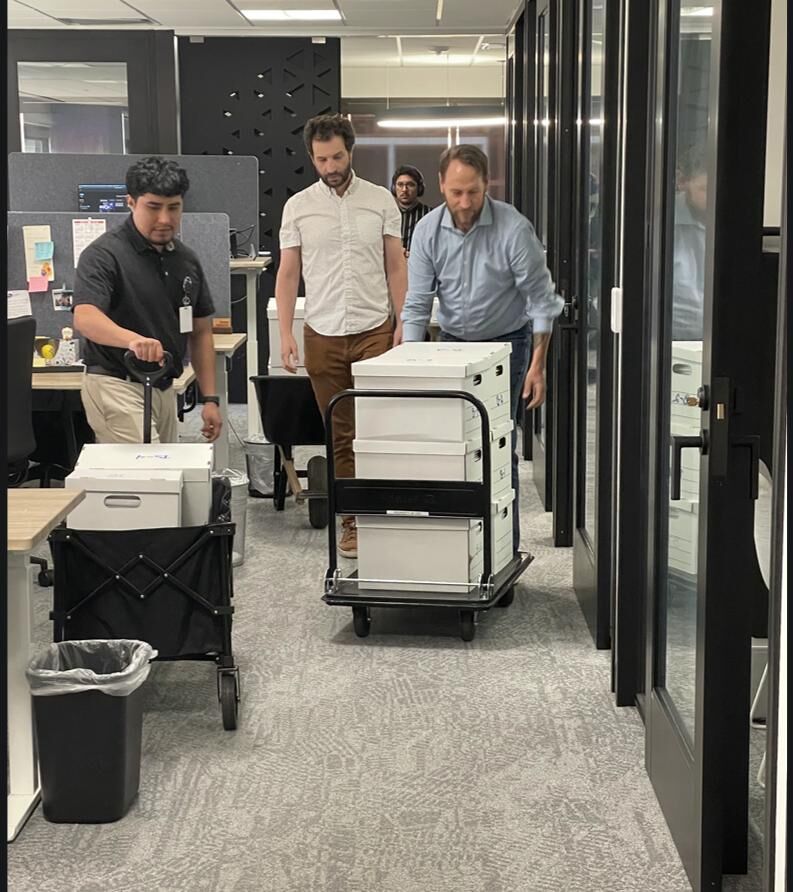
Group submits signatures for proposed Colorado graduated income tax
Marianne Goodland
marianne.goodland@coloradopolitics.com
Updated 13 hours ago
The measure, which eliminates Colorado’s flat tax, is expected to raise $2 billion in new revenue The proposal to amend the Colorado constitution to change the state’s flat rate into a graduated income tax came in under the wire Monday,...

10th Circuit weighs Gross Reservoir expansion, judge’s ‘punishment’ of Denver Water
Michael Karlik
michael.karlik@coloradopolitics.com
Updated 11 hours ago
Members of the Denver-based federal appeals court considered on Friday whether they could intervene in an ongoing infrastructure project to enlarge a Boulder County dam after a trial judge deemed the underlying permit unlawful nearly two years ago. Denver Water...

Democratic group maps out path to Colorado House and Senate supermajorities
Marissa Ventrelli
marissa.ventrelli@coloradopolitics.com
Updated 14 hours ago
A national organization that works to elect Democrats to state legislatures has its sights on Colorado, unveiling a road map to establish a supermajority in both the House and Senate. Democrats have held a majority in the House since 2013...

10th Circuit upholds federal prohibition on juvenile handgun possession
Michael Karlik
michael.karlik@coloradopolitics.com
Updated 16 hours ago
The Denver-based federal appeals court concluded on Monday that Congress acted within its constitutional powers to make it a crime for juveniles to possess handguns in most instances. The decision from the U.S. Court of Appeals for the 10th Circuit...

Board of Peace demands Netanyahu cease Gaza airstrikes
The Washington Examiner
the-washington-examiner@coloradopolitics.com
Updated 17 hours ago
The Board of Peace is struggling to get Israel on board with its peace plan for Gaza as Israeli militia airstrikes continue to bombard the war-torn strip despite expectations for a ceasefire and de-escalation. Gaza City was hit repeatedly by...

Trump wants to give Iran ‘last chance’ to strike a deal before ‘decapitation’
Christian Datoc
christian-datoc@coloradopolitics.com
Updated 18 hours ago
President Donald Trump said this week’s talks with Iran will be the “last chance” for the Middle Eastern country to avoid a severe escalation in the war. Trump called off plans to strike Iran’s energy infrastructure over the weekend after...
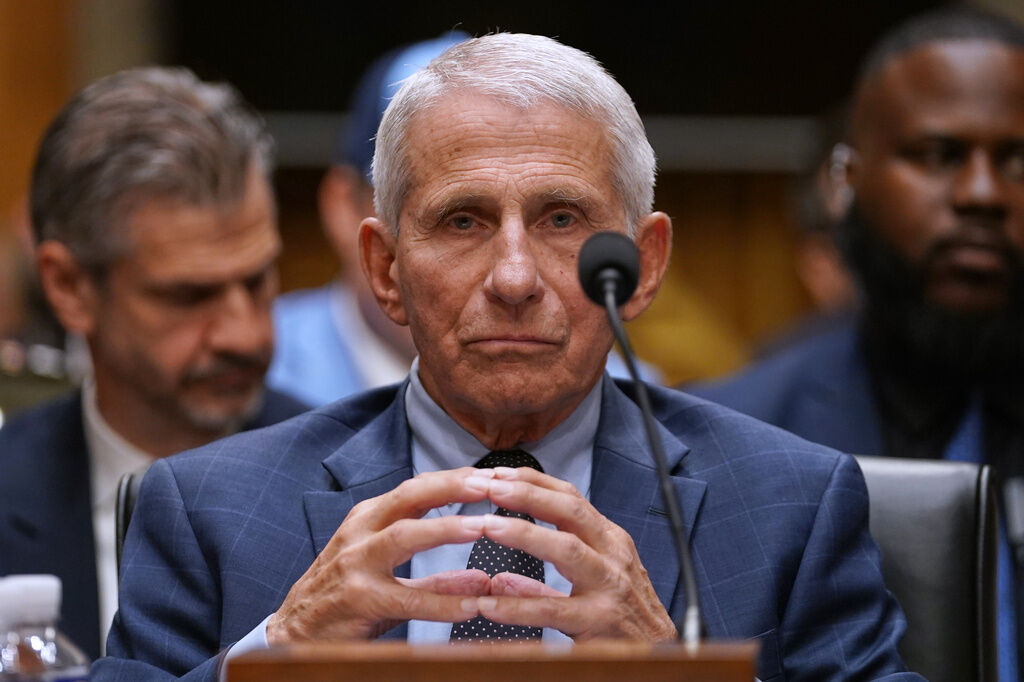
Fauci told Congress higher COVID-19 fatality rate than he calculated in diary: ‘More like 0.2-0.3%’
Mia Cathell
mia-cathell@coloradopolitics.com
Updated 18 hours ago
Dr. Anthony Fauci privately calculated that COVID-19 had a significantly lower fatality rate than what he told Congress a month later at the outset of the pandemic. On March 11, 2020, the day that the World Health Organization declared COVID-19...

Senate advances judicial nominee, Montezuma County judge agrees to discipline | COURT CRAWL
Michael Karlik
michael.karlik@coloradopolitics.com
Updated 19 hours ago
Welcome to Court Crawl, Colorado Politics’ roundup of news from the third branch of government. A U.S. Senate committee advanced a judicial nominee from Colorado, plus a Montezuma County judge agreed to receive discipline for his misconduct that stops short...

Tunnel to Towers brings 9/11 steel to Denver
Nicholas Fogleman
nicholas.fogleman@denvergazette.com
Updated 22 hours ago
A nationwide tour commemorating the 25th anniversary of 9/11 brought a piece of the World Trade Center to Denver on Saturday as the Tunnel to Towers Foundation hosted a ceremony at the Wings Over the Rockies Air & Space Museum....
Top officials in Arizona’s Maricopa County agree on how to oversee elections | OUT WEST ROUNDUP
The Associated Press
the-associated-press@coloradopolitics.com
Updated 6 days ago
ARIZONA Officials agree on election oversight PHOENIX — Election officials in Arizona’s most populous county reached an agreement a week before the state’s July 21 primary on how to jointly oversee the vote, ending a prolonged legal battle. Republican Maricopa...
PREV
PREVIOUS

Strode: ZIP Code matters as much as genetic code
Where you live, what you do for a living, and how much you make could determine your long-term health outlook. This concept, commonly termed “social determinants,” is gaining equal importance with healthy behaviors as a predictor of an individual’s future health outcomes. Alan Weil, editor in chief of Health Affairs, the nation’s leading journal on […]
Noonan: Will DPS-style charter system work in Jeffco?
Former state Sen. John Andrews asked Jeffco school board members and candidates at a forum if they would welcome Denver Public Schools’ charter school system in Jeffco. I said I would not, while Ken Witt, John Newkirk, and Julie Williams, the three board members facing recall, all said they would. (I’m running for the seat […]