

Hudson: Honest, humble Jimmy Carter set the bar
I was 31 years old and living in Denver when I cast my first ballot for president in 1976. My 10-year absence from the polls wasn’t for a lack of interest but was a product of circumstance. The voting age hadn’t yet changed to 18 in 1964, so I missed the Johnson-Goldwater contest. Then in 1968 I was serving in the Navy at a time when no real effort was made to provide service members absentee ballots. In October 1972 I was moving to Colorado from Maryland, long before early voting was offered there and far too late to register here. So I was on the lookout for a Democratic candidate to support in 1975 when Newsweek reported that the first-term governor of Georgia would be running. Jimmy Carter was described as a Naval Academy graduate, nuclear engineer and peanut farmer, as well as a born-again Christian. I was a Navy veteran, my father a nuclear engineer and his father a New Mexico cotton farmer, so I was intrigued.
In January 1976 Carter’s name recognition polled at just 4 per cent. He was not our usual Ivy League candidate. In those days, it took several weeks to find an address for the Carter campaign in Atlanta, but once I had it, I wrote and requested copies of position papers that might be available on national issues. A week later I received a boxed package, perhaps three inches thick, with detailed proposals on just about every challenge facing the nation. A month or two later I received an invitation in the mail to meet the governor at a reception hosted by Wilma and Wellington Webb at the long-since shuttered Marina Hotel on Colfax Avenue, across the street from the U. S. Mint. I was disappointed, as were the Webbs, that scarcely more than a dozen Democrats attended. Nonetheless, Gov. Carter was gracious, funny and earnest in equal measure.
Successful politicians can usually be divided into two categories, retail or wholesale wizards. In rare cases — Bill Clinton comes to mind — a candidate excels at both skills. But Jimmy Carter is the master of the retail sale. One-on-one, he could be the most charming, persuasive and decent person I’ve ever met. However tired or distracted he might be, you are left with a sense that he’s been waiting all day for the chance to speak with you. By contrast, Barack Obama has proven the master of the wholesale campaign. Has there ever been another presidential candidate who could fill the grounds between the Colorado State Capitol and the City and County building with 125,000 supporters, as Obama did in 2008? It isn’t surprising Carter was able to hammer out the Camp David Accords, ending decades of hostility between Egypt and Israel. I suspect, however, that he prays each day for Anwar Sadat, who was felled by assassins for reaching the agreement that has stabilized the Middle East for decades.
When the formal reception ended, Carter invited the handful of stragglers, myself included, up to his room, where he kicked off his shoes and welcomed a second round of questions. Nothing was out of bounds. Finally, at 2 a.m., someone suggested it was time to let the candidate get some sleep. As I drove up Speer Boulevard to North Denver, I was convinced I had just spent nearly 10 hours with the next president of the United States. I began telling anyone who would listen that Jimmy Carter would be our next President, but even Democrats acted as though I’d taken leave of my senses. It’s important to remember the political climate of the time. President Nixon had resigned in disgrace, as had Vice President Agnew. Runaway inflation was bankrupting American families. We had finally cut and run from Viet Nam. President Gerald Ford, who had never run for national office, pardoned Nixon, who had appointed him vice president. A pair of crazed women, one an acolyte of Charles Manson, had attempted to assassinate Ford for obscure reasons. American politics appeared both venal and corrupt.
Jimmy Carter’s message of honesty and humility resonated with voters. His campaign book was titled “Why Not the Best?” As a candidate, he carried his own suitcase, sleeping in supporters’ spare bedrooms in Iowa and New Hampshire, eating breakfast with their families and going on to win both states while overturning conventional campaign wisdom. It is impossible to predict when a candidate will emerge who perfectly matches the public mood of the moment, yet it happens with surprising frequency, and every campaign decision, in hindsight, appears inspired. Jimmy Carter chose green as his campaign color, rather than the usual red, white and blue, perhaps signaling his support to the growing environmental movement.
Carter’s intrinsic integrity — “I will not lie to the American people” could have been his campaign slogan — together with a surprising inability to delegate responsibility likely doomed his reelection. Operating for months without a chief-of-staff, even scheduling the White House tennis courts himself, Carter occasionally appeared overwhelmed by the challenges he faced — never more so than during the Iranian hostage crisis and the bungled rescue attempt. He was also, in part, a scold, urging Americans to act like adults, turn down their thermostats and shoulder responsibilities. But it’s often forgotten that it was Jimmy Carter who appointed Paul Volcker to chair the Federal Reserve, giving him a green light to break the back of inflation by ratcheting up interest rates to painful levels. The strategy worked but was neither popular nor politically wise.
Carter has used his nearly four decades out of office to prove a great man can keep right on doing great things. His Carter Center has supervised the transition to democracy throughout the Third World, monitoring elections, introducing public health systems, arbitrating disputes and attacking corruption without fear or favor. A lifelong woodworking hobbyist, he almost single-handedly elevated Habitat for Humanity to international status. And through it all he has written a bookshelf on the challenges still facing us all. I’ve spoken with him only a few times since his presidency, but when he was in Denver a few weeks ago to sign “A Full Life,” his most recent memoir, he winked at me and said, “Hi, Miller.” Knowing now that he was already aware of his cancer diagnosis, I can’t help wonder how he remembered me and what his remarkable example teaches. I pray for him that the God he loves will welcome him in his sleep, as he so richly deserves.
— Miller Hudson is a public affairs consultant and a former state legislator. He can be reached at mnhwriter@msn.com

Victor Marx says he’ll only debate Phil Weiser once in Colorado governor’s race — without a moderator
Ernest Luning
ernest.luning@coloradopolitics.com
Updated 12 hours ago
Colorado Republican gubernatorial nominee Victor Marx said on Tuesday that he will participate in only one debate with Attorney General Phil Weiser before the November election — and he challenged the Democratic nominee to hold the event without a moderator....
10th Circuit finds no fair housing violation by Littleton landlord for worker’s alleged rape of tenant
Michael Karlik
michael.karlik@coloradopolitics.com
Updated 14 hours ago
The Denver-based federal appeals court concluded on Monday that Littleton’s housing authority could not be held liable for a maintenance worker’s alleged rape of a tenant, as the worker’s employment did not provide any special access to the victim. A...
Fauci’s Fifth Amendment answers may test Biden pardon as GOP eyes contempt
Kaelan Deese
kaelan-deese@coloradopolitics.com
Updated 13 hours ago
Dr. Anthony Fauci invoked his Fifth Amendment right against self-incrimination more than 100 times on Wednesday, a move legal experts described as strategically sound despite the politically damaging optics. Sen. Rand Paul (R-KY), chairman of the U.S. Senate Committee on...

Democrats must win 57 out of 77 competitive House seats to take majority: Cook Political Report
Hailey Bullis
hailey-bullis@coloradopolitics.com
Updated 16 hours ago
Democrats’ path to retaking the House in November has significantly slimmed as a result of the mid-decade redistricting war this cycle, a new analysis found. The nonpartisan Cook Political Report found that under the newly drawn maps across 10 states,...
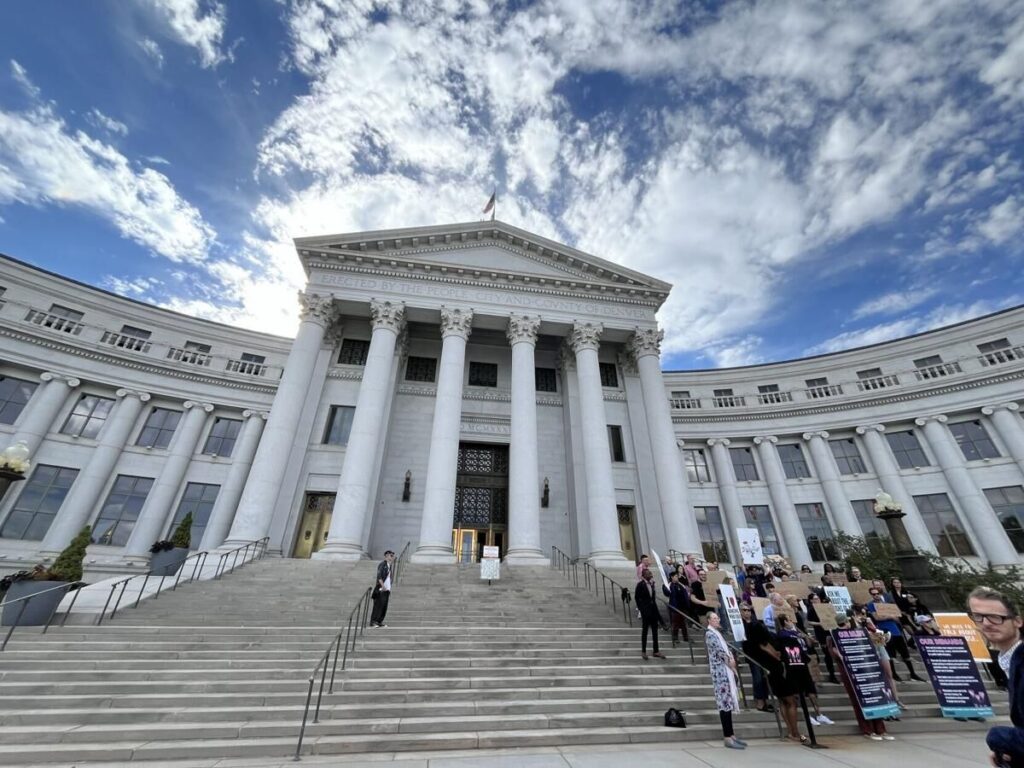
Denver labor acknowledgment proposal faces council committee questions
Deborah Grigsby
deborah.smith@denvergazette.com
Updated 20 hours ago
A proposal to add a labor acknowledgment to Denver City Council proceedings has been delayed by the Finance and Business Committee after members raised questions about its wording, intentions and place in the council’s opening proceedings. The proposal, put forth...
Fauci invokes the Fifth Amendment and declines to testify in GOP-led Senate panel’s COVID-19 hearing
The Associated Press
the-associated-press@coloradopolitics.com
Updated 21 hours ago
WASHINGTON (AP) — Dr. Anthony Fauci on Wednesday invoked the Fifth Amendment and declined to answer questions from senators in a Republican-led committee hearing about his handling of the COVID-19 pandemic. The move injects new drama into the lingering tensions...

Colorado residents rush to buy guns ahead of new restrictions, breaking sales records for several stores
By Debbie Kelley
by-debbie-kelley@coloradopolitics.com
Updated 20 hours ago
Colorado residents are lining up to buy guns ahead of the latest weapons restrictions set to take effect this Saturday. The new law mandates individuals seeking to purchase semiautomatic firearms with detachable magazines to first complete a firearm safety course...

Crime continues to decline in Aurora, police chief says
Kyla Pearce
kyla.pearce@gazette.com
Updated 20 hours ago
Crime in Aurora continued to decline in the first half of 2026, according to Aurora Police Department officials. Crime overall in the city has been on a downward trend since 2024, according to APD. Between Jan. 1 and June 30,...
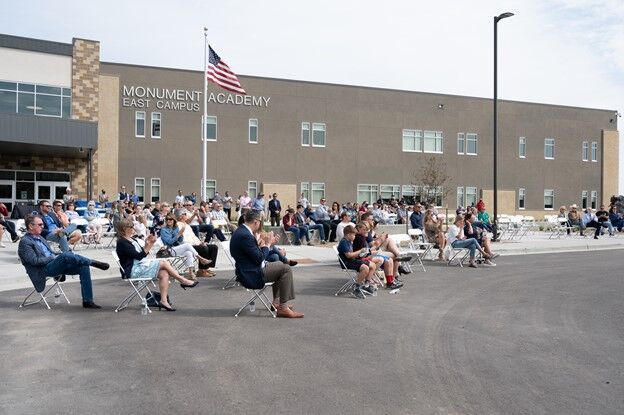
El Paso County rejects multi-family zoning request near Monument Academy
Savannah Eller
savannah-eller@coloradopolitics.com
Updated 19 hours ago
The El Paso County Board of Commissioners narrowly rejected a developer’s bid to convert land from low- to high-density residential zoning. The request, made by MA Infrastructure, LLC, would have allowed 12 units per acre on half of a 14-acre...
Atop taxes, here’s how much each Colorado resident pays in fees
Marissa Ventrelli
marissa.ventrelli@coloradopolitics.com
Updated 1 day ago
Each Colorado resident paid nearly $5,000 in state-sanctioned fees last year, according to a report by a policy think tank. The report, which analyzed how fees have affected Colorado’s economy, found that fee revenue has more than tripled since 2008...
PREV
PREVIOUS

Congress obsessed with EPA, but Silverton seeks solutions for contaminated mines
As Congress sharpens its knives for what will likely be multiple committee hearings on the accidental release by the U.S. Environmental Protection Agency of 3 million gallons of toxic mine wastewater into the Animas River on Aug. 5, local officials are focused on disaster relief. Their pleas for congressional help come amid a chorus of […]
Letter: Have a happy 100th birthday, Rocky Mountain National Park!
Editor: Coloradans will mark 100 years of Rocky Mountain National Park withcake, music, and family activities on Sept. 4. Moms and kidsfrom Colorado Moms Know Best will attend the park’s centennialbirthday party to deliver a giant birthday card with children’slandscape drawings and a message to “protect our clean air andbeautiful vistas” to elected officials and […]