

Smith: Money and fear: El Chapo escapes again
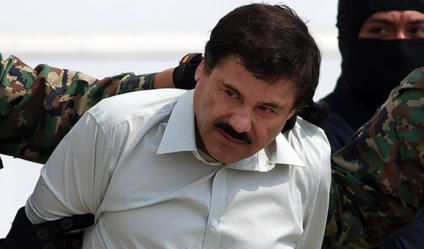
“El Chapo for President of México,” Pastor Galván says. “He’s like Pancho Villa or Emilio Zapata. They had money, but they helped the poor, something the government doesn’t do.”
This was one of the many reactions I heard during a trip to Juárez, Mexico, two days after Joaquín “El Chapo “ Guzmán’s extraordinary escape from the high-security Altiplano prison outside of Toluca, Mexico. How could this happen in Mexico’s “supermax,” and what did people think about it? Chapo was incarcerated in Altiplano from 1993 to 1995 before being transferred to another prison in Jalisco from which he escaped in 2001. No one had ever escaped since its opening in 1991, even though it houses most of Mexico’s highest-profile inmates. It has walls three feet thick in order to repel an attack from outside, restricted airspace and cell transmissions, as well as regular polygraphs for all staff.
This escape was much different from the June 6 escape of Richard Matt and David Sweat from the Clinton Correctional Facility in northern New York State that captured so much media attention here. That escape involved several lower level prison staff. Chapo’s escape involved a breathtaking level of technical sophistication as well as the complicity of dozens if not hundreds of people, including high-level officials. He was clearly the most important prisoner in the Mexican prison system, and his arrest in February 2014 was a high point in the credibility of President Enrique Peña Nieto. In fact, Peña Nieto said at the time “It would be unforgivable if El Chapo escapes again.”
The tunnel through which Chapo escaped was about a mile long with lights, ventilation and a vehicle like a motorcycle to haul out the dirt — estimated to be the equivalent of 350 truckloads — from the excavation. How long did it take to construct? How many people were involved? Who supplied the architectural plans and information about the prison alarm systems that made this possible? Imagine the skills necessary to engineer a tunnel that would end up precisely at his cell.
In a March 10, 2014, column for The Statesman, I recommended that Mexico extradite Chapo to the United States, writing, “The thought of him possibly escaping from a Mexican prison has to be Peña Nieto’s worst nightmare. Further, look at the difficulties of trying him in Mexico. Who is their right mind will dare to testify against him or be his lawyer?” (The cost of failure is high for a drug lord’s doctor or lawyer. In the case of Amado Carrillo, who died during plastic surgery in 1997, his two doctors were found four months later stuffed in barrels and encased in cement.)
Peña Nieto may have felt that keeping Chapo in Mexico was a matter of national pride. More likely, I think, was the fear that Chapo would reveal all sorts of government-cartel connections to U.S. authorities in an effort to plea bargain his case.
What do Peña Nieto’s constituents feel about this daring event?
“It’s all money. Even up to the President. And Obama. All corrupt,” shouts Juan, a Mixteca Indian who sells trinkets on the Mexican side of the border crossing west of Juárez.
“He snaps his fingers,” says Josué Rosales, who works in a hospital on the edge of Juárez. “He has power all over the world, can tell anyone that he knows where their mother lives, their family. He has so much money no one can stop him.”
Aurora, a life-long resident of Juárez says, “To me, he is just a businessman. The people wanted him freed.” Carolina, also from Juárez, adds, “For a man with hardly any education, he became an extraordinarily successful businessman.” She blames the escape not on Chapo but the Mexican government. “It’s a global shame, a world embarrassment.” Elvira Romero, a cook in Juárez takes it a step further and says that the man who escaped wasn’t even Chapo — just a look-alike. Her friend David claims that the criminals are the real law. Speaking of the people she has asked about this, Betty, an American who has worked in a ministry in Juárez for many years adds, “Some treat it as a novella … for others, it is not that important.”
While all this is going on, President Peña Nieto has been in Paris with a delegation of 300 leaders, looking for French investment, celebrating Bastille Day, meeting with the French bullfighter Juan Bautista and further destroying his image.
Paradoxically, there is a more positive side to Peña Nieto’s presidency that has been ignored. Under his leadership, Mexico has broken the telephone monopoly that allowed Carlos Slim to become the world’s richest man. Long overdue reforms are also taking place in the educational system. PEMEX, the national oil company is being opened up for much needed foreign investment, which could be a boon for Colorado’s energy sector. Sadly, these long-overdue reforms are being swallowed up by the crime and corruption problems and by the image of Chapo thumbing his nose at him.
What happens next? No one knows, but one concern is that this could re-ignite a drug war between Chapo’s Sinaloa cartel and other cartels? This is the great fear in Mexico — a return of the overwhelming violence of just a few years ago. This highlights the vast difference in goals and perceptions between our two countries. Many Mexicans believe that the movement of drugs to the United States is our problem, because we’re the ones who have created the demand for those drugs, and that Chapo is, in a way, a businessman rather than a criminal and also a “Robin Hood” because of his aid to the poor. They believe that, in our zeal to have Mexico solve this drug problem for us, we’ve pushed the country’s leaders to “poke a stick in the hornet’s nest” at the cost of tens of thousands of Mexican lives. More than 100,000 were killed during the six-year term of the preceding president, and 20,000 are still missing.
In the meantime, think again about Galvan’s comment about “El Chapo for President.”
“He’s respectful, he helps the people. If he were president, he’d pay the country’s external debts, the peso would rise, killings would stop and the smaller cartels would be controlled,” he said.
Mexico is a “surreal country,” as Carolina from Juárez said to me. Who knows what will happen next.
Morgan Smith is a former state legislator and Commissioner of Agriculture who travels to the border monthly to report on issues there. He can be reached at Morgan-smith@comcast.net.

Federal judge directs plaintiff to revise complaint alleging Denver officers’ constitutional violations
Michael Karlik
michael.karlik@coloradopolitics.com
Updated 4 hours ago
A federal judge directed a plaintiff to revise his allegations on Wednesday to more precisely state what two Denver officers and the city itself allegedly did to violate his constitutional rights by facilitating his prosecution for murder until prosecutors dropped...
Federal judge explores new sanctions against ex-Colorado judicial discipline director
Michael Karlik
michael.karlik@coloradopolitics.com
Updated 8 hours ago
A federal judge on Wednesday directed Colorado’s former judicial discipline director, for the third time this year, to explain why she should not sanction him for his latest conduct in his litigation against the state’s judiciary. Christopher S.P. Gregory, who served...
Colorado joins lawsuit challenging changes to Endangered Species Act
Marissa Ventrelli
marissa.ventrelli@coloradopolitics.com
Updated 7 hours ago
Colorado once more joined a coalition of states challenging the Trump administration — this time on proposed rules regarding the Endangered Species Act. The pair of lawsuits challenge new rules made under Interior Secretary Doug Burgum, who earlier said the...

Boebert challenger Eileen Laubacher says she’ll ‘break through the noise’ in Democrat’s 1st TV ad
Ernest Luning
ernest.luning@coloradopolitics.com
Updated 4 hours ago
Democratic congressional candidate Eileen Laubacher says she’ll take a different approach than her opponent in a campaign ad released Wednesday that opens with a cacophonous series of videos featuring Republican U.S. Rep. Lauren Boebert. “Eileen’s had enough of the noise...

Colorado congressman asks DOJ to investigate violent student ICE walkout
Nico Brambila
nico.brambila@denvergazette.com
Updated 7 hours ago
U.S. Rep. Jeff Crank is asking the Justice Department to investigate violence at last week’s anti-ICE student walkout in Denver, including whether outside organizations helped organize, fund, or influence the demonstration. Crank sent a letter Tuesday requesting the investigation to...
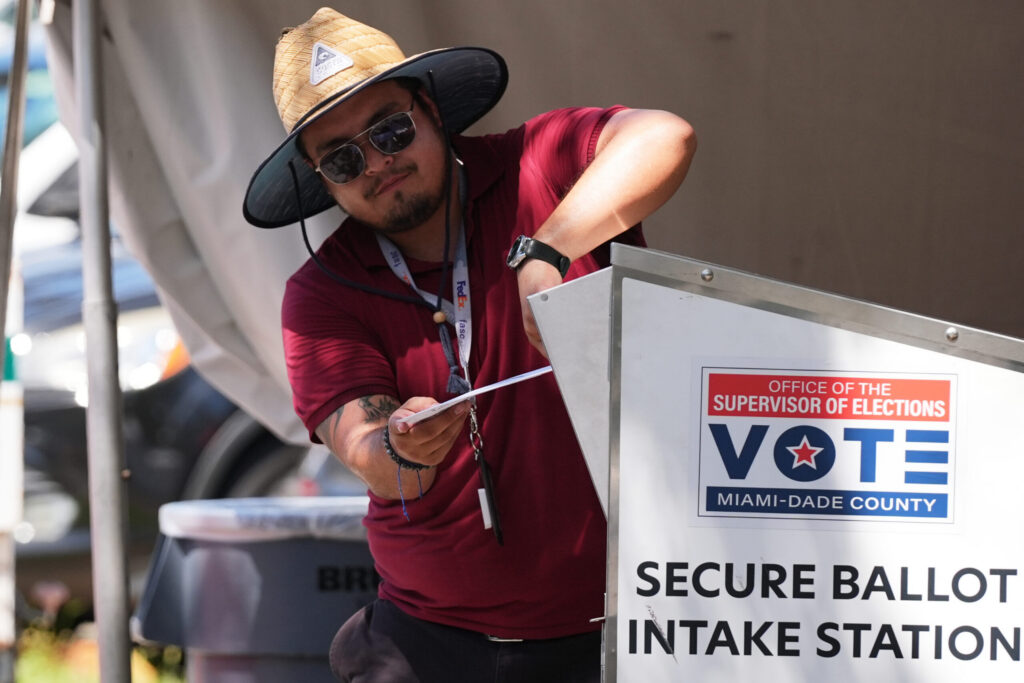
General election season is here. Where does mail-in voting stand?
David Zimmermann
david-zimmermann@coloradopolitics.com
Updated 10 hours ago
As the general election season approaches, the legal question surrounding the new U.S. Postal Service mail-in ballot requirements remains up in the air. With the case playing out in the courts, mail-in voting has not been changed substantially despite President...

10th Circuit orders second look at immunity for Kiowa County deputy over fatal vehicle crash
Michael Karlik
michael.karlik@coloradopolitics.com
Updated 5 hours ago
The Denver-based federal appeals court directed a trial judge on Tuesday to further analyze whether a Kiowa County deputy and the sheriff’s office may be sued for a fatal vehicle collision. The Colorado Governmental Immunity Act generally shields government entities and public...
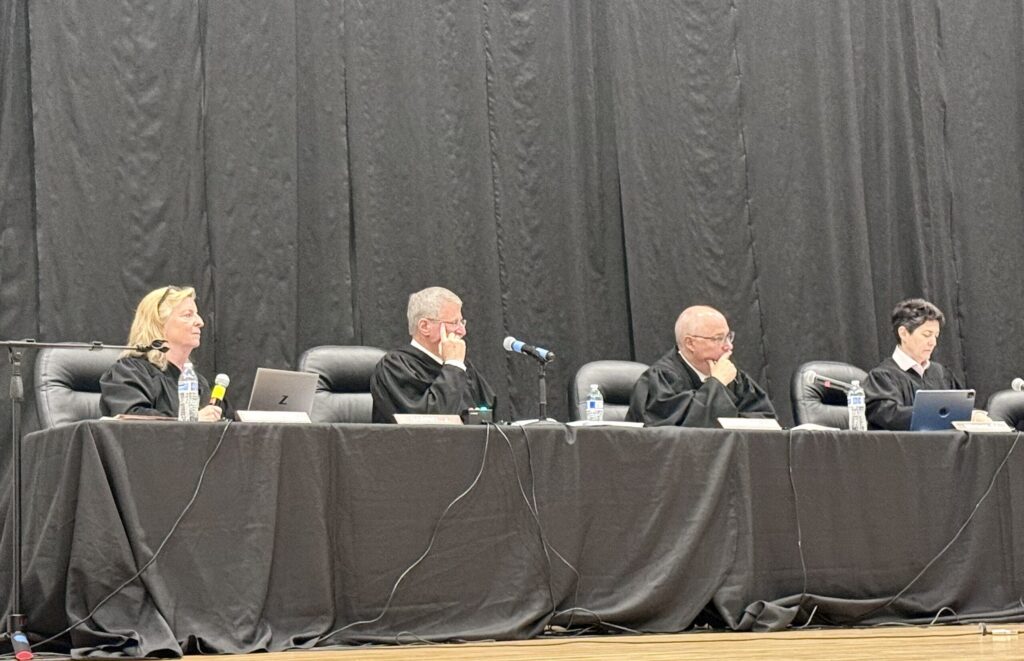
Colorado justices to hear appeal in Kendrick Castillo death lawsuit, ‘fugitive’ rule
Michael Karlik
michael.karlik@coloradopolitics.com
Updated 5 hours ago
The Colorado Supreme Court announced on Tuesday that it will decide whether it was proper to dismiss a lawsuit over the 2019 shooting death of Kendrick Castillo after the defendants paid the maximum amount of damages available to Castillo’s parents,...

Two more wolves killed by Colorado wildlife staff
Marianne Goodland
marianne.goodland@coloradopolitics.com
Updated 1 day ago
Two yearling wolves from the Copper Creek and Three Creeks packs in Pitkin and Rio Blanco counties, respectively, were killed by Colorado Parks and Wildlife staff on Monday. That brings to 19 the number of wolves that have died under...

Federal judge dismisses Douglas County’s challenge to collective bargaining law
Nicholas Fogleman
nicholas.fogleman@denvergazette.com
Updated 15 hours ago
A federal judge dismissed claims brought by the Douglas County Board of Commissioners alleging that a state law granting county employees the right to organize and join labor unions violates free speech protections and conflicts with federal labor law. Douglas...
PREV
PREVIOUS

Pot shops inconsistent with Vail’s high-quality brand, mayor says
VAIL — Vail Mayor Andy Daly says the ski town’s older guests, many from more conservative parts of the country, are not ready for pot shops next to their favorite fur stores and fine-dining establishments in the heart of Vail Village. “I really believe that we’ve spent tremendous time and money developing a very definitive […]

Jewell vows to meet court deadline, avoid Colowyo mine shutdown
BUENA VISTA – Interior Secretary Sally Jewell insisted over the weekend that she and other federal authorities are “doing everything we can” to stop a shutdown of the Colowyo coal mine, which could include a request for more time to finish a court-ordered review. Jewell squeezed in a meeting on the mine’s future late Friday […]