

Report: Colorado ready to take on climate change

Coloradans love playing outdoors. But if residents want to keep on enjoying the state’s recreational bounty — and continue enjoying the $13.2 billion the recreational industry pumps into Colorado’s economy — it’s time for the state to lead the way cutting carbon pollution. Fortunately, says a report released this week, Colorado is in a good position to do just that.
That was the message delivered on Tuesday by Environmental Colorado, several outdoor recreational organizations and Speaker of the House Dickey Lee Hullinghorst, D-Boulder.
Climate change has already shortened the state’s ski season, according to Phil Huffeldt of Snowriders International, an organization of snow sports and outdoor recreation enthusiasts. The ski season is about 20 days shorter than it was in the 1970s, he said, and he fears that, without major changes, there will be no skiing left in Colorado by the end of the century. This year, for example, warmer temperatures meant ski resorts opened later, and a dry March meant many closed up earlier.
Nikki Hodgson of the Outdoor Industry Association said the effects of climate change on public lands and water are a growing concern, adding that the industry looks to Colorado to continue to lead on the issue.
Environment Colorado on Tuesday released Path to the Paris Climate Conference: American Progress in Cutting Carbon Pollution Could Pave the Way for Global Action. The report contends that state and federal policies already in place could reduce carbon dioxide pollution by 27 percent by 2025, taking levels down below where they were in 2005.
Colorado has the ability to make those reductions right now, according to PJ Higgins of Environment Colorado. He told reporters there’s no question that the impact of climate change is evident here, pointing to the frequency and destructiveness of wildfires in the past several years and diminishing snowfall in the mountains.
But Higgins maintained that climate change isn’t just about Colorado — it demands global solutions. That could come in December, when the United Nations convenes a conference in Paris. It’s expected to result in a binding, universal agreement on climate, capping roughly two decades of negotiations.
“The best way to lead is by example,” Higgins said, adding he believes Colorado is already ahead on efforts to reduce carbon pollution. Hullinghorst said she agrees.
The reduction in fossil-fuel emissions envisioned by the report will require action at all levels of government. That means changes in land-use planning and laws, more state government support for clean energy technology, and more federal support for renewable energy sources and less reliance on coal, oil and gas consumption.
The federal government is already working on a program to cut fossil-fuel emissions. The Environmental Protection Agency last year proposed rule changes on carbon pollution from power plants, known as the Clean Power Plan, expected to be finalized this summer. The plan requires a 17 percent cut in greenhouse-gas emissions from power plants in Colorado and “compels state leaders to accelerate the transition to clean energy sources such as wind and solar,” Environment Colorado said.
The Republican-controlled state Senate this year tried to move a bill to require the Colorado Public Utilities Commission to review any state plan to comply with the Clean Power Plan. It died in the Democratic-controlled House in the last week of the session.
But fossil-fuel interests, including the coal and utility industries, are trying to block the Clean Power Plan. Environment Colorado pointed out that the U.S. House and two key Senate panels voted this month to derail the plan.
Hullinghorst told reporters Tuesday that Colorado has already done a lot to reduce climate change. The state boosted renewable energy standards for utilities, including rural electric co-ops and was the first state in the country to regulate methane in oil and gas production. Climate change is becoming a big issue in Colorado, she said. “It’s obvious our constituents are calling on leadership to do something about it.”
There might be legislation on this issue in the next session, according to Hullinghorst, but it won’t be easy to craft a compromise with the Senate.
Stuart Sanderson of the Colorado Mining Association told The Colorado Statesman that the plan is bad for Colorado on a number of fronts.
The regulations proposed by the EPA will be the most expensive in the entire history of the Clean Air Act, Sanderson said. He pointed to Monday’s ruling by the U.S. Supreme Court to toss EPA rules on mercury emissions for power plants. The Court sent a clear message to the President and the EPA, Sanderson said: “You do not have a blank check when it comes to adopting regulations. You have to prove they’re cost-effective and that the environmental benefits are not meaningless.”
Sanderson said the Clean Power Plan, which seeks to regulate carbon dioxide emissions, will be as meaningless as the mercury rules. The rules won’t reduce global temperatures and, at best, will only lead to miniscule reduction in carbon emissions, he said. That’s because the United States represents just 4 percent of worldwide emissions — the big problem is emissions coming out of China and other developing nations.
Those countries want to have what the United States has, Sanderson explained, including access to affordable electricity, which the U.S. enjoys, in part, because of its rich supply of coal reserves.
The industry has always supported advanced coal-generation technologies that will provide more efficient use of coal, Sanderson said. “That needs to be considered in the energy mix.”
If the EPA rules are implemented, Colorado consumers will notice the difference, he said – a doubling in the cost of electricity. Instead, Sanderson argued, Colorado should join other states suing the EPA when the rules are finalized later this summer.

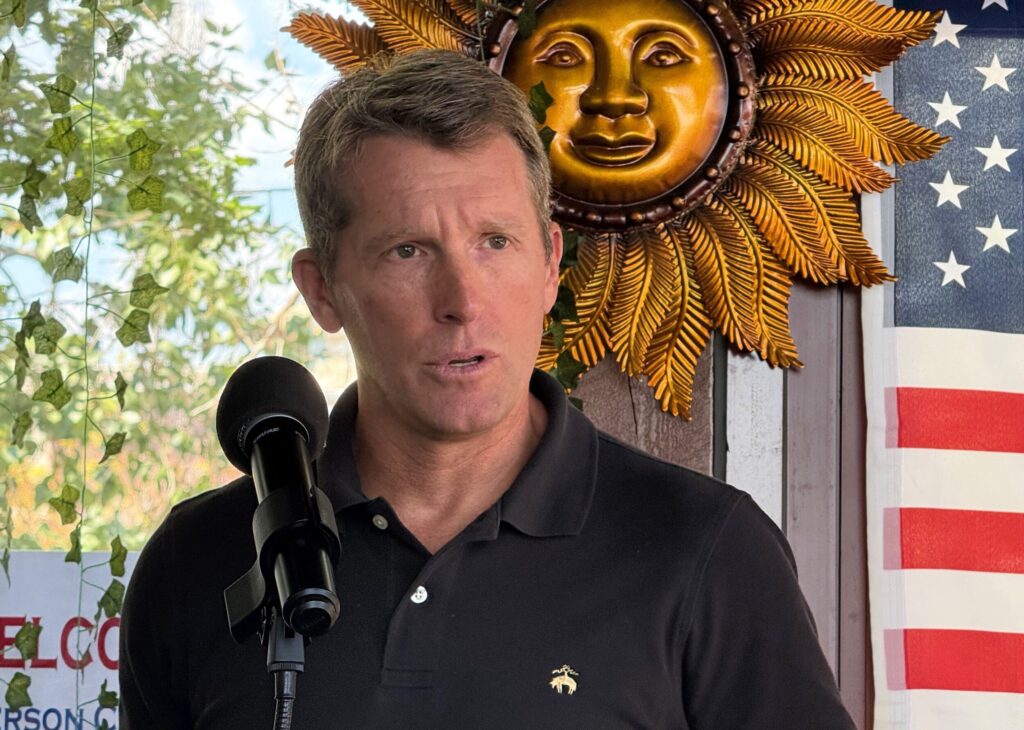
Republican Victor Marx taps George Markert as his lieutenant governor pick in Colorado’s gubernatorial race
Ernest Luning
ernest.luning@coloradopolitics.com
Updated 25 minutes ago
Colorado Republican gubernatorial nominee Victor Marx named George Markert, a retired Marine colonel, as his running mate for lieutenant governor Friday morning, saying the former U.S. Senate candidate will bring “exceptional character, proven leadership and a lifetime of serving others”...
Misconduct complaints from ex-Colorado judicial discipline director dismissed against federal judges
Michael Karlik
michael.karlik@coloradopolitics.com
Updated 13 hours ago
The administrative body for the Denver-based federal appeals court upheld a finding last week that misconduct complaints against Colorado’s chief federal trial judge and the chief appeals judge warranted dismissal and appeared to be a “litigation tactic” by the complaining...

First-ever Red Rocks naturalization ceremony draws most diverse group of new citizens
Michael Karlik
michael.karlik@coloradopolitics.com
Updated 16 hours ago
Colorado’s federal trial court held its first-ever naturalization ceremony for nearly 300 new citizens on Thursday at Red Rocks Park and Amphitheater. “We’re doing it to commemorate the 250th anniversary of the Declaration of Independence and the United States. Red...
Colorado lawmakers start crafting strategy to manage $200 million in federal rural health funds
Marissa Ventrelli
marissa.ventrelli@coloradopolitics.com
Updated 17 hours ago
Members of the Colorado legislature’s new Commission on Medicaid raised concerns Wednesday about the federal Rural Health Transformation Program created under H.R. 1. The bipartisan, bicameral commission, created in the last legislative session to guide implementation of Medicaid changes under...
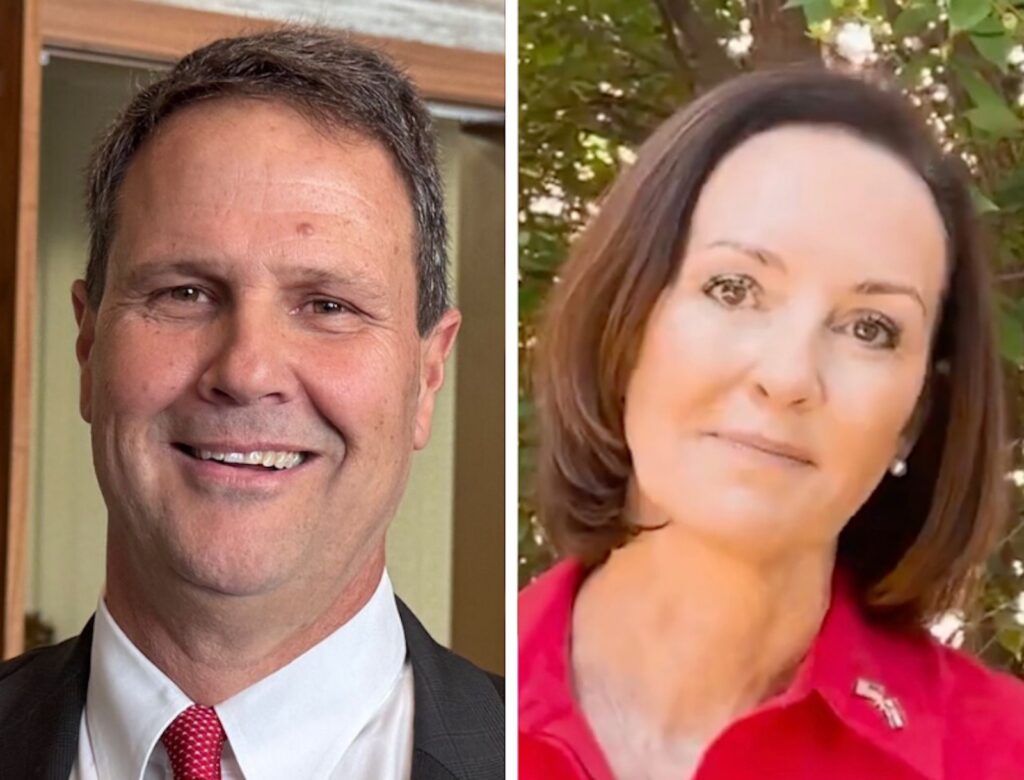
Democrat Jessica Killin’s internal poll shows dead heat with U.S. Rep. Jeff Crank in Colorado’s 5th CD
Ernest Luning
ernest.luning@coloradopolitics.com
Updated 14 hours ago
Jessica Killin, the Democratic nominee in Colorado’s 5th Congressional District, is in a statistical tie with Republican U.S. Rep. Jeff Crank, according to an internal poll released this week by Killin’s campaign. The poll of likely general election voters, conducted...

Thousands of migrants bull-rush Spanish border, sparking ‘total humanitarian and social emergency’
Timothy Nerozzi
timothy-nerozzi@coloradopolitics.com
Updated 18 hours ago
Hundreds of migrants in Morocco have bull-rushed through the Spanish border into the European Union, exacerbating the migration crisis. A mob of African migrants plowed past border guards and circumvented barriers into the Spanish territory of Ceuta this week, creating...

Violent and property crimes decreased in Colorado in 2025, according to new data
Marissa Ventrelli
marissa.ventrelli@coloradopolitics.com
Updated 17 hours ago
Violent and property crime rates in Colorado decreased significantly in 2025, according to data from the state’s public safety agency. The violent crime rate decreased by 10.7% from 2024 to 2025, resulting in over 3,300 fewer crimes reported statewide, while...

Colorado Springs D-11 may present voters with $775 million bond measure
Eric Young
eric.young@gazette.com
Updated 22 hours ago
Colorado Springs’ oldest school district could see new capital funding for the first time in over 20 years. Colorado Springs District 11’s Board of Education will decide whether to present a new, districtwide bond totaling $775 million to voters this...

Victor Marx says he’ll only debate Phil Weiser once in Colorado governor’s race — without a moderator
Ernest Luning
ernest.luning@coloradopolitics.com
Updated 18 hours ago
Colorado Republican gubernatorial nominee Victor Marx said on Tuesday that he will participate in only one debate with Attorney General Phil Weiser before the November election — and he challenged the Democratic nominee to hold the event without a moderator....

Denver seeks to move more than $18 million to cover George Floyd protest claims
Deborah Grigsby
deborah.smith@denvergazette.com
Updated 1 day ago
City officials want to move millions from Denver’s General Fund contingency account to the City Attorney’s Liability Claims Fund to cover legal settlements and claims stemming from the 2020 George Floyd protests. The hefty shift of cash, proposed in Council...
PREV
PREVIOUS

Coloradans will continue to lead on health care reform
In the wake of the Supreme Court’s decision in King v. Burwell upholding advance premium tax credits for Americans who need help affording basic health care coverage, our nation is at a crossroads. Our political leaders and would-be leaders face a choice of direction. They can choose to go back to the days when fewer […]

Western Conservative Summit keeps growing in numbers, influence
The Western Conservative Summit keeps getting bigger, more influential and, as far as John Andrews is concerned, better. Every year, the summit breaks its own attendance record, and this year was no exception. The three-day conservative confab, which wrapped up Sunday at the Colorado Convention Center, is expected to hit nearly 4,000 attendees when the […]