

Sen. Lindsey Graham charts presidential path
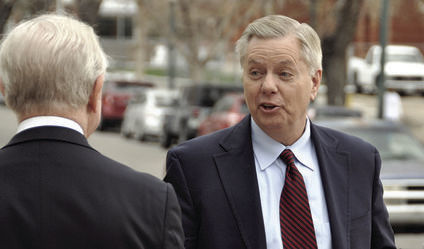
While his positions on immigration and climate change might land Lindsey Graham outside the mainstream among Republican presidential hopefuls, the South Carolina senator says he’s got solid majorities of GOP primary voters in his corner. Add to that his years crafting a distinctly hawkish foreign policy — a favored position in early primary states — and Graham has no problem envisioning a good run in what is already a burgeoning field of candidates.
That’s despite the fact that Graham, 59, hardly appears on anyone’s presidential radar yet, even though he’s made three trips to New Hampshire in recent weeks amid a flurry of high-profile speeches that have included provocative charges leveled at fellow Republicans.
In an exclusive interview with The Colorado Statesman, Graham said on Tuesday that he’s working to put together his finance team and should know whether he’ll be able to raise enough money within another month. “I’m more likely than not to run,” he said.
“I think the message is a good message,” Graham said. “As national security becomes more important in people’s minds, I think that benefits my candidacy. It’s the No. 1 issue in Iowa, New Hampshire and South Carolina right now.”’
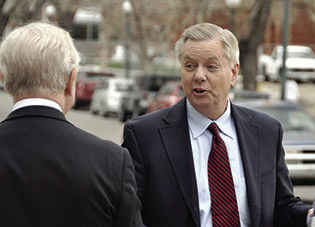
South Carolina Sen. Lindsey Graham arrives at the Counterterrorism Education Learning Lab in Denver on April 1. The Republican is considering whether to run for president and has said he plans to make a decision by late May.Photo by Ernest Luning/The Colorado Statesman

In recent weeks, three of Graham’s Republican Senate colleagues, Ted Cruz of Texas, Rand Paul of Kentucky, and Marco Rubio of Florida have officially launched their presidential campaigns. Waiting in the wings are former Florida Gov. Jeb Bush, Wisconsin Gov. Scott Walker and a raft of other potential contenders.
Calling Colorado “one of the ultimate prizes of the 2016 race,” Graham said the state’s growing Hispanic population will be key to a GOP victory, but that the same old approach won’t cut it. “I hope that we can find a Republican that can repair some of the damage we’ve done on immigration,” he said.
“I think immigration has hurt us with the Hispanic community, the way we’ve handled the issue,” Graham said. “The nominee of the party needs to embrace national immigration reform. ‘Self deportation’ is not going to work, and I think that hurt us last time.” Republicans, he added, have to “chose our words wisely.”
According to polls, Graham said, his centrist position on immigration wins support from some 65 percent of the Republican primary voters in Iowa, New Hampshire and South Carolina. That hefty majority, he said, “would support a pathway to citizenship if you first secured your borders, increased legal immigration, control who got a job, require people to pay taxes, pay a fine and not cut in line. The people who are opposed, I respect their views, but self deportation won’t work. I think the nominee of the party has to resist the temptation to pander.”
Graham, who has long argued that the GOP needs to grow — “We’re not going to be the party of angry white guys,” he said a few years back at an angry town hall in South Carolina — maintained that appealing to younger voters requires straight talk about the climate.
“Among young people, we’ve got to show that we’ll be the party that will save young Americans from having the Baby Boomers wipe out Social Security and Medicare,” Graham said. “What I’m going to talk about is national security, keeping the war over there so it doesn’t come here. But younger Americans care about the environment. I believe climate change is real. I just want a business solution to the problem that will create jobs and not destroy the economy,” he said, adding that a cap-and-trade approach will destroy the economy.
“I believe that a lower-carbon economy can be achieved by creating jobs,” Graham said, adding that the country will depend on fossil fuels for a while, which is why he supports building the Keystone XL pipeline. “Every barrel of oil we can buy from our friends in Canada, every liter of gas we find in our own backyard makes us more energy independent. Last year we spent $400 billion buying fossil fuels from people in the Mid East who do not like us. I’d like to break that cycle. I’d like to do two things at once: find more and use less.”
Calling the three announced candidates “very young,” Graham said that Cruz, Paul and Rubio would all have to prove they have the background and experience to lead on the world stage — he added that Cruz would also have to demonstrate he’s got the right “temperament” — but singled out Paul’s hands-off national security views.
“Rand Paul, his foreign policy is sort of the outlier in the Republican field. I think that’s going to be his biggest problem. In many ways, a libertarian foreign policy is less muscular than leading from behind.”
Graham stressed his position pushing for congressional review of the administration’s nuclear deal with Iran. “The idea of Congress not looking at a deal regarding Iran’s nuclear ambitions is just hard to imagine because of the consequences of the deal,” he said. “Again, we’ve created the sanctions, we should have a say about whether or not they’re relieved.”
Calling the outlines of the deal “very confusing” — the Obama administration and Iranian leaders describe it in contradictory terms — Graham faulted the President for coming up with a bad deal. “I just think Barack Obama is the worst possible negotiator because people in the region don’t fear him nor do they respect him, and that makes it hard to get a good deal in the Mid East,” he said.
Graham said he plans to return to Colorado in the next month or so if his campaign is under way by then.


Colorado to participate in Great American State Fair in Washington
Marissa Ventrelli
marissa.ventrelli@coloradopolitics.com
Updated 14 hours ago
Visitors to Washington, D.C., for the country’s 250th anniversary will have the opportunity to learn about Colorado’s natural beauty and culture during the Great American State Fair, a World’s Fair-style event that opened Thursday at the National Mall. While all...
Colorado health officials say federal budget adds pressure to already stressed system
Marissa Ventrelli
marissa.ventrelli@coloradopolitics.com
Updated 15 hours ago
As the first anniversary of H.R. 1 approaches, Colorado Democrats and hospital executives say the law’s Medicaid reductions and eligibility rules are accelerating financial stress in a system where many facilities were already operating on the brink. Signed by President...

Phil Weiser leading Michael Bennet in Colorado’s Democratic gubernatorial primary, internal poll finds
Ernest Luning
ernest.luning@coloradopolitics.com
Updated 10 hours ago
Attorney General Phil Weiser holds a lead over U.S. Sen. Michael Bennet among likely voters less than a week before ballots are due in Colorado’s Democratic gubernatorial primary, according to a new poll released Thursday by a group backing Weiser....
Colorado justices suggest father entitled to appeal of custody decision
Michael Karlik
michael.karlik@coloradopolitics.com
Updated 17 hours ago
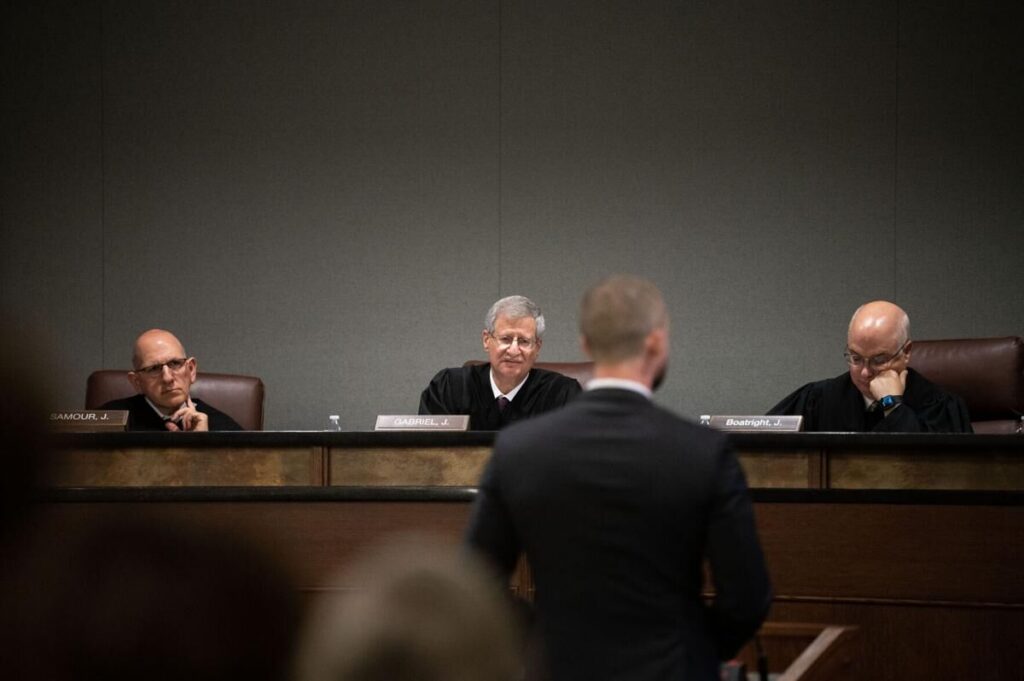
Members of the Colorado Supreme Court signaled strongly on Tuesday that a father deserved some avenue for challenging a temporary child custody order that no lower court believed it could review due to the unusual circumstances of the case. Because...
Colorado justices agree fraud claims belong in corporate dispute
Michael Karlik
michael.karlik@coloradopolitics.com
Updated 19 hours ago
The Colorado Supreme Court decided on Tuesday that a corporate plaintiff validly pursued fraud claims over conduct that was not covered by a contract or by a set of interrelated business agreements leading up to the contract. Previously, the Court...
Colorado Supreme Court says intimate messages irrelevant to assault case
Michael Karlik
michael.karlik@coloradopolitics.com
Updated 21 hours ago
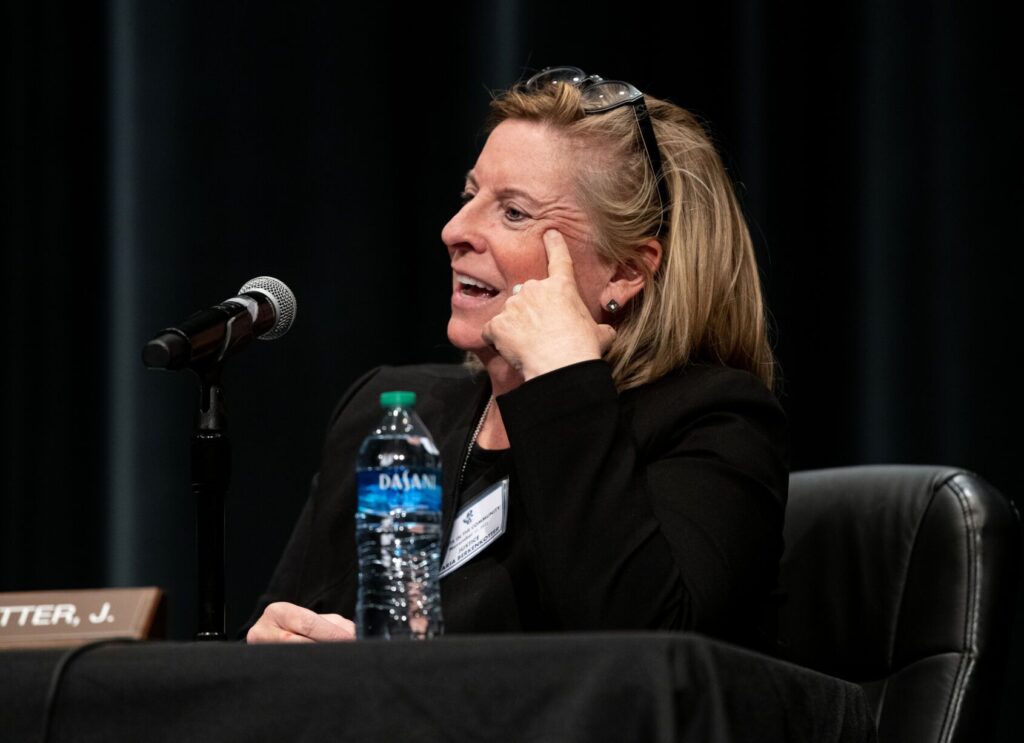
The Colorado Supreme Court decided on Tuesday that a Douglas County judge acted reasonably by blocking evidence of a defendant’s BDSM-related conversations with the victim in his trial for assault and false imprisonment. While the Court of Appeals believed that...

Postmaster general spars with Senate Democrats over mail-in ballot restrictions
Molly Parks
molly.parks@washingtonexaminer.com
Updated 21 hours ago
Senate Democrats sparred with Postmaster General David Steiner on Wednesday over the U.S. Postal Service’s move to stop delivering mail-in ballots in states that don’t hand over their voter rolls to the federal government. Steiner, who has stayed out of...

Douglas County water plan entering public review phase
Nicholas Fogleman
nicholas.fogleman@denvergazette.com
Updated 19 hours ago
After more than two years of formal work, Douglas County officials are moving into the public review phase of a countywide water plan they say will help guide future development and water resources through 2050. The Douglas County Water Commission...

Douglas County cracks down on illegal scooter, off-road vehicle use
Nicholas Fogleman
nicholas.fogleman@denvergazette.com
Updated 19 hours ago
Douglas County joined a growing list of local governments regulating electric scooters and motorcycles, setting standards and penalties for misuse. County commissioners approved an ordinance Tuesday regulating off-highway vehicles and low-powered scooters following broad community support and a presentation from...
Homeless recruits of ‘The Program’ say they were told to sign NDAs amid investigations in Colorado
David Migoya
david.migoya@gazette.com
Updated 2 days ago
Several formerly homeless people — each drawn into an Aurora-based enterprise known as “The Program” that promised free housing and cash in return for letting a home-health business administer prescriptions they were given — said they were pressed into signing...
PREV
PREVIOUS

Center for Western Priorities taps Rokala as executive director
Jennifer Rokala, the former state director for U.S. Sen. Mark Udall, was named executive director of The Center for Western Priorities this week, the organization announced. The nonpartisan conservation group works to protect land, water and communities in the American West with a focus on what it describes as a balanced approach to energy development […]

Steadman: Bill will provide marijuana, TABOR fix
State Sen. Pat Steadman, D-Denver, readily admits that he is not a fan of Colorado’s Taxpayer’s Bill of Rights (TABOR), a constitutional amendment restricting the spending of state tax revenues. In these last few weeks of the session’s duration, he will be introducing a bill in the Senate to allow the state to retain the […]