

‘Economic gardening’ supports local business efforts

It was 1987, and Chris Gibbons had a big problem. He was the business affairs director for the city of Littleton, and the biggest employer in town, Martin Marietta, had just announced that it was closing its Littleton operation and cutting 7,500 jobs.
To fill that huge hole in the local economy, Gibbons could have tried the traditional economic development strategy, focusing on luring another giant out-of-state company by offering it tax incentives, utility rebates and workforce training subsidies.
But Gibbons knew there was no guarantee of success. And he knew that even if he succeeded, the next corporate behemoth could perform the same disappearing act as Martin Marietta.
Gibbons tried a different approach. He targeted smaller local companies already operating in Littleton, with a focus on second-stage companies poised for growth and hired highly trained specialists to provide the companies with sophisticated management consulting and market research. Rather than risk everything on one high-priced free agent, Gibbons was going to build his city’s employer base through home-grown player development.
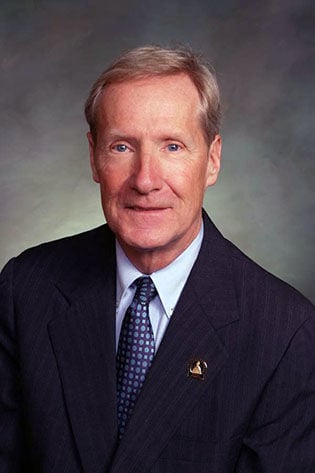
Rep. Pete Lee

The first “economic gardening” program was born.
Over the next 20 years, Littleton doubled its jobs pool and tripled its sales tax revenue. And as word of Littleton’s success spread, other local and state governments implemented their own “economic gardening” programs.
More than 40 states and communities have implemented economic gardening with similar success. From 2010 to 2012, the 28 companies enrolled in Kansas’s economic gardening program had an average annual growth rate of 13.4 percent. Gov. Rick Snyder, a Michigan Republican, has made economic gardening the centerpiece of his state’s desperately needed economic revitalization program. The economic gardening initiative in Florida, another state with a Republican governor, has created an estimated 3,745 net jobs and boosted state and local tax revenues by nearly $20 million, a return on investment of $7.58 for every $1 of funding.
By voting for my HB13-1003, the Colorado legislature authorized an economic gardening pilot program that went into effect in 2014, ending in 2016. It is operated by the regional Small Business Development Centers under the Office of Economic Development and International Trade.To participate in the pilot program, companies must be based in Colorado, have 6-99 employees, have revenues of $500,000 to $50 million and have a product or service that is marketable outside the state or region.
The goal was to enlist 20 Colorado companies. So far, there are 14 participants from all areas of Colorado: Arvada, Boulder, Broomfield, Colorado Springs, Denver, Durango, Fort Collins, Fort Morgan, Greeley, Longmont, Montrose, Pagosa Springs and Silverton. Seven companies are in manufacturing (geodesic domes, robotics, snowboards, skateboards and signs), three are in advanced industries, (aerospace, solar and IT) and four are in professional services (insurance, medicine and consulting).
One year in, participating companies are enthusiastic about the Colorado pilot program. “We are a small company readying to scale, so the timing of this input was perfect,” said Puja Parsons of Growing Spaces, a manufacturer of geodesic-dome greenhouses in Pagosa Springs. “The program is providing great input for our current growth decisions.”
My bill this year, HB15-1002, would continue Colorado’s economic gardening program through the 2016-17 fiscal year. It passed the House on Tuesday and heads to the Senate.
As economic development policy, giving advice to local Colorado companies makes far more sense than giving tax breaks to corporations based in some other state or some other country. I hope my bill extending Colorado’s economic gardening program passes the legislature and is signed into law by Gov. John Hickenlooper.
State Rep. Pete Lee, a Democrat, represents House District 18 in Colorado Springs and Manitou Springs.

Colorado measure adding ID checks to mail-in voting qualifies for ballot
Marissa Ventrelli
marissa.ventrelli@coloradopolitics.com
Updated 3 hours ago
A ballot initiative that would require voters to include additional information on mail-in ballots has qualified for the November election, according to the Secretary of State’s Office. Backed by El Paso County Treasurer Chuck Broerman and former Deputy Secretary of...

Colorado election website error exposes personal data of confidential voters
Marissa Ventrelli
marissa.ventrelli@coloradopolitics.com
Updated 4 hours ago
A system update accidentally lifted protections on confidential records in Colorado, exposing dozens of voters’ personal information, according to the Secretary of State’s Office. The limit that normally blocks access to confidential voter profiles was inadvertently disabled during an update...

PUC adds weekly comment after killing private talks
Scott Weiser
scott.weiser@gazette.com
Updated 4 hours ago
The Colorado Public Utilities Commission will take public comment at the start of every commissioner’s weekly meeting beginning Sept. 9 as part of its new transparency mandate, the commission announced, expanding a slot previously limited to the second Wednesday of...
10th Circuit overturns framework for sentencing probation violators by 11-1
Michael Karlik
michael.karlik@coloradopolitics.com
Updated 5 hours ago
In a rare decision by all 12 of its full-time judges, the Denver-based federal appeals court ruled in a lopsided vote on Friday that one of its members created a sentencing process for probation violators that was out of step...

Federal judge dismisses excessive force lawsuit against Colorado Springs, officer
Michael Karlik
michael.karlik@coloradopolitics.com
Updated 4 hours ago
A federal judge concluded last week that a Colorado Springs police officer could not be held liable for shooting a suspect three times after the man menaced two victims with a gun and fled the scene. Al’morion Germany was involved...

DeFlock started from one man’s curiosity — now Flock cameras are a midterm issue
Claire Carter
claire.carter@washingtonexaminer.com
Updated 8 hours ago
Will Freeman wasn’t looking to start a national movement when he launched DeFlock after noticing Flock Safety’s automatic license plate readers along the side of the road. The software engineer was driving across the country in 2024 when the cameras...

Aurora student journalist cleared of disciplinary charges after ignoring ‘gag order’
Kyla Pearce
kyla.pearce@gazette.com
Updated 5 hours ago
A Community College of Aurora student who accused the college of putting an “unconstitutional gag order” on his student-run publication was cleared of disciplinary charges against him. CCA student Andrew Green tried to register his independent student publication, called “FoxTalk,”...

Colorado leaders cheer court decision to block Trump’s mail ballot order in a ruling that’s likely to be swiftly appealed
Thelma Grimes
thelma.grimes@coloradopolitics.com
Updated 5 hours ago
A federal judge on Thursday halted — at least for now — attempts to implement President Donald Trump’s executive order that seeks to restrict the mailing of ballots to American citizens on an eligible voters list. The move stalled the...

Healthcare Freefall: AI arms race hits rural healthcare as hospitals fight to keep up
Thelma Grimes
thelma.grimes@coloradopolitics.com
Updated 9 hours ago
Editor’s Note: Colorado’s healthcare system is entering a period of accelerating instability — a “tsunami,” as multiple leaders describe it — driven by collapsing hospital finances, shrinking Medicaid reimbursements, disappearing services and a political fight over who is responsible for...

House will vote to denounce socialism
Lauren Green
lauren-green@coloradopolitics.com
Updated 12 hours ago
The House of Representatives is set to vote next week when lawmakers return to condemn and denounce “socialism in all its forms,” specifically pointing to the growing Democratic Socialists of America organization. The House voted to condemn socialism last year,...
PREV
PREVIOUS

How does the world see race?
The 67th annual Conference on World Affairs at the University of Colorado Boulder campus kicked off with a provocative keynote address by Pulitzer Prize winning columnist (2004) Leonard Pitts of the Miami Herald. In a century when our first African-American president has called for a vigorous national dialogue on race and his African-American Attorney General, […]

Colorado Water Plan all about West Slope water diversion
GRAND JUNCTION — James Eklund, director of the Colorado Water Conservation Board, told Club 20 in late March that the “seven points of consensus” thus far approved as a preliminary step in finalizing the Colorado Water Plan requested by Gov. John Hickenlooper represent a “new paradigm” in Front Range and Western Slope relations regarding water, […]