

Colorado legislators’ efforts to help free Soviet Dissidents on display
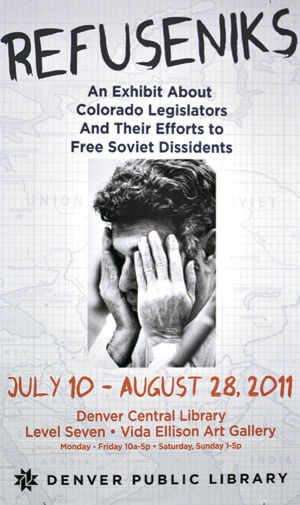
The subject of this column was the failed hijacking of a 12-seat airplane from Leningrad Airport in Soviet Russia in June of 1970. Ten Refuseniks were involved. A refusenik is a Russian who wanted the freedom to practice his or her religion or the freedom of political life provided in a democracy. Many were of Jewish faith but there were also Christians. They wanted the right to emigrate. Their attempt to fly to Finland was thwarted by the Soviet police who were previously alerted. The refuseniks had actually purchased tickets for the flight.

The ten were sentenced to prison in late 1970 except for two sentenced to death. One was Mark Dymshits, a former military pilot. The other was Eduard Kuznetsov whom I met in Denver. He had come to the capitol building for a press conference seeking help for the other refuseniks who were being denied the right to leave Russia. Their death sentence was reduced under pressure to many years in prison. Both were part of a 1979 trade of five refuseniks for two Soviet agents held by the United States.
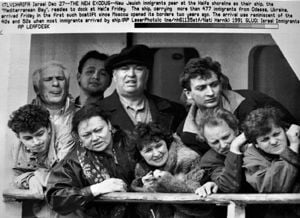
A photograph of Russian Jewish immigrants about to arrive in Haifa, Israel circa 1991, at a time when conditions for emigration for Russian Jews had improved.Photo by John Schoenwalter/The Colorado Statesman

At the Kuznetsov press conference, I announced the formation of a Committee to Free the Leningrad Three, co-sponsored by Sen. Tilman Bishop, R-Grand Junction. In 1980 the number of prisoners from the Leningrad escape attempt was down to three, Iosif Mendelevich, Yuri Federov, and Alexei Murzhenko. The last two were of Christian faith. All other prisoners had completed their prison terms.
Why did this particular committee work for a five-year period. Because we humanized it. How?• You keep the committee composed of legislators but not use the legislative process. You need a source for information relating to the events up to date.
• All members of the committee are listed on the stationery. As members they were required to write letters to reach officials who will certainly read but not release letters. You ban “form letters.” Each letter would be an expression of the committee members’ feeling regarding the issues.
• And if your approach is unique compared to legislators in other states, that makes your committee even more interesting.

Former state Rep. Jerry Kopel, a Democrat from Denver and Sen. Tilman Bishop, a Republican from Grand Junction, recruited their fellow legislators in the 1980s to serve on the Committee to Free the Leningrad Three, a powerful voice on behalf of Soviet prisoners. The Denver Public Library has a current exhibit about their efforts to free Soviet dissidents.Photo by John Schoenwalter/The Colorado Statesman

By zeroing on the three prisoners, they became symbols of all other dissidents who were denied the right to leave Russia. To be a member of the Leningrad Committee was to agree to write letters to the prisoners, as well as to the Soviet leaders. We know the prisoners would never get the letters, but every one of the letters would be read by the Soviet leaders. [From 1980 to 1982, the Colorado legislators addressed their letters to Premier Leonid Brezhnev, who also served as chairman of the Communist Party. After his death, Yuri Andropov, former head of the secret police known as the KGB, became Premier and the recipient of Colorado legislators’ letters. Konstantin Chernenko replaced him. Fifteen months later,Chernenko passed away and Mikhail Gorbachev became the head of state.]
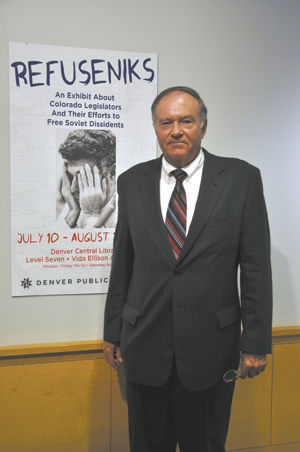

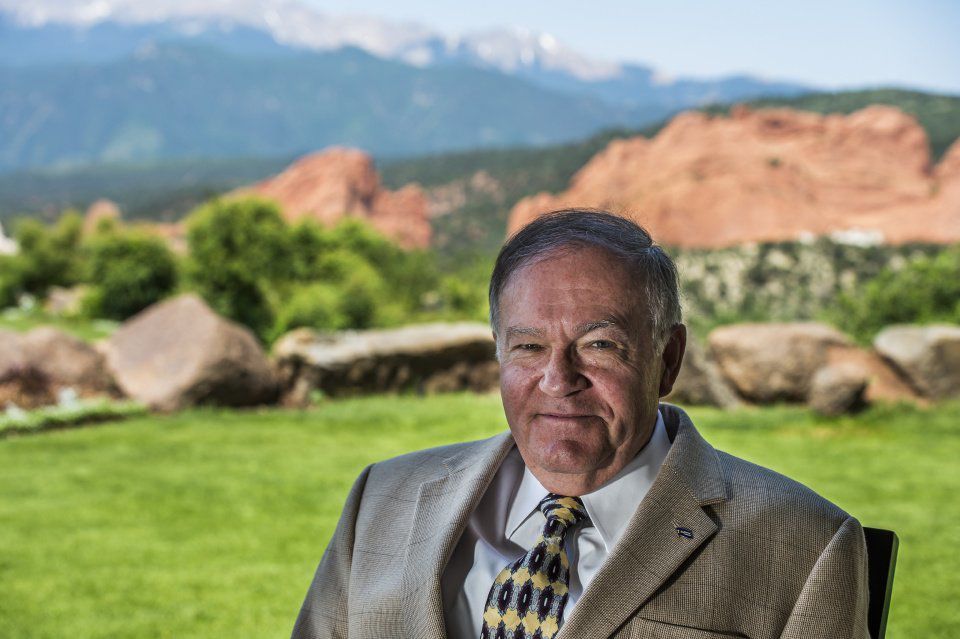
Steve Durham, former state senator and representative from Colorado Springs and also a member of the Free the Leningrad Three committee, arrives for the reception.
Photo by John Schoenwalter/The Colorado Statesman
We did not use legislative stationery. The Colorado Commission on International Jewish Affairs (CIJA) provided the stationery and each of us paid the 40 cent cost for each stamped letter to Soviet Russia. CIJA was our source for new information about the prisoners that we could show to the Soviets reading the mail.
We started with 80 legislators on the committee and we included almost all the senators in office. Over a six-year period (1980-85) as new legislators were elected we added them to the committee. On our final stationery in 1985 I believe we had 95 in-office legislators, in great part because of the presence of Sen. Bishop as our co-sponsor. If he asked “if you had written a new letter,” the answer had to be “yes.”
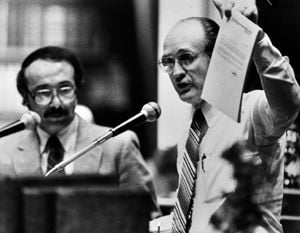

Former state Sen. Tilman Bishop, co-chair of the Committee to Free the Leningrad Three, in the 1980’s.
Iosif Mendelevich was released in 1971. The Russians assumed the release of the remaining member of Jewish faith would lead to the Jewish pressure group now ignoring the Christian prisoners. One of the first things Mendelevich did on reaching Israel was to tell everyone to keep up the pressure for releasing Federov and Murzhenko. And we did.
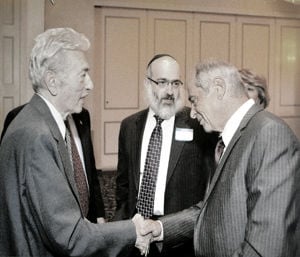

Retired state Rep. Jerry Kopel shakes hands with Wolf Zalmanson, one of the still surviving dissidents who attempted to flee Russia on June 15, 1970 by hijacking a plane near Leningrad. Standing between them is Greg Margolin, a founder of the Russian Jewish Community Foundation, from an event in 2009 during which Kopel and Bishop received awards for their efforts on behalf of the Russian dissidents.
Murzhenko was released in 1984, found guilty of violating his parole, re-incarcerated and under worldwide major pressure, let go by the Soviet authorities. Federov was released in 1985 and allowed to come to the United States in 1988. He received the Champion of Freedom Award for 2008 from the American Jewish Committee. He focused his remarks by thanking the dissidents live or deceased who broke the Soviet hold.


Family members at the Refusniks reception are retired State Rep. Jerry, granddaughters Kathleen and Margaret, wife Dolores and grandson Andrew.
Photo by John Schoenwalter/The Colorado Statesman
Colorado Politics Must-Reads:

Top officials in Arizona’s Maricopa County agree on how to oversee elections | OUT WEST ROUNDUP
The Associated Press
the-associated-press@coloradopolitics.com
Updated 4 days ago
ARIZONA Officials agree on election oversight PHOENIX — Election officials in Arizona’s most populous county reached an agreement a week before the state’s July 21 primary on how to jointly oversee the vote, ending a prolonged legal battle. Republican Maricopa...

Colorado Politics Calendar Aug. 3-9
Rachael Wright, Special to Colorado Politics
rachael.wright@coloradopolitics.com
Updated 4 days ago
CoPo’s weekly political calendar will help you find political and public-policy events throughout Colorado. It includes candidate and issue campaign events, public policy meetings, court hearings, state and local party conventions, assemblies, debates, rallies, parades, speaking engagements, traveling dignitary appearances,...

The primary political reform and precondition for all others | SONDERMANN
Eric Sondermann
eric-sondermann@coloradopolitics.com
Updated 4 days ago
In its current state, the American political system has no end of ailments. Far too many factors accelerate polarization and work against moderation and narrowing the differences. Media, and the way so many citizens limit themselves to agreeable, reinforcing sources,...
Susemihl wins surprise victory to replace Steve Durham as Colorado Springs state senator | A LOOK BACK
Rachael Wright, Special to Colorado Politics
rachael.wright@coloradopolitics.com
Updated 4 days ago
Forty-five years ago this week: In a closed session, the vacancy committee for Colorado’s Senate District 12 selected attorney Peter Susemihl to complete Sen. Steve Durham’s, R-Colorado Springs, term. Durham resigned his seat to become Region 8 Director of the...
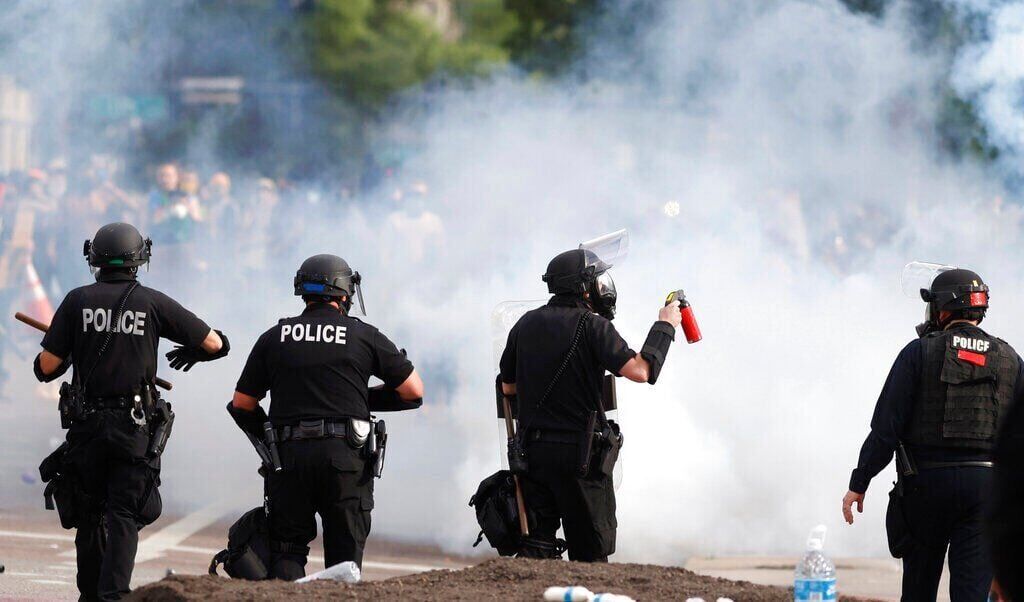
10th Circuit partially revives lawsuit over 2020 Denver protest injuries
Michael Karlik
michael.karlik@coloradopolitics.com
Updated 2 days ago
The Colorado-based federal appeals court revived a man’s claims against Denver on Friday after concluding a trial judge resolved the case in the city’s favor without analyzing two of the three instances of alleged excessive force and other constitutional violations....

At conservative summit, Colorado Republican leaders concede Democrats’ election edge
Marissa Ventrelli
marissa.ventrelli@coloradopolitics.com
Updated 22 hours ago
Four Republican state lawmakers told attendees at a gathering of conservative leaders on Friday they doubt their party can win statewide races, noting that Colorado’s electorate has been shifting toward Democrats but adding they see an opening in several pockets....

Federal judges find Colorado immigration judge violated several orders
Michael Karlik
michael.karlik@coloradopolitics.com
Updated 16 hours ago
Multiple federal judges in Colorado have freed people from immigration custody after determining that one immigration judge violated their directives for properly conducting bond hearings. For nearly a year, Colorado’s U.S. District Court has faced a flood of habeas corpus petitions...
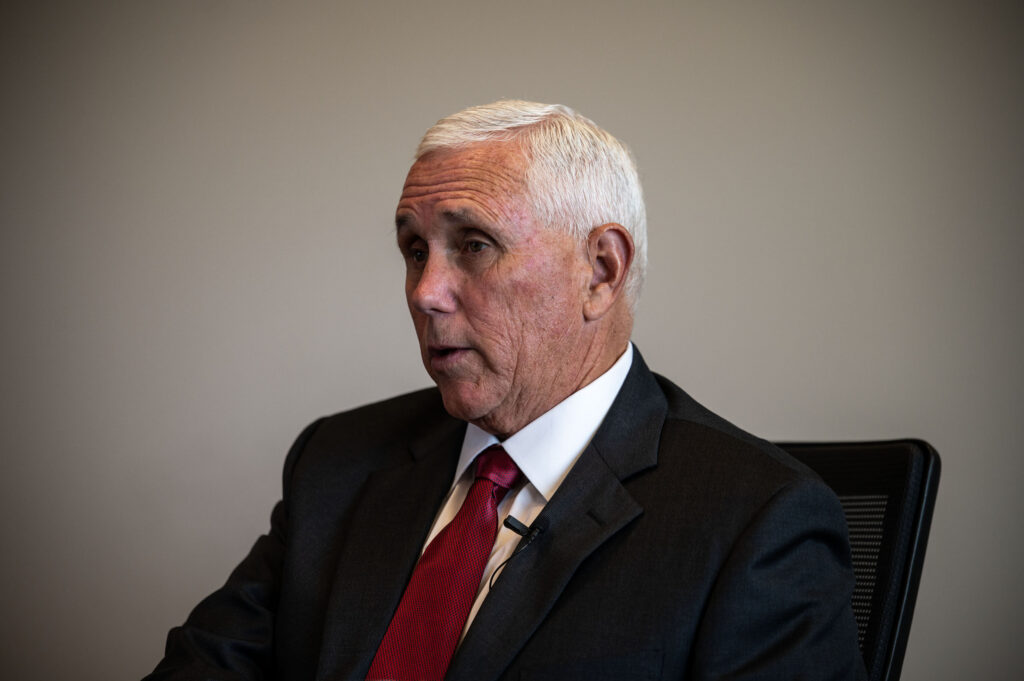
Q&A with Mike Pence | Former vice president says GOP’s populist turn from conservatism isn’t permanent
Ernest Luning
ernest.luning@coloradopolitics.com
Updated 19 hours ago
Former Vice President Mike Pence says he’s concerned that the Republican Party has taken a populist turn away from bedrock conservative principles during President Donald Trump’s second term, but he believes the party will return to its roots when Trump...

New federal plan sets short-term rules for Colorado River management
Marianne Goodland
marianne.goodland@coloradopolitics.com
Updated 2 days ago
Interior Department’s plan spares Colorado from mandatory cuts for now After years of stalled negotiations among the seven states that rely on the Colorado River, the federal government on Friday released its own plan for managing the drought-strained system. Calling...
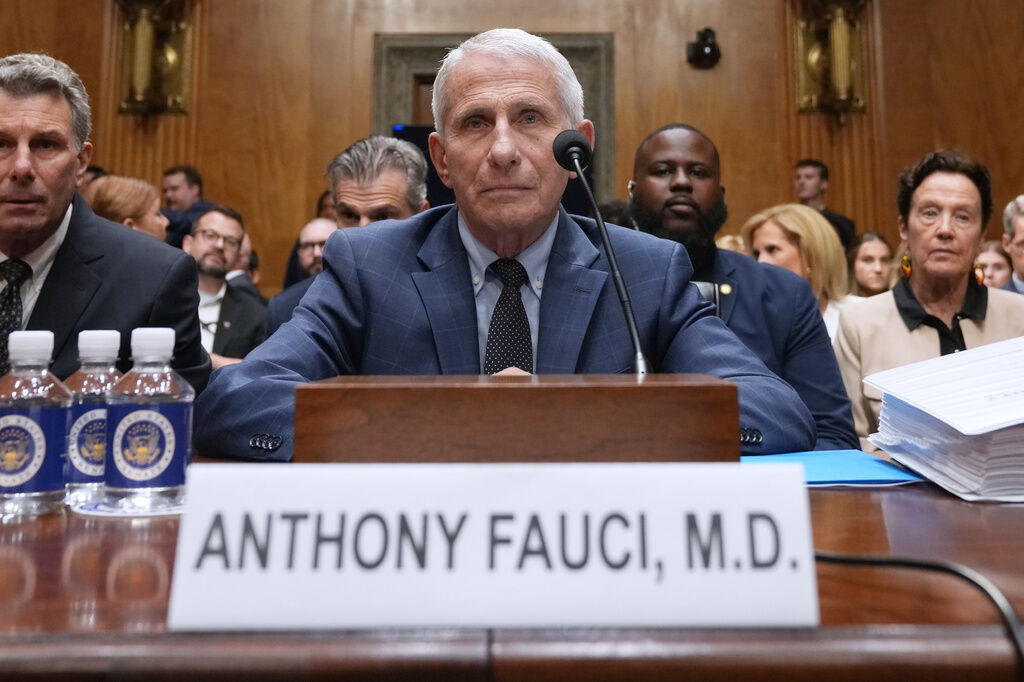
Fauci’s diary details blooming outrage toward ‘far right,’ softness toward Biden and China
Hudson Crozier
hudson.crozier@washingtonexaminer.com
Updated 2 days ago
Dr. Anthony Fauci increasingly railed against “far right” critics of his approach to COVID-19 issues while describing strong support from the Biden White House in his pandemic-era diary, which was recently released by Congress. The former National Institute of Allergy...
PREV
PREVIOUS

RNC chief says Colorado will be 'absolute battleground'
Politically active Coloradans had better figure out how to pronounce the name of Reince Priebus as the state takes center stage in the 2012 presidential election. That’s because the Wisconsin attorney, who took over as chairman of the Republican National Committee earlier this year, plans to spend a lot of time here. (His first name […]

POWRful Republican Women laud gains
More than 200 Republican women — and their admirers — gathered to talk politics on July 29 at the Glenmoor Country Club in Cherry Hills Village at a fundraiser sponsored by the Colorado group Political Organization of Republican Women. Former Colorado First Lady Frances Owens and state Rep. Carole Murray, R-Castle Rock, epitomize powerful Republican […]