

Legislative leaders talk of new year, new hope
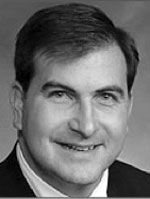
When Rep. Frank McNulty, R-Highlands Ranch, bangs the gavel as the next Speaker of the House, it will be for the first time, officially, but he’s been practicing.The four leaders of the Colorado General Assembly spoke to The Colorado Statesman this week, hopeful for the opportunities that the 2011 session will bring and mindful that a divided legislature will require more bipartisanship than has existed in the past.
And each one of the leaders had advice for each other, ranging from the humorous to the thoughtful.
McNulty had this admonition for his counterpart in the Senate, President Brandon Shaffer, D-Longmont: “It sucks being in the minority.” But McNulty said it also was important to remember the message voters sent to the General Assembly in November: “We need jobs, we need to let employers do what they do best, create jobs, and we want you to get out of their way.”
McNulty acknowledged that at times Republicans and Democrats will reach an impasse on certain issues, but when they’re “willing to move forward in ways to put Coloradans back to work and find common ground, we ought to do that.”
His priority for the 2011 session is to take the responsibility of governing “very seriously. We recognize that we’re here for a very short period of time as legislators,” and to govern well will take a level of seriousness, accompanied by humor, he said. McNulty hopes that when people look back at his time as Speaker, they will say he did his job well during one of the most difficult periods in state history.
McNulty said Republicans will not back away from undoing some of the things done by previous legislatures that he said has forced jobs and investment out of the state.
“That will be a priority,” he said, but it will depend on how Democrats and Republicans can work together within the Senate, how the Republicans work with Democrats in the House, and how they will work with Gov.-elect John Hickenlooper.
McNulty said he found Hickenlooper’s appointment of Reeves Brown as head of Department of Local Affairs “interesting” and did not want to comment on the governor’s other appointments, except to congratulate Sen. Al White on his appointment as director of the Colorado Tourism Office. “I know it’s a great passion of his, I’m excited for him.”
Senate President Brandon Shaffer: Not about conflict, but persuasion
Shaffer’s advice for McNulty, who takes the reins of power in the House next week:
The key of leadership “is to be able to convince other people of your position.” It might sound simple, but Shaffer harkened back to the leadership styles of Senate President John Andrews, R-Centennial, and Speaker of the House Doug Dean, R-Colorado Springs, whom he said were “notorious for trying to force people to do things they didn’t want to do.” Shaffer said they did things that were unpleasant — such as manipulating rules or pulling people off committees — in order to get what they wanted. “It’s not about conflict and who can win — it’s about persuasion and who can convince their colleagues to vote one way or the other.”
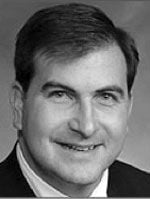
Brandon Shaffer

Shaffer said he hopes that there will be more places of common ground in 2011 than in 2010. He noted that in the 2010 session, 79 percent of the bills signed by Gov. Bill Ritter had bipartisanship sponsorship or co-sponsorship. Most of the bills that didn’t were budget bills, he said.
Of the 453 bills signed by Ritter last year, 155 had Republican primary sponsors or primary co-sponsors. And of those 155, some 30 were authored and introduced in their respective chambers by Republicans without Democratic co-sponsors.
The most successful Republican in the 2010 session was Rep. Tom Massey, R-Poncha Springs, whose name showed up as a House sponsor or co-sponsor for 18 bills signed by Ritter.
“In a charged election year, where we were forced to make some very unpopular decisions, in order to balance the budget the Republicans had a pass,” Shaffer said. Republicans didn’t have to take unpopular votes or explain to constituents why they suspended the homestead exemption, cut $260 million out of K-12 and $60 million out of higher ed, and “that’s unpopular for anyone to do,” Shaffer explained. “They don’t get a pass this year.”
The 2011 session will not only present an opportunity for a bipartisan budget solution, it is “a requirement,” given the 3-3 make-up of the Joint Budget Committee. “When we have a bipartisan proposal that comes from JBC, it gives us an opportunity to be more bipartisan than we were last year,” Shaffer said.
Shaffer said his personal priority for the session is the Prioritize Education First Fund, the first bill he intends to introduce, and a tax check-off for education. While details are still being worked out, Shaffer said the fund will attempt to collect cost savings through cost recovery audits or reversions made by departments, and that money will go to backfill cuts to K-12 and higher education. And Shaffer said he will continue to reach out to the same Republican legislators he’s worked with in the past to craft bipartisan legislation, and ignore the rhetoric.
Shaffer pointed out that the Senate Republicans, a very conservative caucus, “had the Tea Party before the Tea Party existed… It’s a difficult environment in which to be a moderate Republican.”
As to the last election, Shaffer said he believes it was a statement about what’s happening in the economy. “Our focus needs to be on jobs and economic development and any issue other than that, people will be unhappy,” he explained. But the economy is coming back, and “that’s good news for the Democratic Party.”
House Minority Leader Sal Pace: Empower and listen to the moderates
House Minority Leader Sal Pace, D-Pueblo, also has a message for his Senate counterparts on moderation. “Empower and listen to the moderates. Don’t let the right wing fringe control the caucus.” He warned that the Senate Republicans will marginalize themselves by not listening to their more moderate members, “but if they don’t, that’s fine. It’s better for us politically.”
Pace said his priority for the session is to work hard to pass Democratic-sponsored bills, and to “help people be successful, recognizing that they have to pick up Republican support in the House to get those bills passed.”

Sal Pace

Pace plans to take a cue from former Rep. Buffie McFadyen, D-Pueblo West, who spent her first two years in the House as part of the minority. Pace said she told him recently that being in the minority made her a better legislator.
Part of that will mean learning to add rather than subtract, when it comes to getting support for Democratic bills in the House. He hinted at the division among the House Democrats last year, and indicated that the 2010 session may have prepared him for being in the minority. “If you’re a Dem, you had to count backwards for how many Democrats would vote on your bill” and losing six members of the caucus was the difference between a bill passing or not. So it meant going to people who don’t always vote with the Democrats, he said, and this year “our members will be trying to find that one Republican” who will vote for their bills.
Pace said it is “inevitable” that more bills will pass with bipartisan support this year because of the nature of the split legislature. “I don’t think there will be a lot of 33-32 votes this year, just like there weren’t a lot of 38-27 votes last year. Not everyone is party-line on every issue. “As to his own bills, Pace intends to focus his energy on being a leader, but he will probably carry a bill on criminal justice. Water issues won’t be on his plate in the 2011 session, he said.
Senate Minority Leader Mike Kopp: It’s tough to work with know-it-alls
The message to Pace from Senate Minority Leader Mike Kopp, R-Littleton, is that the “bipartisan nature, and the incredible challenges we face as a state, coalesce into a remarkable opportunity for us.”
Kopp said the 2011 session will provide an opportunity to re-envision the way the legislature delivers a “good accountable low cost government to Coloradans…The table has been set if we want to lead well.”
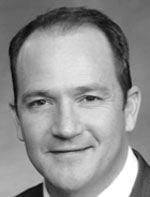
Mike Kopp

To his Senate President, Kopp said a bipartisan government will challenge the Democrats on their ideas that will be “healthy for his party. And it will require them to be better leaders,” he said. The circumstances of a divided government “will require leadership to come up a notch. I think we’ll have better policy outcomes” as a result, he said.
“People are looking for leaders that they can have trust in, and trust starts with accountability and competence,” Kopp said. “We haven’t been bad on accountability,” but people will say they don’t have confidence in the competence of government.
Kopp said the legislature has to achieve tangible results, and be able to project to Coloradans what it means to be accountable and competent. “It’s the only way we stand a chance of getting their trust back,” he said.
Kopp also had some words of advice for the freshmen class: do your homework “and be known for doing your homework. One of the quickest ways to lose the confidence of your peers is to look like you’re winging things,” he said.
Last year, Kopp was one of the most successful Senate Republicans members in getting bills to the governor’s desk. Seven bills for which he was the primary sponsor or co-sponsor were signed into law last year. Kopp said he approaches bills by knowing 90 percent more about the bill and the issue than what he will need when he presents it. Legislators need to exhibit that they’re prepared, and by doing so they will engender the trust of their colleagues, he said. New legislators also need to work hard at building faith, especially with the legislators on the other side of the aisle, he said, and not to pretend to be “a know-it-all,” which he said costs a legislator credibility and “it’s an irritant. It’s tough to work with know-it-alls,” he said with a smile.
As to his priorities, Kopp said he is “passionately committed to reducing the cost, size and complexity of state government.” Government costs money, he said, and it does some things well and others poorly, but by design it can’t do things as well as the private sector because there’s no profit motive. Kopp would not identify those things that government doesn’t do well, saying he’s worked hard to not create a “political environment” around that question. Instead, he said he wants a process that Democrats and Republicans could own together. He likened it to the annual spring cleaning of the garage — what gets left out of the garage are the things “you never use or can live without.”
Democrats and Republicans can agree on some of their priorities — education or the safety net, for example — and work to agree on making better recommendations on other priorities and where to cut, he said. But if they don’t like the idea of getting together and cutting, they need to say what taxes will be increased, which Kopp said is unlikely this year, as it would be “wildly out of step with Colorado’s economy.” Kopp hopes for a process, jointly owned by Democrats and Republicans, that will “create better recommendations on our priorities.”
“We’re facing the economic challenge of a lifetime,” Kopp said, and the question then becomes whether the legislature will do the same old things, “or form a new bipartisanship.”
— Marianne@coloradostatesman.com
Colorado Politics Must-Reads:

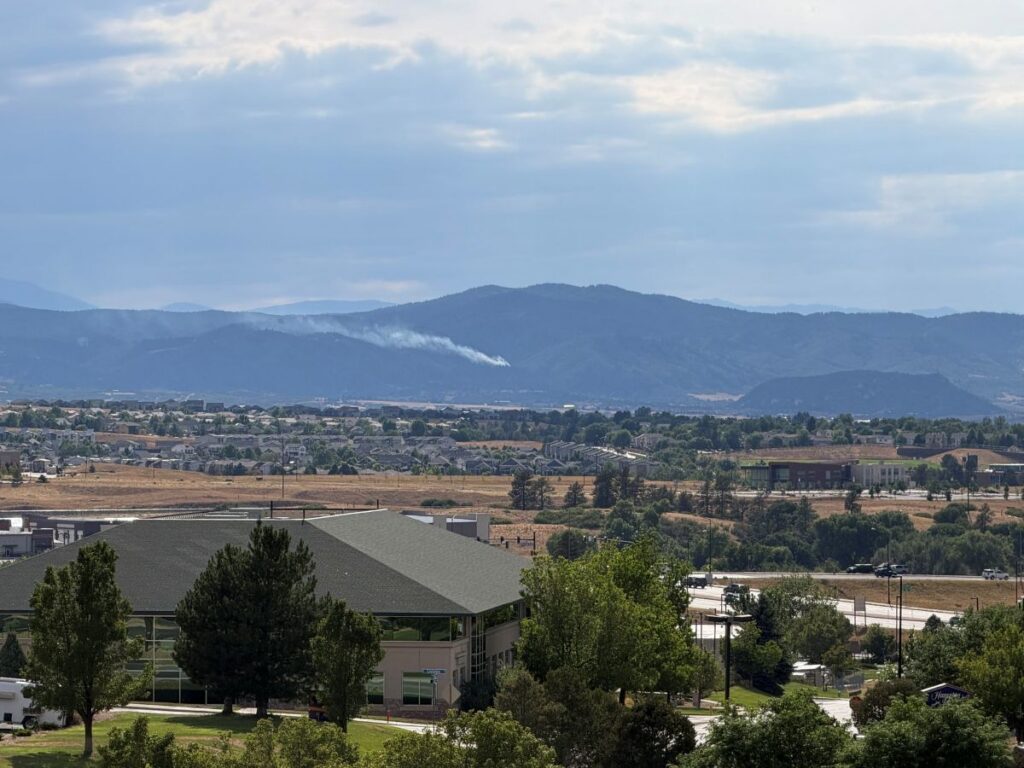
Forest fire west of Sedalia prompts evacuations in Douglas County
Nicholas Fogleman
nicholas.fogleman@denvergazette.com
Updated 1 hour ago
Emergency crews are responding to a forest fire burning west of Sedalia, prompting evacuation orders for nearby residents Sunday afternoon. At about 5 p.m. Sunday, the Douglas County Sheriff’s Office issued an evacuation order for residents within a 2-mile radius...

Airstrikes have paused and talks are pressing forward. But can the US and Iran take the off-ramp?
The Associated Press
the-associated-press@coloradopolitics.com
Updated 1 hour ago
WASHINGTON (AP) — The U.S. military has paused its airstrikes on Iran after nearly two weeks of intensifying bombing, while diplomatic efforts have pushed forward to try to avert a return to all-out war. But it remains to be seen...
Penrose fortune paved the way for Colorado Springs to be a military, space and sports town
Mary Shinn
mary-shinn@coloradopolitics.com
Updated 1 hour ago
Colorado Springs is always working to catch the next big economic wave. “We’re always trying to figure out what the next thing is going to be,” explained Matt Mayberry, director of the Colorado Springs Pioneers Museum. In the early days,...

Colorado Politics Calendar July 27-Aug. 2
Rachael Wright, Special to Colorado Politics
rachael.wright@coloradopolitics.com
Updated 5 days ago
CoPo’s weekly political calendar will help you find political and public-policy events throughout Colorado. It includes candidate and issue campaign events, public policy meetings, court hearings, state and local party conventions, assemblies, debates, rallies, parades, speaking engagements, traveling dignitary appearances,...

Space Force needs to measure workforce needs, as it prepares to double in size, GAO report says
Mary Shinn
mary-shinn@coloradopolitics.com
Updated 1 hour ago
The Space Force needs more people. It’s just not precisely sure how many more. A Government Accountability Office report released earlier this month found that the youngest and smallest military branch does not have a process to consistently or accurately...
The through line from Donald Trump to Victor Marx | SONDERMANN
By Eric Sondermann
by-eric-sondermann@coloradopolitics.com
Updated 5 days ago
Over 10 years ago, before Donald Trump could ever defeat Hillary Rodham Clinton, he had to first engineer a hostile takeover of the Republican Party. Prior to his descent of that golden escalator, the previous seven Republican presidential nominees had...

Colorado districts prepare for school year amid mental health cuts. But will less cellphone distractions help?
Marissa Ventrelli
marissa.ventrelli@coloradopolitics.com
Updated 3 days ago
The signs of a new school year are everywhere — buses in the shop, teachers unpacking boxes, families ticking through supply lists — but behind the familiar rituals, Colorado districts are preparing for a year defined less by routine than...
Armstrong staffer considers congressional bid, DeGette angers rural communities with wilderness act | A LOOK BACK
Rachael Wright, Special to Colorado Politics
rachael.wright@coloradopolitics.com
Updated 4 days ago
Forty-five years ago this week: If the lines were drawn just right, Republican Sen. Bill Armstrong stood the chance of losing his office manager, Ruth Fountain. Fountain admitted she was seriously thinking about running for Colorado’s new congressional seat in...

Busy wildfire season tests US fire bosses as they juggle resources to stay ahead | OUT WEST ROUNDUP
The Associated Press
the-associated-press@coloradopolitics.com
Updated 41 minutes ago
NEW MEXICO Wildfires challenge resources ALBUQUERQUE — It’s already been a deadly year for firefighters, and authorities have been putting resources where they can more quickly pounce on wildfires before they get out of hand and increase the possibility of...

Aurora City Council to discuss accountability for homeless navigation campus
Kyla Pearce
kyla.pearce@gazette.com
Updated 1 hour ago
The Aurora City Council will discuss performance metrics and accountability for the homeless navigation campus, vote on election timing and hear updates on chamber accessibility in Monday night’s meetings. In Monday night’s study session, Councilmember Gianina Horton will propose a...
PREV
PREVIOUS

Remembering Ritter: Mix of roasts, toasts
As Gov. Bill Ritter prepares to vacate his office on Tuesday and assume the directorship of the Center for New Energy Economy at Colorado State University next month, Democrats and Republicans predict his legacy, share memories and espouse comments juicy enough for a roast.Democrats tend to view Ritter’s leadership through rose-colored glasses. Most Republicans view […]

Waak won’t run
At least three candidates are considering whether to run for Colorado Democratic Party chair following an announcement late last week that incumbent party boss Pat Waak will not seek an unprecedented fourth two-year term in March.One potential candidate is a former state lawmaker who interned for the state Democratic Party nearly 50 years ago and […]