

Democrats and the siren call of socialism | SONDERMANN

The political pendulum continues to swing, though its arc these days seems far more volatile and exaggerated.
While there have always been outliers and more extreme actors on the political spectrum, the pendulum for many years was more of a steady, often predictable metronome. The country would experience periods of ascendancy on the left, followed by years of dominance by the right.
In political terms, the bob of the pendulum is constantly in motion and never fully resets in the same point. Still, the historical swings were usually within a limited range. As life these days too often feels on overdrive, so it is with political mood swings.
In the early 2010s, in reaction to Obama’s young presidency, the Tea Party took flight within the Republican Party and yanked that center of gravity hard to the right. What we are now witnessing is something of the Democratic equivalent. Given that it is most prevalent among the urban young, maybe we should call it the Cappuccino Party.
The Democratic Socialists of America (DSA, for short) has rather quickly gone from being a fringe element with traction largely limited to New York City and major locales on the West Coast (or Left Coast as some refer to it) to being a potent, growing force throughout the Democratic Party.
Before “democratic socialism” became part of the vernacular, many of its fans “felt the Bern” through the presidential candidacies of Vermont’s Bernie Sanders. Younger star power now belongs to Congresswoman Alexandria Ocasio-Cortez and New York Mayor Zohran Mamdani.
Those headliners are rapidly gaining plenty of support troops. Less than a month ago, DSA-affiliated or endorsed candidate Brad Lander and Darializa Avila Chevalier unseated incumbent Democratic congresspeople and Claire Valdez won an open seat all in New York. The sweep carried an unmistakable message.
A week later, here in Colorado, 29-year-old Melat Kiros, who full-throatedly touted her DSA endorsement, sent packing a 15-term incumbent who had taken office before Kiros was born. True, Diana DeGette had passed up one opportunity after another to retire with grace and pass the torch. No matter, Kiros’s was a victory of stunning proportions.
The most powerful statement may have come from a losing candidate. Julie Gonzales, who mounted what many considered only a symbolic challenge to perennial establishment pol, Sen. John Hickenlooper, never shied away from her ultraprogressive platform and came within 5.8 points of pulling off the upset of all upsets.
Clearly, something is going on that is more than a passing fad. A number of DSA-friendly sorts hold seats on Denver City Council. Ditto in Aurora. Most tellingly, a Colorado Polling Institute survey from last summer showed that more Denver residents identify as “socialist” (12%) than as a “Republican” (10%).
Just what is “Democratic socialism?” Clearly, not everyone connected to DSA embraces the full philosophy of Karl Marx (the author of “Das Kapital;” not Victor Marx’s dad) or American socialist icons such as Eugene Debs, Norman Thomas and Angela Davis.
The DSA website does not sugarcoat the platform. Single-payer healthcare, the Green New Deal and defunding the police are all included. Whatever the merits of each issue, an elemental understanding of branding is utterly lacking. The same genius who coined “democratic socialism” must have been the wordsmith behind the “defunding” silliness that nearly three-quarters of Americans reject.
Those who penned the issue stances got a full dose of the oppressor versus oppressed binary that overtook much of academia a decade back. A year ago, the organization adopted a resolution making support for Israel’s right to self-defense grounds for expulsion from membership. Kiros and others show no inclination to challenge that admonition.
Dating back to the Biden years, DSA decried any notion of a “crisis at the border” as “exclusionary” and “xenophobic.”
One gets the sense that DSA activists and ideologues buy much of the socialist agenda. However, that is not necessarily the case for the 53 percent of Denver primary voters who chose Kiros or the 47 percent of those across the state who picked Gonzales.
Political motivations and perceptions are multifaceted. For many sympathetic voters, DSA candidates provided an outlet for deep frustration with a stuck political system and a discredited establishment with ever more oligarchical traits. Beyond that, this was a response to punishing inflation, unaffordability and the disappearing American dream.
This is as much a reaction to perceived powerlessness on the left as it is a statement on specific platform planks. Though those newly in power will seek to enact policy while too many other Democrats will feel the breeze hard from the left and set their sail accordingly.
For most Americans, especially those outside big cities and progressive enclaves, socialism remains several bridges too far both as a concept and in its particulars. Its surge may provide Democrats with new energy but at a very steep cost.
New York’s Avila Chevalier has spoken of abolishing prisons and “seizing all properties from landlords” while expressing admiration for the likes of Vladimir Lenin, Joseph Stalin, Ho Chi Minh and Che Guevara. She has referred to the United States as “occupied Native American land” and “a (expletive) disgrace.”
Good luck selling that across the vast heartland.
Eric Sondermann is a Colorado-based independent political commentator. He writes regularly for ColoradoPolitics and the Gazette newspapers. Reach him at EWS@EricSondermann.com; follow him at @EricSondermann

Colorado’s primary proved in this political climate money doesn’t buy electoral happiness | Paula Noonan
Paula Noonan
paula-noonan@coloradopolitics.com
Updated 2 days ago
To catch you up, campaign committees from this 2026 election cycle already collected and shoveled out a lot of cash: $102.64 million. That’s contributions in all forms — dollars, in kind, loans, etc. — from December 2024 to now. Total...
Too many stories, too little space | Hal Bidlack
Hal Bidlack
hal-bidlack@coloradopolitics.com
Updated 4 days ago
Well, this week’s column presents a problem: there are far too many things in Colorado Politics of interest, and I want to write about them all. But given my kindly editor is unlikely to let me expand my column to...

Agriculture’s workforce act addresses H-2A program issues | Rachel Gabel
Rachel Gabel
rachel-gabel@coloradopolitics.com
Updated 1 week ago
A bill recently introduced by U.S. Rep. G.T. Thompson (Pennsylvania-15) making changes to the accessibility and cost of agricultural labor has wide support from growers who utilize H-2A visa program workers, including in Colorado. The H-2A program hasn’t been statutorily...

Another of Marx’s claims — his primary lead — was fake news | Dick Wadhams
Dick Wadhams
dick-wadhams@coloradopolitics.com
Updated 1 week ago
Self-declared exorcist of demons and swashbuckling rescuer of 45,000 innocent women and children, Victor Marx narrowly won the Republican nomination for governor despite claiming he had a 44-point lead just weeks before the election. Marx received 39.9% while state Sen....
What makes a ‘real American’ after all? | Miller Hudson
Miller Hudson
miller-hudson@coloradopolitics.com
Updated 1 week ago
I presume in each generation of a family there’s a member who assumes the role of heredity tracker. In mine it’s been my father, also Miller, followed by my twin brother, Richard. We still possess copies of correspondence returned to my...
The Weiser-Bennet primary election political geography | Cronin & Loevy
Tom Cronin Bob Loevy
tom-cronin-bob-loevy@coloradopolitics.com
Updated 1 week ago
Regional analysis of the vote in the recent Democratic Party primary election for governor of Colorado shows primary election winner Phil Weiser sweeping the Denver metropolitan area with 59.4% of the vote. Weiser’s losing opponent, U.S. Sen. Michael Bennet, garnered...

What Colorado could look like in a year under a Gov. Phil Weiser | Jon Caldara
Jon Caldara
jon-caldara@coloradopolitics.com
Updated 1 week ago
Why is it that Victor Marx is going to become a superb governor? Because he’s the self-proclaimed world’s fastest at disarming someone holding a gun to his head. Seriously, watch the videos. It’s pretty impressive. How could I not vote...
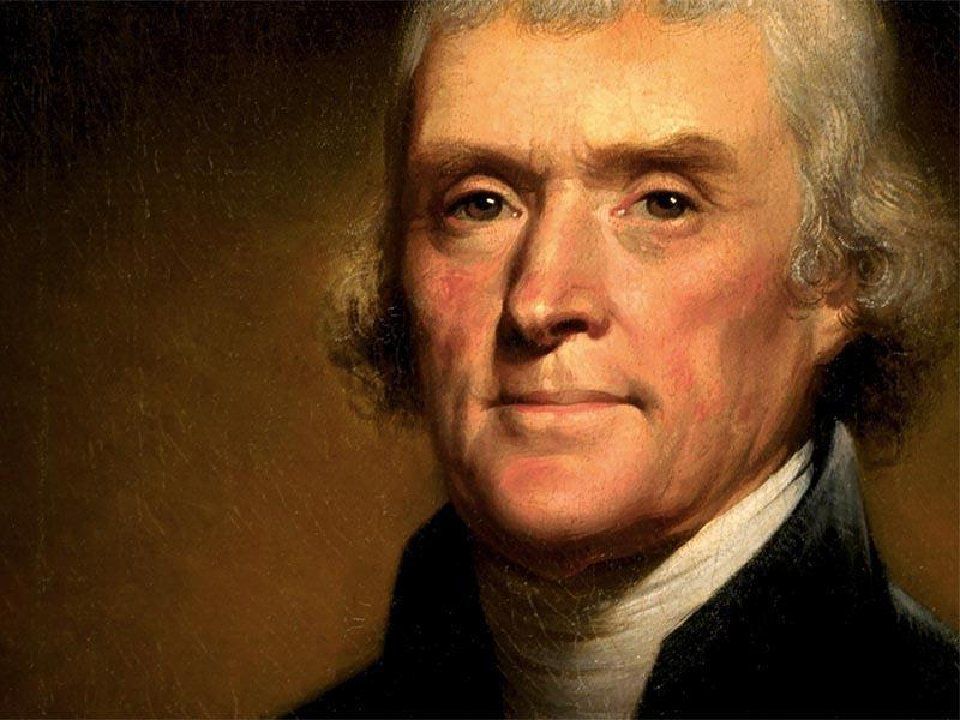
Half of Americans don’t know what the 250th anniversary celebrates | Vince Bzdek
Vince Bzdek
vince.bzdek@gazette.com
Updated 7 days ago
Do you want the good news or the bad news, America? Let’s start with the bad: Nearly half of all Americans don’t know what America’s 250th anniversary commemorates (namely, the adoption of the Declaration of Independence), according to a new...
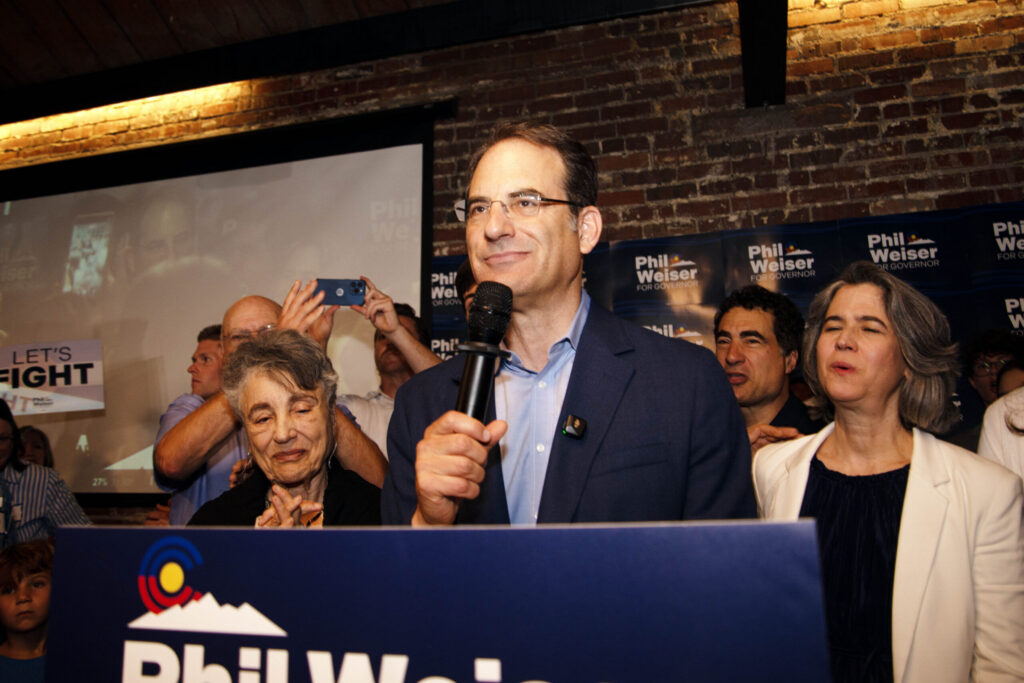
Phil Weiser’s sudden need to find the brake pedal | SONDERMANN
Eric Sondermann
eric-sondermann@coloradopolitics.com
Updated 1 week ago
Indulge me with a personal story at the outset. Trust me, it relates. Years ago, when our kids were young, we briefly had a small jalopy for a babysitter’s use. One morning, I discovered that the battery on this poor...
How Colorado progressives prevailed in the primary over the machine | Paula Noonan
Paula Noonan
paula-noonan@coloradopolitics.com
Updated 1 week ago
Dick Wadhams, well known GOP strategist who put Bill Owens in the governor’s mansion, will turn over in his political grave if Victor Marx wins the Republican nomination for governor. The GOP will bury its conservative principles for good if...
PREV
PREVIOUS
Big GOP names address rumors they want to challenge Gov. Lamm | A LOOK BACK
Forty-Five Years Ago This Week: With few Republican candidates announced for the gubernatorial race, the political rumor mill was in full force. Secretary at the Department of Housing and Urban Development Phil Winn, a former Colorado Republican Party chairman, felt compelled to announce that he had no plans to return to Colorado to run against […]

Will Colorado Gov. Jared Polis’ independent streak define his legacy?
Sometimes aligned with his party and at other times apart from it, Colorado Gov. Jared Polis has spent much of his tenure charting his own course. That independent streak carried through fights over labor policy, rural anger over wolf reintroduction and ultimately his decision to commute Tina Peters’ sentence, a move that reshaped his standing […]