

Todd Blanche orders federal reclassification of medical marijuana as less dangerous

Acting Attorney General Todd Blanche signed an order on Thursday officially reclassifying state-licensed medical marijuana from a Schedule I to a less-regulated Schedule III drug, following President Donald Trump’s order to do so in December.
The rescheduling move will relax federal regulations on FDA-approved cannabis products, grouping them with substances such as anabolic steroids and ketamine rather than substances like heroin and LSD. Schedule III substances have an accepted medical use, while Schedule I substances, which have the highest abuse rates, do not have an accepted medical use.
“The Department of Justice is delivering on President Trump’s promise to expand Americans’ access to medical treatment options,” Blanche said in a statement. “This rescheduling action allows for research on the safety and efficacy of this substance, ultimately providing patients with better care and doctors with more reliable information.”
Rescheduling certain marijuana products to a Schedule III substance does not legalize them, but instead creates tax benefits for cannabis companies, lessens criminal penalties for certain offenses, and eases regulations on academic marijuana research.
Blanche’s order officially reclassifies marijuana products approved by the FDA and regulated by state medical marijuana licenses. It also gets the ball rolling on a possible broad-sweep cannabis reclassification by scheduling an administrative hearing on June 29 to weigh the broader reclassification of marijuana to a Schedule III substance.
“Under the direction of President Trump and Acting Attorney General Blanche, [Drug Enforcement Administration] is expeditiously moving forward with the administrative hearing process — bringing consistency and oversight to an area that has lacked both,” DEA Administrator Terry Cole said.
In Cole’s statement, he also said that the DEA remains “committed to fighting drug cartels, the fentanyl epidemic, and protecting American lives.”
The move marks a pivotal moment for the marijuana industry, as cannabis advocates celebrate the Trump administration’s decision to embrace the reclassification, signaling a move towards a greater normalization of the substance in medical spaces, research, and society more broadly.
Boris Jordan, Chairman and CEO of Curaleaf, one of the world’s largest cannabis companies, thanked Trump and Blanch for their push on the policy.
“This is the biggest legislative change for cannabis in 55 years, and a clear signal that federal policy is beginning to catch up with science, public opinion, and economic realities,” Jordan said in a statement. “This decision carries meaningful implications for the future of the industry and provides medical patients with the critical access that they need.”
Drug safety advocates are, however, raising alarm bells over the move. Kevin Sabet, of Smart Approaches to Marijuana, railed against the Trump administration as the “most pro-drug administration in our history.” He vowed to take legal action on the rescheduling move.
“Policy is now being dictated by marijuana CEOs, psychedelics investors, and podcasters in active addiction — it is a travesty and injustice to the American people of unprecedented proportions,” Sabet said in a statement to the Washington Examiner.
“Research into these drugs is necessary, but there are many ways to increase our knowledge without giving a tax break to Big Weed and sending a confusing message about marijuana’s harms to the American public. Today’s marijuana is more dangerous than previously thought, not less dangerous,” Sabet said.
The resecheduling move also comes at a complex, contentious time for marijuana’s cousin, hemp, which is also a derivative of the cannabis sativa plant. A 2025 minibus agricultural appropriations bill included an 11th-hour provision effectively banning hemp products in the U.S. starting in Nov. 2026.
But at the same time as this hemp ban approaches, the Centers for Medicare and Medicaid Services has launched a new pilot program for hemp-derived CBD and THC products for symptom control. As the Trump administration looks at rescheduling marijuana, the industry will also be watching closely to see how or if the policy move affects hemp.

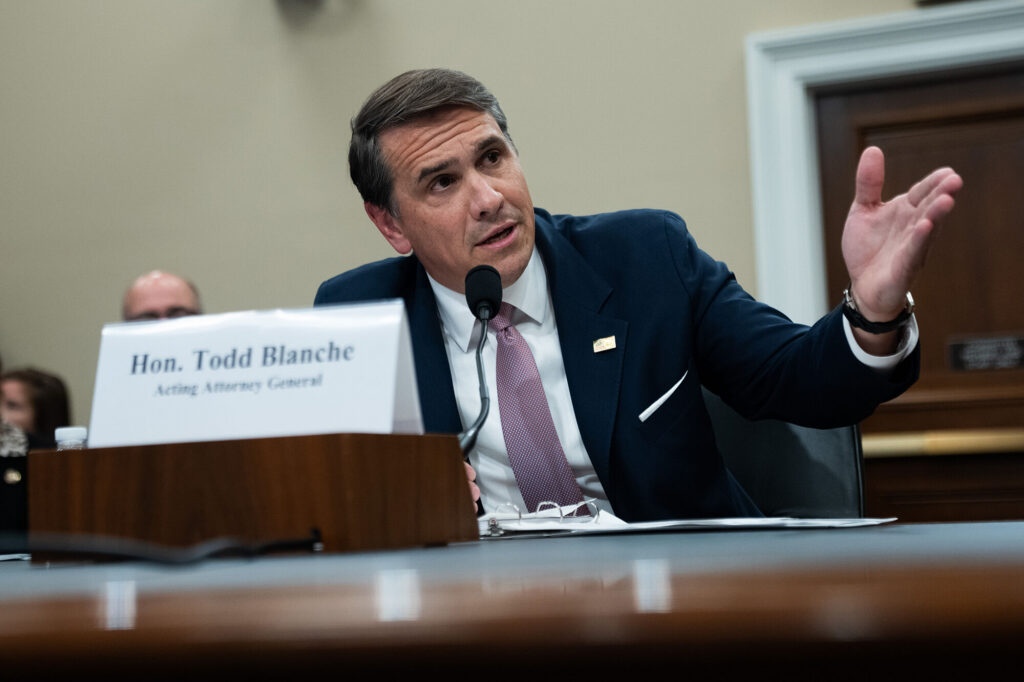
Federal judge wants Todd Blanche to swear in writing anti-weaponization fund won’t be revived
Jack Birle, Washington Examiner
jack.birle.washington.examiner@gazetteedit.wpenginepowered.com
Updated 1 day ago
A federal judge maintained a block on the Department of Justice’s $1.776 billion anti-weaponization fund Friday, despite the DOJ claiming they have abandoned the planned fund aimed at compensating allies of President Donald Trump and others who say they were politically targeted by...

US is escorting 20 tankers a night through Strait of Hormuz, Burgum says, easing oil strain
Maydeen Merino, Washington Examiner
maydeen.merino.washington.examiner@gazetteedit.wpenginepowered.com
Updated 1 day ago
The U.S. Navy is escorting ships through the Strait of Hormuz despite the threat from Iran, guiding more than 20 crude oil carriers on some nights, Interior Secretary Doug Burgum said. Some are ultra-large tankers that hold 2 million barrels...
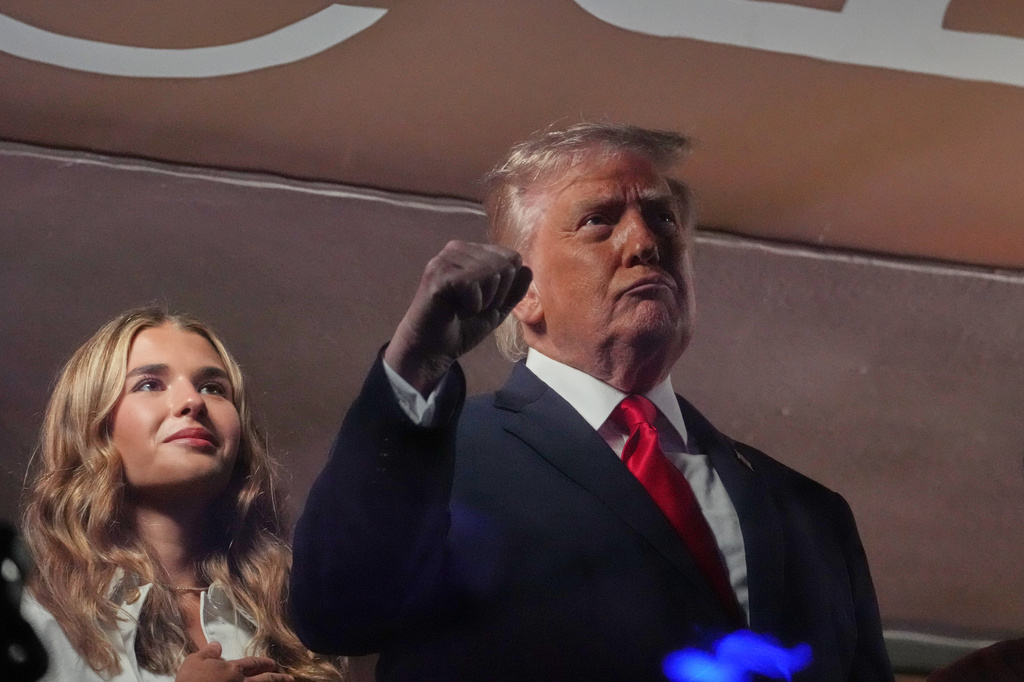
Trump fumes over ‘fake’ peace deal terms leaked by Iran
Christian Datoc, Washington Examiner
christian.datoc.washington.examiner@gazetteedit.wpenginepowered.com
Updated 1 day ago
President Donald Trump claimed that the ceasefire terms reported by Iranian state media on Friday were “fake news” and denied offering any monetary compensation to Tehran to secure their cooperation in ending the war. Iranian state media began circulating a...
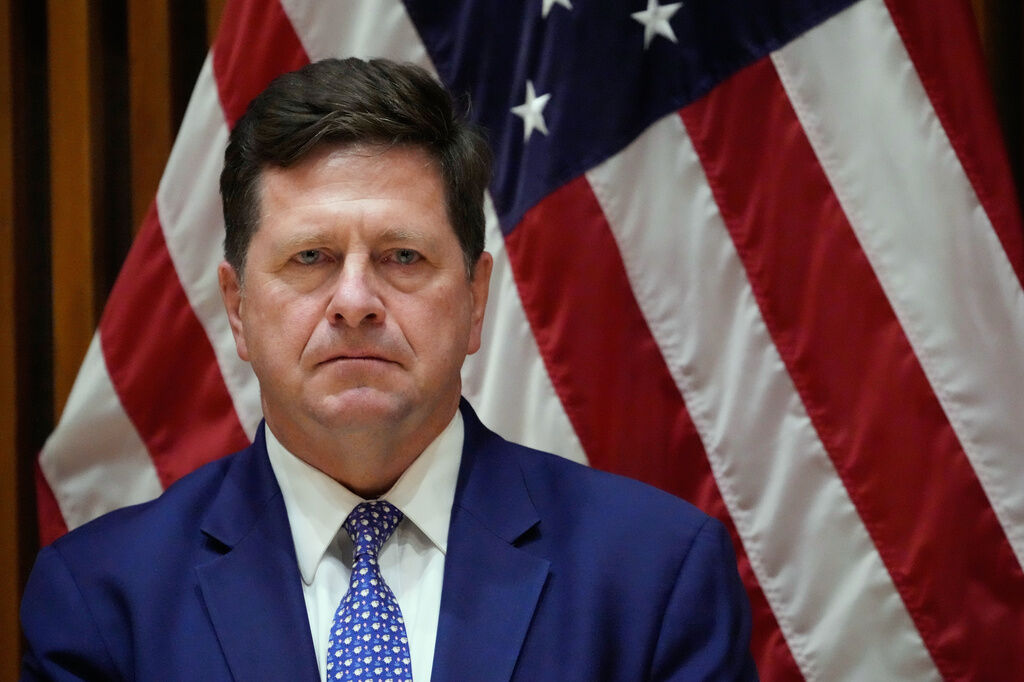
Republicans race to confirm Trump DNI pick Jay Clayton to break spy program gridlock
Hailey Bullis and Lauren Green, Washington Examiner
hailey.bullis.and.lauren.green.washington.examiner@gazetteedit.wpenginepowered.com
Updated 1 day ago
Senate Republicans are moving quickly to vote on President Donald Trump’s pick to run the country’s intelligence agencies, underscoring the level of anxiety in Washington over a temporary lapse in the federal government’s spy powers. The Senate Intelligence Committee scheduled...

DOJ targets disparate impact hiring practices at odds with ‘color-blind Constitution’
Jack Birle and Kaelan Deese, Washington Examiner
jack.birle.and.kaelan.deese.washington.examiner@gazetteedit.wpenginepowered.com
Updated 2 days ago
The Department of Justice declared this week that the Equal Employment Opportunity Commission’s “disparate impact” policies are unconstitutional, tossing aside a rule, long criticized by conservatives, that saw racial discrimination whenever a policy resulted in outcomes that differed among people...

US primed for summer of unpredictable gas prices as Iran war rages on: ‘Living this uncertainty’
Emily Hallas, Washington Examiner
emily.hallas.washington.examiner@gazetteedit.wpenginepowered.com
Updated 3 days ago
The war with Iran has made summer gas prices unpredictable, as President Donald Trump’s shifting messaging on hostilities keeps the energy markets in limbo. There’s little concrete direction on where gas prices could go in the coming months, an expert...

USPS proposes changes to mail-in ballots in states that don’t hand over voter rolls
Molly Parks, Washington Examiner
molly.parks.washington.examiner@gazetteedit.wpenginepowered.com
Updated 2 days ago
The Postal Service proposed a new rule pushing states to turn over their mail-in and absentee voter rolls to the agency, a move in line with President Donald Trump’s March executive order tightening regulations on mail-in voting in federal elections....
The Latest: US military launches strikes against Iran in response to downing of American helicopter
The Associated Press
the-associated-press@coloradopolitics.com
Updated 4 days ago
The U.S. military announced that it has begun strikes against Iran following the crash of a U.S. Army Apache helicopter off the coast of Oman. In a statement posted to social media, U.S. Central Command said the strikes would be...

Trump will get another pick on influential federal appeals court
Jack Birle, Washington Examiner
jack.birle.washington.examiner@gazetteedit.wpenginepowered.com
Updated 4 days ago
President Donald Trump will have the opportunity to nominate another judge to a key federal appeals court after one of the judges announced this week that he would take senior status. Circuit Judge Kurt Engelhardt, who was nominated to the...
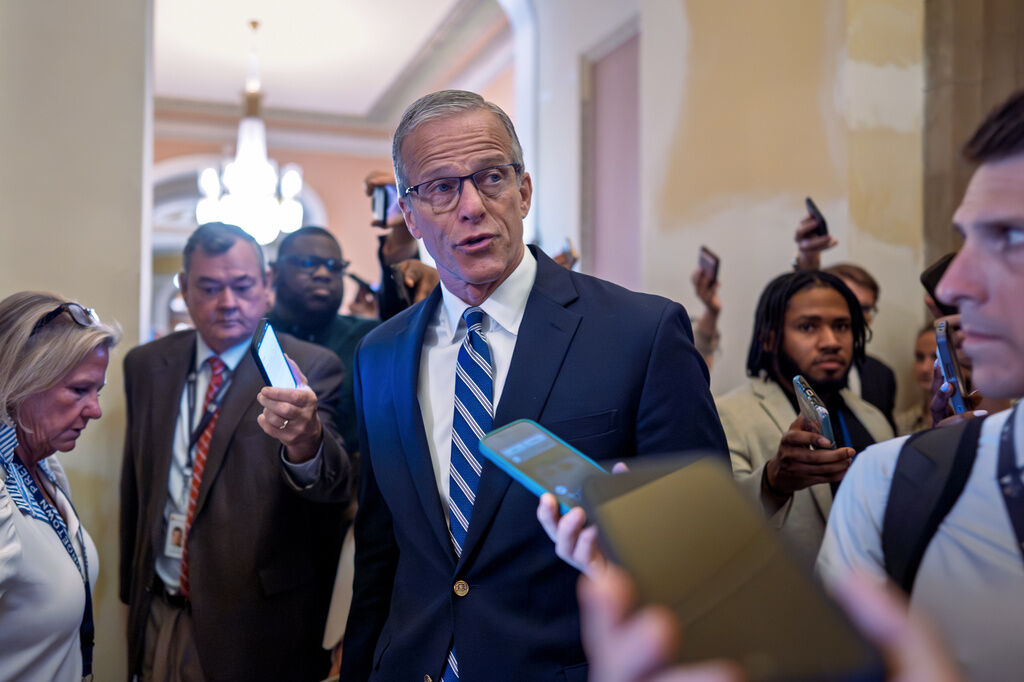
Senate GOP cool to House push for third party-line budget bill: ‘Really not an option’
Ramsey Touchberry, Washington Examiner
ramsey.touchberry.washington.examiner@gazetteedit.wpenginepowered.com
Updated 4 days ago
Senate Republicans are unlikely to take up a third budget reconciliation bill to advance more of President Donald Trump’s agenda. The development is sure to be unwelcome news for their counterparts in the House, who have advocated a third bill....
PREV
PREVIOUS

Trump calls Virginia redistricting election ‘RIGGED,’ hopes courts reverse maps
President Donald Trump denounced the redistricting election in Virginia as “RIGGED,” and voiced his hope that the courts would strike the new congressional map down. In a post on Truth Social, Trump questioned the legitimacy of the Tuesday voting results, which narrowly passed with 1,575,288 “Yes” votes and 1,486,230 “No” votes, with over 95% of […]

Lawmakers introduce bipartisan ‘Hot Rotisserie Chicken Act’ to put the poultry on food stamps
In today’s hyper-partisan Congress, there is at least one thing that can quickly bring Democrats and Republicans to the same table: rotisserie chicken. A bipartisan group of senators introduced the “Hot Rotisserie Chicken Act” this week, a bill that would allow Supplemental Nutrition Assistance Program participants to purchase the hot, spinning poultry with food stamps. […]