

Death in the dust: Downburst wind, dry lakebeds and disaster at milepost 92
Pueblo County Emergency Management Coordinator Josh Johnson was on the road, negotiating details of a public safety power shutoff due to high winds when the first 911 dispatch came in, just before 10 a.m. on Tuesday, Feb. 17.
Seconds later, scanner traffic blew up across all channels of his radio.
“Semi vs car.”
Then, “multiple semis, multiple cars.”
“It just kept getting bigger and worse,” Johnson said.
He turned his Tahoe around and headed to the accident site, milepost 92 of I-25 south of the city, fielding a request en route from the Pueblo Fire Department, who were first on scene, that dashed any hopes 911 callers were exaggerating the crisis.
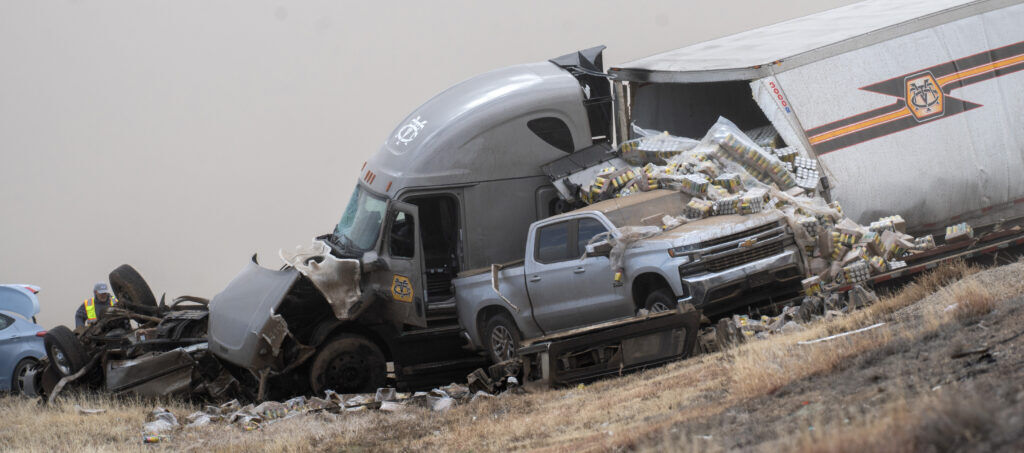
“I don’t know how many (ambulance) units are on, but send them all,” Johnson recalled being told. “Send every pumper in the city that can do extrication.
“This is going to be an MCI.”
A Mass Casualty Incident.
An atmospheric on-ramp
Warnings had gone out well ahead of time as meteorologists at the National Weather Service in Pueblo tracked a large jet stream moving over the mountains and threatening to set up the Wizard of Oz winds that have become all too common in parts of Colorado.
It was going to be a windy day.
Dry conditions and unseasonably warm temperatures can combine with other factors to sow further chaos down below. Rain evaporates as it falls through parched air, creating a squeezing effect — an atmospheric on-ramp, if you will — that sends winds jetting down leeward mountain slopes as storm systems move from west to east.
“So we’re already windy and then we add that downburst … it makes it even windier,” said meteorologist Eric Petersen with the Weather Service.
In a state with a cautionary history of devastating, wind-driven wildfires, and currently in the throes of an unprecedented drought, parched terrain and gale-force predictions rightly bring heightened concerns of conflagrations.
But on this Red Flag Warning day, a different element was in play and conspiring with weather and terrain to turn deadly.
In the calm before every alarm and personal device in the station lit up that morning, Pueblo Fire Chief Barb Huber wrapped an interview with a local TV station in which she cautioned residents to heed the day’s heightened risks.
“We were worried about fire and wind,” Huber later said. “Ironically, nobody ever said anything about dust.”
‘They knew each other’
As the fatal moment ticked closer, a fast-moving windstorm was tearing east over the foothills in stuttered gusts of 60, 70, 80 mph.
Over acres of drought-plagued ranches and fields of desiccated scrubgrass.
And over the chalk-dry topsoil of a series of recently drained reservoirs directly west of I-25, at mile marker 92.
Hundreds of motorists were on a direct course with what Petersen later called the “worst place at the worst time.”
Five of them never made it home again.
Sixty-four-year-old Scott Kirscht and his 90-year-old father, David, were en route from Walsenburg to Pueblo for a doctor’s appointment, Scott behind the wheel of the family’s Ford Escape.
Rye resident Thomas Thayer, 65, and his wife, Mary, 72, were on a similar mission, with Tom driving the couple’s Dodge Ram.
And, commuting among them in a Honda Pilot on the interstate corridor she and her neighbors traveled daily, was Pueblo nurse Karen Ann Marsh, 66, who’d spent the morning visiting with patients.
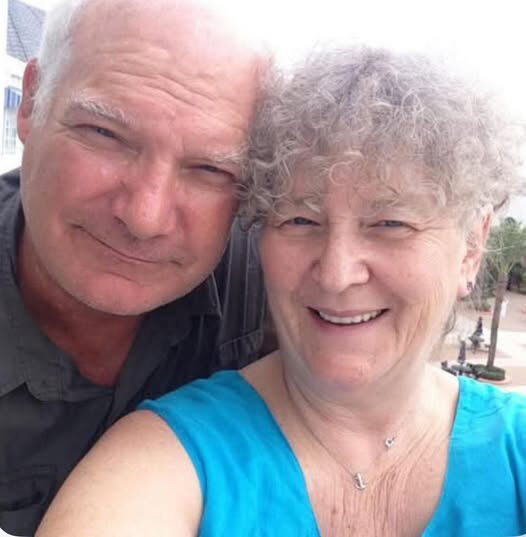
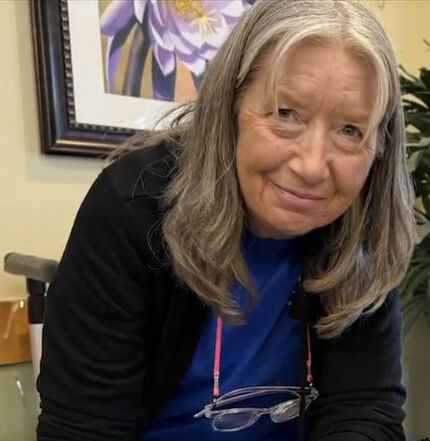
“It’s kind of a miracle that more people weren’t killed,” said survivor Michael Mender.
The tragedy on top of a tragedy is that the five people who died were local.
“We all knew them,” Mender said. “And they knew each other.”
‘Like, five times they hit me’
After a lifetime in Colorado, Mender was no stranger to wind gusts so strong they could turn a semi into a schooner or relocate a barn from one part of your property to the other.
“It’s always windy here. Everybody from here knows that,” said Mender, who lives off-the-grid with his wife, Leslie, on a 117-acre ranch in Beulah, about 30 miles southwest of the Steel City.
A truck driver with more than 40 years’ experience behind the big wheel, 62-year-old Mender loaded up his Ram truck – the one with the “Don’t tailgate me, I’ll go slower” bumper sticker – and hit the road for work in Pueblo, shrugging over the cow grate and the miles of back roads and finally picking up speed — 60, 70, 75 mph — as he braided into the northbound flow of I-25 about five miles south of Pueblo.
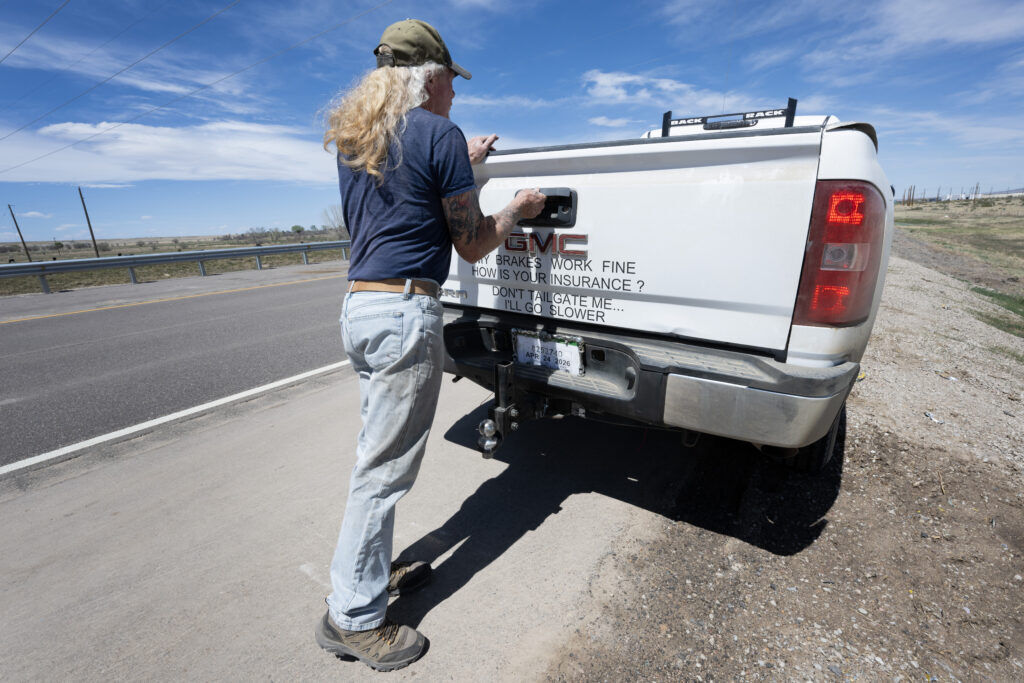
He merged into the left lane, passing vehicles going under the speed limit: routine. Traffic wasn’t especially dense, but the winds were brutal. Up ahead, he could see faint squalls of dust sweeping over the road. He drove through one (“It was light”) and then another, not so light.
Then he saw brown — only brown.
“It was like a wall. You couldn’t see past the dash,” Mender said.
With milliseconds to react, he hit the brakes and cut the wheel, avoiding a rear-end collision with the vehicle in front of him.
Drivers behind him failed to respond so quickly.
“Bang. Bang. Bang. I just kept getting hit … Like, five times they hit me,” he said.
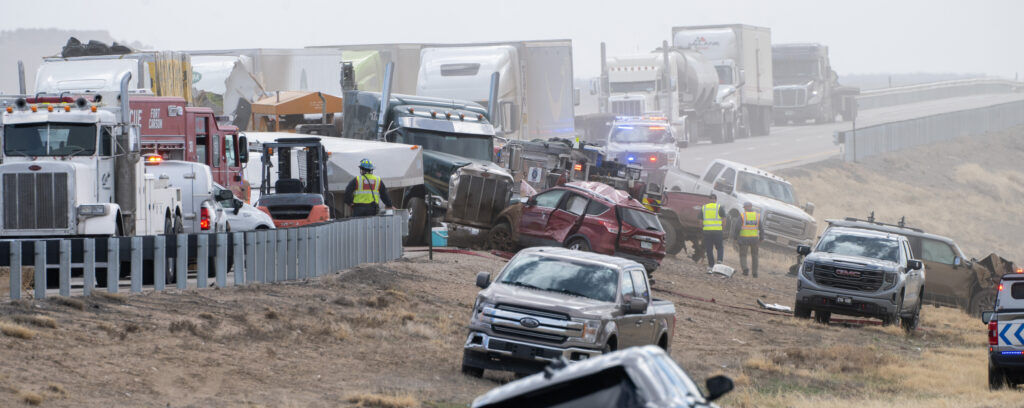
The impacts accordioned the back of his truck and sent it tumbling into the gully between the north and southbound lanes of I-25, roughly halfway into a pile-up that ultimately totaled 36 vehicles — 29 passenger cars and seven semis.
Mender came to his senses and climbed out of his totaled truck, running on adrenaline and not yet feeling the pain of the neck injury that would come roaring back in the hours and days to come.
Standing in the median among the devastation, in the calm and clear skies between exfoliating blasts of dust, he tried to take in what had happened.
The county’s worst mass casualty incident in a century.
Vehicles so crushed he knew those inside couldn’t have survived.
Mender didn’t know then how many of his friends and neighbors were among the dead.
‘Just good, country people’
According to a March 3 preliminary accident report by the Colorado State Patrol, the Kirschts’ 2016 Ford Escape was northbound on I-25 in the right lane when the curtains of dust swept over the interstate.
Their car rear-ended a northbound tractor-trailer traveling in the right lane at a speed estimated to be “well below” the posted limit — 15-20 mph in a 75 mph zone.
The collision rotated the compact SUV clockwise, spinning it into the northbound passing lane where it stalled out and triggered a subsequent cascade of crashes as the brown-out continued — at the exact point where a slight rise in the highway meant that, even in the best conditions, a wreck blocking the left lane would be hard to see until you’re on top of it.
Father and son were pronounced dead on the scene.
Scott and his younger brother, Shawn, grew up working with their hands in and around Walsenburg, ultimately earning names for their knowledge of — and artistic knack with — barbed wire, as well as a singular flair for raising and showing champion livestock, a skill they’d learned from their father.
“I bought a goat from them, years ago,” said Leslie Mender, the memory conjuring up a smile. “His name was Roger the Goat.”
The only children of David and Laura Bell Kirscht never married, and a friend and former employer recalled an anecdote Scott once told him that perhaps provided insights into why.
“They were at the State Fair and doing the livestock, you know, and he (Scott) had some gal in his travel trailer, and they were kissing,” said Brett Corsentino, of Hwy 10 Meat Processing in Walsenburg, a former dairy where both Scott and David worked for years.
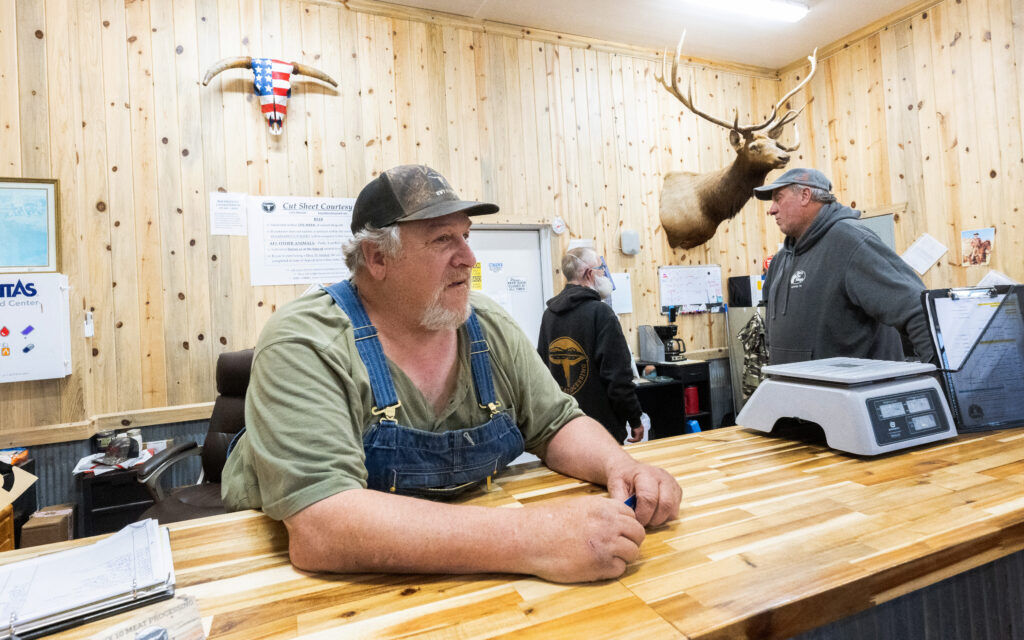
David caught the paramours and read Scott the riot act, demanding no such thing ever happen again.
“I says, ‘Well, Scott, I don’t think he meant for the rest of your life,’” Corsentino said.
Shawn died after a prolonged battle with cancer in late December 2025. Corsentino said he wasn’t certain, but believed Karen Ann Marsh may have been one of his hospice nurses.
Meanwhile, Laura Bell’s dementia was advancing at a heartbreaking pace.
Corsentino said his wife, Nancy, is the nursing director of the Walsenburg veterans home, where Laura Bell is in residence since the deaths of her husband and son, who served as her primary caregivers.
“This sounds bad, but maybe it’s good she’s not with it enough to understand what happened,” Corsentino said. “They were just good, country people and they were all she had left.”
‘No, they’re for you’
It’s unclear whether that Tuesday morning doctor’s appointment was for Mary Sue or Thomas Thayer, but according to those who knew them well, it wouldn’t have mattered.
They did everything together.
“They were each other’s world,” said Thomas “TR” Thayer, Thomas’ son and Mary Sue’s stepson. “They were almost inseparable.”
The Thayers lived for more than 20 years in a ranching community on the southern end of Rye, a town of about 200 residents where the term “next-door neighbor” has a loose interpretation. Thomas, a retired boiler maker, was known as the guy who would drop everything to help a neighbor at a moment’s notice.
“Out here, it’s a big deal to have someone you can call out of the blue and say, ‘I need your help in half an hour,’” said neighbor Alex Potter. “Thomas was that person. If I needed help moving animals, if I needed help butchering something, he was always there to lend a hand.”
Mary Sue Thayer, 72, was pronounced dead at the scene of the crash.
Thomas, 65, was airlifted to a nearby hospital and died a few hours later, bringing the death toll to five.
Michael and Leslie Mender got to know the Thayers through the local flea market, and during Leslie’s time working at Top Bid Auction house in Pueblo. What Leslie said she will always remember about Mary is the deep kindness and loyalty behind an exterior that could be “all attitude.”
A collector of salt and pepper shakers, Leslie recalled having her eye on a set that had come up for auction on the eve of her retirement from the business.
“It was expensive, and I thought, I’ll go to $30 on it. That’s all I’m gonna go,” Leslie said.
Mary and another woman ended up in a bidding duel that drove the price well over that amount.
“Every time (the other woman) went up five bucks, Mary would go up 10,” Leslie said. Finally, “Mary flipped her off, bid one more time and got it.”
When Leslie went to present the set to the winning bidder, Mary stopped her.
“No, they’re for you, for your last day,” Leslie recalled Mary telling her, “for always being sweet when we come in and helping us.”
TR Thayer said that, while the family is devastated by the sudden loss, he can at least take solace in the fact that neither Thomas nor Mary Sue would have to face life without the other.
“Dad would have been lost without Mom. And if we had just lost Dad, Mom would have gone crazy,” TR said. “It sucks that they’re gone, and I would give anything to have them back. But at least they went together.”
‘A pretty great gift that she gave’
Friends and colleagues remember Karen Ann Marsh as a staunch friend, a valued co-worker, and a tireless champion for her patients.
As a certified nursing assistant with Sangre de Cristo Community Care, a Pueblo-based nonprofit hospice, Marsh was a familiar and beloved presence at care facilities across southern Colorado for nearly 10 years, according to Melinda Egging, Sangre de Cristo’s CEO.
“She had so much respect for each person, and she wanted to make sure they were treated with the highest dignity at the end of their life,” Egging said. “I think that’s a pretty great gift that she gave.”
Working as a CNA in a hospice is one of the more meaningful roles in health care, but also one of the hardest. In addition to the physical toll of positioning, bathing and dressing patients, there’s an emotional toll that comes with the repeating cycle of building relationships with patients, then losing them.
One of Marsh’s greatest gifts was her ability to comfort patients in their final months, weeks and days, while helping their families navigate the fear, uncertainty and sadness that accompany the loss of a beloved family member.
“You could tell the impact she had on people’s lives,” said Egging, who had the opportunity to observe Marsh during field visits. “She was so good at her job because she genuinely cared about people.”
The fact that Marsh was traveling to see patients that February morning was tragic but also somehow fitting.
“She was doing what she loved, and what she was great at,” Egging said. “I pray that the end was quick for her. She deserves that.”
Among twisted metal, dazed survivors
In addition to the five fatalities, more than a dozen people were injured in the pile-up — some of them severely.
Justin Crimm was behind the wheel of a U-Haul truck, helping his aunt relocate from Arizona while his mom and aunt followed behind by car.
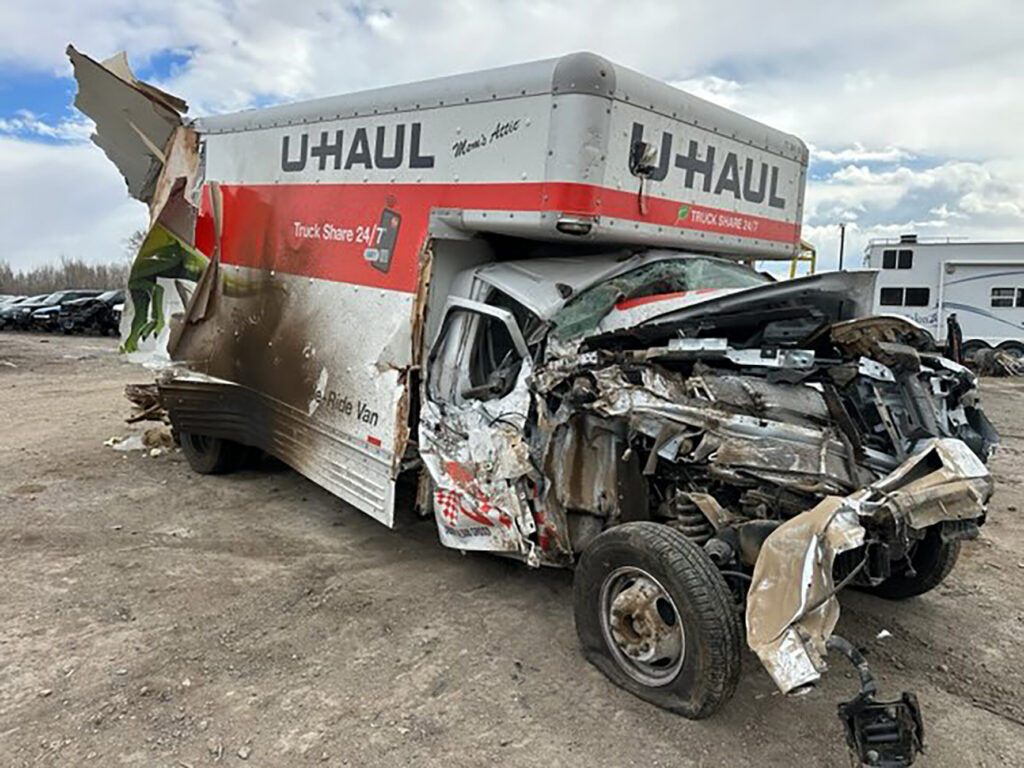
“One second there was visibility, then zero visibility,” said Crimm’s wife, Katrena, who was home in Wyoming when she got an app alert that her husband had been involved in a crash in Colorado.
Crimm had to have his right leg amputated below the knee — and undergo multiple surgeries — after the series of collisions battered the U-Haul so intensely that a steel suitcase on the front seat crumpled like an aluminum can. Crimm recently underwent surgery No. 15 and is unlikely to be physically able to return to work, where he is the sole driver for his company.
“We thank God he survived, but he’s got a long road ahead of him,” said Katrena. “We’re still wrapping our heads around what happened that morning … and praying for the families who lost loved ones.”
Not all the victims of the Tuesday weekday pile-up were human.
By the time Josh Johnson arrived on scene, it was overcast and very windy, but the dust had temporarily calmed.
“It was very cyclic. It would get really, really bad — at one point I couldn’t see the emergency vehicle I was parked right behind — but then it would be crystal clear for 30 or 40 minutes,” Johnson said.
Among the emergency responders, twisted metal and dazed survivors, Johnson could make out something that seemed surreal: livestock.
Thirty sheep and a goat were being transported in a stock trailer when the collisions started.
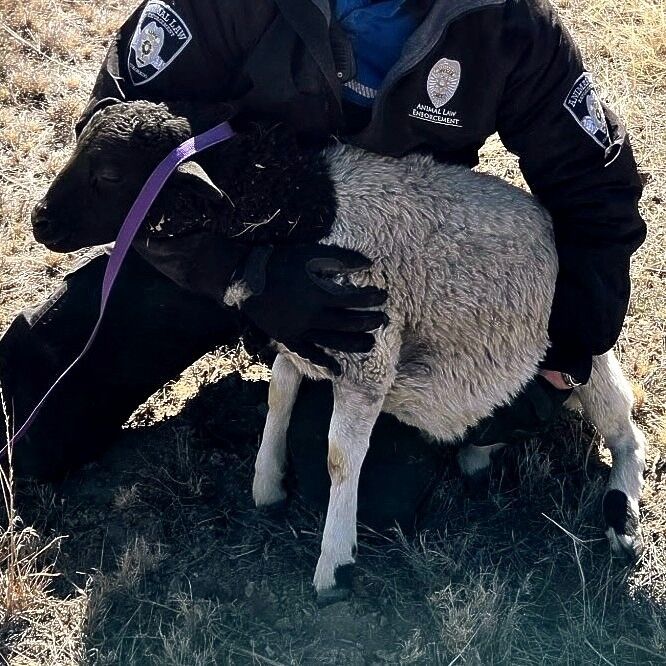
The driver of the diesel truck, a Pueblo-area rancher, was injured and needed to be extracted from the vehicle, which separated from the trailer during the crash, according to Beth Hayes of Colorado State University’s Community Animal Response Team.
When responders from CART and the Humane Society of the Pikes Peak Region arrived at the scene, most of the animals were trapped inside the damaged trailer, but two had gotten loose and were on the roadway, Hayes said.
Animal welfare officers worked to get the loose sheep off the freeway and move the injured and frightened animals from the trailer to a transport vehicle, where they were taken back to their home ranch and treated by the rancher’s neighbors, Hayes said. Five of the animals were fatally injured and are believed to have died upon impact.
CDOT: ‘Dry lake beds’ source of dust
Colorado State Patrol’s investigation into the source of the deadly dust is still ongoing, but — after a prairie dog colony was removed from the list of suspects — attention now has focused on the reservoirs by milepost 92.
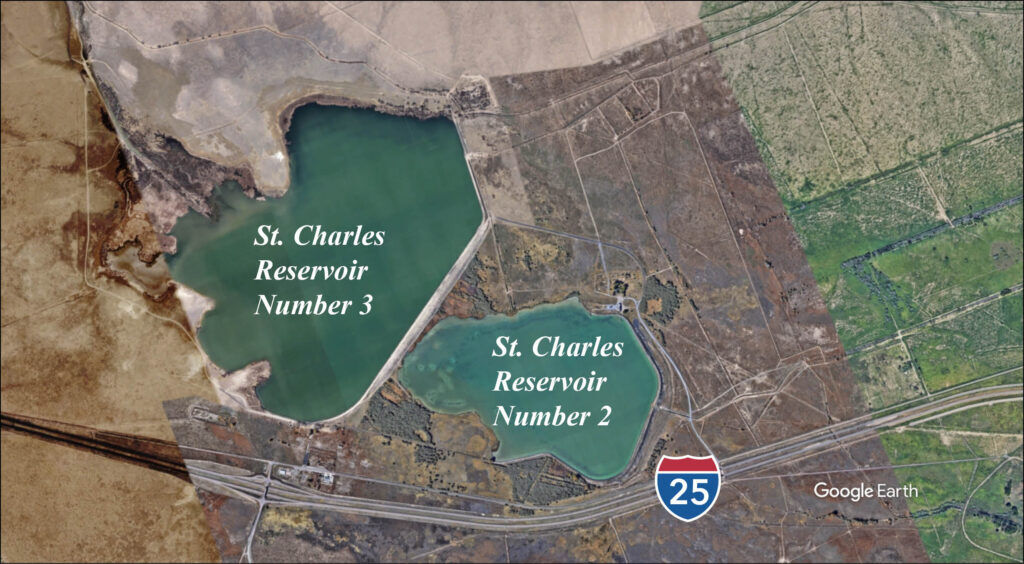
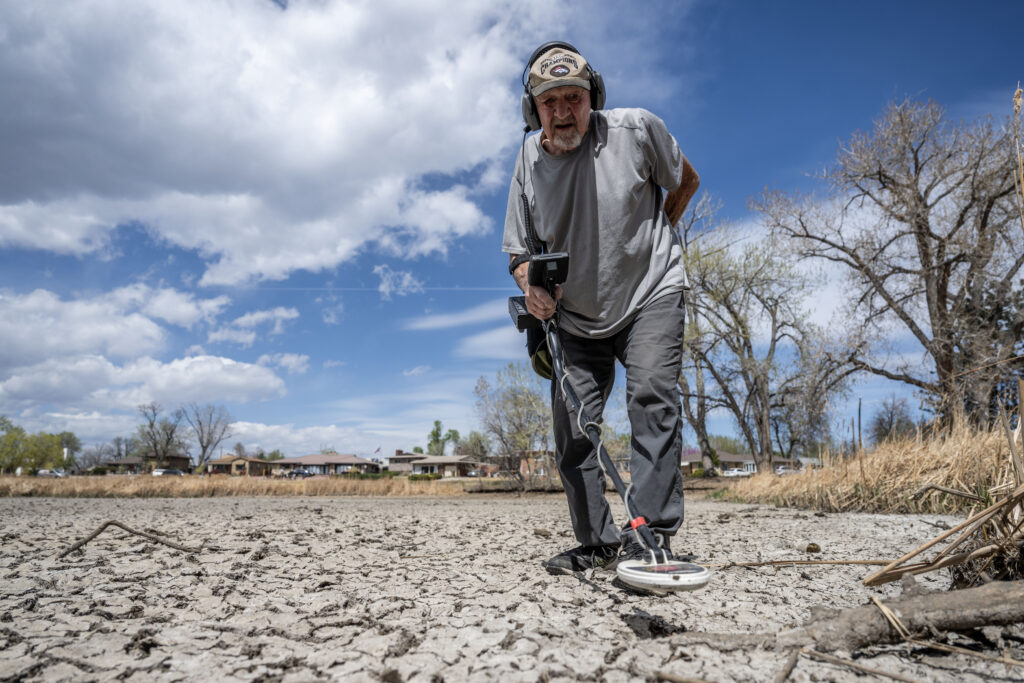
Just west of the site of the crash sits a barbed wire fence guarding a dusty, barren terrain surrounding two large — until recently — dry reservoirs.
St. Charles Reservoirs 2 and 3, also known as Lake Corwin and Lake Savard, have been pinned by CDOT as the source of the dust due to their “dry lake beds,” said Amber Shipley, communications manager for the department.
Monitored by the Colorado Division of Water Resources, these reservoirs recently were drained by owner Orion Steel, previously known as Evraz, as they underwent “significant planned rehabilitation,” DWR’s Marie Sullivan said.
The complete drainage of hundreds of thousands of gallons of water from the larger reservoir, No. 3, and the partial drainage of No. 22, in December, left behind acres of topsoil, fine as talcum.
A historically hot and dry winter, with the lowest snowpack in Colorado history, meant nature wasn’t equipped to fill them back up.
The problem’s certainly not localized to the southern part of the state.
“Reservoirs in Colorado rely heavily on snowpack to maintain levels,” Meteorologist Mark Wankowski with the National Weather Service said.
“Other reservoirs in the region are completely dry solely because of low snowpack and it is likely that others may go dry during the upcoming irrigation/summer season.”
As reservoirs and lakebeds become exposed to the sun, soil turns brittle and dry, eventually eroding and turning to blowing dust, the United States Department of Agriculture explained in a study about soil health and hazards.
An employee of the business at the intersection closest to the pileup — who said workers could feel and hear the seismic booms of the wrecks inside the building — told The Gazette that both reservoirs were mostly, if not totally, dry at the time of the wrecks.
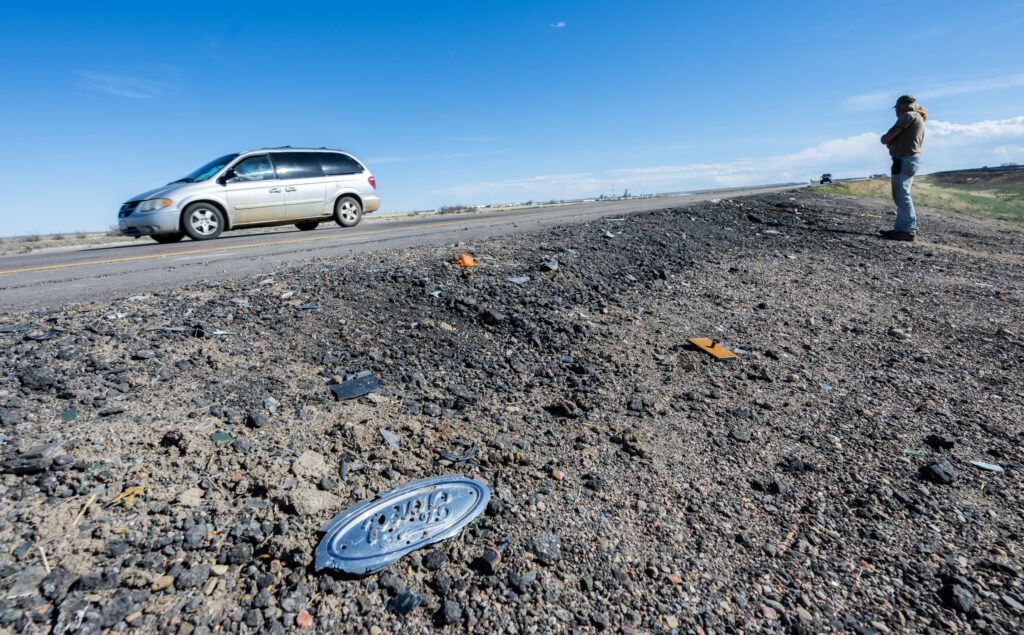
By mid-April, however, both had been almost entirely replenished by the private property owner, who did not respond to The Gazette’s multiple interview requests.
Southbound fender-bender likely saves lives
Along the interstate are customized digital signs with warnings for drivers.
Some have cute and catchy warnings, like “Click it or ticket,” while others are deadly serious.
On Feb. 17, I-25 drivers approaching milepost 92 from the north rolled by two such signs bearing cautions: “Red Flag Warning in Effect/High Wind Caution/Low Visibility Blowing Dust” and “High wind restrictions for light and high profile vehicles,” CDOT’s Shipley said.
Northbound drivers would have had to merge onto the interstate at least 20 miles south of milepost 92 to see such a “dust storm” warning sign.
Remarkably, there were no injuries and only one wreck in the southbound lanes. That wreck — a semi-vs-car fender-bender that reportedly had nothing to do with dust — brought the flow of traffic on southbound I-25 to a standstill moments before the dust storm, very likely saving lives.
“Just having a cruiser out there with its lights on can slow down traffic enough to prevent fatalities,” said Johnson.
Dust warnings and even preemptive closures are uncommon, but they have happened before in Colorado. Such things aren’t easy to coordinate and they’re not cheap, with a fifteen-minute shutdown of a major highway estimated to cost about $600,000 to the economy.
The northbound lanes of I-25 were closed for 14 hours on Feb. 17, as emergency responders transported survivors to local hospitals and worked nonstop to clear the road, finally reopening around midnight.
Before that day, the I-25 corridor around and south of Pueblo had no recorded history of fatal dust storms or brownouts, Shipley said.
National Weather Service meteorologists said the Feb. 17 dust storm was isolated and arrived in a way that defied prediction.
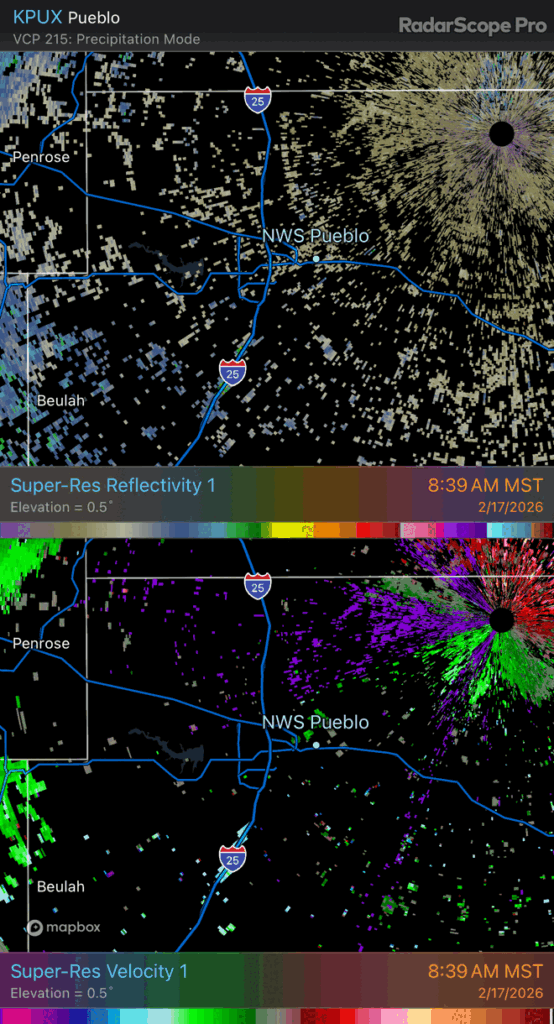
Though dust thermals soared up to 100 feet in the air, the storm was still too intermittent and low in the atmosphere for tracking, Petersen said.
“We looked on radar and satellite, looking for signs of blowing dust. This one was too small to see,” he said. “We didn’t really know (the wreck) had happened till we started getting alerts on media.”
Honoring the victims
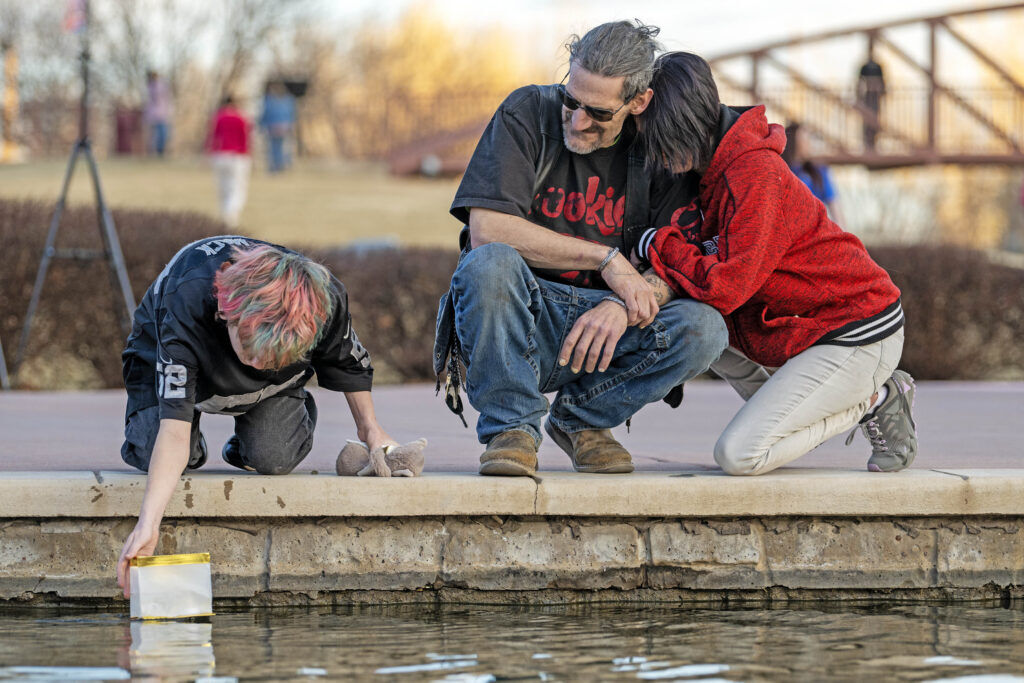
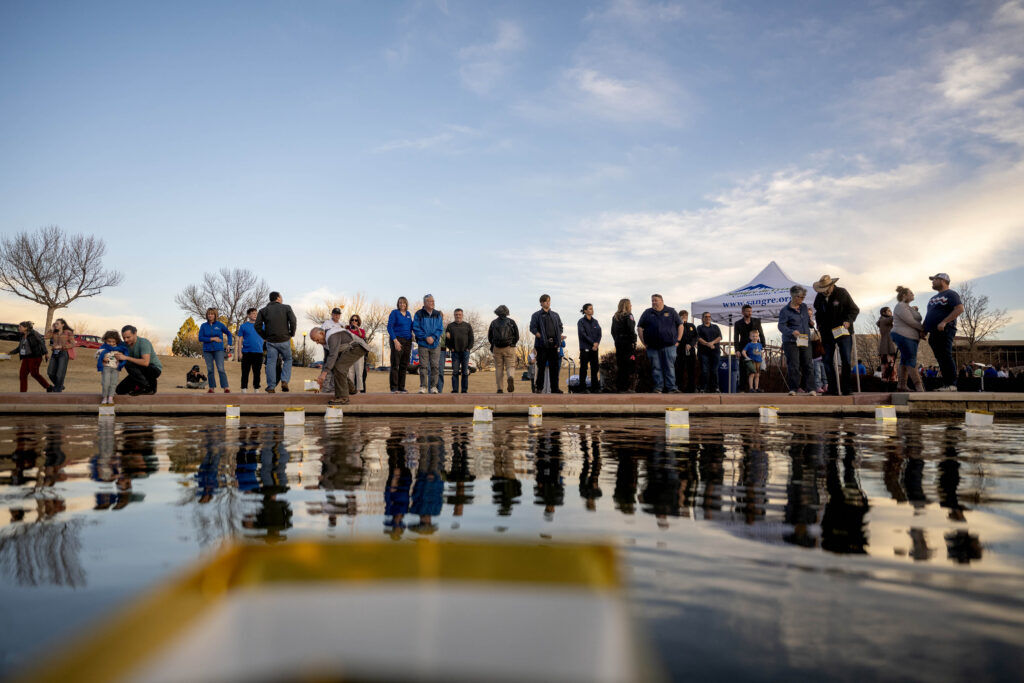
On a sunny Saturday in late February, hundreds of people gathered at the Pueblo Riverwalk for a lantern release memorializing David and Scott Kirscht, Thomas and Mary Sue Thayer, and Karen Ann Marsh, whose clinic organized the event.
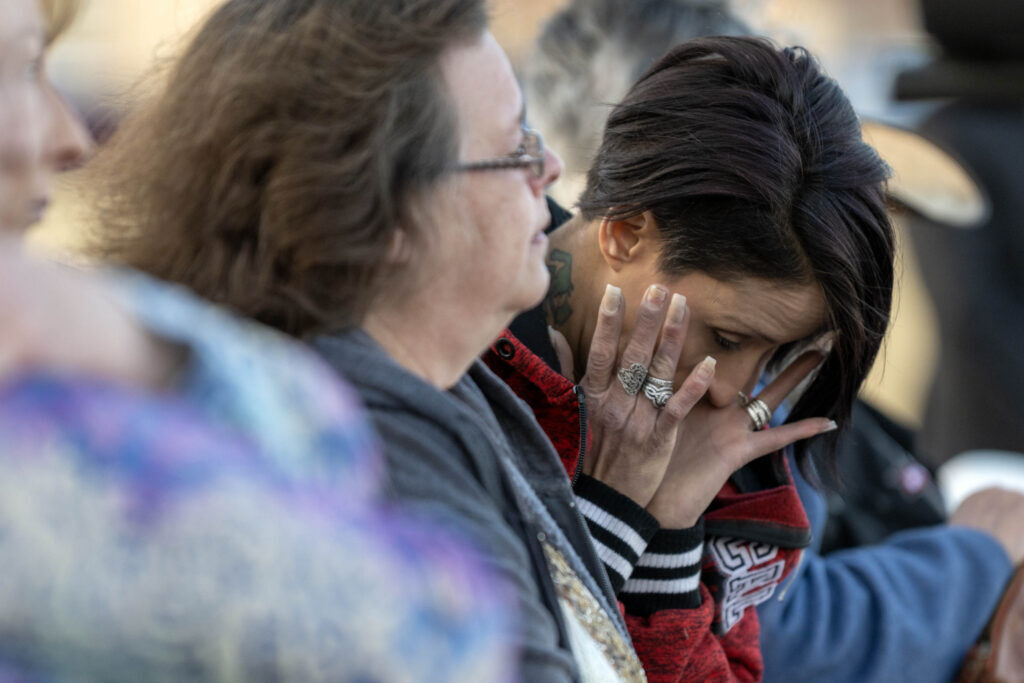
Speakers shared memories of those who were lost and praised the multi-agency response from around the state before setting their lanterns afloat. For about 10 minutes, attendees reflected in silence as a gentle breeze nudged and scattered the miniature flotilla. Then park workers waded in to scoop them back out.
In the weeks since the crash, Mender has watched and re-watched the many videos posted online by witnesses, outraged and baffled at how it played out — why the road wasn’t closed; why one crash had to become three dozen, as drivers who should have slowed because of the conditions continued to barrel ahead at 60, 70, 80 mph.
He’s still struggling with pain and his insurance company is refusing to cover the totaled truck. Loud noises — the shudder and grind of brakes pushed to their limit — set his nerves on edge, and probably always will. But he’s trying to move on and make peace with the tragedy, and a stretch of road he must drive daily.
Part of that journey meant honoring the victims, his friends and neighbors, with a memorial that felt a little more permanent.
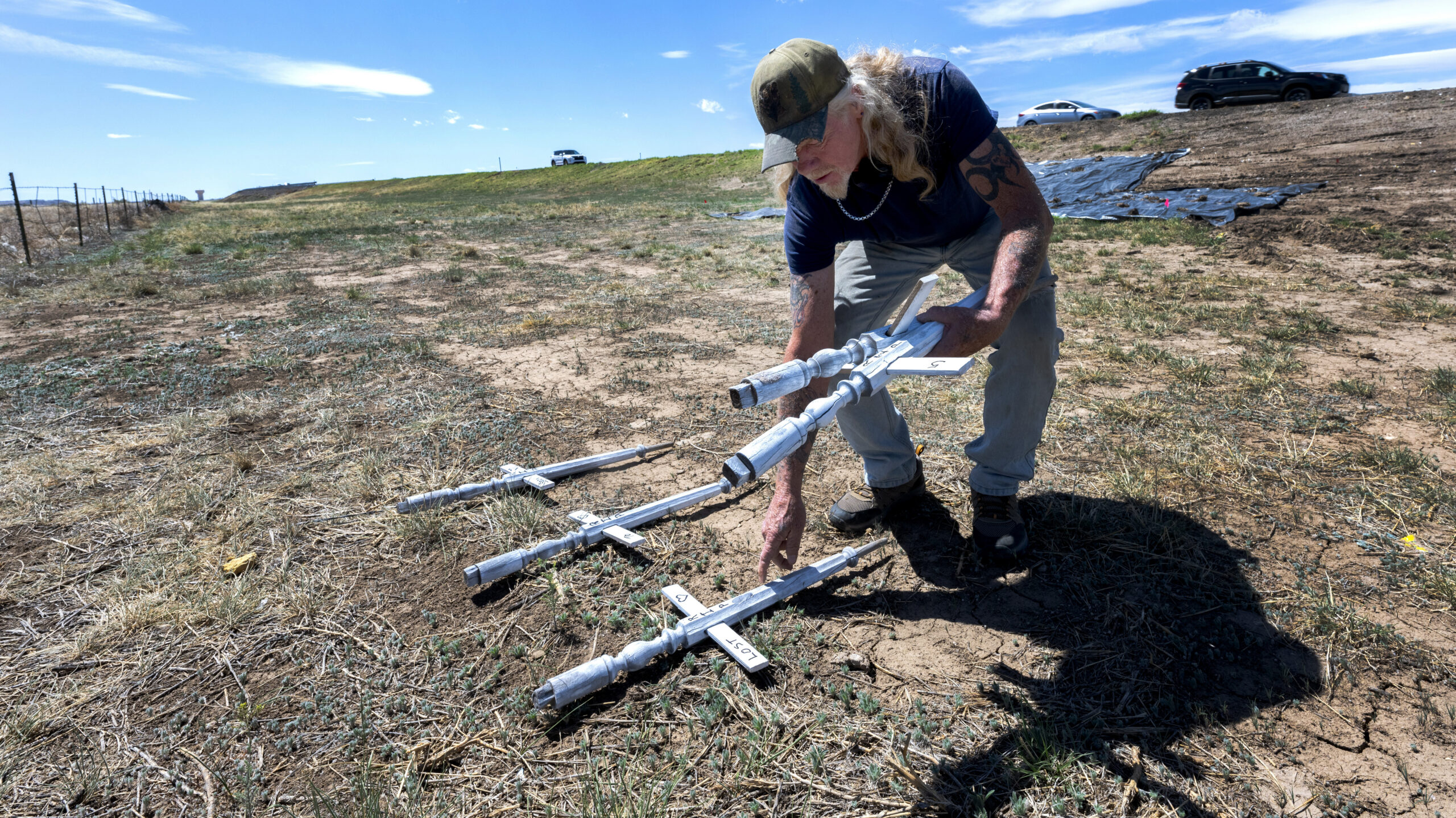
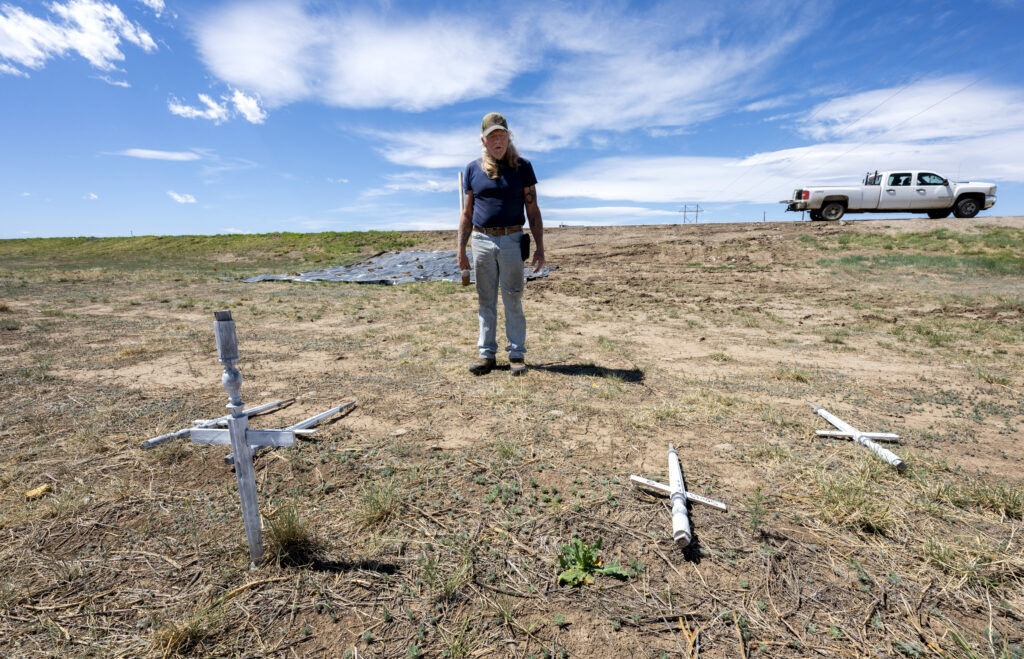
So on a Monday in mid-April, Mender returned to milepost 92 with a collection of hand-made crosses fashioned from antique pickets. They looked bigger in the back of the truck, he noted with a frown.
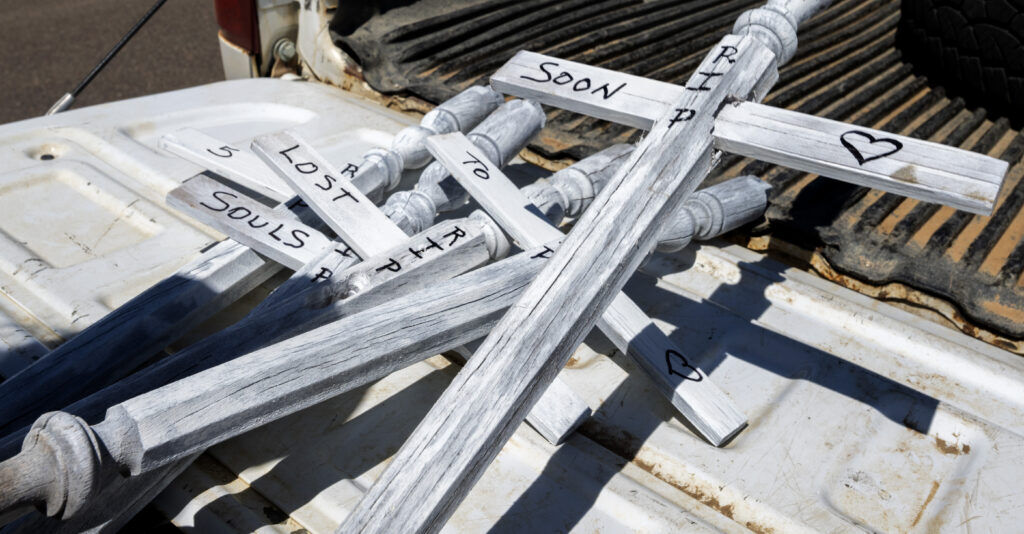
“I felt like I needed to. Somebody needs to,” he said. “I just hope people can see them.”
Mender stepped back to take in the row he’d just finished sledge-hammering into the dusty topsoil, deep enough so they wouldn’t blow away.


‘The program’: Using the homeless to reap Medicaid millions is not new
David Migoya
david.migoya@gazette.com
Updated 8 hours ago
Federal rules prohibit anyone from giving any Medicare or Medicaid beneficiary any remuneration — defined as anything more than $10 in value at a time or $50 in a year — that “is likely to influence the beneficiary’s selection of...
‘The program’: Church’s cash ‘donations’ are an anomaly; requests to attend services were ignored
David Migoya
david.migoya@gazette.com
Updated 8 hours ago
Helping the homeless is at the center of many religious groups’ focus, with outreach coming in the form of soup kitchens, shelters and a variety of programs designed to lend a hand. The Seventh-day Adventist Church, a Protestant denomination with...

Democrats Bennet, Weiser square off in spirited Colorado gubernatorial primary debate
Ernest Luning
ernest.luning@coloradopolitics.com
Updated 8 hours ago
The two Democrats running for governor of Colorado agreed on nearly every policy-related topic but vehemently clashed over which of them is best equipped to lead the state through what one described as an “existential moment” in a televised debate...

WATCH: Bennet, Weiser face off in Colorado Politics, 9NEWS debate
9News
9news@coloradopolitics.com
Updated 11 hours ago
The Denver Gazette and Colorado Politics are hosting the debate in partnership with the University of Denver and 9NEWS. DENVER — Candidates vying to be the next governor of Colorado will face off in debates hosted by The Denver Gazette,...

Advocates tout new Colorado law targeting child exploitation
Nicholas Fogleman
nicholas.fogleman@denvergazette.com
Updated 12 hours ago
Douglas County officials and advocates celebrated the passage of a bipartisan bill Wednesday aimed at strengthening penalties for sexual crimes against children. House Minority Leader Jarvis Caldwell, a sponsor of Senate Bill 26-015, said the measure addresses gaps that previously...

Colorado will soon require age-bracket verification for online platforms
Marissa Ventrelli
marissa.ventrelli@coloradopolitics.com
Updated 12 hours ago
Colorado will soon require apps and online services to verify users’ approximate age under a new law Gov. Jared Polis signed Thursday, creating a statewide framework that sponsors said would shield minors from inappropriate content while limiting how companies can...
Polis declares statewide drought emergency
Luige DelPuerto
luige.delpuerto@gazette.com
Updated 12 hours ago
Gov. Jared Polis on Thursday declared a statewide drought emergency, citing the record-low snowpack and prolonged warmer temperatures across Colorado. He also activated the next phase of the state’s drought response plan. Polis had placed Colorado under Phase 2 in...

The hidden story behind Lake Powell’s low water levels reveals a canyon coming back to life
Marianne Goodland
marianne.goodland@coloradopolitics.com
Updated 15 hours ago
The Colorado River Basin is often described in terms of crisis — drought, climate change and failed water‑sharing talks. Yet beneath Lake Powell’s retreating shoreline, Glen Canyon is quietly experiencing one of the largest natural restorations in the river’s history....
Colorado expands state inspection authority over ICE detention centers
Marissa Ventrelli
marissa.ventrelli@coloradopolitics.com
Updated 11 hours ago
Gov. Jared Polis on Thursday signed a bill that broadens Colorado’s power to conduct health and safety inspections at federal immigration detention centers. Additionally, the legislation requires the Attorney General’s Office to craft a policy on when personally identifying information...

Paramedics’ convictions tossed in Elijah McClain’s death
9News
9news@coloradopolitics.com
Updated 18 hours ago
AURORA, Colo. — Two former Aurora Fire Rescue paramedics convicted in connection with the 2019 death of Elijah McClain will be retried following a ruling by the Colorado Court of Appeals. In September 2021, a statewide grand jury indicted Cooper and fellow...
PREV
PREVIOUS

Aurora City Council to discuss statement of 'mourning' for police shooting victims
In Monday night’s Aurora City Council study session, councilmembers will discuss a resolution that, if passed at a future regular meeting, would state that the City Council “stands in mourning” with people who have lost loved ones to officer-involved shootings. The resolution comes to a study session just over a week after an officer shot […]
Denver City Council eyes millions for infrastructure, airport spending
The Denver City Council meeting Monday will be light, with no required public hearing set, but it does have several big-ticket infrastructure and airport spending items on the agenda. A lot of money is on the table this week, with $6.5 million earmarked for asphalt replacement for 95 lane miles of local, collector, and arterial […]