Colorado GOP votes down bid to ask court to prevent unaffiliated voters from voting in June primary
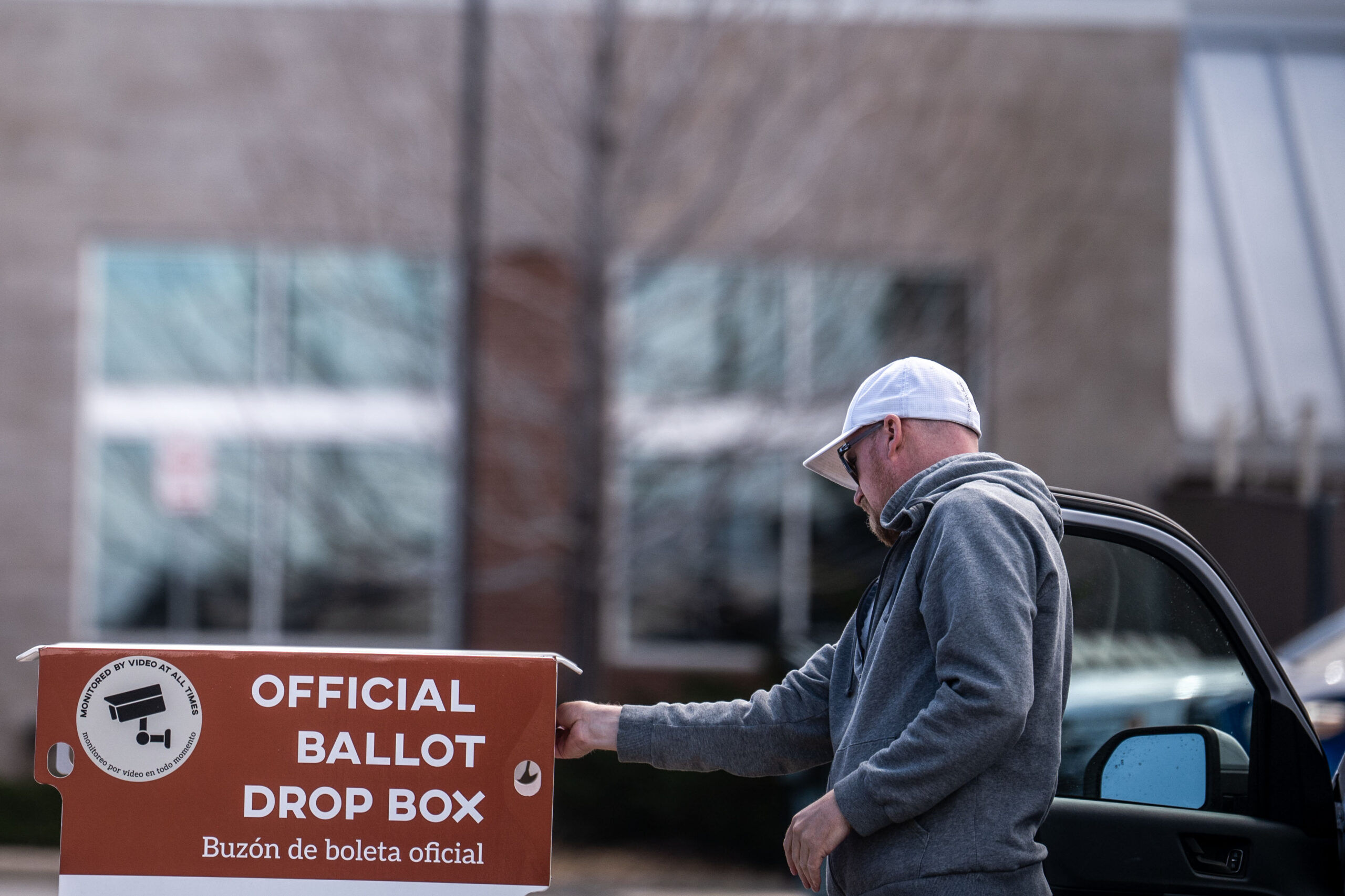
Members of the Colorado Republican Party’s executive committee rejected a proposal Thursday night to seek an emergency injunction in federal court to prevent unaffiliated voters from participating in the state’s upcoming June primary election.
The proposed motion, backed by Colorado Republican National Committeeman Randy Corporon, was in response to a federal judge’s recent ruling that found a provision in the voter-approved ballot measure that permits unaffiliated voters to cast ballots in Democratic and Republican primaries was unconstitutional because it makes it too difficult for parties to “opt out” of the semi-open primary system.
At the end of an hour-long Zoom meeting, however, the party’s executive committee voted 15-9 against pursuing litigation, which had been drawn up by the state party’s former lead attorney, former top Trump legal advisor John Eastman.
The motion prepared by Eastman, who participated in Thursday night’s meeting, would have asked the federal courts to order county clerks to only send Republican primary mail ballots to registered Republicans ahead of the June 30 election.
“Last night’s Executive Committee vote reflects a failure of the outgoing leadership team to act on a clear, time-sensitive opportunity created by the Party’s own legal success,” Corporon told Colorado Politics Friday morning in a text message.
“Last week’s federal ruling was the product of years of litigation, including work I was directly involved in from the start, and it created a narrow window to act for this election cycle,” he said.
Outgoing state GOP chair Brita Horn, who opposed the move, told Colorado Politics late Thursday that attempting to close the party’s primary just weeks before ballots are scheduled to go out would be a “recipe for disaster.”
“Changing the process this close to the election is unfair to our candidates, unfair to voters, and a recipe for disaster,” Horn said in a text message. “The Executive Committee resoundingly spoke, and the 2026 Republican primary will remain open.”
As it stands, the 50% of Colorado voters who aren’t affiliated with a political party receive both Republican and Democratic primary ballots and can choose to fill out and return one of them.
Corporon called an emergency special meeting of the GOP’s roughly two-dozen-member executive committee after Horn initially set a meeting on April 18, the day after she plans to resign her position, in response to a petition Corporon submitted earlier this week asking the committee to approve going to court over the matter.
While U.S. District Court Judge Philip A. Brimmer didn’t strike down the rest of Proposition 108, which was passed by voters in 2016, the judge said the measure’s requirement that 75% of a party’s central committee had to approve canceling primaries “creates a severe burden,” infringing on the parties’ freedom of association under the First Amendment.
The judge also said that if the parties had “a reasonable ability to opt out” of the primary system, their constitutional rights wouldn’t be infringed upon.
Since Proposition 108 went into effect, a faction of state Republicans has attempted to “opt out” of the primary each election cycle, arguing that the party should be able to pick its own nominees, rather than let unaffiliated voters have a say.
The Colorado GOP has also been suing to overturn the law since 2023, alleging it unconstitutionally limits the party’s ability to decide who participates in one of its core activities, designating candidates to the November ballot.
Eastman and Corporon were the attorneys who filed the original complaint challenging the primary system, though different attorneys have represented the party in the last year as the lawsuit makes its way through court.
Under the law, parties have to inform the secretary of state by Oct. 1 in odd-numbered years if they’ve decided to skip the next year’s primary, but while increasingly larger shares of the GOP central committee have voted to opt out, the margin hasn’t achieved the required super-majority.
Corporon maintained that Brimmer’s March 31 ruling “opened the door” for a further challenge to the law, even though the judge didn’t explicitly overturn Proposition 108. In addition, he said the motion to boot unaffiliated voters from this year’s primary had to be filed by Friday, April 10.
Republicans, Corporon said after the vote, faced “a straightforward choice — act this week or lose the opportunity for 2026. A temporary majority of the Executive Committee chose not to act. That delay effectively closed the window for Republicans to enjoy the fruits of our efforts by choosing their primary candidates this cycle without interference from non-party members.”
State GOP executive committee member Laurel Imer, a former legislative and congressional candidate, said she took Thursday night’s vote “personally,” since she had been a plaintiff in a related 2022 lawsuit challenging the primary system’s constitutionality.
“The March ruling gave Republicans a clear opportunity to act, and the (state central committee) overwhelmingly voted in September 2025 to close our primaries,” she said in a text message. “Those who voted ‘no’ tonight ignored that mandate, and once again showed that this administration is more focused on appealing to unaffiliated and Democrat voters than representing the Republicans who elected them.”
Her son, Weston Imer, a veteran political operative and this year’s presumptive GOP nominee for sheriff in Jefferson County, said he was “outraged” by Thursday’s vote against pursuing the litigation.
“With this vote, our last real chance to escape an unconstitutional election system was squandered by an administration now on its way out,” he said Thursday night in a text message. “This is not leadership, it is defiance. A disgruntled faction chose to ignore the Republicans who elected them, and tonight’s vote is the result.”
Former state GOP chair Dick Wadhams, a political consultant who helmed successful Republican campaigns for governor and the U.S. Senate, said the party dodged a bullet by quashing the 11th-hour attempt to close the primary.
“It would’ve been a disaster if the executive committee had allowed Corporon and Eastman to go forward,” said Wadhams, who listened in on Thursday night’s meeting.
“It would’ve thrown the whole process into chaos,” he said. “It wouldn’t have been fair to any of the candidates running, to change the rules not in the middle of the game but the end of the game — we’re only two months from ballots going out. Thankfully, the executive committee had the insight to say no to these clowns.”
Wadhams added that the judges’ recent ruling means that Republicans will likely be able to opt out of future primaries under a lower threshold, if one is set before next year’s window to make the decision.
“The odds of the 2028 Republican primary being canceled are very, very high, and you can just kiss this party goodbye in 2028 if that happens,” he said. “The Republican Party will be relegated to be an irrelevant sect at that point.”
Corporon said he plans to “continue to fight for election fairness and integrity, and to limit the selection of our candidates to only registered Republicans,” noting that Horn and her allies on the executive committee are headed for the exits.
“The reality is that new leadership will be in place within seven days, and I expect a very different approach,” Corporon said. “The party needs to decide whether it is serious about protecting its nomination process and acting when the law gives it the opportunity to do so.”


Colorado Democrat John Hickenlooper pulls in nearly $1.4M in 1st quarter, heads into primary with $4M
Ernest Luning
ernest.luning@coloradopolitics.com
Updated 18 hours ago
U.S. Sen. John Hickenlooper’s campaign raised nearly $1.4 million in the first quarter of 2026 and plans to report more than $4 million on hand heading into Colorado’s June primary, the first-term Democrat’s campaign said Thursday. That brings Hickenlooper’s total...
Republican Ron Hanks plans ‘grassroots’ primary challenge to US Rep. Jeff Hurd in Colorado’s 3rd CD
Ernest Luning
ernest.luning@coloradopolitics.com
Updated 21 hours ago
Colorado Republican Ron Hanks, a former state lawmaker, plans to challenge first-term U.S. Rep. Jeff Hurd in the 3rd Congressional District primary by seeking a spot on the June ballot at the GOP’s district assembly in Pueblo on Friday, Colorado...

Kentucky Gov. Andy Beshear set to headline Colorado Democrats’ annual fundraising dinner
Ernest Luning
ernest.luning@coloradopolitics.com
Updated 7 days ago
Kentucky Gov. Andy Beshear, one of the Democrats’ top 2028 presidential prospects, is scheduled to deliver the keynote address at the Colorado Democratic Party’s annual fundraising dinner in June in Denver, the party said Friday. Serving his second term as...
Denver Democrat Neal Walia lands endorsement from Ro Khanna in Colorado’s state House District 9
Ernest Luning
ernest.luning@coloradopolitics.com
Updated 4 days ago
California Rep. Ro Khanna on Friday endorsed legislative candidate Neal Walia in the race for an open state House seat, praising the Denver Democrat’s commitment to public service and progressive goals. Walia, who mounted an unsuccessful challenge against U.S. Rep....
Judge rules that Colorado law makes it too hard for parties to bar unaffiliated voters from primaries
Ernest Luning
ernest.luning@coloradopolitics.com
Updated 1 week ago
A federal judge ruled in favor of the Colorado Republican Party late Tuesday, saying that a portion of the state law that allows unaffiliated voters to cast ballots in party primaries is unconstitutional because it imposes an unrealistic burden on...

Phil Weiser wins top spot in Colorado’s Democratic gubernatorial primary at party’s state assembly
Ernest Luning
ernest.luning@coloradopolitics.com
Updated 2 weeks ago
Attorney General Phil Weiser’s name will appear first on Colorado’s Democratic gubernatorial primary ballot after his overwhelming win Saturday at the party’s state assembly in Pueblo. Weiser joins U.S. Sen. Michael Bennet in the June 30 primary for the office...
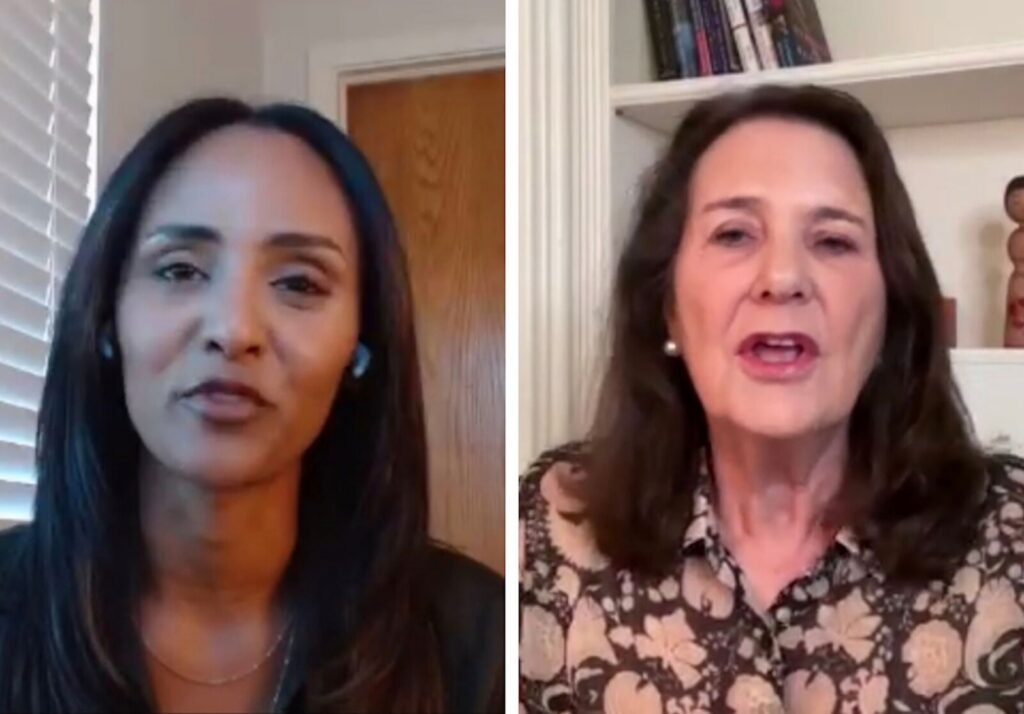
Denver Democrat Diana DeGette trails challenger Melat Kiros at assembly as both qualify for primary
Ernest Luning
ernest.luning@coloradopolitics.com
Updated 1 week ago
U.S. Rep Diana DeGette, a Denver Democrat, qualified for Colorado’s June primary by the skin of her teeth Friday at the party’s district assembly, where the 15-term incumbent received fewer than half as many delegate votes as her challenger, 28-year-old...

Seligman, Bridges, Gonzales lead downballot races heading into Colorado Democrats’ state assembly
Ernest Luning
ernest.luning@coloradopolitics.com
Updated 2 weeks ago
As Colorado Democrats prepare to designate candidates to the June primary ballot at the party’s state assembly in Pueblo on Saturday, three candidates appear poised to win top-line designation in downballot statewide races, according to data compiled by the state...
Democratic US Sen. John Hickenlooper qualifies for Colorado primary by petition, will skip assembly
Ernest Luning
ernest.luning@coloradopolitics.com
Updated 1 week ago
U.S. Sen. John Hickenlooper has qualified for Colorado’s Democratic primary after the first-term incumbent submitted enough valid petition signatures to make the ballot, state officials said. Hickenlooper is facing primary challenges from state Sen. Julie Gonzales, D-Denver, and university professor...
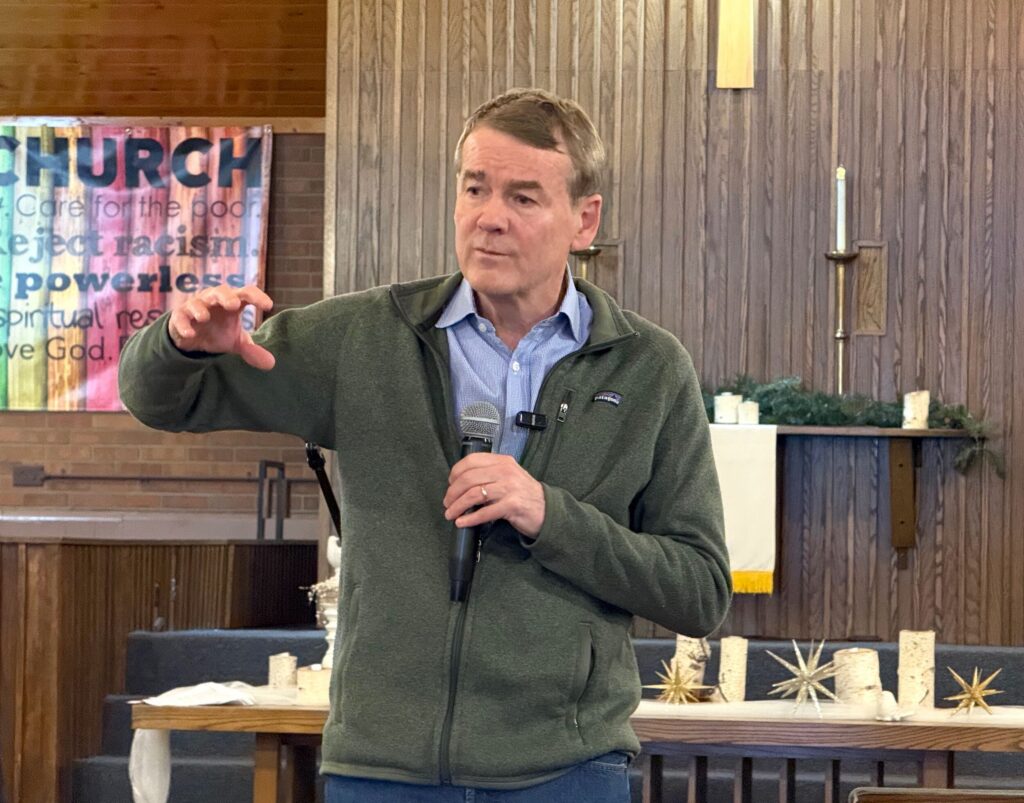
U.S. Sen. Michael Bennet qualifies by petition for Colorado’s Democratic gubernatorial primary
Ernest Luning
ernest.luning@coloradopolitics.com
Updated 1 week ago
U.S. Sen. Michael Bennet on Tuesday became the first gubernatorial candidate to qualify for Colorado’s June primary ballot after state election officials determined the three-term Democrat’s campaign submitted enough valid petition signatures. Bennet is running against Attorney General Phil Weiser...