

10th Circuit provides guidance on police searches of cloud-based data
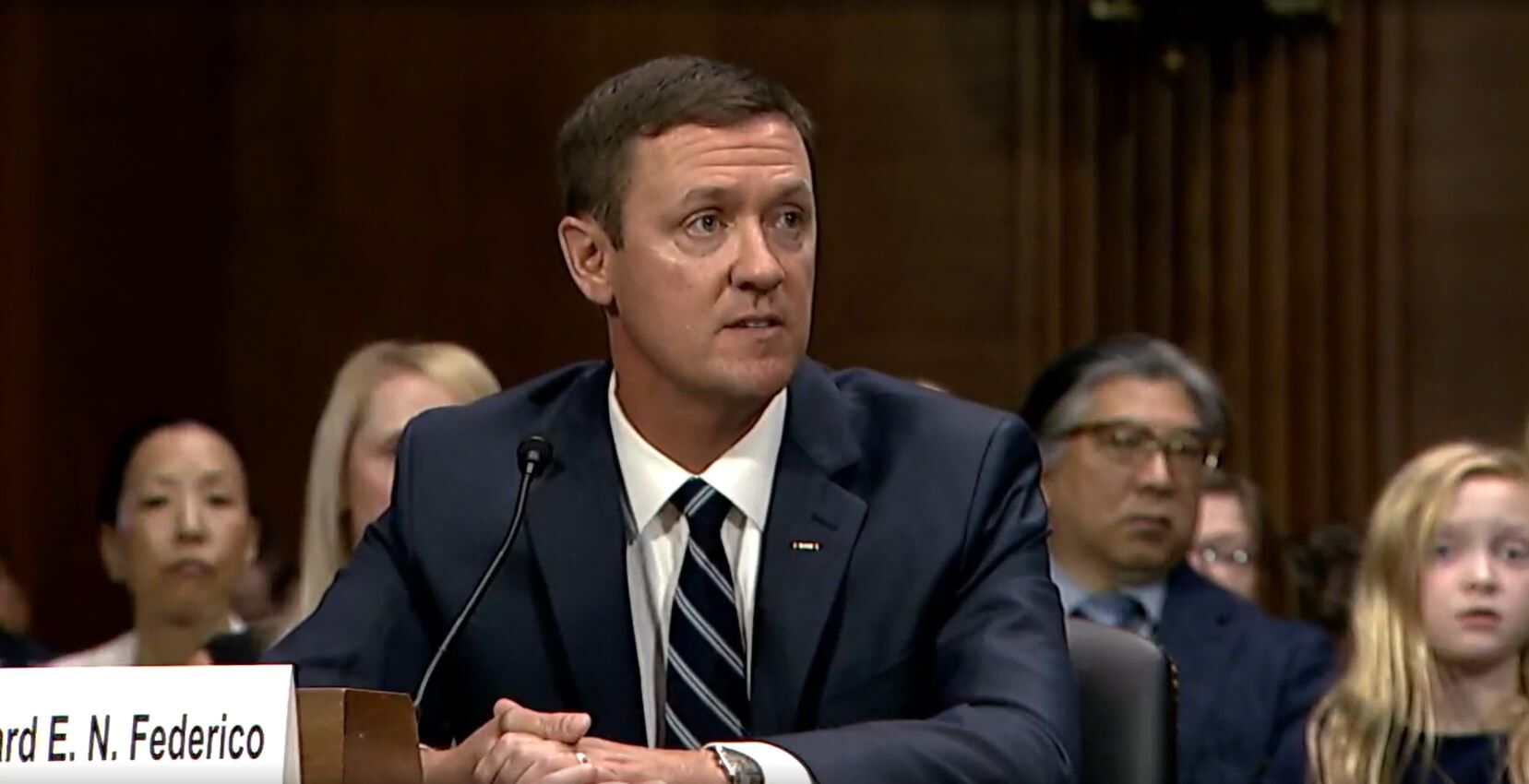
The Denver-based federal appeals court provided guidance to law enforcement agencies on Monday for ensuring that searches of cloud-based accounts comply with the Fourth Amendment’s requirements.
A three-judge panel of the U.S. Court of Appeals for the 10th Circuit noted that a search of information stored in the cloud is “categorically different” from searching an individual electronic device. Among other things, wrote Judge Richard E.N. Federico, a cloud-based search covers every device that accessed the account.
“Although these types of warrants are becoming more common, our Fourth Amendment doctrine lags behind the technological advances that allow for integrated and cloud-based storage of massive amounts of personal data. Which is to say, there is still little precedential authority expounding on the unique challenges raised by such warrants,” he wrote in the April 6 opinion.
The 10th Circuit panel agreed that the warrant used by federal agents to search the cloud account of Kimberley Ann Tew was unconstitutionally broad, but it upheld her convictions after finding law enforcement operated in good faith.
Case: United States v. Tew
Decided: April 6, 2026
Jurisdiction: U.S. District Court for Colorado
Ruling: 3-0
Judges: Richard E.N. Federico (author)
Jerome A. Holmes
Carolyn B. McHugh
The panel also rejected the arguments from Kimberley Tew and her co-defendant, Michael Aaron Tew, that they were improperly tried together.
Cloud search
The Tews, who are married, are serving approximately four years in prison after a jury convicted them on numerous counts of wire fraud and money laundering. Jurors also convicted Michael Tew of tax fraud.
The couple defrauded National Air Cargo, where Michael Tew was formerly the chief financial officer, of $5 million, using fake invoices and the cooperation of the company’s comptroller.
The government obtained a warrant to search Kimberley Tew’s Apple account for evidence related to conspiracy, money, laundering, and wire fraud. The warrant encompassed “all information,” including plans and motive, of a scheme to defraud National Air Cargo.
The Tews moved to block the evidence from the Apple account. U.S. District Court Chief Judge Daniel D. Domenico denied the motion, believing the warrant satisfied the Fourth Amendment’s requirement of describing “particularly” the items police could seize related to the specific offenses. He added that law enforcement’s statements in support of the warrant established probable cause, so the government relied in good faith on a magistrate judge’s approval of the warrant.
On appeal, Kimberley Tew argued the warrant allowed the government to “rummage through” 2.5 years of electronic data.
“Just think about it: 2½ years of emails, instant messages, text messages, phone records, video recordings, photographs, location data, financial records, iCloud records, and device backups. That’s a huge amount of data,” wrote attorney Justin A. Lollman.
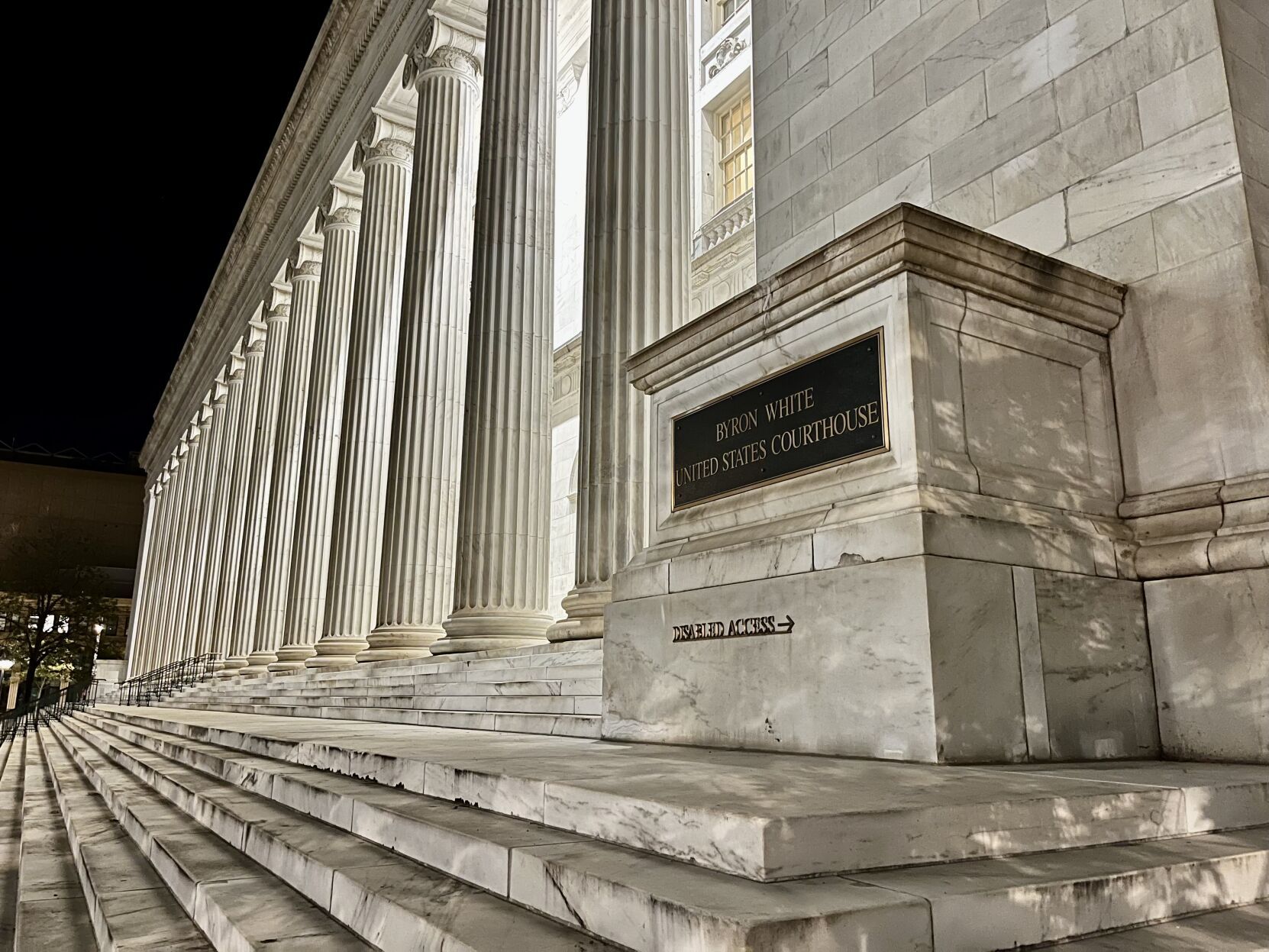
In the panel’s opinion, Federico noted the 10th Circuit could have simply agreed with Domenico that law enforcement relied on the warrant in good faith. However, because there was little existing legal guidance about conducting cloud-based searches that comply with the Fourth Amendment, “we do not think that is the best path for this case,” wrote Federico.
“This was a very broad warrant, based upon very broad conspiracy statutes, and without sufficient guardrails,” he continued.
Specifically, the warrant’s authorization to collect information related to the conspiracy’s motive was seemingly limitless.
“Thus, the warrant would apparently allow the Government to seize all evidence about their marital relations contained in Kimberley’s Apple account on a theory that the intricacies of their marital relationship may have motivated the crime,” Federico wrote. “This would permit an incredible intrusion into the intimate and personal lives of the warrant’s subject and her spouse.”
He suggested that the warrant could have referred to the seizure of communications to and from specific phone numbers or email addresses. The warrant could also have stated categorically, rather than in a single paragraph, that the information was intended solely for the alleged conspiracy against National Air Cargo.
Still, the warrant, “though defective, made some effort to comply with the particularity requirement,” wrote Federico in declining to overturn Kimberley Tew’s convictions. “Given the presumption that a warrant authorized by a neutral judge is thereafter executed in good faith, we find that the Government has met its burden to prove good faith. This determination, though, is a close call.”
Separate trials
The Tews both argued on appeal that Domenico should have granted their motions to hold separate trials.
Initially, after their indictment, a single lawyer represented both defendants. The government raised concerns about that arrangement, and Domenico also appeared wary.
“The best defense for one defendant sometimes can be to say, ‘While the other defendants were guilty, I didn’t do it,'” he said. A lawyer representing both “can’t effectively make that sort of argument.”

The attorney assured Domenico that “we can move forward with a strong defense with this married couple who love each other and without these conflicts arising.”
That lawyer withdrew, and eventually, after a series of changes in representation, the Tews wound up with separate attorneys.
At the outset of the trial, Kimberley Tew’s lawyer argued that her husband was the perpetrator of the scheme. Michael Tew’s lawyer quickly asked Domenico to sever the trials, as Kimberley Tew’s defense was “so antagonistic, at this point, that I don’t believe that Mr. Tew is going to get a fair trial.”
Domenico responded, “This doesn’t seem like some surprise bombshell that you couldn’t have thought out before.” Still, he allowed the defendants to submit a motion to separate the trials.
In a written order, he denied Michael Tew’s motion. Domenico noted that “mutually exclusive defenses” are grounds for severing trials, but the Tews’ finger-pointing at each other did not necessarily require jurors to convict one and acquit the other.
“Despite Mr. Tew’s protestations, there has been a real, foreseeable possibility that Mrs. Tew’s defense would be antagonistic to his for years,” Domenico added. “And as the government outlined in its response, there were multiple natural opportunities to raise this issue in the years before trial started.”
The 10th Circuit determined Kimberley Tew had not properly raised the issue of severance, and it agreed with Domenico that Michael Tew had not shown that mutually exclusive defenses were at play.
“In fact, Michael may have benefitted from the joint trial,” wrote Federico. “Had the trial been severed, evidence of Kimberley’s actions may not have otherwise been admissible. Thus, Michael would have had less evidence of Kimberley’s alleged manipulation to support his theory of defense.”
The case is United States v. Tew.

Federal judge releases man after 2 immigration judges disobey order
Michael Karlik
michael.karlik@coloradopolitics.com
Updated 6 hours ago
A federal judge released a man from immigration detention on Thursday after two different immigration judges disobeyed his order in the same case. “At this point, the Court has granted Respondents two bites at the apple to prove detention of...

New rules for private judges in Colorado include discipline oversight, campaign contributions
David Migoya
david.migoya@gazette.com
Updated 24 hours ago
The Colorado Supreme Court recently determined the state’s private judges — retired jurists appointed to oversee civil cases that rarely get public scrutiny — can now make political contributions freely and without reserve, overruling a prohibition that had been in...
Appeals court finds Prowers County judge incorrectly analyzed firetruck collision lawsuit
Michael Karlik
michael.karlik@coloradopolitics.com
Updated 1 day ago
Colorado’s second-highest court directed a Prowers County judge last month to take a second look at whether a firetruck operator and the county itself can be held liable for a collision with a motorist. Donald Williamson was driving through a...
Appeals court reverses assault convictions after jury received no definition of ‘harm’
Michael Karlik
michael.karlik@coloradopolitics.com
Updated 1 day ago
Colorado’s second-highest court reversed an Arapahoe County defendant’s assault convictions last week, concluding the trial judge neglected to define a key, ambiguous term for jurors. Police officers arrested David Cristobal Aragon at a house party for allegedly violating a restraining...
Colorado counties cannot challenge state law restricting immigration contracts, appeals court says
Michael Karlik
michael.karlik@coloradopolitics.com
Updated 1 day ago
Colorado’s second-highest court ruled on Thursday that counties lack standing to challenge a 2023 state law that restricts their ability to contract with the federal government or private entities for immigration detention. A three-judge Court of Appeals panel agreed with...

Colorado lawmakers propose changes to family court procedures | Bills in Brief
Marissa Ventrelli
marissa.ventrelli@coloradopolitics.com
Updated 2 days ago
Colorado lawmakers introduce hundreds of bills each year. Bills in brief cuts through the noise by explaining which proposals matter, what’s at stake, and how decisions at the Capitol could affect everyday life across the state. Colorado lawmakers from both parties are...
Federal judge partially allows second World Cup trafficking lawsuit to move forward
Michael Karlik
michael.karlik@coloradopolitics.com
Updated 2 days ago
A federal judge allowed some claims to move forward last month against companies operating out of Colorado that allegedly participated in a human trafficking venture involving Filipino laborers who constructed facilities for the 2022 World Cup in Qatar. There are...
Federal judge dismisses lawsuit seeking to force Colorado secretary of state to screen out scam filings
Michael Karlik
michael.karlik@coloradopolitics.com
Updated 2 days ago
A federal judge dismissed a lawsuit last week that sought to require Colorado’s secretary of state to verify corporate filings in the state’s database to reduce the risk of future fraud. Bernard Butts of Florida, who was 83 when he...

Federal judge finds no constitutional violation by Huerfano County well inspectors
Michael Karlik
michael.karlik@coloradopolitics.com
Updated 2 days ago
A federal judge concluded last month that two Huerfano County employees did not engage in an unconstitutional search when they approached the plaintiffs’ camper within 40 feet to investigate a potential code violation. In July 2021, the county’s building inspector,...

Federal judge warns of increasingly inadequate immigration bond hearings
Michael Karlik
michael.karlik@coloradopolitics.com
Updated 23 hours ago
A federal judge ordered the immediate release of a man in immigration custody last week and, seemingly for the first time in Colorado, warned that the government is increasingly conducting inadequate bond hearings for detainees. Colorado’s federal trial court is facing...
PREV
PREVIOUS

Colorado GOP votes down bid to ask court to prevent unaffiliated voters from voting in June primary
Members of the Colorado Republican Party’s executive committee rejected a proposal Thursday night to seek an emergency injunction in federal court to prevent unaffiliated voters from participating in the state’s upcoming June primary election. The proposed motion, backed by Colorado Republican National Committeeman Randy Corporon, was in response to a federal judge’s recent ruling that […]

Colorado lawmaker's demand for full budget reading upends GOP assembly plans, triggers bipartisan reaction
Republican Rep. Brandi Bradley’s decision to force the full reading of the state budget — the lengthy “long bill” — has not only slowed House business to a crawl, it’s also disrupting her colleagues’ plans for the weekend. Since the full reading lasted until 11 p.m. Thursday evening, and was expected to continue all day […]