

The danger of when government goes rogue | Paula Noonan
It’s dangerous, even fatal, when government goes rogue whether in a democracy or autocracy. Government officials who ignore or taunt laws that constrain bad acts should be given the heave ho. We’re witnessing these egregious scenarios now at the federal and the Douglas County level. Scorn of basic rules of governance at the federal level leads to scorn at local levels.
When the president of the United States threatens to bomb Iran to the Stone Age, someone needs to step up to stop the rhetorical lunatic. The U.S. Congress with Republican majorities apparently isn’t up to the task. JD Vance, our vice president, is off to Hungary to support the great dictator, Viktor Orbán. Military officers who object to President Donald Trump and Secretary of Defense Pete Hegseth’s seat-of-the-pants decisions are humiliated, then fired, especially if they are minorities or women. When it comes to matters of war, the courts don’t intervene to save us. Is anyone out there who can?
Fortunately, at the Colorado county level, when county commissioners knowingly and intentionally violate state statute, the courts can intervene, even if it takes time and appeals. Here’s the storyline and its implications for public policy:
In March of 2025, Douglas County commissioners took about 12 minutes to pass a resolution to take the county into an election on county home rule. The three commissioners, George Teal, Kevin Van Winkle and Abe Laydon, wanted to put county business outside the rules of state statute and regulation.
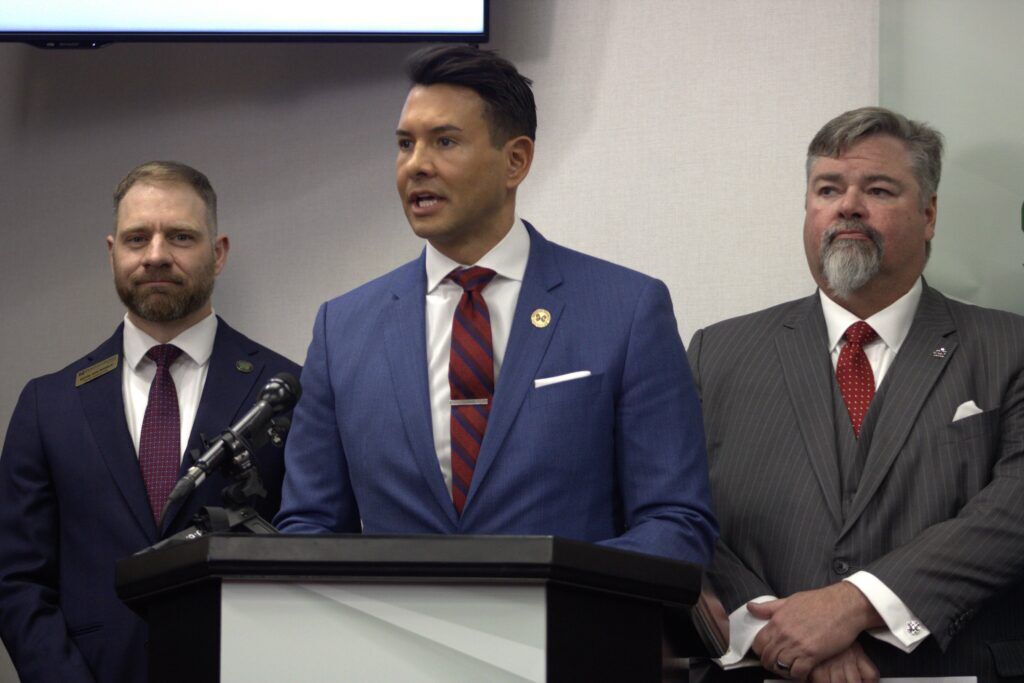
Many county residents wondered how it was possible to come to this momentous decision in 12 minutes. Three plaintiffs in a case against the commissioners, state Rep. Bob Marshall, former Commissioner Lora Thomas, and Douglas County resident Julie Gooden, concluded the commissioners held planning and decision-making meetings on this subject outside the public view. They took the commissioners and the county to court. The trial court found in favor, sort of, of the commissioners. The appeals court rejected the trial court’s fact-finding and declared the plaintiffs correct. The county commissioners flouted open meetings rules.
It’s important to understand the appeals court’s decision is significant not just to correct Douglas County commissioners’ nose-thumb at state law. It’s most critical for protecting the principle the public’s business must be conducted in public in this state.
According to the appeals court decision, the commissioners held many meetings preceding the 12-minute session. They also screwed with three executive sessions by not following procedures related to notifications and recording the discussions. The county attorney should have insisted upon proper procedures, but he failed to do so. The trial court concluded these executive sessions were not policymaking. The appeals court vigorously disagreed, stating the trial court’s decision was “clearly erroneous.”
The plaintiff’s case breaks new ground for the implementation of open meetings statutes. Elected government officials cannot hide behind “planning sessions” as an excuse to sidestep open meetings rules when their planning involves a quorum of members. In the case of Douglas County commissioners, two members meeting together make a quorum. Though the commissioners did not come to a formal public decision on their home rule referendum in their executive sessions, they discussed and shaped their prospective options so the final vote on the referendum resolution was, in effect, a rubber stamp.
An earlier Douglas County case related to school board members conducting “serial meetings” ostensibly to avoid open meeting quorum requirements was called out by courts. This appellate court’s decision nails down that impropriety. Courts will now assess whether policy and other pertinent discussions between elected officials outside a quorum, if followed one after another in a game of telephone, will constitute “meetings” that require proper notice. The current court decision clarifies: if the sequence of meetings constitute policy discussions, then open meeting rules apply.
The plaintiffs have more tiffs with the county commissioners. The commissioners recently decided to disallow general public comment at their business meetings. As a result, if an individual has questions or comments about county business or operations not covered by an agenda item, that individual is out of luck. Commissioner Van Winkle claims these comments should be brought to open forums. Forums are not formal public meetings, so comments are not formally recorded or reported.
Plaintiffs also note commissioners have continued to play fast and loose with open meetings statute through insufficient notice of meetings, agendas and executive sessions. Consequences for breaking rules focus on procedures, not the person. Commissioners won’t be thrown into jail for violating the Open Meeting Act. Decisions of elected officials may be tossed in extreme circumstances, so officials have to redo their discussions and votes in proper public settings.
Coloradans and everyone in the nation are anxious, even frightened, over the unleashed acts of this federal administration in the Middle East. Will the president take the nation into war crimes?
In the Douglas County case, the people asserted their power over law breaking by voting down the home rule resolution by about 70% NO to 30% YES. It was a resounding defeat seconded by the appellate court.
Paula Noonan owns Colorado Capitol Watch, the state’s premier legislature tracking platform.


Colorado’s childcare contribution tax credit bolsters our economy by keeping programs afloat | PODIUM
Colorado Politics
colorado-politics@coloradopolitics.com
Updated 10 hours ago
By Mike Kehoe, Lisa Steven and Johnna Reeder Kleymeyer Colorado parents are struggling to find childcare, programs that serve our most vulnerable families are stretched thin, and private philanthropy has never been more critical. Since it was first enacted in...

Senate Democrats outline amendment strategy as budget debate nears
Marissa Ventrelli
marissa.ventrelli@coloradopolitics.com
Updated 15 hours ago
Members of the Colorado Senate met with their respective caucuses on Tuesday to discuss the state’s proposed $46.8 billion budget for fiscal year 2026-2027, which passed through the House over the weekend following lengthy debate. The full Senate will begin...
Polis pushes back after Trump administration again denies federal disaster aid
Marissa Ventrelli
marissa.ventrelli@coloradopolitics.com
Updated 14 hours ago
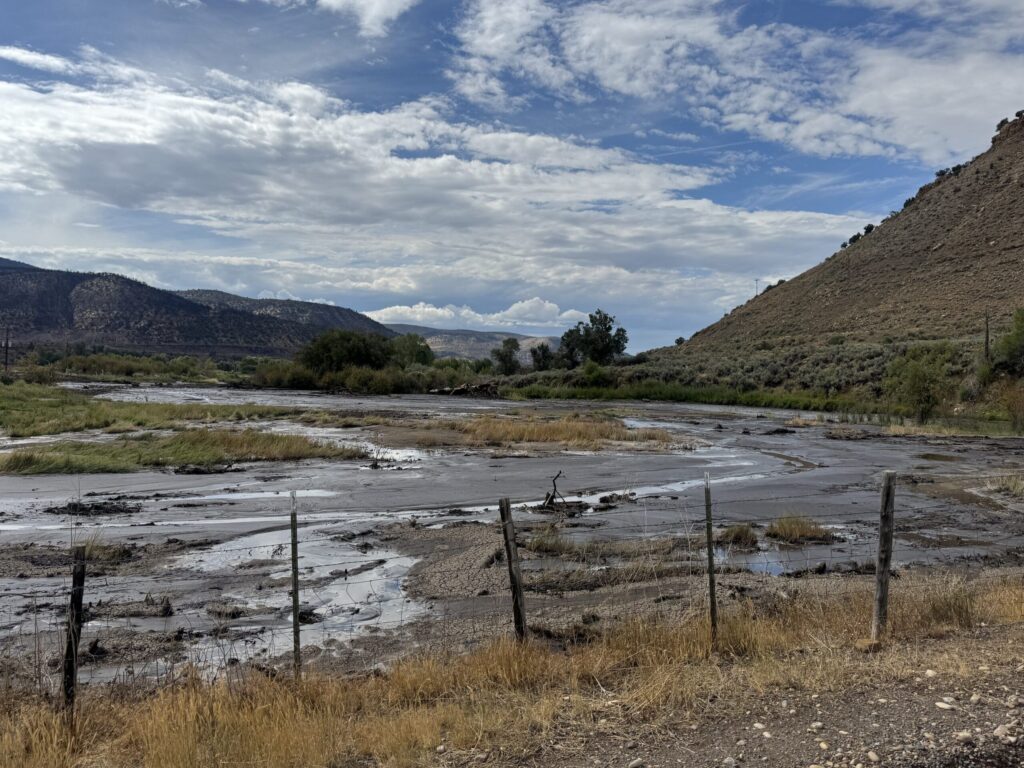
A dispute over federal disaster aid escalated Monday as Colorado Gov. Jared Polis faulted the Trump administration for rejecting the state’s appeals for assistance following last fall’s fires and flooding. The state initially filed for a Major Disaster Declaration for...

Just kidding about the separation of church and state? | Hal Bidlack
Hal Bidlack
hal-bidlack@coloradopolitics.com
Updated 1 day ago
You may recall the old truism the three things you shouldn’t discuss at a cocktail party are religion, politics, and, well, that last one often depends on the situation. But those first two tend to be commonly warned against as...
Tap THC beverage tax to address budget gap | OPINION
Colorado Politics
colorado-politics@coloradopolitics.com
Updated 1 day ago
By Christine Lafferty Colorado is faced with the largest budget deficit in recent memory — calculated to be a $1.5 billion hole according to the state’s Joint Budget Committee. Legislators have been scrambling to address this gap, which signals massive cuts...

A bill to bring back Colorado’s world-class music scene | OPINION
Colorado Politics
colorado-politics@coloradopolitics.com
Updated 1 day ago
By Akilah Graham and Bobby Rogers There was a time when Denver was a destination for music lovers. Jazz clubs lined our streets, and places like El Chapultepec — that legendary little bar on 20th and Market — drew world-class...

Colorado becomes first state to ban arrests solely based on field drug test results
Marissa Ventrelli
marissa.ventrelli@coloradopolitics.com
Updated 2 days ago
Colorado has become the first state in the nation to prohibit arrests based solely on colorimetric drug tests, also known as field drug tests. Last legislative session, lawmakers passed a bill establishing a working group to make recommendations regarding the use of colorimetric drug...

Colorado Senate takes up $46.8 billion budget
Marissa Ventrelli
marissa.ventrelli@coloradopolitics.com
Updated 2 days ago
The battle over Colorado’s proposed $46.8 billion spending plan for next year shifted to the state Senate, which must decide whether to acquiesce to changes made by the House. The senators could also decide to adopt their own changes, which...

When a species is managed atop a pedestal, it isn’t management — it’s emotion | Rachel Gabel
Rachel Gabel
rachel-gabel@coloradopolitics.com
Updated 4 days ago
With petitions being tossed around like glitter at prom, it’s time for reasonable voters to sharpen their pencils and speak up. The first, of course, is in response to the Colorado Parks and Wildlife Commission’s blatant disregard for their director,...

Let the state’s narrative-laundering season begin | Jon Caldara
Jon Caldara
jon-caldara@coloradopolitics.com
Updated 6 days ago
Politics is a game of narrative. Whoever controls the narrative wins. Sure, the truth is interesting. But truth doesn’t sell. It takes time to uncover, assuming people care enough to go digging for it. Narratives are easier. They’re simple, comforting...
PREV
PREVIOUS

The future of Colorado condo development | OPINION
By Peter LiFari For nearly two decades, the story of condominium construction in Colorado has been mistold, misunderstood and misrepresented. This outcome reflects the cumulative effect of more than two decades of Colorado policy, beginning with the Construction Defect Action Reform Act of 2001 and evolving through subsequent legislative changes, that have reshaped the risk landscape governing […]

Colorado lawmakers propose changes to family court procedures | Bills in Brief
Colorado lawmakers introduce hundreds of bills each year. Bills in brief cuts through the noise by explaining which proposals matter, what’s at stake, and how decisions at the Capitol could affect everyday life across the state. Colorado lawmakers from both parties are seeking to make changes to various facets of the state’s family court system — from […]