Federal judge partially allows second World Cup trafficking lawsuit to move forward
A federal judge allowed some claims to move forward last month against companies operating out of Colorado that allegedly participated in a human trafficking venture involving Filipino laborers who constructed facilities for the 2022 World Cup in Qatar.
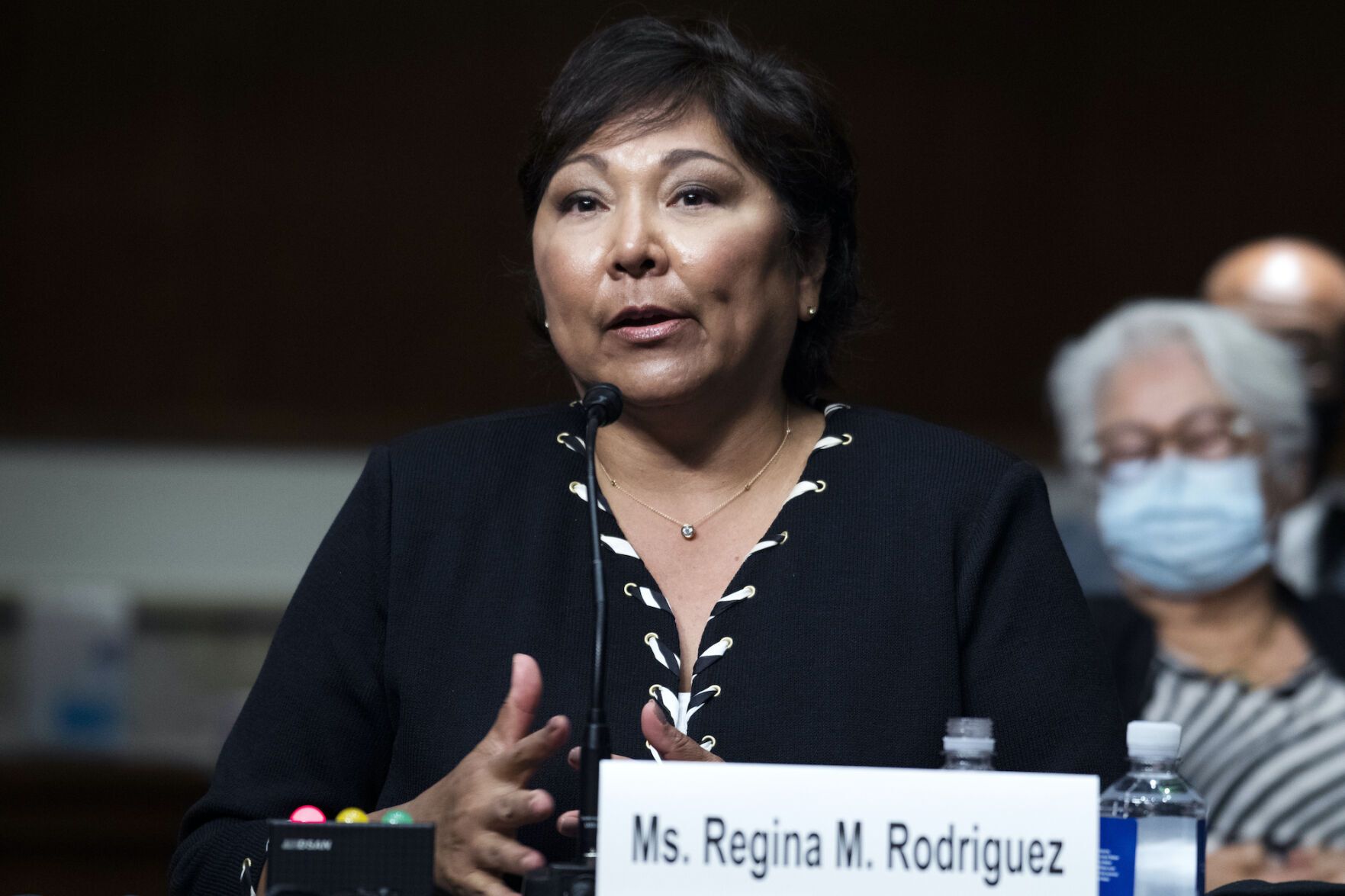
There are three lawsuits pending in Colorado, each brought by a group of workers under the federal human trafficking law. They all allege that the defendant corporations, which oversaw construction for the World Cup, knowingly benefited from their trafficking by overseas contractors. Each case is assigned to U.S. District Court Judge Regina M. Rodriguez and U.S. Magistrate Judge Cyrus Y. Chung.
So far, the judges have largely denied the defendants’ motion to dismiss in the first lawsuit filed, featuring 53 plaintiffs. A motion to dismiss is pending in the third lawsuit, featuring 27 plaintiffs.
On March 30, Rodriguez agreed to dismiss the claims from half of the 40 plaintiffs in the second lawsuit to be filed. Although Chung had relied on his analysis from the first lawsuit and recommended that all of the plaintiffs’ claims be allowed to continue to some degree, Rodriguez believed there were meaningful differences between the allegations.
The plaintiffs all sued CH2M Hill Companies, Jacobs Engineering Group, and related organizations that worked with the Qatari government to construct multiple soccer stadiums and facilities in the lead-up to the World Cup. The Filipino workers alleged their employers took their passports, forced them to live in inhumane conditions, and did not pay them as promised.
The plaintiffs accused the defendant corporations of violating the Trafficking Victims Protection Reauthorization Act. Among other things, the law allows lawsuits against those who knowingly benefit from their participation in a human trafficking “venture.”
When evaluating the first lawsuit last June, Chung agreed with the plaintiffs that the law reached beyond U.S. borders to some extent, as Congress sought to address the enforcement challenges posed by transnational trafficking. Chung noted the complaint sufficiently alleged that entities of CH2M Hill and Jacobs benefitted from the stadium construction venture and would have been put on notice about potential human trafficking.
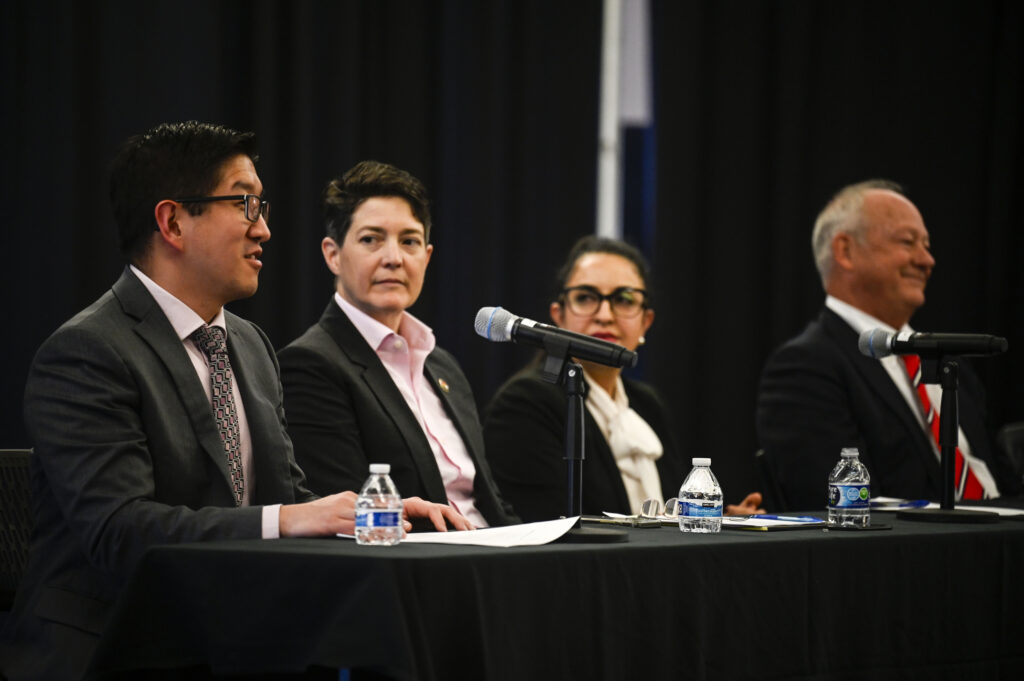
In analyzing the motion to dismiss in the second lawsuit, Chung observed the allegations and the arguments were highly similar. Relying on his prior reasoning, Chung recommended in February that Rodriguez allow the claims to proceed against all but two of the corporate defendants.
The defendants objected, arguing Chung wrongly believed he could “import (his) findings wholesale” from the first case.
In her order, Rodriguez concluded Chung’s analysis was correct on most fronts, and the plaintiffs had sufficiently alleged the defendants knowingly benefited from a human trafficking venture in violation of federal law.
However, Rodriguez noted that, unlike the first lawsuit, around half of the plaintiffs in the second lawsuit alleged that they worked for Habtoor Leighton Group on road construction leading to a stadium.
“The problem is that Habtoor is not listed as one of the ‘participants in the World Cup Construction Venture’ in the Complaint,” she wrote.
While the plaintiffs broadly claimed that the defendants oversaw construction for “all of the facilities and infrastructure,” Rodriguez believed that assertion was insufficient to connect the defendants to Habtoor and its workers.
Consequently, she dismissed the claims from the 19 former Habtoor employees.
The case is Al.C. et al. v. Jacobs Solutions Inc. et al.

Federal judge dismisses lawsuit seeking to force Colorado secretary of state to screen out scam filings
Michael Karlik
michael.karlik@coloradopolitics.com
Updated 7 hours ago
A federal judge dismissed a lawsuit last week that sought to require Colorado’s secretary of state to verify corporate filings in the state’s database to reduce the risk of future fraud. Bernard Butts of Florida, who was 83 when he...
Federal judge finds no constitutional violation by Huerfano County well inspectors
Michael Karlik
michael.karlik@coloradopolitics.com
Updated 3 hours ago
A federal judge concluded last month that two Huerfano County employees did not engage in an unconstitutional search when they approached the plaintiffs’ camper within 40 feet to investigate a potential code violation. In July 2021, the county’s building inspector,...

Federal judge warns of increasingly inadequate immigration bond hearings
Michael Karlik
michael.karlik@coloradopolitics.com
Updated 1 day ago
A federal judge ordered the immediate release of a man in immigration custody last week and, seemingly for the first time in Colorado, warned that the government is increasingly conducting inadequate bond hearings for detainees. Colorado’s federal trial court is facing...

10th Circuit upholds dismissal of Barry Morphew’s civil lawsuit against prosecutors, investigators
Michael Karlik
michael.karlik@coloradopolitics.com
Updated 1 day ago
The Denver-based federal appeals court agreed on Monday that Barry Morphew, who now stands accused for a second time of murdering his wife, failed to state viable claims against the government officials involved in his first, unsuccessful prosecution. Morphew was...
Federal judge blocks evidence from Aurora police’s unconstitutional search
Michael Karlik
michael.karlik@coloradopolitics.com
Updated 1 day ago
A federal judge ruled last month that prosecutors cannot use firearm evidence against a defendant because Aurora police searched him without having any reasonable basis to believe he was armed and dangerous. In evaluating the constitutionality of the search, U.S....

Colorado justices confirm lawyers may ‘borrow’ allegations from elsewhere
Michael Karlik
michael.karlik@coloradopolitics.com
Updated 2 days ago
The Colorado Supreme Court ruled on Monday that plaintiffs’ lawyers can use allegations made elsewhere to bolster their own clients’ claims, so long as the attorney first performs some degree of investigation into the “borrowed” assertions. Under Colorado’s rules for...
Appeals Court rules Douglas County violated open meeting laws
Nicholas Fogleman
nicholas.fogleman@denvergazette.com
Updated 1 day ago
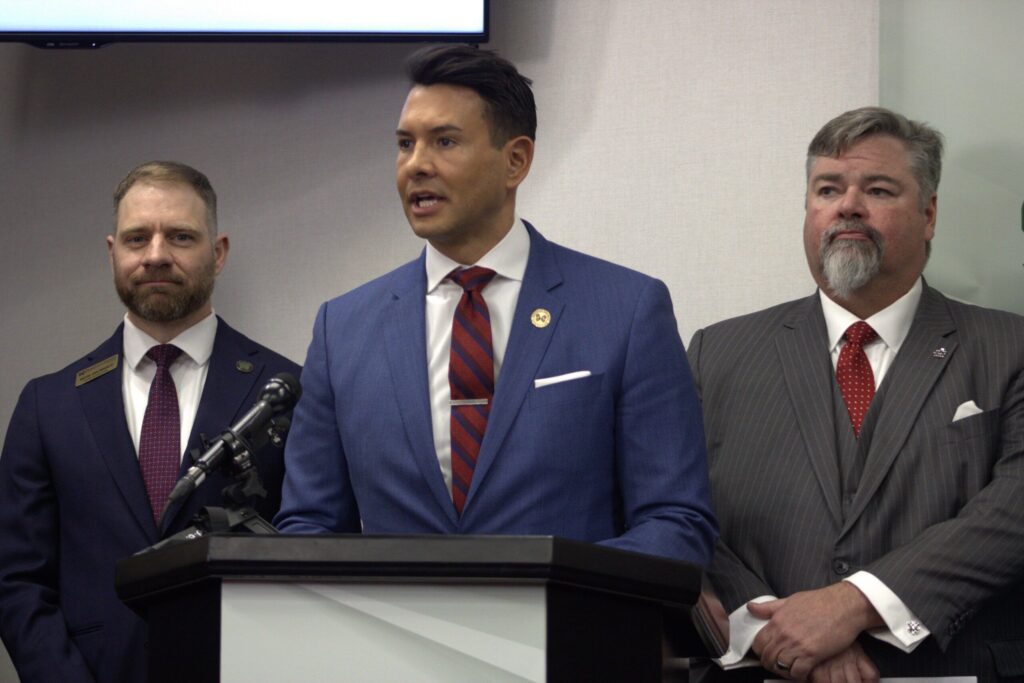
The Colorado Court of Appeals ruled that Douglas County Commissioners violated Colorado open meeting laws in a series of closed meetings leading up to the county’s failed home rule special election. The Thursday ruling reversed a trial court’s denial of...

Colorado justices restore RTD subcontractor’s award, reject ‘drastic’ view of public works law
Michael Karlik
michael.karlik@coloradopolitics.com
Updated 2 days ago
The Colorado Supreme Court on Monday restored a $5.7 million award to a company that helped build a commuter rail line and, in doing so, rejected a view of state law that would nullify a subcontractor’s entitlement to any compensation...
El Paso County defendant’s speedy trial rights violated, Colorado justices find in overturning convictions
Michael Karlik
michael.karlik@coloradopolitics.com
Updated 2 days ago
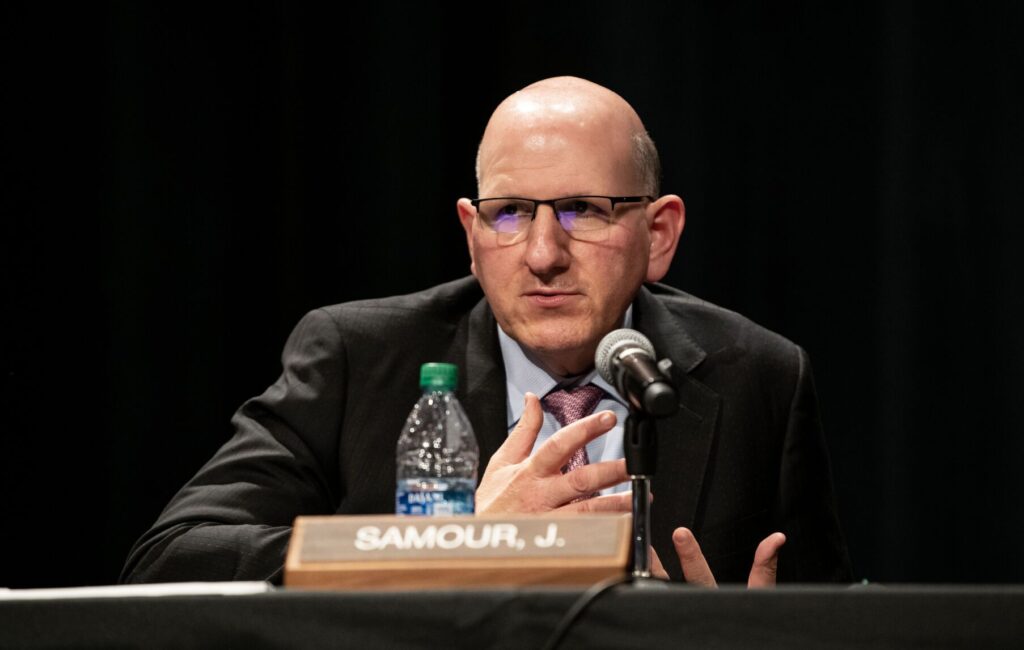
The Colorado Supreme Court concluded on Monday that an El Paso County prosecutor made an unjustified decision to file a mid-case appeal, pushing the trial beyond the legal deadline and requiring that the defendant’s convictions be overturned. In Colorado, the...

SCOTUS decides Colorado case, state’s newest justice authors first opinion | COURT CRAWL
Michael Karlik
michael.karlik@coloradopolitics.com
Updated 2 days ago
Welcome to Court Crawl, Colorado Politics’ roundup of news from the third branch of government. The nation’s highest court decided a First Amendment case out of Colorado, plus the state’s newest justice issued her first opinion since joining the Colorado...