

Senate-passed farmworkers overtime bill easily clears Colorado House committee
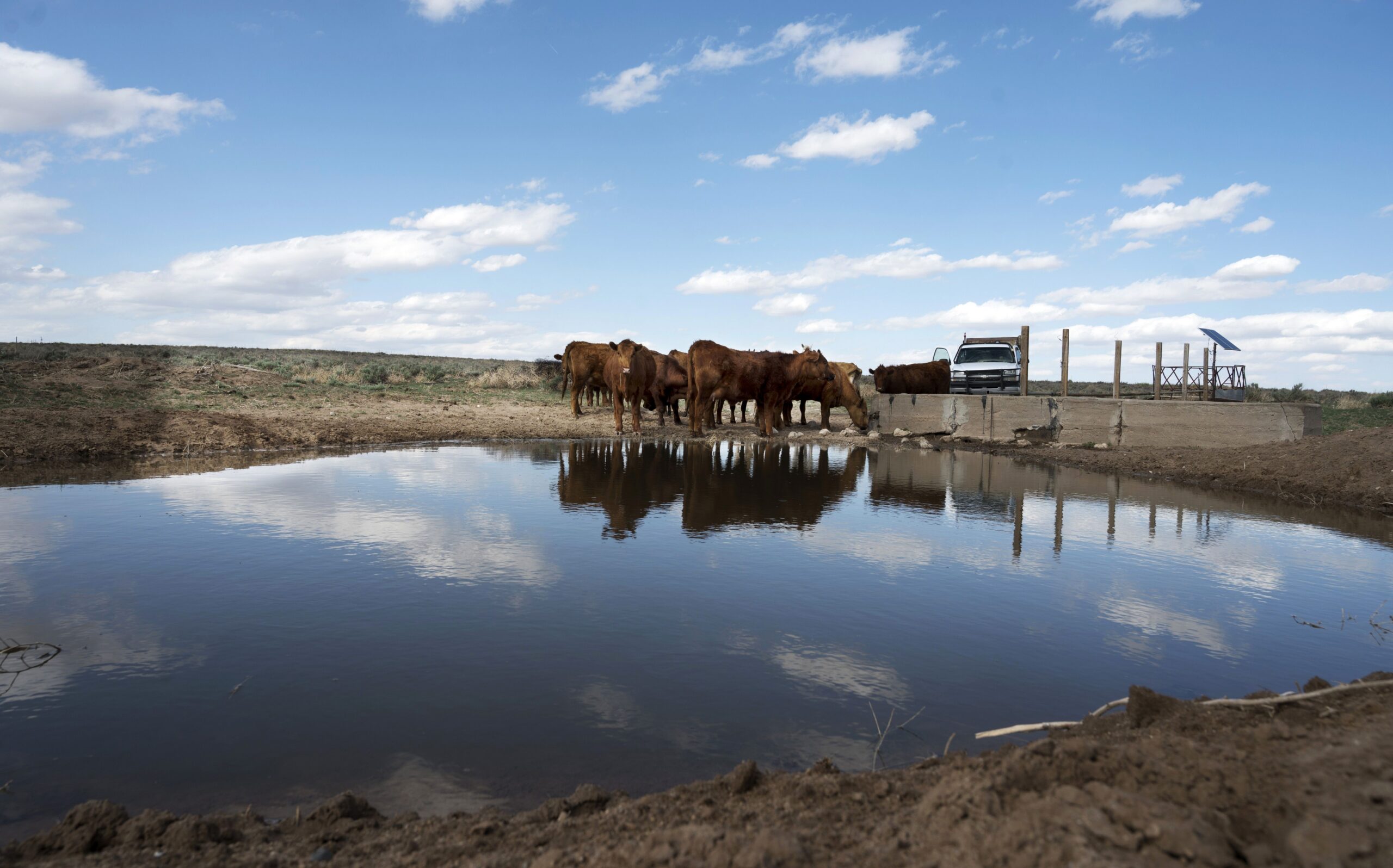
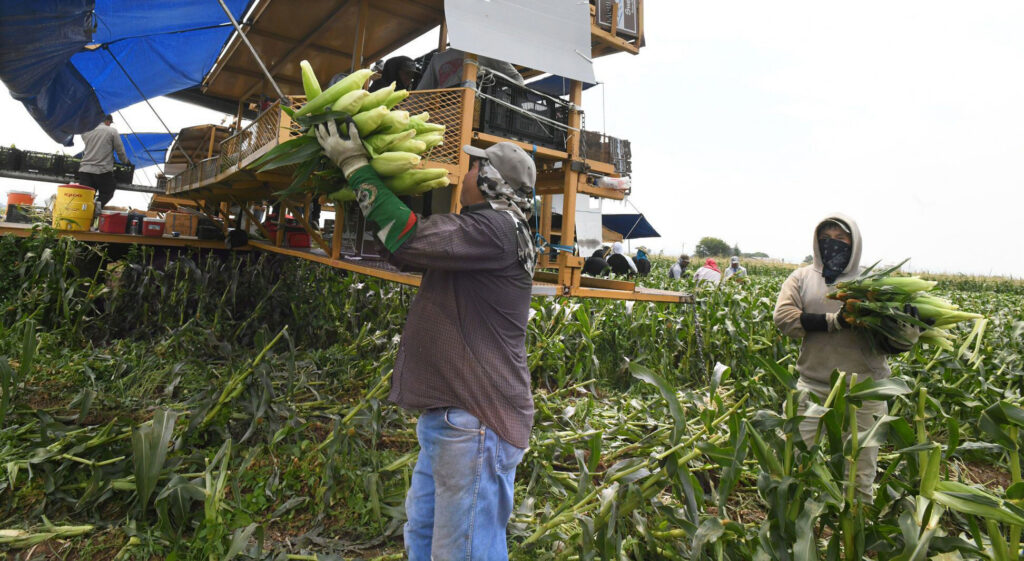
A proposal to ease Colorado’s overtime requirements for agricultural employers cleared a key House committee Monday, setting up a broader fight over whether the state should scale back a labor policy adopted just five years ago.
The House Agriculture, Water and Natural Resources Committee approved the bill Monday to raise the threshold for overtime pay for agricultural workers from the current 48 hours to 56 hours.
Senate Bill 121 narrowly cleared the state Senate on March 25 in a 19–16 vote.
Its path through the House Agriculture, Water and Natural Resources Committee on Monday was far less contentious. Committee Chair Rep. Karen McCormick of Longmont and Rep. Lesley Smith of Boulder joined in advancing the bill to the House floor.
With the House focused this week on the 2026-27 state budget, SB 121 is not expected to reach the full House until that work wraps up and the proposed spending plan moves to the Senate.
As introduced, SB 121 would set the overtime threshold at 60 hours, but the Senate amended it down to 56. The bill would exclude those who are salaried or those who work in 24/7 operations, such as shepherds or workers, who tend cattle herds on the range.
The vote in the House agriculture committee wasn’t as close: Two Boulder County Democrats — McCormick and Smith — joined four rural Democrats and the committee’s three Republicans in sending the bill to the House floor on a 10-3 vote.
The House is expected to see the fiercest debate, as supporters of the current 48‑hour threshold work to steer the bill toward a version that was rejected last month by the Senate Business Affairs and Labor Committee. That earlier proposal, Senate Bill 87, would have lowered the threshold to 40 hours. The committee voted it down on the same 3–2 split that advanced the 56‑hour bill to the full Senate.
The arguments presented on Monday were the same as those heard by the Senate business committee last month.
Labor unions and advocates claimed agriculture workers have been discriminated against for decades, dating back to the federal Fair Labor Standards Act of the 1930s, which excluded them from overtime rules.
The bill’s sponsors, Reps. Matt Martinez, D‑Monte Vista, and House Minority Leader Ty Winter, R‑Trinidad, highlighted the impact that lowering the threshold to 48 hours — and to 56 hours during peak seasons — has had on farmworkers.
Martinez noted the policies implemented in the last five years dealing with farmworkers: Colorado has set minimum wage standards; adopted meal, rest breaks and protections against overwork; prohibited short-handle tools; and put the right to organize for farmworkers into state law.
But farms are struggling, Martinez said, with historic low commodity prices and rising costs for fuel, fertilizer, and equipment due to tariffs. The historically low snowpack has also created stress, leading to water shortages in his San Luis Valley district and throughout the state, he said.
These factors require a pause and re-evaluation of Senate Bill 87, passed in 2021, and the overtime pay issue, he said.
SB 87 had established the requirement for overtime rules, as determined by the state Department of Labor and Employment.
That legislation also included a provision allowing anyone, including labor organizers, to enter a farm or ranch without the landowner’s permission. A similar law in California was declared unconstitutional by the U.S. Supreme Court three days before Gov. Jared Polis signed SB 87 into law.
The Colorado General Assembly repealed that portion of the Colorado law last year.
“We are failing our farmworkers,” Martinez said.
Producers are cutting hours so that when a worker reaches the 48-hour limit, they’re done for the week. That means people who used to be able to work longer days are taking home less pay, he said.
“It doesn’t mean they’re working less,” Martinez explained. “It means they’re working multiple jobs to get the same wages.”
In addition, workers are not coming to Colorado because they can earn more money in other states providing labor to a single farm or ranch, Martinez said, adding that working on multiple farms and ranches just to earn the same income is neither fair nor equitable to the farm worker.
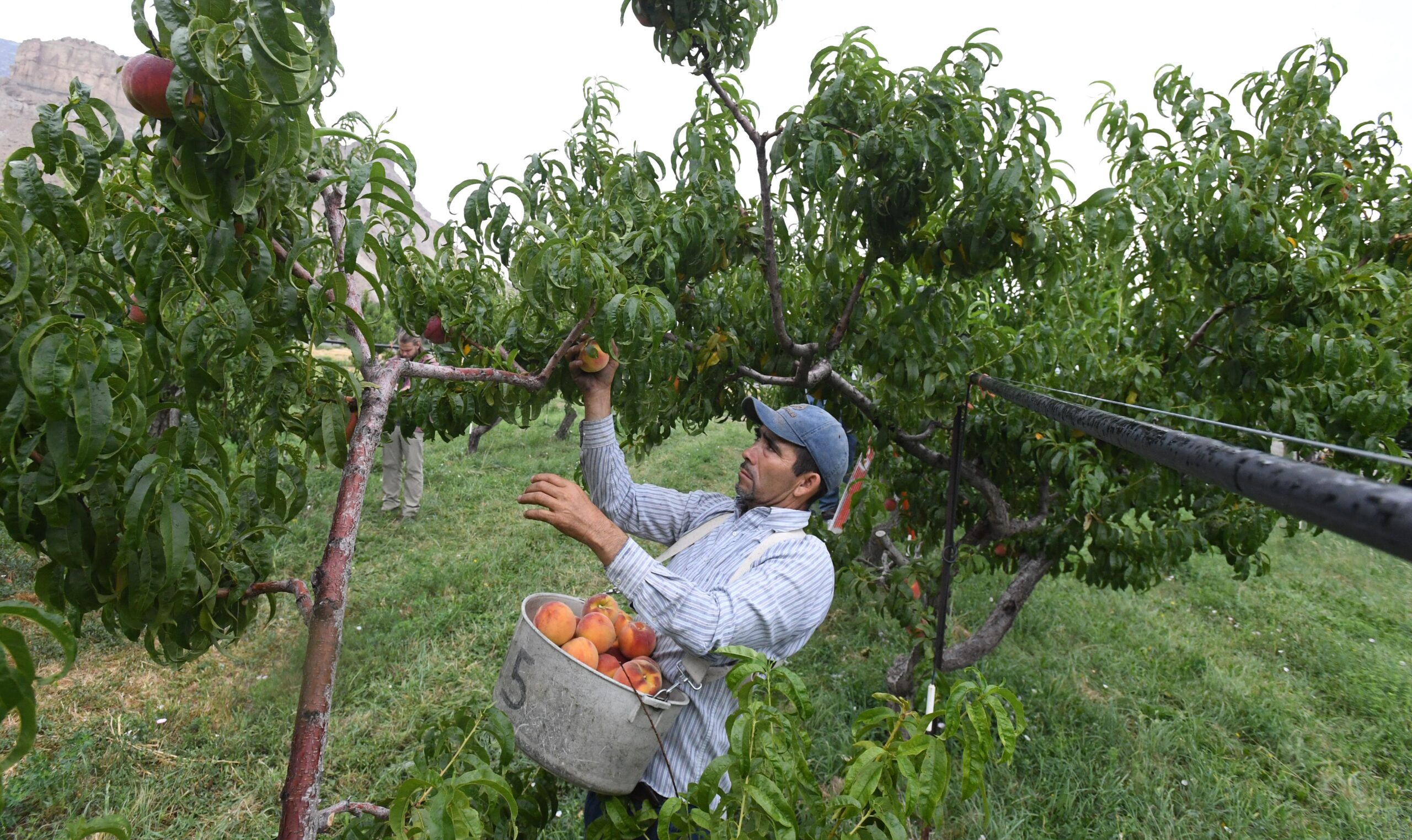
Winter, meanwhile, told the committee about a visit to Rocky Ford, home to the state’s cantaloupe crop, and of conversations he had with workers.
One family had been coming to Colorado to work on those farms for 35 years. They were upset that they will have to go elsewhere to get the hours they need — after building a relationship with the farmer for a generation, Winter said.
Winter noted that two-thirds of Colorado farms and ranches reported net losses, based on the 2022 U.S. Census on agriculture. Two-thirds of farmers and ranchers have second jobs just to make ends meet.
“These are the people that feed and clothe you and we need them. We need them for the food security. We need them for the jobs that they create for this state,” he said.
Senate Bill 121 strikes a needed balance, he said.
Opponents disputed those numbers, along with claims that farmworkers are making less money, citing a California study often cited by sponsors and advocates of SB 121.
Hunter Knapp of Project Protect Food Systems Workers noted the California study looked only at crop workers, not dairy or ranching, and that in California, agriculture workers get overtime pay after 8 hours per day and double after 12 hours per day.
“Colorado has no similar requirement,” Knapp said.
The California data is fundamentally incomparable to what is happening in Colorado, where workers still do not have daily overtime pay even after 12 hours, Knapp added.
“Agriculture is the only industry where the economic challenges that affect workers are used to justify decreasing their hourly wages and labor protections,” he said.
Knapp said the organization surveyed nearly 600 workers, including about 200 in the dairy and livestock sectors. Among them, 55% of dairy workers and 70% of livestock workers reported working more than 48 hours a week. Overall, only 38% said they received overtime pay, Knapp said.
As for the farms that reported net losses, Charles Brennan of the Colorado Center on Law and Policy said those net losses don’t include the income farm owners get from second off-farm jobs and that they reflect standard accounting and tax strategies, rather than financial distress.
Last year, the American Farm Bureau reported that nationally, chapter 12 bankruptcies for farms increased 46% over 2024 filings.
Zoila Gomez, also with Project Protect, spoke of a family member who worked in agriculture and worked very long hours, sometimes until 4 a.m. If people wonder why farm workers are never at community or school events, their children aren’t involved in extracurricular activities or the kids don’t know English, she concluded it is the culture of “work, work, work.”
Another farmworker told her they’re working fewer than 48 hours, which allows them to spend time with their children and family, and even though the money is less, “we manage,” Gomez said.
Robert Sakata, who served as acting commissioner of agriculture until recently, said he supports SB 121. His family has farmed in Adams County for decades.
“Our employees are like family,” he told the committee. “We can’t afford the benefits that other industries offer,” he said, adding that, as a result, what they offer is extreme flexibility.
Workers can go home when it rains, for example, and spend time with their families, he said.
Restricting hours is necessary because of the competitive environment; they’re competing with other states that don’t have overtime, he said.
He noted that some of his employees left to work in oil and gas when that industry was booming — but all save one returned because of the flexibility and the care he has for them.
Farming is different from retail because Mother Nature sets the hours, he said.
Mike Drieth, who has worked on farms for 17 years, said he appreciates the intention behind the 2021 law.
“I know it was created to help workers like me,” he said.
But the result has been the exact opposite, he said.
Agriculture isn’t just a job that fits into a limited schedule — the work takes the time it needs, and weather and crops don’t operate on a clock, he said.
Before 2021, he could work the hours necessary to support his family. Now, because they have to manage labor costs, he is sent home early or told not to come in at all. He’s losing income and now takes on second jobs, which means more time away from his family, he said.
The 2021 law has created financial strain and negatively affected his household, Dreith said.
“It is hurting us financially, personally, and professionally,” he said, adding a 56-hour threshold would be more realistic.
“I’m proud of the work I do. I just want the chance to do it,” he said.
The committee passed the bill without the amendments sought by the opposition when it was approved by the Senate. Those amendments, including attempts to set a 40-hour threshold, are likely to surface when the bill is debated by the full House.

Colorado farmers begin spring planting season with soaring fertilizer costs and price-gouging fears
Marianne Goodland
marianne.goodland@coloradopolitics.com
Updated 2 weeks ago
As Colorado farmers prepare their fields for spring planting, many are sounding the alarm over fertilizer prices that have surged far beyond what they say global supply disruptions can explain. With nitrogen costs up 30% in a matter of days,...
Farmworker overtime bill advances after lengthy debate in Colorado Senate
Marianne Goodland
marianne.goodland@coloradopolitics.com
Updated 2 weeks ago
The Colorado Senate on Tuesday narrowly advanced a bill to raise the overtime threshold for agricultural workers, defeating more than a dozen amendments from its leading opponent aimed at rewriting the measure. As introduced, Senate Bill 121 would raise the threshold for...
Colorado Agriculture Day: A feast for the ears, eyes and stomachs
Marianne Goodland
marianne.goodland@coloradopolitics.com
Updated 2 weeks ago
Gov. Jared Polis, legislators and friends of agriculture gathered at the state Capitol on Tuesday to celebrate Colorado Agriculture Day. The annual recognition of the contributions of Colorado farmers, ranchers and agribusiness drew hundreds to the Capitol’s west foyer, where...
Colorado Senate committee advances bill increasing overtime threshold for farmworkers
Marianne Goodland
marianne.goodland@coloradopolitics.com
Updated 3 weeks ago
The struggle to balance farmworker protections with the survival of Colorado’s family farms took center stage Thursday as senators debated two competing overtime bills. The Senate Business, Labor and Technology Committee held a rare double-bill hearing that led to a...

Department of Agriculture warns of packages holding potentially invasive seeds
Michael Braithwaite
michael.braithwaite@gazette.com
Updated 4 weeks ago
Spring planting is around the corner, and the Colorado Department of Agriculture wants residents to know where their seeds are coming from. Officials with the department warned Tuesday that they received reports of unsolicited packages containing plant seeds mailed internationally...
More than 20 Colorado counties receive grants to improve land record-keeping systems
Maren Prince
maren.prince@denvergazette.com
Updated 1 month ago
More than 20 Colorado counties received a total of $2.5 million to improve their land record-keeping systems, according to a Monday news release. The State’s Electronic Recording Technology Board awarded 22 counties with grants ranging from $5,000 to $350,000, according...
JBS strike could trip up Greeley’s economic surge
Hap Fry, Special to The Gazette
hap-fry@gazette.com
Updated 2 months ago
GREELEY – The upward trajectory of Greeley has been hard to match by other Colorado communities in the here and now. The city is on the verge of experiencing dramatic growth and change. Greeley is in the midst of developing a...
A fight over seeds and bees: Colorado Democrats target neonicotinoid pesticides
Marianne Goodland
marianne.goodland@coloradopolitics.com
Updated 2 months ago
Colorado lawmakers are weighing new restrictions on a class of pesticides after Gov. Jared Polis signaled support for a Democratic-backed bill aimed at protecting pollinators — a proposal that has raised sharp worries from farmers who rely on treated seeds...

We tested vapes in Colorado for signs of hemp. This is what we found.
Christopher Osher
chris.osher@gazette.com
Updated 2 months ago
This article was produced for ProPublica’s Local Reporting Network in partnership with The Denver Gazette. Sign up for Dispatches to get our stories in your inbox every week. Leaders in the Colorado marijuana industry have complained in recent years that...

Colorado farmers warn U.S. Sen. John Hickenlooper tariffs and research cuts endanger agriculture
Marianne Goodland
marianne.goodland@coloradopolitics.com
Updated 3 months ago
Northern Colorado farmers told U.S. Sen. John Hickenlooper this week that tariffs and President Donald Trump’s decision to import $40 billion worth of beef from Argentina have hurt Colorado’s agricultural industry. But the administration’s cuts to scientific research are almost...
PREV
PREVIOUS
Federal judge blocks evidence from Aurora police's unconstitutional search
A federal judge ruled last month that prosecutors cannot use firearm evidence against a defendant because Aurora police searched him without having any reasonable basis to believe he was armed and dangerous. In evaluating the constitutionality of the search, U.S. District Court Senior Judge William J. Martínez noted that police officers were called to a […]

10th Circuit upholds dismissal of Barry Morphew's civil lawsuit against prosecutors, investigators
The Denver-based federal appeals court agreed on Monday that Barry Morphew, who now stands accused for a second time of murdering his wife, failed to state viable claims against the government officials involved in his first, unsuccessful prosecution. Morphew was arrested in May 2021, almost a year after his wife, Suzanne Morphew, disappeared. State prosecutors […]