

Inside the GOP caucus: Colorado legislator explains why a bigger budget still means cuts

Tasked with explaining a budget driven by rising caseloads, shifting federal dollars and a $1.5 billion shortfall, Joint Budget Committee member Rep. Rick Taggart spent Tuesday’s Republican caucus meeting detailing why the 2026–27 spending plan appears larger on paper, even as many state programs face cuts.
“If I look a little tired, I am,” Taggart told his Republican colleague. “We started with well over a billion dollars that we had to trim from this budget.”
He noted that his fellow JBC members and staff had spent the past five months working to address both budgetary and structural challenges.
“I’ll be the first to say it isn’t perfect,” he added, acknowledging that others may have different priorities. “But we’ve worked very hard on your behalf.”
As reflected in House Bill 1410, the 2026-27 state budget sits at $49.5 billion.
However, that figure includes nearly $3 billion in double-counting, known as reappropriated funds. Those are dollars one state agency pays to another: For example, what a department pays the attorney general’s office for legal services or what others pay the Department of Personnel and Administration for human resource or other employee services.
Once those double-counted dollars are removed, the total is $46.8 billion, which is what the state would actually spend in 2026-27.
The largest increase in the budget comes from federal funds, which account for about a third.
Most of the reductions fall on the general fund, which lawmakers tap to launch new programs or to keep existing ones. Economists had projected that this part of the budget would face a shortfall — estimated at $1.2 billion by the governor’s economists and $1.5 billion by legislative economists.
General fund dollars come primarily from corporate and individual income taxes and state sales and use taxes.
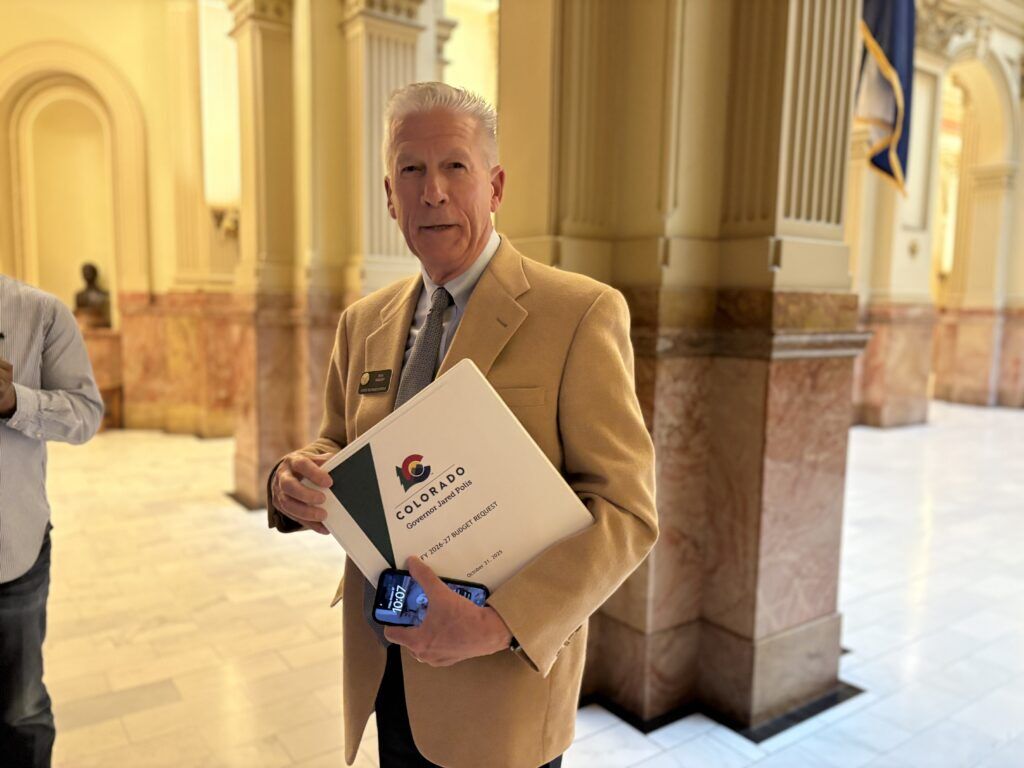
During the House Republican caucus meeting on Tuesday, Taggart of Grand Junction found himself fielding questions, as he walked members through how the JBC crafted the budget and what the major issues are.
He started by talking about the top six state agencies by dollars: Corrections, health care financing, education, higher education, judicial and law.
Taggart told his colleagues that 13 of 20 state agencies saw their budgets cut for 2026-27, leaving some to question why the proposed budget is still higher than last year’s.
It’s caseload, Taggart explained, pointing to a higher medical caseload in the Department of Corrections, an aging prison population, and the need for 941 more beds to accommodate the state’s growing crisis in prison capacity.
Notably, increased caseload and Medicaid utilization are driving the other big increase within Department of Health Care Policy and Financing.
Without those two areas, the 2026-27 state budget would spend less than in 2025-26, he said.
Taggart said that once lawmakers look past the overall spending total, they’ll see that many areas are being cut from last year.

Reductions would include state employee compensation, Medicaid provider payments, services for children with intellectual and developmental disabilities, higher education funding, dental benefits for children and adults on Medicaid, as well as long‑term care for children who rely on home and community‑based services.
One issue the Republican caucus focused on was Cover All Coloradans, the 2021 law that expanded medical coverage to immigrant children 19 and under, as well as pregnant women living in the U.S. illegally.
The program has already cost more than four times its original $26 million estimate. Taggart said Tuesday that its price tag could reach $130 million in 2026–27.
“These kids did not decide to come to Colorado; their parents did,” Taggart told the committee.
The JBC wants to serve this population, but it cannot continue to expand at this rate, he said.
Under an “orbital” bill designed to help balance the budget, the program would be capped at 25,000 children. Currently, the program has 21,000 children enrolled. The overall program cost is also capped at $96 million in the new budget.
Even with a set cap, Taggart told his colleagues that there is still a risk that those who can’t get into the program will show up in already-stressed hospitals, driving higher costs for the latter, especially the rural ones, as a result of uncompensated care.
“I know it’s hard for you folks to support this,” he said.
But without the House Bill 1411, the state could get overwhelmed by those costs, he said.

The provider rate is a concern for some Republicans. The JBC has voted to cut provider rates across the board by 2%, with other reductions depending on the type of service provided. Without those cuts, the money would have to come from somewhere else, including K-12 education, higher education or other vital areas, Taggart explained.
Rep. Stephanie Luck of Penrose asked how lawmakers should explain the budget to constituents, noting that overall spending is higher than in 2025–26, even as news reports highlight a $1.5 billion shortfall.
Taggart pointed to the cuts affecting 13 of the state’s 20 agencies and the caseload-driven pressures behind some of the spending increases. He also emphasized that federal funding in the budget is rising by 10%, and that — for the first time — the general fund will cover the senior and disabled veterans’ homestead exemptions, instead of relying on TABOR surplus dollars.
In response to a question from Rep. Ken DeGraaf of Colorado Springs, Taggart said nothing is off limits. He pointed to worries about waste, fraud, and abuse in Medicaid and said the JBC has been digging into them in areas such as pediatric behavioral therapy and non-emergency medical transport.
He also noted the budget took $10 million out of transportation, money headed to the Front Range passenger rail project — or what DeGraaf called the governor’s “choo-choo.”
Rep. Ryan Gonzales of Greeley asked about the potential for federal funding cuts amid “hostility” from the Polis administration and the attorney general toward the federal government.
“There’s a risk,” Taggart replied.
Spending $2.5 million to educate parents about healthy foods is a hard “no” for Rep. Rebecca Keltie of Colorado Springs. That funding comes from the Healthy School Meals for All program, but Keltie said that education should be provided by parents to children.
That’s not the state’s job, she said.
She also had problems with the tuition waiver for Native American students attending Fort Lewis College, resulting in an increase of about $800,000. The Southern Utes are among the richest tribes in the entire country, she said.
“We’re giving tuition waivers during a time when we don’t have the money, to people who are some of the wealthiest people,” she said.
Taggart explained that the waiver comes from a treaty with the federal government and that it isn’t new.
As for the nutrition education program, Taggart said he recognizes that his colleagues probably won’t agree with him, but they should understand the societal costs of obesity. That $2.5 million helps parents and students understand how important nutrition is to their future health, and it should go along with the money spent on providing lunches and breakfasts every day, he told the caucus.
The full House is expected to debate the budget bill and its accompanying orbital bills on Wednesday.

Colorado’s 661‑page budget read aloud after Rep. Bradley invokes procedural rule
Marianne Goodland
marianne.goodland@coloradopolitics.com
Updated 3 hours ago
A rarely used procedural move by Rep. Brandi Bradley, R‑Roxborough Park, has thrown the Colorado House into an extended slowdown, after she invoked her right to have the 661‑page state budget bill read aloud in full. While unprecedented, once Bradley...
Literal reading of budget bill complicates Colorado legislators’ plans for GOP assembly
Marianne Goodland
marianne.goodland@coloradopolitics.com
Updated 2 hours ago
Republican Rep. Brandi Bradley’s decision to force the full reading of the state budget — called the “long bill” for its obvious length — has not only slowed House business to a crawl but also disrupted her colleagues’ plans for...
Colorado GOP votes down bid to ask court to prevent unaffiliated voters from voting in June primary
Ernest Luning
ernest.luning@coloradopolitics.com
Updated 3 hours ago
Members of the Colorado Republican Party’s executive committee rejected a proposal Thursday night to seek an emergency injunction in federal court to prevent unaffiliated voters from participating in the state’s upcoming June primary election. The proposed motion, backed by Colorado...
City of Northglenn, state fail to reach agreement on mental health facility amid safety concerns
Marissa Ventrelli
marissa.ventrelli@coloradopolitics.com
Updated 2 hours ago
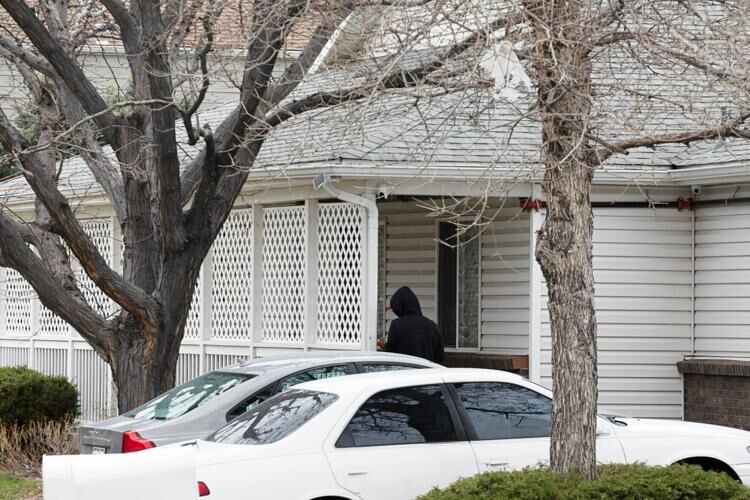
The City of Northglenn said it was unable to reach an agreement with the state on a pair of transitional living facilities for individuals with mental health conditions run by the Colorado Department of Human Services. The facilities, located across...
Colorado lawmakers grapple with spending cuts amid $1 billion-plus deficit
Marianne Goodland
marianne.goodland@coloradopolitics.com
Updated 24 hours ago
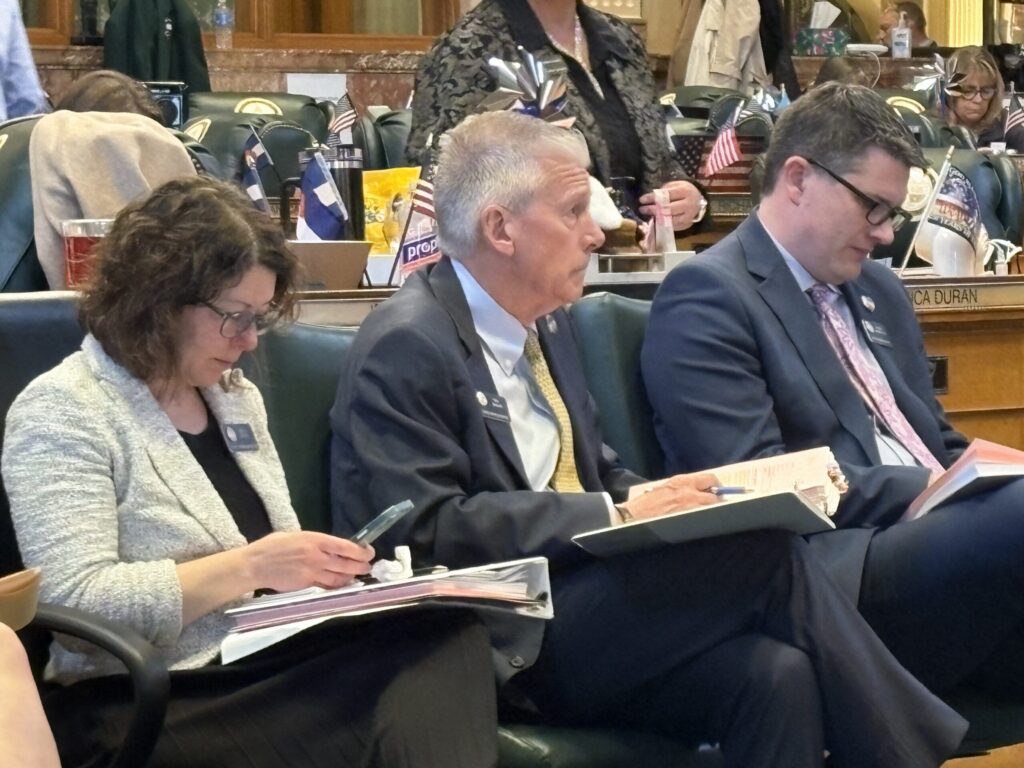
The battle over Colorado’s budget for next year — which stalled in the House over a procedural maneuver — entered a more difficult phase on Thursday, when legislators grappled with hundreds of millions of dollars in proposed reductions to balance...

New rules for private judges in Colorado include discipline oversight, campaign contributions
David Migoya
david.migoya@gazette.com
Updated 1 day ago
The Colorado Supreme Court recently determined the state’s private judges — retired jurists appointed to oversee civil cases that rarely get public scrutiny — can now make political contributions freely and without reserve, overruling a prohibition that had been in...

Colorado bill reshaping RTD board advances
Marissa Ventrelli
marissa.ventrelli@coloradopolitics.com
Updated 1 day ago
A proposal to reshape the Regional Transportation District’s leadership easily cleared a committee vote Wednesday, advancing the bill sponsors say is needed to revive a transit system still struggling to regain riders and public trust. Critics have countered that, while...

Colorado Democrat John Hickenlooper pulls in nearly $1.4M in 1st quarter, heads into primary with $4M
Ernest Luning
ernest.luning@coloradopolitics.com
Updated 4 hours ago
U.S. Sen. John Hickenlooper’s campaign raised nearly $1.4 million in the first quarter of 2026 and plans to report more than $4 million on hand heading into Colorado’s June primary, the first-term Democrat’s campaign said Thursday. That brings Hickenlooper’s total...

Republican Ron Hanks plans ‘grassroots’ primary challenge to US Rep. Jeff Hurd in Colorado’s 3rd CD
Ernest Luning
ernest.luning@coloradopolitics.com
Updated 4 hours ago
Colorado Republican Ron Hanks, a former state lawmaker, plans to challenge first-term U.S. Rep. Jeff Hurd in the 3rd Congressional District primary by seeking a spot on the June ballot at the GOP’s district assembly in Pueblo on Friday, Colorado...

Colorado counties cannot challenge state law restricting immigration contracts, appeals court says
Michael Karlik
michael.karlik@coloradopolitics.com
Updated 1 day ago
Colorado’s second-highest court ruled on Thursday that counties lack standing to challenge a 2023 state law that restricts their ability to contract with the federal government or private entities for immigration detention. A three-judge Court of Appeals panel agreed with...
PREV
PREVIOUS

10th Circuit upholds dismissal of Barry Morphew's civil lawsuit against prosecutors, investigators
The Denver-based federal appeals court agreed on Monday that Barry Morphew, who now stands accused for a second time of murdering his wife, failed to state viable claims against the government officials involved in his first, unsuccessful prosecution. Morphew was arrested in May 2021, almost a year after his wife, Suzanne Morphew, disappeared. State prosecutors […]

Federal judge warns of increasingly inadequate immigration bond hearings
A federal judge ordered the immediate release of a man in immigration custody last week and, seemingly for the first time in Colorado, warned that the government is increasingly conducting inadequate bond hearings for detainees. Colorado’s federal trial court is facing a flood of “habeas corpus” petitions from those in immigration detention. The most common allegation […]