

10th Circuit upholds dismissal of Barry Morphew’s civil lawsuit against prosecutors, investigators

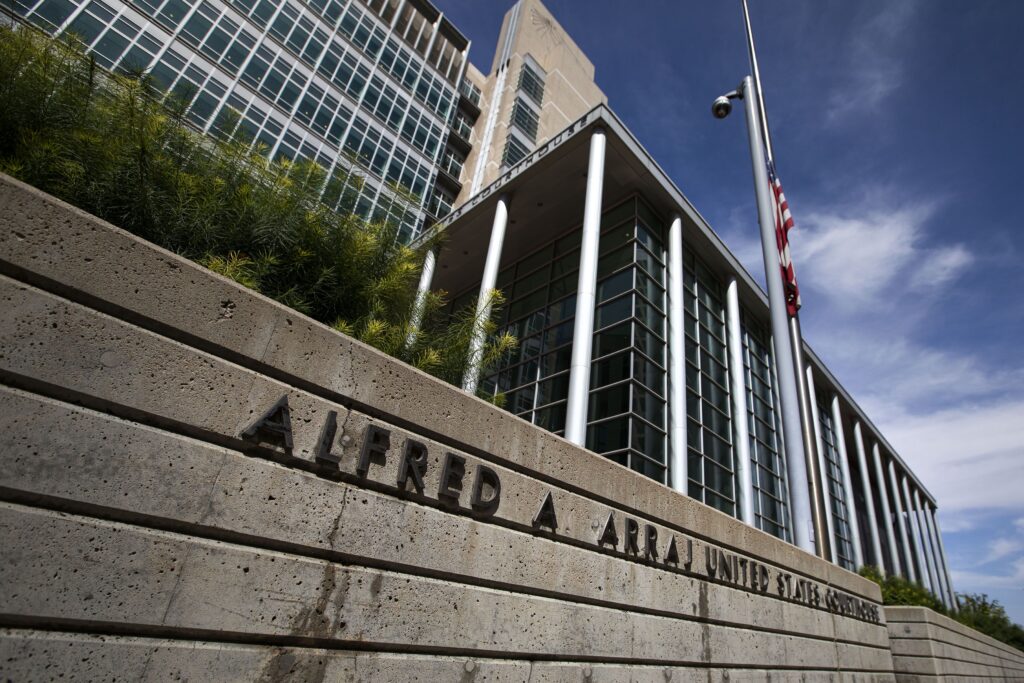
The Denver-based federal appeals court agreed on Monday that Barry Morphew, who now stands accused for a second time of murdering his wife, failed to state viable claims against the government officials involved in his first, unsuccessful prosecution.
Morphew was arrested in May 2021, almost a year after his wife, Suzanne Morphew, disappeared. State prosecutors dismissed the case in April 2022 and Morphew filed a federal lawsuit a year later. As defendants, he named the elected district attorney, Linda Stanley; multiple deputy district attorneys; investigators with various agencies; and officials in Chaffee County.
A trial judge dismissed Morphew’s claims related to his wrongful prosecution, largely finding that probable cause existed to charge him for Suzanne’s murder even without the alleged omissions and misrepresentations by law enforcement.
In an April 6 opinion, a three-judge panel of the 10th U.S. Circuit Court of Appeals agreed.
“Here, the district court emphasized the many inculpatory facts in the arrest affidavit that Mr. Morphew did not dispute,” wrote Judge Veronica S. Rossman. “Mr. Morphew’s allegations, taken as true and viewed in the light most favorable to him, do not plausibly allege a lack of probable cause for his arrest and prosecution.”
Case: Morphew v. Chaffee County, Colorado
Decided: April 6, 2026
Jurisdiction: U.S. District Court for Colorado
Ruling: 3-0
Judges: Veronica S. Rossman (author)
Scott M. Matheson Jr.
Gregory A. Phillips
Since Morphew filed his civil lawsuit, investigators found and identified remains in Saguache County as Suzanne’s. A grand jury indicted Morphew in that jurisdiction, and he has pleaded not guilty to Suzanne’s murder.
While the appeal was pending, the 10th Circuit asked lawyers for Morphew and the defendants to address the effect of Morphew’s renewed prosecution on his civil case. Also, the court wondered whether it should hold oral arguments in the appeal, given that Morphew’s attorneys’ statements could pose a risk to his criminal defense.
Morphew’s lawyers agreed they had an ethical duty to “refrain from making statements” that could harm their client and asked the 10th Circuit to pause the appeal until the criminal proceedings were over. The defendants asked the court to decide the appeal, as the murder prosecution could take years.
The 10th Circuit panel chose to move forward and did not rely on any of the developments from Morphew’s second prosecution.
Morphew’s complaint alleged that the 129-page affidavit that investigator Alex Walker IV signed in support of his arrest contained misleading statements and omissions. He alleged the defendants were liable for malicious prosecution and other violations of his rights that largely revolved around the lack of probable cause to believe he murdered Suzanne.
In a September 2024 order, U.S. District Court Chief Judge Daniel D. Domenico repeatedly criticized the defendants for their unsuccessful first prosecution of Morphew, the consequences of which included the Colorado Supreme Court’s disbarment of Stanley.
“Plaintiff, like anyone accused of a crime, deserves better than what happened here. The People of the State of Colorado, on whose behalf and in whose name the charges against Plaintiff were brought, deserved better. And Suzanne Morphew certainly deserved better,” wrote Domenico.

However, in reading the extensive allegations in the affidavit and accounting for Morphew’s contention that relevant information was misrepresented or omitted, Domenico still found the investigator’s statement in support of an arrest warrant established probable cause.
“Did the investigators and prosecutors have an obligation to Plaintiff and the state courts to be more careful and candid? Yes. Did they fail to live up to that duty? By all appearances, yes. Do the full facts as alleged here raise some doubt about the theory presented in the affidavit and the certainty that Plaintiff was solely responsible for Mrs. Morphew’s death? Yes,” he wrote. “But do they eliminate even a ‘fair probability’ that he was involved? The answer to that can only be no. For all its infuriating flaws, then, the prosecution of Plaintiff was not unlawful.”
Morphew appealed to the 10th Circuit, taking issue with Domenico’s reading of the allegations in the arrest affidavit.
“His findings are replete with credibility determinations best left for the jury and certainly warranted an opportunity for Plaintiff to respond,” wrote Morphew’s lawyers.
“In fact, the district court did precisely what Mr. Morphew argues it should have done: accepting his allegations as true, it analyzed whether a ‘corrected’ affidavit (excluding the material Mr. Morphew claims to be false and misleading, and including the information Mr. Morphew claims to have been wrongly omitted) would have supported probable cause for the arrest,” responded the defendants. “That the district court reached a different conclusion than Mr. Morphew does not mean the district court’s conclusion is wrong.”
The 10th Circuit panel agreed with Domenico’s handling of the probable cause issue.
“The defendants raised the issue of whether Mr. Morphew sufficiently alleged lack of probable cause,” wrote Rossman. “The governing legal standard obligated the district court to determine whether the modified affidavit provided probable cause.”
The case is Morphew v. Chaffee County, Colorado et al.
Reporter Carol McKinley contributed to this article.

Federal judge blocks evidence from Aurora police’s unconstitutional search
Michael Karlik
michael.karlik@coloradopolitics.com
Updated 6 hours ago
A federal judge ruled last month that prosecutors cannot use firearm evidence against a defendant because Aurora police searched him without having any reasonable basis to believe he was armed or dangerous. In evaluating the constitutionality of the search, U.S....

Colorado justices confirm lawyers may ‘borrow’ allegations from elsewhere
Michael Karlik
michael.karlik@coloradopolitics.com
Updated 20 hours ago
The Colorado Supreme Court ruled on Monday that plaintiffs’ lawyers can use allegations made elsewhere to bolster their own clients’ claims, so long as the attorney first performs some degree of investigation into the “borrowed” assertions. Under Colorado’s rules for...
Appeals Court rules Douglas County violated open meeting laws
Nicholas Fogleman
nicholas.fogleman@denvergazette.com
Updated 5 hours ago
The Colorado Court of Appeals ruled that Douglas County Commissioners violated Colorado open meeting laws in a series of closed meetings leading up to the county’s failed home rule special election. The Thursday ruling reversed a trial court’s denial of...

Colorado justices restore RTD subcontractor’s award, reject ‘drastic’ view of public works law
Michael Karlik
michael.karlik@coloradopolitics.com
Updated 1 day ago
The Colorado Supreme Court on Monday restored a $5.7 million award to a company that helped build a commuter rail line and, in doing so, rejected a view of state law that would nullify a subcontractor’s entitlement to any compensation...
El Paso County defendant’s speedy trial rights violated, Colorado justices find in overturning convictions
Michael Karlik
michael.karlik@coloradopolitics.com
Updated 20 hours ago
The Colorado Supreme Court concluded on Monday that an El Paso County prosecutor made an unjustified decision to file a mid-case appeal, pushing the trial beyond the legal deadline and requiring that the defendant’s convictions be overturned. In Colorado, the...

SCOTUS decides Colorado case, state’s newest justice authors first opinion | COURT CRAWL
Michael Karlik
michael.karlik@coloradopolitics.com
Updated 1 day ago
Welcome to Court Crawl, Colorado Politics’ roundup of news from the third branch of government. The nation’s highest court decided a First Amendment case out of Colorado, plus the state’s newest justice issued her first opinion since joining the Colorado...
Federal judge sides with Mesa County school district in ex-student’s First Amendment claims
Michael Karlik
michael.karlik@coloradopolitics.com
Updated 4 days ago
A federal judge concluded last week that Mesa County Valley School District 51 and three of its administrators did not violate the First Amendment rights of a former student when they imposed minor discipline in response to disruptive behavior. In...

Colorado Supreme Court intervenes in 4 ongoing cases
Michael Karlik
michael.karlik@coloradopolitics.com
Updated 4 days ago
The Colorado Supreme Court recently moved to intervene in four ongoing cases, including two criminal prosecutions, a civil lawsuit, and a child welfare proceeding. At least four of the court’s seven members must agree to hear a case outside of...
Federal judge releases man immediately as consequence for immigration judge disobeying orders
Michael Karlik
michael.karlik@coloradopolitics.com
Updated 4 days ago
A federal judge ordered a man’s immediate release from immigration detention on Thursday after finding an immigration judge disregarded his prior orders requiring a bond hearing. For the past year, Colorado’s federal district court has faced a flood of “habeas corpus”...

Denver judge denies Gov. Polis request to dismiss ICE-related records case
Marianne Goodland
marianne.goodland@coloradopolitics.com
Updated 3 days ago
A year after blocking the release of state records to federal immigration agents, a Denver judge has now denied Gov. Jared Polis’ effort to end the lawsuit at the center of the dispute. The lawsuit filed against the governor in...
PREV
PREVIOUS

Senate-passed farmworkers overtime bill easily clears Colorado House committee
A proposal to ease Colorado’s overtime requirements for agricultural employers cleared a key House committee Monday, setting up a broader fight over whether the state should scale back labor protections adopted just five years ago. The House Agriculture, Water and Natural Resources Committee approved a bill Monday to raise the threshold for overtime pay for […]

Inside the GOP caucus: Colorado Rep. Rick Taggart explains why a bigger budget still means cuts in 2026-27
Tasked with explaining a budget driven by rising caseloads, shifting federal dollars, and a $1.5 billion shortfall, Joint Budget Committee member Rep. Rick Taggart spent Tuesday’s Republican caucus meeting detailing why the 2026–27 spending plan appears larger on paper even as many state programs face cuts. “If I look a little tired, I am,” Taggart […]