

Colorado justices accept appeals on Netflix taxation, children pursuing neglect cases
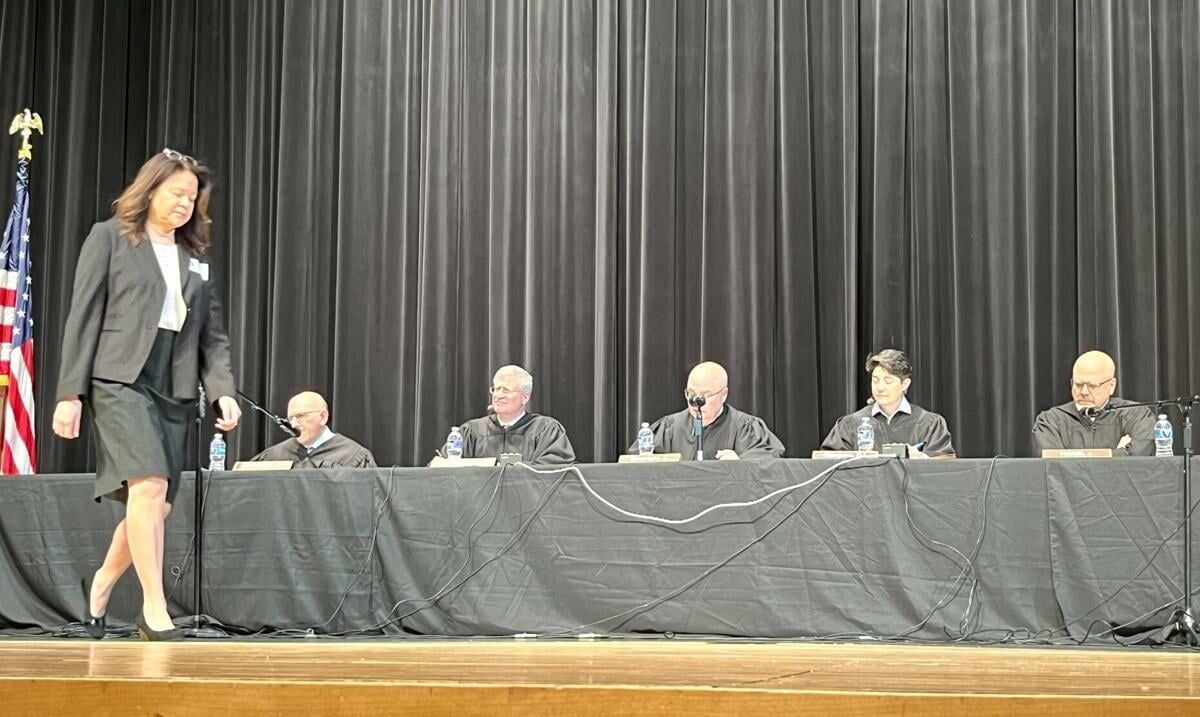
The Colorado Supreme Court announced on Monday that it will decide whether Netflix subscriptions are subject to the state’s sales tax as “tangible personal property.”
At least three of the court’s seven members must agree to hear an appeal.
The justices also accepted cases that question whether a minor’s legal representative can pursue an appeal in child welfare cases in lieu of the government, and whether a judge properly allowed jurors in a criminal trial to hear the deceased victim’s testimony that he gave in an earlier, civil trial.
Netflix subscriptions
Netflix sued the Colorado Department of Revenue in 2023 over its liability for sales tax on streaming subscriptions. The 1935 law creating the tax applies to “tangible personal property.” Netflix argued, among other things, that its subscriptions did not fit the definition of tangible, “corporeal” property.
Denver District Court Judge Sarah B. Wallace initially sided with the company.
The words the legislature used in 1935 “convince this Court that it intended to limit the reach of its taxation powers to that which could be seen and touched. Netflix’s streaming service, while capable of being seen, is not capable of being touched and therefore is not taxable under the 1935 law,” she wrote.
But a three-judge Court of Appeals panel saw differently, concluding that Netflix subscriptions enabled people to perceive media with their ears and eyes. Therefore, they were “corporeal.”
“It is a reality of modern life that substantial amounts of goods previously existing only in a form susceptible to touch are now routinely and increasingly sold in digital form — photographs, music, television shows, movies, newspapers, magazines, and educational content, to name just a few. The legislature obviously intended to tax such goods when passing the sales tax statute,” wrote Judge Matthew D. Grove.

Netflix appealed, pointing out the Supreme Court had recently decided that taxes cannot be expanded to cover unforeseen variations on things that are explicitly covered under earlier laws.
“As the Court of Appeals observed, when the 1935 legislature used the phrase ‘tangible personal property,’ it ‘obviously intended to tax such goods’ as ‘photographs, music, television shows, movies, newspapers, magazines, and educational content,'” argued the Colorado Attorney General’s Office. “In the present day, only the delivery methods for these items have evolved.”
“It is one thing to interpret the 1935 Act to also cover similar physical objects that did not exist in 1935, such as CDs and DVDs,” responded Netflix’s attorneys. “It is quite another to interpret the 1935 Act to cover transactions that involve no exchange of a physical object at all because they are an alternative to selling music, movies, and other content on records, CDs, and DVDs.”
The Supreme Court will review the issue.
The case is Netflix, Inc. v. Department of Revenue et al.
Child welfare appeals
Last year, the Supreme Court decided People in the Interest of R.M.P., which held that a minor’s legal representative may not continue to litigate a child neglect case after the government has withdrawn its allegations against the parent. The court’s majority was concerned that allowing a child’s representative to litigate neglect allegations dismissed by the government would morph the traditional child-welfare proceedings into “a weaponized family court system.”
Several months later, by 2-1, a Court of Appeals panel concluded it could not review a trial judge’s decision out of Rio Blanco County that declined to terminate the parent-child relationship between two adults and their two children. The “guardian ad litem,” who is the court-appointed representative for the children’s best interests, pursued the appeal without the government.
The panel’s majority believed that the Supreme Court’s R.M.P. decision also prevented children, through their legal representatives, from stepping into the shoes of the state in pursuing appeals.
“This is an intermediate appellate court. We are bound by holdings of the Colorado Supreme Court,” Judge Dennis A. Graham wrote for himself and Judge Michael H. Berger in the Dec. 31 opinion. “If the Supreme Court spoke too broadly in R.M.P., it is for that court, not this court, to correct that error.”
Judge Katharine E. Lum dissented, believing the guardian ad litem was empowered to pursue a solo appeal of the trial judge’s decision.
“R.M.P. does not say that a GAL cannot prosecute a motion to terminate parental rights or appeal the denial of a termination motion, and I can find no prior case supporting either principle,” she wrote.
The Supreme Court has agreed to decide if Lum’s interpretation is correct.
The case is N.K.S. et al. v. M.S. et al.

Testimony from deceased witness
William Henry Harmon hired a construction company to make a steel building on his property. The parties eventually got into a dispute and a civil trial resulted in a Delta County judge ruling that both sides were at fault. Afterward, Harmon engaged in stalking behavior against one of the company’s owners, Paul Hershberger.
After Harmon sat in his truck outside Hershberger’s home and drove away one day, law enforcement officers responded to the report by pulling Harmon over. Based on statements he made to a sheriff’s deputy, his apparent intoxication, and evidence suggesting Harmon was actually prepared to shoot Hershberger, law enforcement arrested him.
Before the trial, Hershberger died in an unrelated accident. Generally, Colorado courts allow for an unavailable witness’s hearsay testimony — meaning statements made outside of court and used to prove the truth — if the accused had an opportunity to cross-examine the witness at the time. District Court Judge Steven L. Schultz believed that letting jurors hear Hershberger’s prior testimony from the civil trial, as read by a court reporter, did not violate Harmon’s constitutional right to confront the witnesses against him.
The jury convicted Harmon.
A Court of Appeals panel concluded that Hershberger’s civil trial testimony did not violate the rules of evidence or Harmon’s constitutional rights.
“Harmon had both a strong motive and ample opportunity to fully examine (Hershberger) at the civil trial,” wrote Judge Timothy J. Schutz. “Numerous federal courts have applied similar principles while upholding the admission of prior civil testimony in a subsequent criminal trial.”
Harmon appealed to the Supreme Court, arguing any motive he had to examine Hershberger during a civil trial “just couldn’t equal his motive to do so” in a higher-stakes attempted murder prosecution. He also contended it was erroneous for the trial judge to have the court reporter read Hershberger’s testimony, instead of playing the audio from the civil trial.
“Admitting the audio-recording would’ve better replicated the circumstances of live testimony and allowed the jury to assess (Hershberger’s) demeanor,” wrote public defender Emily Hessler.
The Supreme Court will determine if the recreated testimony violated either the rules of evidence or Harmon’s constitutional rights.
The case is Harmon v. People.

10th Circuit provides guidance on police searches of cloud-based data
Michael Karlik
michael.karlik@coloradopolitics.com
Updated 12 hours ago
The Denver-based federal appeals court provided guidance to law enforcement agencies on Monday for ensuring that searches of cloud-based accounts comply with the Fourth Amendment’s requirements. A three-judge panel of the U.S. Court of Appeals for the 10th Circuit noted...
Federal judge releases man after 2 immigration judges disobey order
Michael Karlik
michael.karlik@coloradopolitics.com
Updated 17 hours ago
A federal judge released a man from immigration detention on Thursday after two different immigration judges disobeyed his order in the same case. “At this point, the Court has granted Respondents two bites at the apple to prove detention of...
New rules for private judges in Colorado include discipline oversight, campaign contributions
David Migoya
david.migoya@gazette.com
Updated 6 hours ago
The Colorado Supreme Court recently determined the state’s private judges — retired jurists appointed to oversee civil cases that rarely get public scrutiny — can now make political contributions freely and without reserve, overruling a prohibition that had been in...
Appeals court finds Prowers County judge incorrectly analyzed firetruck collision lawsuit
Michael Karlik
michael.karlik@coloradopolitics.com
Updated 2 days ago
Colorado’s second-highest court directed a Prowers County judge last month to take a second look at whether a firetruck operator and the county itself can be held liable for a collision with a motorist. Donald Williamson was driving through a...
Appeals court reverses assault convictions after jury received no definition of ‘harm’
Michael Karlik
michael.karlik@coloradopolitics.com
Updated 2 days ago
Colorado’s second-highest court reversed an Arapahoe County defendant’s assault convictions last week, concluding the trial judge neglected to define a key, ambiguous term for jurors. Police officers arrested David Cristobal Aragon at a house party for allegedly violating a restraining...
Colorado counties cannot challenge state law restricting immigration contracts, appeals court says
Michael Karlik
michael.karlik@coloradopolitics.com
Updated 2 days ago
Colorado’s second-highest court ruled on Thursday that counties lack standing to challenge a 2023 state law that restricts their ability to contract with the federal government or private entities for immigration detention. A three-judge Court of Appeals panel agreed with...

Colorado lawmakers propose changes to family court procedures | Bills in Brief
Marissa Ventrelli
marissa.ventrelli@coloradopolitics.com
Updated 2 days ago
Colorado lawmakers introduce hundreds of bills each year. Bills in brief cuts through the noise by explaining which proposals matter, what’s at stake, and how decisions at the Capitol could affect everyday life across the state. Colorado lawmakers from both parties are...
Federal judge partially allows second World Cup trafficking lawsuit to move forward
Michael Karlik
michael.karlik@coloradopolitics.com
Updated 3 days ago
A federal judge allowed some claims to move forward last month against companies operating out of Colorado that allegedly participated in a human trafficking venture involving Filipino laborers who constructed facilities for the 2022 World Cup in Qatar. There are...
Federal judge dismisses lawsuit seeking to force Colorado secretary of state to screen out scam filings
Michael Karlik
michael.karlik@coloradopolitics.com
Updated 2 days ago
A federal judge dismissed a lawsuit last week that sought to require Colorado’s secretary of state to verify corporate filings in the state’s database to reduce the risk of future fraud. Bernard Butts of Florida, who was 83 when he...
Federal judge finds no constitutional violation by Huerfano County well inspectors
Michael Karlik
michael.karlik@coloradopolitics.com
Updated 2 days ago
A federal judge concluded last month that two Huerfano County employees did not engage in an unconstitutional search when they approached the plaintiffs’ camper within 40 feet to investigate a potential code violation. In July 2021, the county’s building inspector,...
PREV
PREVIOUS

Proposal outlines $300M deal separating Pinnacol from Colorado state government
Colorado lawmakers are weighing a proposal that would allow Pinnacol Assurance to sever its remaining ties to the state in exchange for a $300 million payment, a long‑debated shift that supporters say could stabilize the insurer’s future and help plug a looming budget shortfall. A draft of the bill obtained by Colorado Politics spells out […]

Energy constraints loom larger than water for Colorado AI boom, experts say
As artificial intelligence reshapes almost every sector of the economy, experts at this year’s Colorado Climate Week gathering in Boulder said it is also reshaping local physical infrastructure. From grid demand and water use to data center construction, scaling the necessary framework to support AI, they said, will be a challenge as experts and policymakers […]