

U.S. Sen. Michael Bennet qualifies by petition for Colorado’s Democratic gubernatorial primary
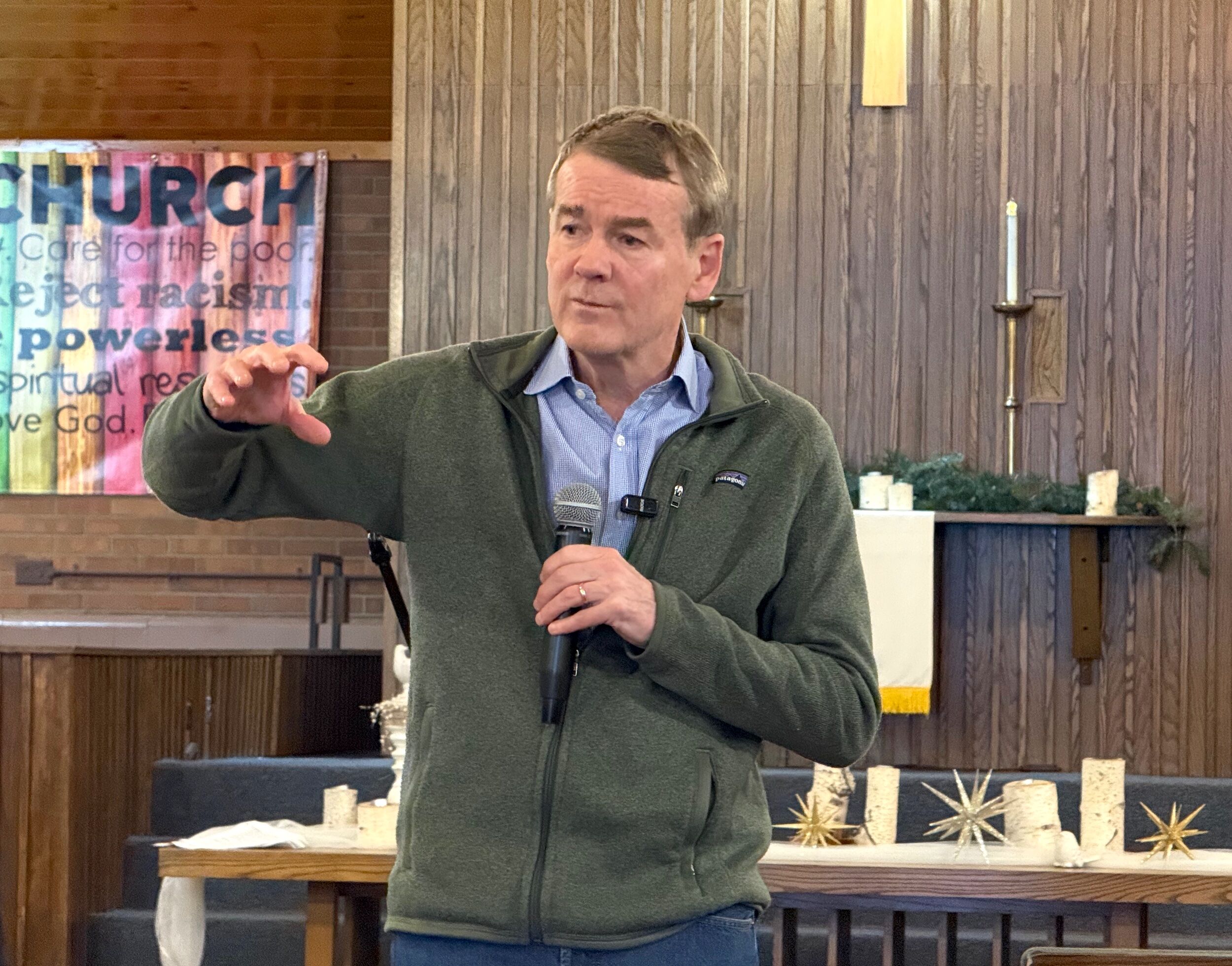
U.S. Sen. Michael Bennet on Tuesday became the first gubernatorial candidate to qualify for Colorado’s June primary ballot after state election officials determined the three-term Democrat’s campaign submitted enough valid petition signatures.
Bennet is running against Attorney General Phil Weiser in the Democratic primary to determine the nominee for the office held by term-limited Gov. Jared Polis, a fellow Democrat. Weiser is pursuing a slot in the primary at Saturday’s state party assembly in Pueblo, where he faces only nominal opposition.
As many as two dozen Republicans — and an independent candidate who was a Republican until a few months ago — are also running for the job, which has only been held by a Republican once in the last 50 years.
The Colorado Secretary of State’s Office said Bennet turned in 14,851 valid signatures out of 17,255 submitted, comfortably surpassing the 12,000 required for candidates for governor and the U.S. Senate to make the statewide primary ballot. To reach that total, candidates must gather 1,500 signatures from fellow party members who reside in each of the state’s eight congressional districts.
Bennet cleared the hurdle with about the same number of valid signatures from each district, from a low of 1,794 in the Republican-leaning 3rd and 5th congressional districts — covering most of the Western Slope and El Paso County, respectively — to 1,964 in the heavily Democratic 2nd Congressional District, which includes Boulder and Larimer counties and Northwestern Colorado.
“This campaign is built by thousands of grassroots supporters across Colorado who share our vision for a better Colorado that takes on the Trump Administration and builds an economy that works for working people,” Bennet said in a statement, adding that he is grateful for those who signed his petitions and his campaign volunteers.
Bennet announced when he filed his petitions late last month that he would skip the state assembly, where candidates who successfully petition need the support of at least 10% of delegates to advance to the primary. Candidates who don’t also qualify by petition — like Weiser, who didn’t circulate petitions — need the votes of at least 30% of delegates to make the ballot.
According to nonbinding preference polls conducted at the Democrats’ county assemblies during the first half of March, Weiser has the support of 85% of the delegates bound for the state confab, followed by uncommitted delegates, at 13%. Three other candidates who are also going through the assembly process — Erik Underwood, Antonio Martinez and William Moses — can claim support from 1% or fewer of the delegates.
The candidate who wins a path to the ballot at assembly automatically lands top-line on ballots, which start going out to voters by mail in early June and are due back to county clerks by 7 p.m. June 30.
A spokesman for Weiser told Colorado Politics that Bennet’s decision to petition his way into the primary rather than go through the caucus and assembly process demonstrates the strength of his boss’s campaign.
Nate Jackson said in a text message that, given Weiser’s strong performance heading into the state assembly, it was no surprise that Bennet “had to drop out and buy his way onto the ballot using paid circulators from an East Coast signature gathering firm.”
“Phil isn’t relying on out-of-state billionaires to back his campaign — Phil is powered by the people of Colorado, and as governor, he’ll show up and fight for Coloradans every day,” Jackson said.
Since Bennet had already withdrawn from the caucus and assembly process before the first caucus or assembly was held, Weiser effectively had the race to himself by the time Democrats began electing delegates or expressing their preference for the nomination.
Bennet’s campaign said the candidate has held more than 200 events across the state since the beginning of the year and plans to continue his tour next week with events in Colorado Springs, Boulder, Denver, Gunnison, Salida and Alamosa.
On the Republican side, state Sen. Barb Kirkmeyer, R-Brighton, and Colorado Springs-based missionary leader Victor Marx, a first-time candidate, both submitted petitions before last week’s deadline. The Secretary of State’s Office has until late April to verify whether or not they’ve qualified for the ballot by petition.
Although Kirkmeyer plans to skip the GOP state assembly — set for April 11, also in Pueblo — Marx says he’ll be courting delegate backing there, along with multiple other Republicans, including state Rep. Scott Bottoms, R-Colorado Springs; Teller County Sheriff Jason Mikesell; and podcaster Joe Oltmann.
Two high-profile Republicans who spent much of last year running for governor jumped out of the GOP primary at the beginning of the year. State Sen. Mark Baisley, R-Woodland Park, announced that he was switching to the crowded primary for Colorado’s U.S. Senate seat, while former U.S. Rep. Greg Lopez stayed in the gubernatorial race but dropped his Republican affiliation and is running as an independent candidate.


Seligman, Bridges, Gonzales lead downballot races heading into Colorado Democrats’ state assembly
Ernest Luning
ernest.luning@coloradopolitics.com
Updated 9 hours ago
As Colorado Democrats prepare to designate candidates to the June primary ballot at the party’s state assembly in Pueblo on Saturday, three candidates appear poised to win top-line designation in downballot statewide races, according to data compiled by the state...

Democratic US Sen. John Hickenlooper qualifies for Colorado primary by petition, will skip assembly
Ernest Luning
ernest.luning@coloradopolitics.com
Updated 1 day ago
U.S. Sen. John Hickenlooper has qualified for Colorado’s Democratic primary after the first-term incumbent submitted enough valid petition signatures to make the ballot, state officials said. Hickenlooper is facing primary challenges from state Sen. Julie Gonzales, D-Denver, and university professor...
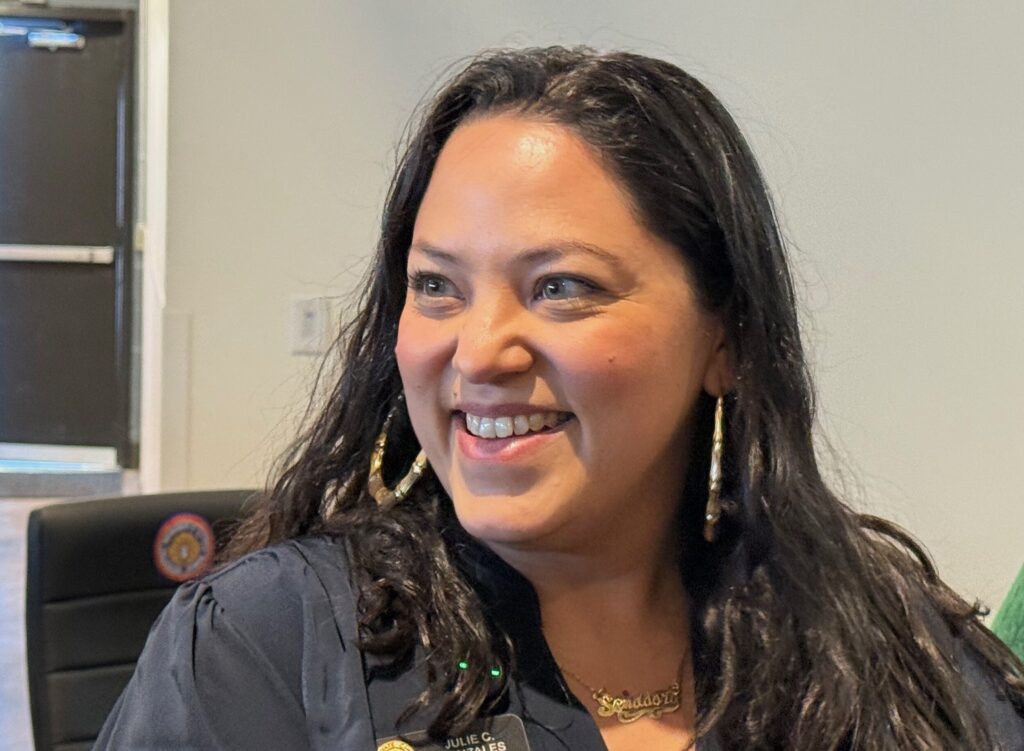
Hickenlooper primary challenger Julie Gonzales endorsed by national progressive group Indivisible
Ernest Luning
ernest.luning@coloradopolitics.com
Updated 3 days ago
State Sen. Julie Gonzales’ bid to challenge U.S. Sen. John Hickenlooper in Colorado’s Democratic primary got a boost Tuesday from Indivisible when the national arm of the progressive grassroots group endorsed the Denver lawmaker. The national group’s endorsement comes less...

Trump switches endorsement back to Jeff Hurd, says Hope Scheppelman is ending run in Colorado’s 3rd CD
Ernest Luning
ernest.luning@coloradopolitics.com
Updated 4 days ago
In a surprise twist, President Donald Trump on Friday said he is again endorsing Republican U.S. Rep. Jeff Hurd after pulling his support from the Grand Junction Republican last month and instead backing his primary challenger in Colorado’s 3rd Congressional...

Democrat Matt Cavanaugh ends campaign in Colorado’s 5th CD, says petition firm came up short
Ernest Luning
ernest.luning@coloradopolitics.com
Updated 1 week ago
Democratic congressional candidate Matt Cavanaugh said Wednesday that he was ending his bid to challenge Republican U.S. Rep. Jeff Crank in Colorado’s 5th District because the firm his campaign hired to gather petition signatures failed to deliver. Cavanaugh, an Army...

DeGette challenger Melat Kiros trounces 15-term Democratic incumbent in Denver delegate vote
Ernest Luning
ernest.luning@coloradopolitics.com
Updated 2 weeks ago
The 28-year-old, first-time candidate challenging Democratic U.S. Rep. Diana DeGette in this year’s primary soundly defeated the 15-term incumbent in a delegate preference poll conducted Saturday at a county party assembly in Denver. Melat Kiros, the daughter of Ethiopian immigrants...
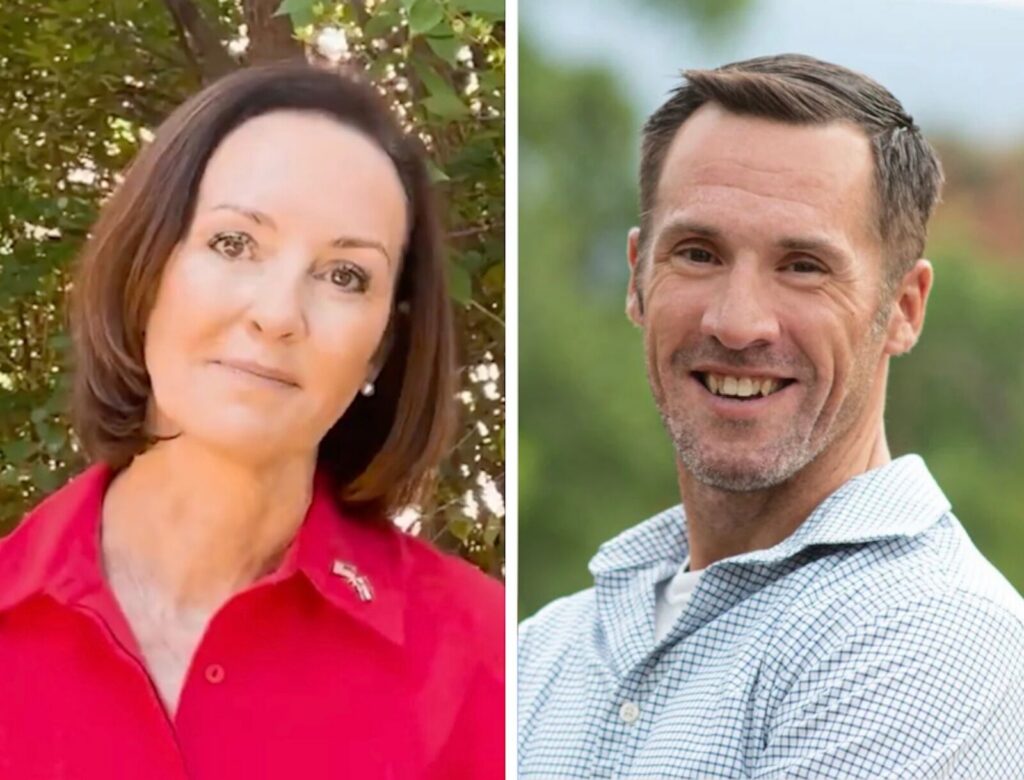
Army veterans Jessica Killin, Joe Reagan qualify for Democratic primary ballot in Colorado’s 5th CD
Ernest Luning
ernest.luning@coloradopolitics.com
Updated 2 weeks ago
Democratic congressional candidates Jessica Killin and Joe Reagan secured spots Saturday in Colorado’s June primary to decide who will run against Republican U.S. Rep. Jeff Crank in a district that’s only ever sent GOP lawmakers to Congress. The two Democrats,...

Boebert challenger Eileen Laubacher joins lawsuit aimed at blocking her from Democratic assembly
Ernest Luning
ernest.luning@coloradopolitics.com
Updated 2 weeks ago
A Denver District Court judge on Thursday permitted Democratic congressional candidate Eileen Laubacher to join a lawsuit filed by one of her primary opponents seeking to prevent Laubacher from participating in the party’s assembly process in a bid to qualify...
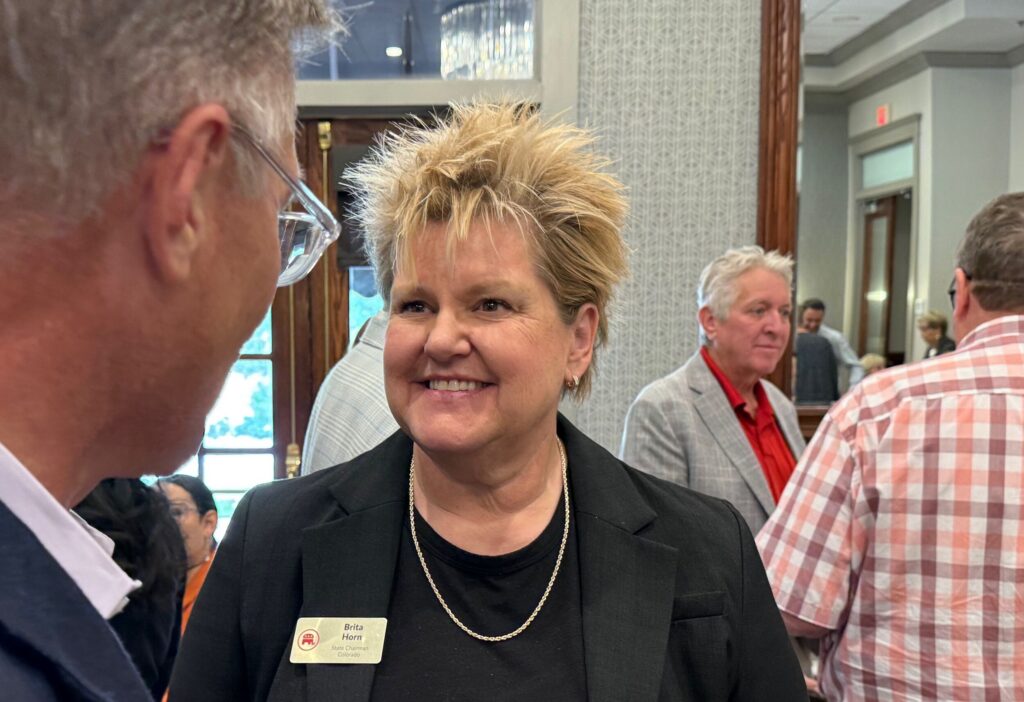
Colorado GOP chair Brita Horn says she’ll resign next month, points to ‘divide within our party’
Ernest Luning
ernest.luning@coloradopolitics.com
Updated 2 weeks ago
Colorado Republican Party Chair Brita Horn said Thursday that she will resign her position next month following the GOP’s state assembly, citing what she described as an “enduring divide” within the party “marked by vitriol and hostility.” Horn’s announcement came...

Republican Jeff Crank, Democrat Jessica Killin qualify by petition for Colorado’s 5th CD primary
Ernest Luning
ernest.luning@coloradopolitics.com
Updated 2 weeks ago
Republican U.S. Rep. Jeff Crank and Jessica Killin, one of the Democrats challenging the first-term incumbent, have both qualified for the primary ballot in Colorado’s 5th Congressional District after turning in a sufficient number of petition signatures, state election officials...
PREV
PREVIOUS

Thornton police investigating homicide
Police in Thornton are investigating a homicide that happened late Wednesday night. Thornton Police Department officers responded just before 11 p.m. near the intersection of East 88th Avenue and Grant Street after a 911 caller reported someone bleeding. Upon arrival, officers found a 29-year-old man on the ground bleeding from a wound, a news release […]

Pinnacol separation bill delayed as Colorado budget remains in flux due to $1.5B deficit
A bill that would allow Pinnacol Assurance to formally sever its remaining ties with the state appears unlikely to emerge anytime soon, as House leaders juggle a massive budget shortfall, unresolved negotiations with key stakeholders, and growing doubts about whether the insurer’s proposed $400 million payment could be counted on to help balance next year’s […]