

Colorado justices agree to review insurance question that has divided federal judges

The Colorado Supreme Court granted a federal judge’s request on Friday to address an issue that has produced conflicting answers in policyholders’ lawsuits against insurance companies over unpaid benefits.
“Parties (and judges) regularly spend undue time and money fighting in the pretrial context about a legal question that should be resolved once and for all by the Colorado Supreme Court,” wrote U.S. Magistrate Judge N. Reid Neureiter in a March 17 order outlining the dilemma for the state’s highest court.
Neureiter explained that there is a “perceived tension” in insurance lawsuits between two principles. First, there is the argument that an insurance company’s duty to settle or resolve a claim is generally suspended upon the filing of a lawsuit, termed the “suspension rule.”
Second, there is the principle that insurers continue to have a duty to act in good faith toward their policyholders, even after a lawsuit is initiated.
Those two principles collide when a plaintiff seeks evidence from an insurer regarding the insurer’s claims-related activity during the ongoing lawsuit. Although such cases are governed by state law, insurers typically exercise their right to transfer the litigation to federal court. As a result, Neureiter explained, the Colorado Supreme Court is unlikely to provide guidance about what to do through the normal appellate process.
Moreover, the Denver-based federal appeals court will be similarly unlikely to weigh in because the issue involves a pretrial evidentiary dispute, to which appellate courts give “great deference” to trial judges, he added.
Consequently, the issue “cries out for resolution by Colorado’s Supreme Court,” Neureiter concluded.
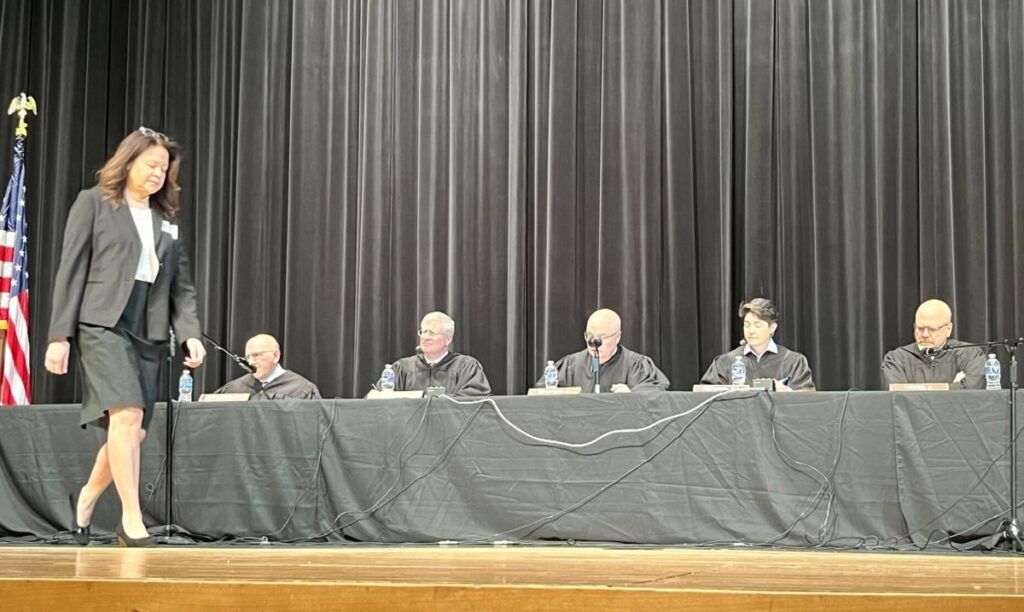
In the underlying case, James Berns was rear-ended in March 2020. The at-fault driver’s insurance company offered $25,000 to settle, which was the maximum under the driver’s policy. Berns then turned to his own insurer, State Farm, which provided up to $250,000 in coverage for injuries caused by an uninsured or underinsured motorist.
After extensive back-and-forth over medical records, Berns sued State Farm in 2024 in state court to avoid hitting the statute of limitations. State Farm transferred the case to federal court. The company continued to obtain medical evidence about Berns, including evaluations from multiple doctors.
The parties then asked Neureiter: Does the “suspension rule” allow State Farm to withhold information placed in Berns’ claim file after he initiated the lawsuit?
“This is an issue that we’re all struggling with as magistrate judges in this court without much guidance from the Colorado courts on how to do this,” Neureiter told attorneys from both sides during a Feb. 2 conference.
He referenced a decision he authored in June 2025, which described in detail the competing philosophies in Colorado’s U.S. District Court. On the one hand, evidence from the claim file after the lawsuit has begun can illustrate whether the insurer is continuing to act in good faith. On the other hand, that information is irrelevant if the insurer’s duty to settle or resolve a claim is suspended pending the outcome of a trial.
Neureiter cited three judges — Senior Judge Robert E. Blackburn and Magistrate Judges Maritza Dominguez Braswell and Kathryn Starnella — who believed plaintiffs were entitled to know whether their insurer continued to act in good faith on a claim even after a lawsuit began. Senior Judge Christine M. Arguello and Judge Nina Y. Wang, meanwhile, took the opposite position.
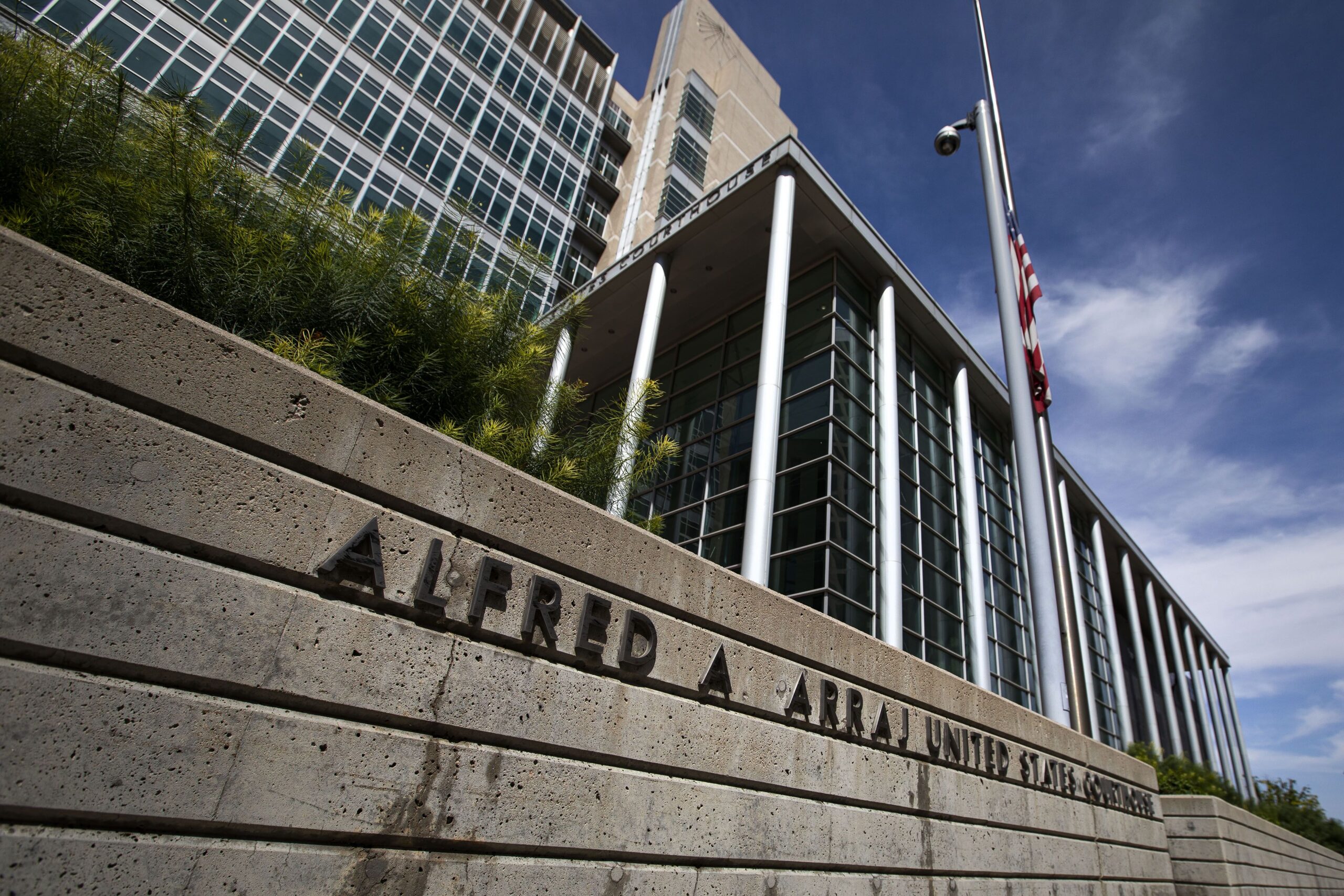
Neureiter, in speaking with the attorneys for Berns and State Farm, indicated he would side with the insurance company unless Berns sought the state Supreme Court’s intervention.
Berns accepted the invitation.
In cases alleging bad-faith conduct by insurance companies, “the insurers’ Claim Records are the most important piece of evidence. In the majority of those cases, the investigation and decisions regarding benefits owed have not been resolved, so are part of the lawsuit,” wrote Berns’ attorney, John G. Taussig III. “In those cases, absent access to post-litigation claim records, insureds are bringing a knife to a gunfight.”
On March 20, the Supreme Court issued an order accepting Neureiter’s request to weigh in. It will decide whether and to what extent plaintiffs may access insurers’ notes or files regarding the claim after a lawsuit has begun.
The case is Berns v. State Farm Mutual Automobile Insurance Company.
Earlier in March, the justices also intervened in an ongoing civil case in state court. Joel Farkas is liable for a $41.2 million debt, and the creditor, VP Fruition Holdings LLC, issued a half-dozen subpoenas to organizations financially affiliated with Farkas.
Farkas moved to void those requests for information. He argued that, under the civil rules, VP Fruition Holdings first had to provide “proof to the satisfaction of the court, that any person has property of, or is indebted to” Farkas.
“Not only does VP Fruition indiscriminately shotgun subpoenas to Farkas’ banks, phone company, and landlord; it demands that these nonparties produce thousands of documents that contain private and proprietary information about the financials and business operations of an untold number of other nonparties that VP Fruition has no conceivable legal right to obtain,” his attorneys wrote.
Denver District Court Judge Ericka F.H. Englert agreed with Farkas, finding the subpoenas did not comply with the rule, which was the “exclusive procedure” for obtaining information from third parties about someone who has been found liable for a debt.
VP Fruition Holdings turned to the Supreme Court, arguing it was illogical to require proof of the financial relationship between a debtor and associated entities at the outset.
“Without access to documents uniquely within the possession of the nonparties Petitioner wishes to subpoena, Petitioner cannot uncover evidence of Debtor’s fraudulent transfers or use of alter egos or otherwise trace Debtor’s assets, and is therefore substantially hindered in its ability to enforce its judgment,” wrote attorney Patrick Gillette.
On March 12, the Supreme Court ordered Farkas to respond to VP Fruition Holdings’ petition.
The case is VP Fruition Holdings LLC v. Farkas.

Appeals court reinstates Garfield County arson charge
Michael Karlik
michael.karlik@coloradopolitics.com
Updated 10 hours ago
Colorado’s second-highest court reinstated a Garfield County defendant’s arson charge on Thursday, concluding a trial judge improperly credited a witness’s claim that she alone was responsible for starting the fire. A sheriff’s deputy responded to a brush fire near Parachute...
Federal judges rebuke ex-Colorado judicial discipline director for conduct in lawsuit
Michael Karlik
michael.karlik@coloradopolitics.com
Updated 11 hours ago
A pair of federal judges expressed a desire on Thursday to break the logjam on a lawsuit by Colorado’s former judicial discipline director against the state Supreme Court and related entities, while simultaneously showing little tolerance for the plaintiff’s scorched-earth...

Democratic bill would let recipients of ‘conversion therapy’ sue Colorado providers with no statute of limitations
Marissa Ventrelli
marissa.ventrelli@coloradopolitics.com
Updated 9 hours ago
Colorado lawmakers have advanced a proposal that would allow people who underwent conversion therapy to sue licensed providers for damages, moving the measure forward on a party-line vote in the House Judiciary Committee. House Bill 1322, proposed by Democratic Reps....
Federal judge refuses to authorize immediate appeal in World Cup trafficking lawsuit
Michael Karlik
michael.karlik@coloradopolitics.com
Updated 1 day ago
A federal judge declined to authorize an immediate appeal last week of a prior decision allowing companies operating out of Colorado to be sued for allegedly participating in a human trafficking venture involving Filipino laborers who constructed facilities for the...
Federal judge considers second round of sanctions against ex-Colorado judicial discipline director
Michael Karlik
michael.karlik@coloradopolitics.com
Updated 2 days ago
A federal judge ordered Colorado’s former judicial discipline director on Tuesday to explain why she should not sanction him a second time for filing documents for improper purposes, such as harassment or delay. U.S. District Court Senior Judge Kathryn H....

Federal judge dismisses background screeners’ challenge to Colorado law
Michael Karlik
michael.karlik@coloradopolitics.com
Updated 3 days ago
A federal judge dismissed a challenge on Friday to a portion of Colorado law that prohibits certain information from being included in consumer reports, in what seemed to be a conflict with federal law. Congress originally enacted the Fair Credit...

10th Circuit rejects ‘penalty’ for children of naturalized citizens seeking visas
Michael Karlik
michael.karlik@coloradopolitics.com
Updated 2 days ago
The Denver-based federal appeals court joined three of its peers earlier this month and determined the child of a newly naturalized U.S. citizen is not moved to a longer visa line as a result of his parent gaining citizenship, and...
Appeals court recognizes longer window to sue insurers for withholding policy details
Michael Karlik
michael.karlik@coloradopolitics.com
Updated 1 day ago
Colorado’s second-highest court split with its own prior decision earlier this month and concluded injured motorists have two years, not one, to sue insurance companies for withholding relevant information about an at-fault driver’s policy. In 2019, Colorado lawmakers enacted a measure to...

Appeals court decides free speech cases, error-prone judge reversed again | COURT CRAWL
Michael Karlik
michael.karlik@coloradopolitics.com
Updated 4 days ago
Welcome to Court Crawl, Colorado Politics’ roundup of news from the third branch of government. The state’s Court of Appeals decided multiple cases implicating free speech rights, plus Colorado’s most error-prone judge was reversed on appeal yet again. Heard on...
Federal judge dismisses claims against medical contractor for Eagle County jail suicide
Michael Karlik
michael.karlik@coloradopolitics.com
Updated 6 days ago
A federal judge dismissed the claims against a medical contractor for the Eagle County jail and its employees earlier this month, concluding there were insufficient allegations that they violated the constitutional rights of a man who died by suicide in...
PREV
PREVIOUS

Farmworker overtime bill advances after lengthy debate in Colorado Senate
The Colorado Senate on Tuesday narrowly advanced a bill to raise the overtime threshold for agricultural workers, defeating more than a dozen amendments from its leading opponent aimed at rewriting the measure. As introduced, Senate Bill 121 would raise the threshold for overtime pay from its current 48 to 56 hours during production season to 60 hours. […]

Colorado Democrats want large corporations to pay fee if employees are on Medicaid
Democrats are seeking to require Colorado’s largest corporations to pay thousands of dollars for each employee that relies on the Medicaid program for health insurance. They don’t have to pay the fee if they can demonstrate offering an “affordable health coverage” to workers, defined as the minimum required by federal law. It’s the latest effort […]