

What kind of energy independence did we pay for? | Miller Hudson
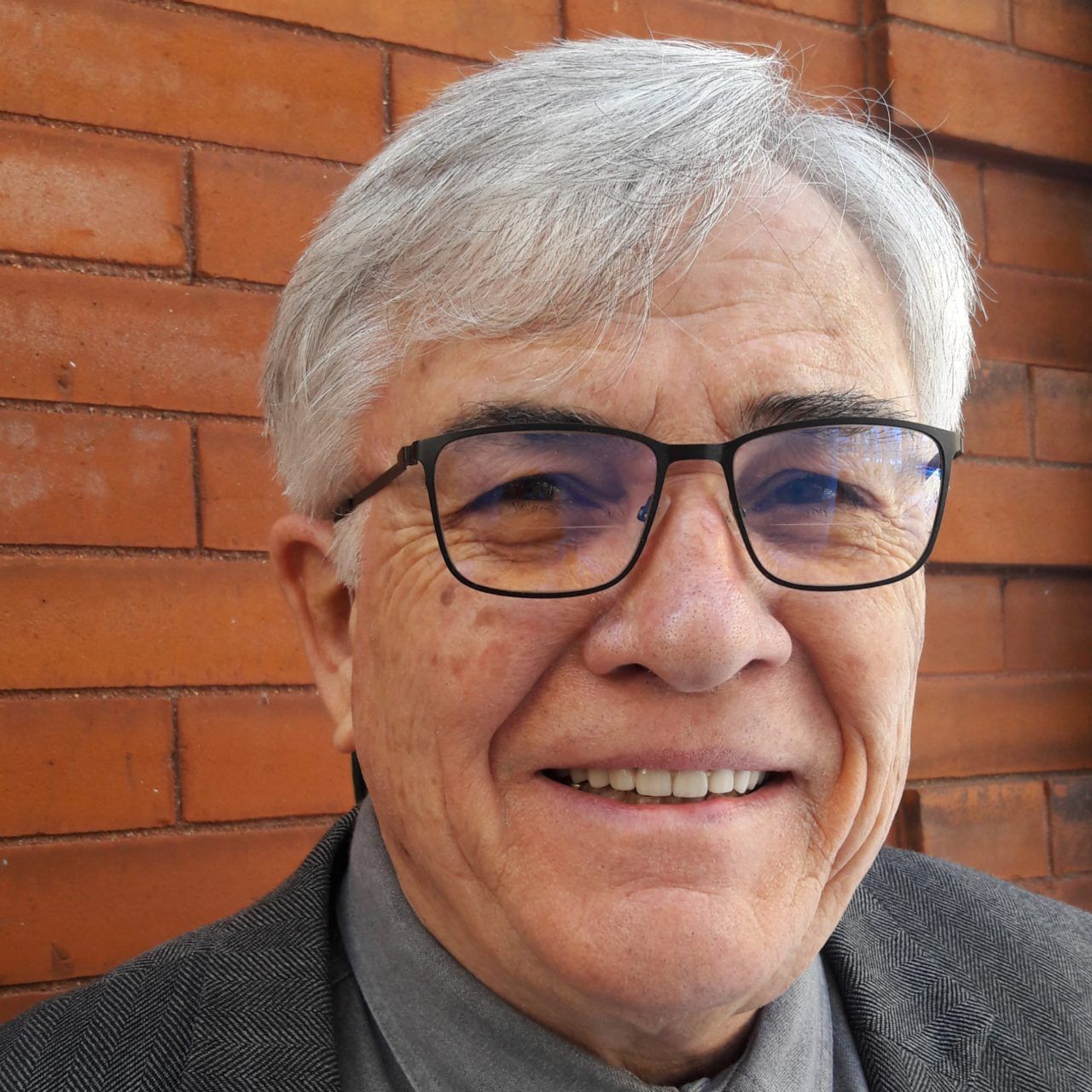
It was during the summer of 1972 AT&T published an internal solicitation for installation and repair supervisors with “inner-city” experience to transfer to Mountain Bell. The catch was an applicant’s readiness to work 10 hours a day, six days a week during the first year in Denver. On the plus side, although a salaried manager, I would receive overtime pay for the extra 20 hours worked each week. This would essentially double what I was earning at the Chesapeake & Potomac Telephone company in Washington, D.C. I drove to Denver in August for an interview with Colorado Plant Manager Bill Horton, who hired me on the spot.
After picking up two cases of Coors, which were prized on the east coast, I drove straight through to Washington in 26 hours. My first day on my Colorado job would be Oct. 20. I had two small children, just one- and two-years-old, but both their mother and I were concerned about raising them in the family unfriendly D.C. area. Denver was in the midst of an oil industry boom that had overwhelmed Mountain Bell’s switching capacity. Forty-two-thousand new homes were waiting for dial-tone, two-thirds of them in Arvada, where I was assigned to a garage. We could pre-install homeowner phones, but there simply weren’t sufficient mechanical switches available at existing central offices — thus no numbers. This was a pre-digital switching world.
A year later, I was promoted to manage the departmental budget office just in time for the Arab oil embargo. The embargo was a “black swan” event that affected me both at home and at work. Within days, block-long lines emerged at gas stations driven more by panic purchasing than actual shortages though that was on the way. Telephone trucks aren’t huge consumers of gasoline since installers drive to and then park at jobs. As a business, however, we purchased our gas from wholesalers who soon began to run out of product. As a stopgap measure, we issued credit cards to employees so they could pounce on gasoline if they noticed a gas station with a short line. And, of course, prices began to climb.
While I was in high school, regular gasoline was usually about 30 cents a gallon, or less. By 1973 the price had risen to 36 cents but would swiftly jump to 50 cents following the OPEC embargo. By 1980 prices would break through a dollar a gallon. Politicians in both parties were speaking of the need to achieve “energy independence,” eliminating our dependence on imported oil.
Although most American imports in 1973 were coming from Venezuela and Canada, with very little reliance on Middle Eastern oil, the same could not be said for European or Asian Pacific economies. As one petroleum economist explained at the time, “We are all filling up at the same pump. Think of oil reserves like a swimming pool we have to share.” Most Americans imagined energy independence as building our own swimming pool to guard against both shortages and price spikes.
The embargo itself precipitated multiple attempts at conservation. At Mountain Bell, our biggest worry was getting employees to their jobs. Working with the Denver Chamber of Commerce and DRCOG, we built a carpooling program to match workers with neighbors traveling to nearby destinations. In a pre-GPS world, this was more difficult than it would be today. In 1974 we approached the legislature to establish a uniform grid system for initializing addresses. I still recall the response from Ken Kramer, then a state senator who would move on to a seat in Congress from El Paso County and a long career as a judge in military courts. Trying to grasp what we were proposing, he said, “I’m a yes vote, but if my constituents have to depend on my understanding what you’re proposing, we’re all in trouble.” For a number of years, free company vans could also be leased by regular carpoolers. Remnants of these initiatives remain available.
At a national level, public policy began to move us toward energy independence. In 1977 Congress authorized an $8 billion trans-Alaskan pipeline to deliver Arctic oil to the “lower 48.” For decades, drilling leases on public lands were auctioned off at pennies on the dollar while showering tax breaks and royalty rebates on the petroleum industry. Generous environmental waivers were provided to both producers and refiners. Tens of billions of dollars were contributed by taxpayers to achieve American energy independence, together with health and climate effects that cannot be calculated. As we have noticed the past few weeks, the energy independence we’ve achieved is not the guarantee we were promised. We thought we had a deal — accept some environmental risks, shower oil producers with subsidies and they’d provide us protection against sporadic turmoil in the energy markets.
It was “fracking” which unleashed the abundant reservoirs of natural gas and shale oil that boosted us into position as the world’s largest petroleum producer. It’s hard not to have noticed during recent years each time someone sneezes in the Arab world, gas prices jump 50 cents. Following our current bombing excursion in Iran, they’ve jumped by a dollar. The price of a barrel of crude has also doubled from $60 to $120. American oil producers were turning a tidy profit at $60 and the oil in their pipelines, storage facilities and at refineries arrived at this lower price. There should have been ample supplies to hold pump prices steady for the six or eight weeks the Department of “War” claims it needs to complete its excursion in the Middle East. That’s not what occurred.
The fossil-fuel-friendly administration in the White House has repealed fuel efficiency standards on autos, torpedoed renewable energy incentives and set us on a path of increased reliance on oil. You would think the industry might have had the courtesy to return such favors — perhaps offering a month of stable pricing. Not a chance. Piracy has an internal logic. It turns out light American crude brings a premium price on the world market — easier and cheaper to refine. So, truth be told, much of our gasoline stocks are still imported because American refineries are geared to process sticky crude. Sorry about that, we’re only energy independent in theory. I suppose there are some benefits to Colorado being a producing state — perhaps as many as 80,000 six-figure jobs for starters. It seems someone’s been asleep at the switch.
Hard as it is to believe, Iran continues to dispatch its oil to customers around the globe and now at a premium price. It’s only everyone else’s oil shipments which are blockaded through the Strait of Hormuz. We aren’t intervening, apparently, because the tankers actually belong to purchasing nations — Japan, Korea, China and India. We may be winning our bombing campaign, but it isn’t clear we are winning the economic war. Team Russia (sanctions lifted) and Iran are raking in oil revenues while price gouging piracy continues here at home. What kind of energy independence did we pay for? Damned little, it seems. An executive order capping prices for consumers sounds about right.
Miller Hudson is a public affairs consultant and a former Colorado legislator.

Phil Weiser wins top spot in Colorado’s Democratic gubernatorial primary at party’s state assembly
Ernest Luning
ernest.luning@coloradopolitics.com
Updated 52 minutes ago
Attorney General Phil Weiser’s name will appear first on Colorado’s Democratic gubernatorial primary ballot after his overwhelming win Saturday at the party’s state assembly in Pueblo. Weiser joins U.S. Sen. Michael Bennet in the June 30 primary for the office...

Denver Democrat Diana DeGette trails challenger Melat Kiros at assembly as both qualify for primary
Ernest Luning
ernest.luning@coloradopolitics.com
Updated 9 hours ago
U.S. Rep Diana DeGette, a Denver Democrat, qualified for Colorado’s June primary by the skin of her teeth Friday at the party’s district assembly, where the 15-term incumbent received fewer than half as many delegate votes as her challenger, 28-year-old...
Federal judge upholds constitutionality of Colorado campaign contribution limits
Michael Karlik
michael.karlik@coloradopolitics.com
Updated 21 hours ago
A federal judge upheld Colorado’s individual campaign contribution limits as constitutional on Thursday, finding that three Republican plaintiffs failed to prove the campaign finance framework violates their First Amendment rights. U.S. District Court Senior Judge John L. Kane recognized that...

Seligman, Bridges, Gonzales lead downballot races heading into Colorado Democrats’ state assembly
Ernest Luning
ernest.luning@coloradopolitics.com
Updated 1 day ago
As Colorado Democrats prepare to designate candidates to the June primary ballot at the party’s state assembly in Pueblo on Saturday, three candidates appear poised to win top-line designation in downballot statewide races, according to data compiled by the state...
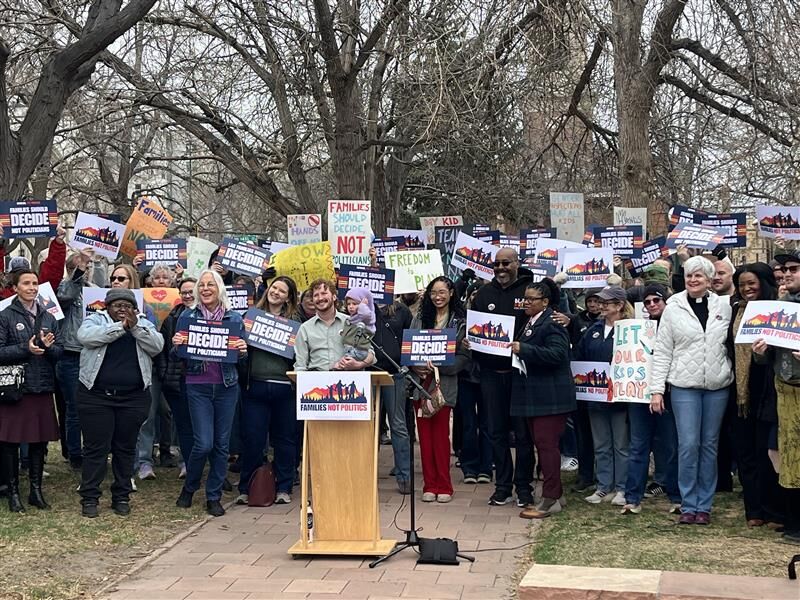
Planned Parenthood, groups launch campaign against transgender ballot measures in Colorado
Marissa Ventrelli
marissa.ventrelli@coloradopolitics.com
Updated 1 day ago
Planned Parenthood and other groups have launched a coalition to oppose two ballot measures that would ban transgender surgeries among children and require student athletes to only join sports teams that correspond to their biological sex. The two measures will...
From pause to progress — a better path on AI policy | OPINION
Colorado Politics
colorado-politics@coloradopolitics.com
Updated 2 days ago
By Brittany Morris Saunders and Loren Furman Last year, following the Special Legislative Session, we wrote in Colorado Politics that delaying Colorado’s AI Act was not a setback. It was an opportunity. We asked state leaders to pause, bring more...

Cutting Prop 123 would cost Colorado far more than it saves | OPINION
Colorado Politics
colorado-politics@coloradopolitics.com
Updated 1 day ago
By Luke Teater Colorado’s legislative budget writers are about to receive updated revenue forecasts and begin making final cuts to close a historic budget gap, and Proposition 123’s affordable housing financing tools are on the chopping block. But in their...
Democratic US Sen. John Hickenlooper qualifies for Colorado primary by petition, will skip assembly
Ernest Luning
ernest.luning@coloradopolitics.com
Updated 2 days ago
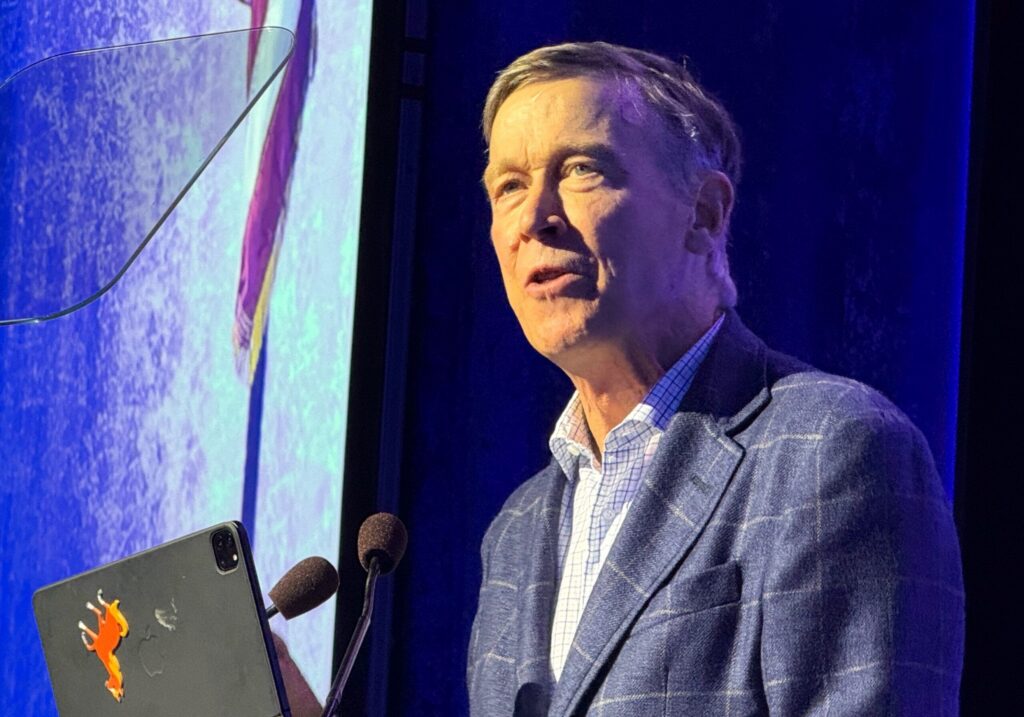
U.S. Sen. John Hickenlooper has qualified for Colorado’s Democratic primary after the first-term incumbent submitted enough valid petition signatures to make the ballot, state officials said. Hickenlooper is facing primary challenges from state Sen. Julie Gonzales, D-Denver, and university professor...

Democratic bill would let recipients of ‘conversion therapy’ sue Colorado providers with no statute of limitations
Marissa Ventrelli
marissa.ventrelli@coloradopolitics.com
Updated 2 days ago
Colorado lawmakers have advanced a proposal that would allow people who underwent conversion therapy to sue licensed providers for damages, moving the measure forward on a party-line vote in the House Judiciary Committee. House Bill 1322, proposed by Democratic Reps....
Pinnacol separation bill delayed as Colorado budget remains in flux due to $1.5B deficit
Marianne Goodland
marianne.goodland@coloradopolitics.com
Updated 2 days ago
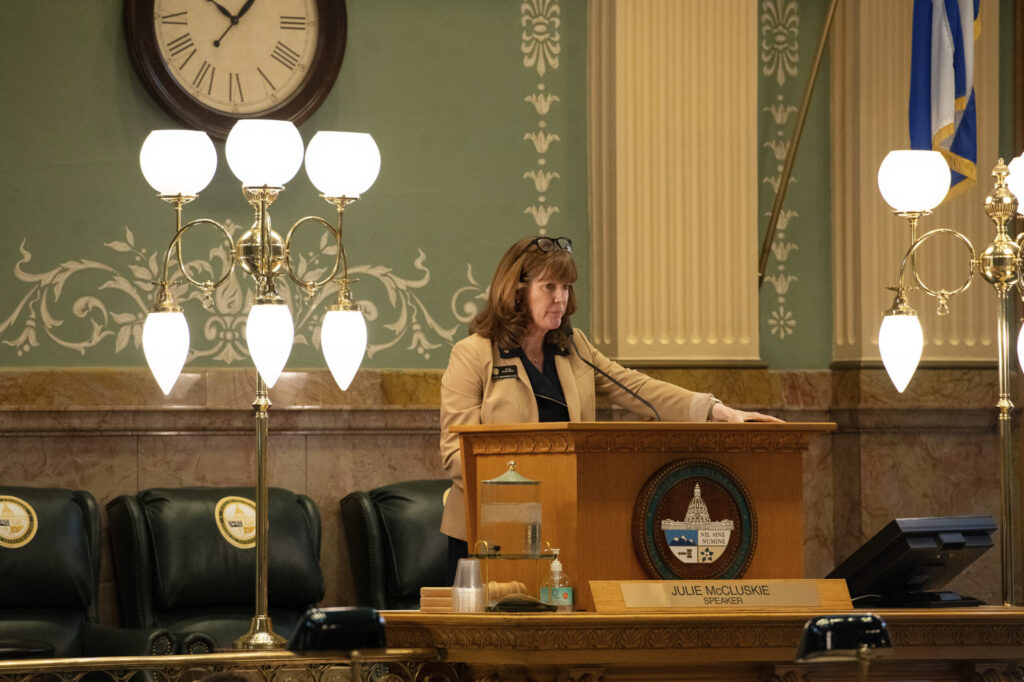
A bill that would allow Pinnacol Assurance to formally sever its remaining ties with the state appears unlikely to emerge anytime soon, as House leaders juggle a massive budget shortfall, unresolved negotiations with key stakeholders, and growing doubts about whether...
PREV
PREVIOUS

Those who cannot live without wild things | Rachel Gabel
Aldo Leopold wrote in his Sand County Almanac, “There are some who can live without wild things and some who cannot.” The collection of essays first published in 1949 was accepted by a publishing house after a steady stream of rejections. His work long outlived him as Leopold died of a heart attack while fighting […]

Mum on his own replacement, Bennet disrespects voters | Dick Wadhams
U.S. Sen. Michael Bennet is playing an arrogant game of hide-and-seek with Colorado voters as he seeks to abandon his Senate seat to become governor. Bennet insists that if he is elected governor in November, he will wait until he is inaugurated in January 2027 before he resigns from the Senate so he can unilaterally […]