

Appeals court recognizes longer window to sue insurers for withholding policy details
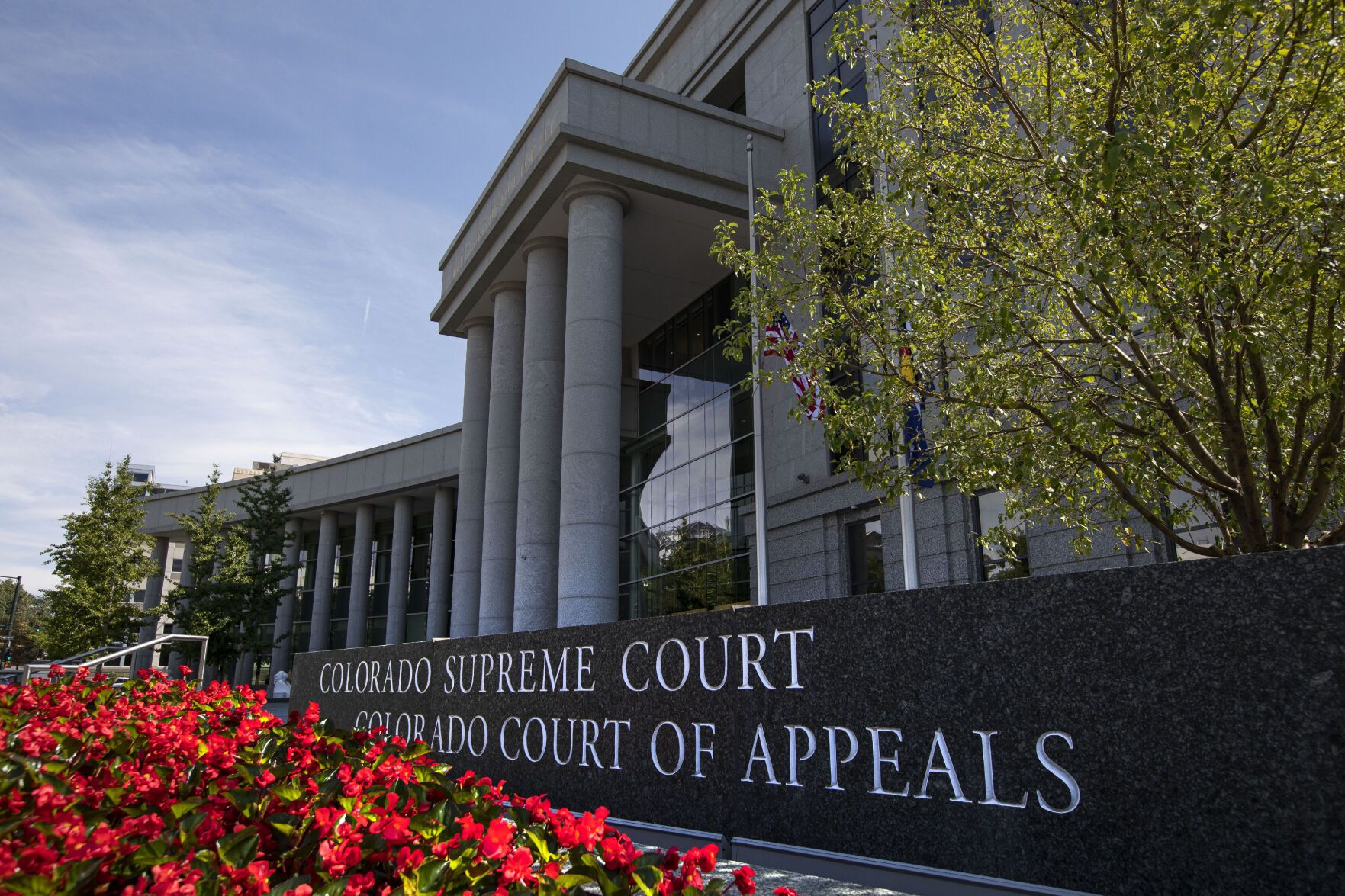
Colorado’s second-highest court split with its own prior decision earlier this month and concluded injured motorists have two years, not one, to sue insurance companies for withholding relevant information about an at-fault driver’s policy.
In 2019, Colorado lawmakers enacted a measure to help motorists determine which insurance coverage is available in the event of an injury. To facilitate “accurate and reliable information,” the law mandates that auto insurance companies disclose policies within 30 days of a request from a claimant, so long as the policy is or may be relevant to the claim. There is a $100-per-day penalty for companies that withhold information beyond the deadline.
In September 2023, a three-judge Court of Appeals panel concluded that plaintiffs have one year from the date of the violation to sue, under the statute of limitations that applies to “any penalty.“
However, on March 12, a different panel disagreed with that finding. Although the policy disclosure law uses the word “penalty,” Judge Elizabeth L. Harris wrote that the $ 100 per day imposed on violators does not have the legal hallmarks of a penalty.
The “damages are not a fine imposed by the state, suggesting that the provision does not amount to a penalty,” she wrote. More importantly, there is no “determination of overpayment or delinquency for which such penalties are assessed.”
As a result, plaintiffs Joshua and Wendy Weatherill may pursue their lawsuit against State Farm for withholding an alleged at-fault driver’s policy for excess coverage for more than 1.5 years after the Weatherills’ attorney requested it.
Case: Weatherill v. State Farm
Decided: March 12, 2026
Jurisdiction: Denver
Ruling: 3-0
Judges: Elizabeth L. Harris (author)
David H. Yun
W. Eric Kuhn
The opinion also sets the stage for potential intervention by the state Supreme Court, which considers the existence of conflicting Court of Appeals decisions when deciding whether to weigh in on a legal question.
A driver collided with the Weatherills in December 2020. The next month, the Weatherills’ attorney sought the driver’s insurance policy and other details through State Farm, pursuant to Colorado law. Eight days later, State Farm disclosed the driver’s policy.
On Feb. 16, 2021, the Weatherills’ attorney made a similar request to State Farm’s legal representative. There was no response.
The following year, the plaintiffs sued the at-fault driver. Only then, in October 2022, did they learn that the driver had a second policy with much higher limits than the policy State Farm disclosed in January 2021. The Weatherills sued State Farm, noting they originally requested disclosure of known policies, “including excess or umbrella insurance,” and they had no reason to believe State Farm was withholding information until the belated discovery.
State Farm moved to dismiss the lawsuit, arguing the Weatherills sued outside of the one-year statute of limitations that applies to penalties. Denver District Court Judge Jill D. Dorancy agreed with the company, while acknowledging the Weatherills were in the dark about the existence of a second policy.
“The argument is logical and would have been stronger if Plaintiffs had demanded a response to their February 16, 2021 letter,” she wrote. But “because Plaintiffs failed to follow up regarding their own request for a response, they contributed to the running of the statute of limitation in this matter.”
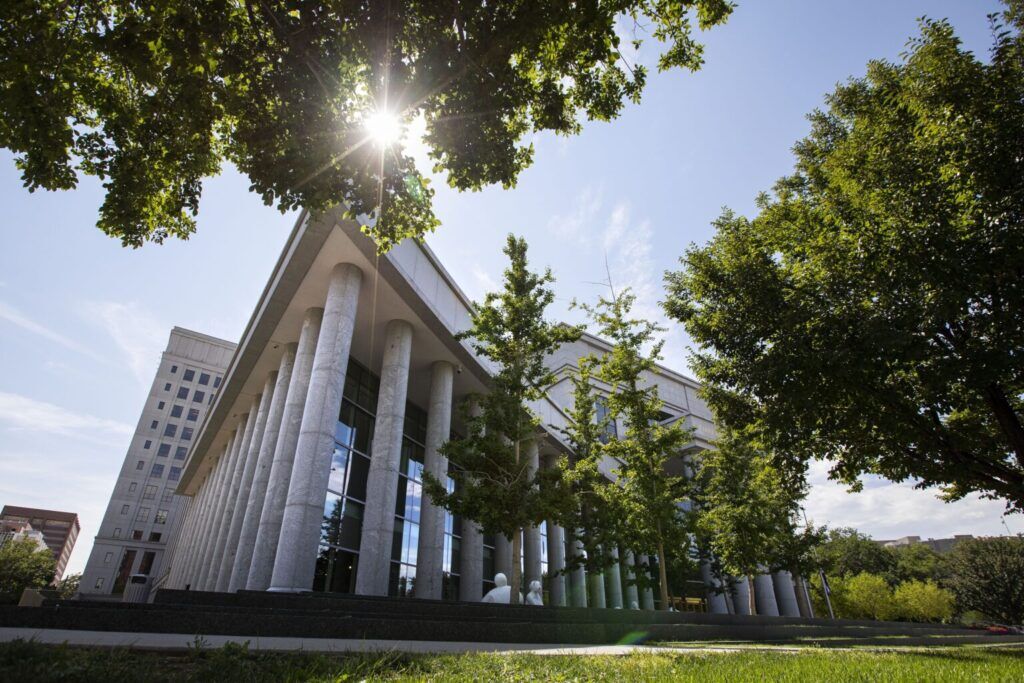
While the Weatherills appealed, the Court of Appeals issued a decision in Reynolds v. Great Northern Insurance Company, confirming that plaintiffs have one year to sue because of the statute of limitations for penalties.
Although the Weatherills and State Farm did not explicitly dispute the one-year timeline to sue, some members of the appellate panel signaled they were reconsidering the question.
“Wouldn’t (the penalty provision) apply where a governmental entity imposes a penalty and then you have, like, an appeal process through an administrative authority?” asked Judge David H. Yun during oral arguments in 2024. “It just doesn’t seem to apply to me in this situation.”
Ultimately, the panel determined the typical two-year window to sue applied to the Weatherills’ case.
If the panel had accepted the one-year deadline from the Reynolds decision, a plaintiff’s claim against an insurer “could be barred by the one-year statute of limitations even though the claimant did not know, and could not reasonably discover, that an insurer had violated its obligation under the statute. Such an interpretation appears incongruous with the legislature’s purpose,” wrote Harris.
Because the Weatherills filed suit against State Farm within two years of the original violation, the Court of Appeals reinstated their claim.
The case is Weatherill et al. v. State Farm Mutual Automobile Insurance Company.

Federal judge refuses to authorize immediate appeal in World Cup trafficking lawsuit
Michael Karlik
michael.karlik@coloradopolitics.com
Updated 4 hours ago
A federal judge declined to authorize an immediate appeal last week of a prior decision allowing companies operating out of Colorado to be sued for allegedly participating in a human trafficking venture involving Filipino laborers who constructed facilities for the...
Federal judge considers second round of sanctions against ex-Colorado judicial discipline director
Michael Karlik
michael.karlik@coloradopolitics.com
Updated 8 hours ago
A federal judge ordered Colorado’s former judicial discipline director on Tuesday to explain why she should not sanction him a second time for filing documents for improper purposes, such as harassment or delay. U.S. District Court Senior Judge Kathryn H....

Colorado justices agree to review insurance question that has divided federal judges
Michael Karlik
michael.karlik@coloradopolitics.com
Updated 13 hours ago
The Colorado Supreme Court granted a federal judge’s request on Friday to address an issue that has produced conflicting answers in policyholders’ lawsuits against insurance companies over unpaid benefits. “Parties (and judges) regularly spend undue time and money fighting in...

Federal judge dismisses background screeners’ challenge to Colorado law
Michael Karlik
michael.karlik@coloradopolitics.com
Updated 1 day ago
A federal judge dismissed a challenge on Friday to a portion of Colorado law that prohibits certain information from being included in consumer reports, in what seemed to be a conflict with federal law. Congress originally enacted the Fair Credit...
10th Circuit rejects ‘penalty’ for children of naturalized citizens seeking visas
Michael Karlik
michael.karlik@coloradopolitics.com
Updated 1 day ago
The Denver-based federal appeals court joined three of its peers earlier this month and determined the child of a newly naturalized U.S. citizen is not moved to a longer visa line as a result of his parent gaining citizenship, and...

Appeals court decides free speech cases, error-prone judge reversed again | COURT CRAWL
Michael Karlik
michael.karlik@coloradopolitics.com
Updated 2 days ago
Welcome to Court Crawl, Colorado Politics’ roundup of news from the third branch of government. The state’s Court of Appeals decided multiple cases implicating free speech rights, plus Colorado’s most error-prone judge was reversed on appeal yet again. Heard on...
Federal judge dismisses claims against medical contractor for Eagle County jail suicide
Michael Karlik
michael.karlik@coloradopolitics.com
Updated 5 days ago
A federal judge dismissed the claims against a medical contractor for the Eagle County jail and its employees earlier this month, concluding there were insufficient allegations that they violated the constitutional rights of a man who died by suicide in...

Federal judge advances lawsuit seeking overtime compensation for Aurora firefighter trainees
Michael Karlik
michael.karlik@coloradopolitics.com
Updated 2 days ago
A federal judge gave preliminary approval earlier this month to a class of Aurora firefighter trainees who may sue the city over allegations that they were denied overtime pay in violation of federal law. Joseph Elias, who attended Aurora’s fire...
Appeals court says jury not obligated to apply discounts to determine value of stolen merch
Michael Karlik
michael.karlik@coloradopolitics.com
Updated 2 days ago
Colorado’s second-highest court concluded on Thursday that it was up to a Douglas County jury to determine the value of stolen merchandise at a defendant’s theft trial, after both sides presented different estimates of the items’ value. Under state law,...
Public figures have limited path to sue over accusations of criminality, says appeals court
Michael Karlik
michael.karlik@coloradopolitics.com
Updated 6 days ago
Colorado’s second-highest court ruled last week that a public figure cannot sue for defamation solely because a person publicly accuses them of committing a crime, as the statement may be constitutionally protected opinion. A three-judge Court of Appeals panel narrowed...
PREV
PREVIOUS

Appeals court decides free speech cases, error-prone judge reversed again | COURT CRAWL
Welcome to Court Crawl, Colorado Politics’ roundup of news from the third branch of government. The state’s Court of Appeals decided multiple cases implicating free speech rights, plus Colorado’s most error-prone judge was reversed on appeal yet again. Heard on appeal • The Colorado Supreme Court agreed a defendant couldn’t be faulted for failing to cooperate […]

Denver airport hasn’t had notice ICE agents will assist TSA yet. Wait times are short, though
As President Donald Trump deployed immigration agents to help U.S. airports manage hours‑long security lines during the partial government shutdown, Denver International Airport remained relatively calm on Monday. At the nation’s third‑busiest airport, TSA PreCheck lanes remained open to start the week — and so did Clear. By noon, security remained easy to get through, […]