

Federal judge to consider sanctioning ex-Colorado judicial discipline director
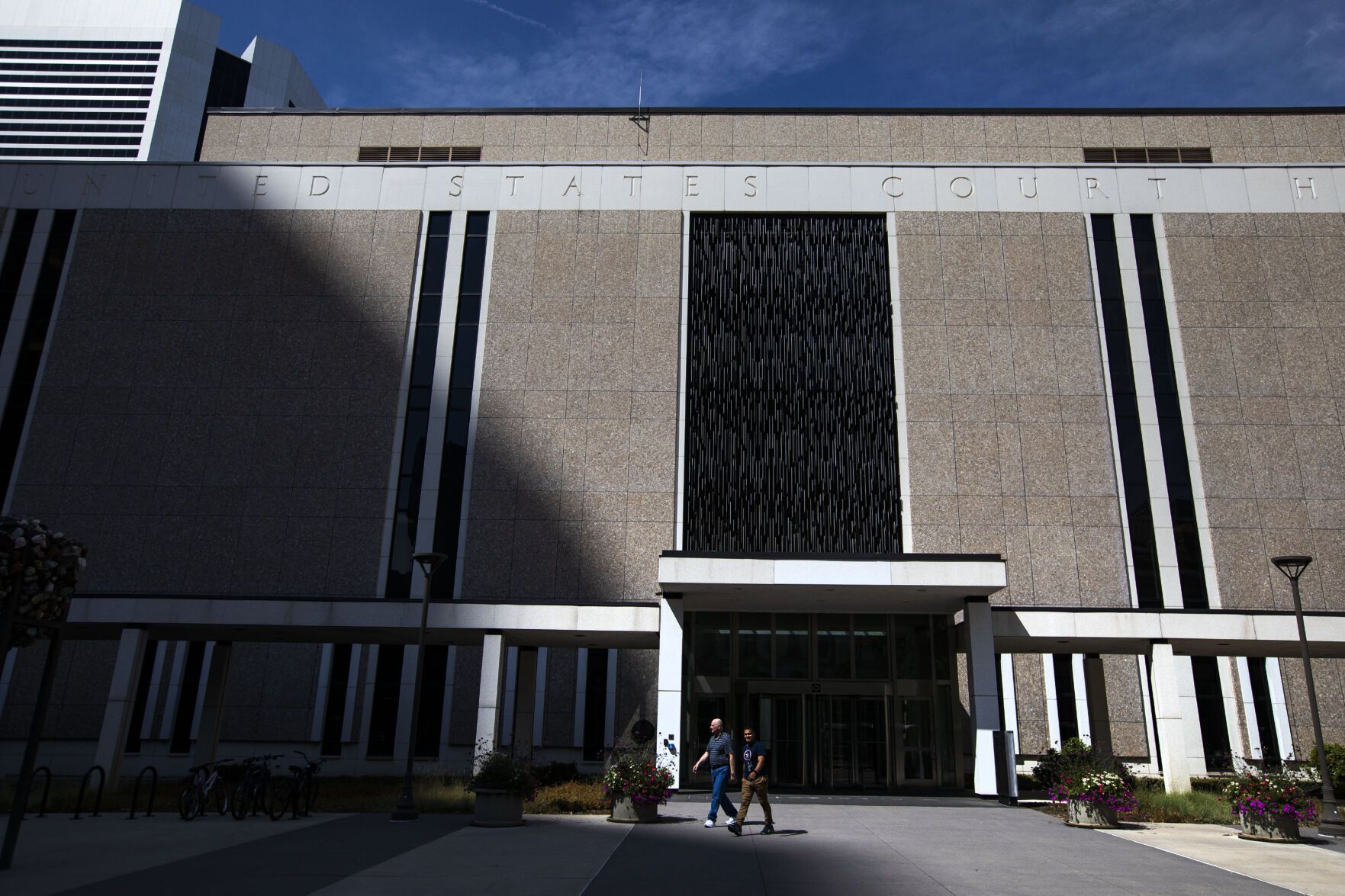
A federal judge ordered Colorado’s former head of judicial discipline on Wednesday to explain why she should not sanction him for making inaccurate statements about the defendants in his lawsuit against the Colorado Supreme Court and related entities.
U.S. District Court Senior Judge Kathryn H. Vratil indicated she will hear arguments and evidence at a hearing next Thursday about whether to impose consequences on Christopher S.P. Gregory, the former executive director of the Colorado Commission on Judicial Discipline.
Vratil, of Kansas, was assigned to Gregory’s lawsuit last month under the provision of law allowing the chief judge of the U.S. Court of Appeals for the 10th Circuit to enlist an out-of-state judge when it would be “in the public interest.” Four of Colorado’s U.S. District Court judges recused or otherwise declined to handle Gregory’s case, after which Chief Judge Jerome A. Holmes of the 10th Circuit designated Vratil to preside.
In October, representing himself, Gregory filed a lawsuit against the state Supreme Court, the discipline commission, the disciplinary rule-making committee, and others. Generally, he alleged a conspiracy related to the 2019 decision to award a multimillion-dollar contract to a Colorado judicial employee who was herself facing misconduct allegations.
Later reporting revealed that the employee, Mindy Masias, had catalogued alleged instances of judicial misconduct that she was prepared to disclose.
Gregory’s lawsuit seeks his reinstatement as the judicial discipline commission’s director and the removal of those appointed to the discipline, judicial performance, and judicial nominating roles. He is also the plaintiff in a related lawsuit that is sealed from public view.
Vratil’s signal about potential sanctions stems from a motion Gregory filed last month seeking the court clerk’s entry of a default against the defendants. A default occurs when a party has “failed to plead or otherwise defend” against a plaintiff’s claims and amounts to an admission of liability.
The defendants “have individually and collectively failed to plead or otherwise respond to the Verified Complaint and Jury Demand filed October 23, 2025,” wrote Gregory in his motion.
The defendants quickly disputed the claim that they had been unresponsive.
“Over the last two months and almost weekly, counsel for the parties have exchanged emails on a number of issues, including the deadline for Defendants to respond to the Complaint,” wrote First Assistant Attorney General Katharine Brown. “Second, Plaintiff cannot seriously contend that Defendants failed to defend themselves against this action.”
She pointed to the unusual sequence of events that unfolded on the docket in February.

First, after the originally assigned judge recused herself, Gregory’s case landed in the lap of Chief Judge Daniel D. Domenico. Gregory filed a misconduct complaint against Domenico and asked him to recuse himself because of his connections to the defendants. Although the misconduct complaint was dismissed and Domenico believed his professional relationships were not problematic, he agreed to disqualify himself on Feb. 3.
The court then assigned the case to Senior Judge R. Brooke Jackson, whose courtroom protocols include the unique requirement that parties send him a detailed letter before filing a motion to dismiss, allowing him to “determine what the next steps should be.” On Feb. 12, the defendants filed their letter with Jackson.
Days later, Jackson exercised his right as a semi-retired senior judge to decline to hear the case, triggering another transfer to Judge Gordon P. Gallagher. At that point, Gregory moved for a default.
Given the confusion about what deadlines now apply, and the fact that the defendants have already made multiple filings, “the Court should not reward Plaintiff’s gamesmanship,” Brown concluded.
Vratil, who took over the case from Gallagher, indicated in her March 18 order that Gregory’s statements in the motion for default might have violated the federal rule prohibiting improper or frivolous filings.
“Specifically, plaintiff should address his representation that defendants had not ‘otherwise defended’ this action,” she wrote, “when as of February 18, 2026, counsel had entered appearances for defendants, filed motions to extend their time to answer or otherwise respond, and actively engaged with plaintiff on issues such as judicial recusal, confidentiality of filings, filing restrictions, deadlines and recusal of counsel.”
At the upcoming March 26 hearing, Vratil will address sanctions and other pending motions.
Gregory has also spoken publicly about the default outside of court, including through a Feb. 25 letter to state Senate President James Coleman, D-Denver, which he also sent to lawmakers and the media. Gregory alleged that the defendants’ “strategy has been to obstruct and prevent litigation of the merits” by “avoiding the Defendants’ obligations to timely and directly respond to the allegations of their unlawful conduct.”
The case is Gregory v. The Colorado Judicial Discipline Rulemaking Committee et al.


Federal judge green-lights trial against Denver officer over race-based enforcement
Michael Karlik
michael.karlik@coloradopolitics.com
Updated 22 hours ago
A federal judge green-lit a jury trial last week on a man’s claim that a Denver police officer engaged in racially selective enforcement of the law by arresting him for video recording at a police station, while not arresting a...
Federal judge says 8 years in solitary confinement not grounds to reduce man’s sentence
Michael Karlik
michael.karlik@coloradopolitics.com
Updated 23 hours ago
A federal judge concluded earlier this month that a man’s eight years allegedly spent in solitary confinement did not justify granting his request for a sentence reduction. However, U.S. District Court Senior Judge William J. Martínez signaled his willingness to...
10th Circuit rejects ‘potential for violence’ when police arrest vehicle occupant’s romantic partner
Michael Karlik
michael.karlik@coloradopolitics.com
Updated 1 day ago
The Denver-based federal appeals court rejected the idea on Tuesday that a vehicle occupant poses a danger to police solely because they are romantically involved with another occupant who officers are arresting. By 2-1, a three-judge panel of the U.S....

Colorado justices grill debt collector about compliance with law
Michael Karlik
michael.karlik@coloradopolitics.com
Updated 19 hours ago
The Colorado Supreme Court repeatedly pressed a debt collection company last week to explain how its lawsuit against a Boulder woman for an unpaid credit card balance complied with the specific requirements that state lawmakers have created. Portfolio Recovery Associates,...
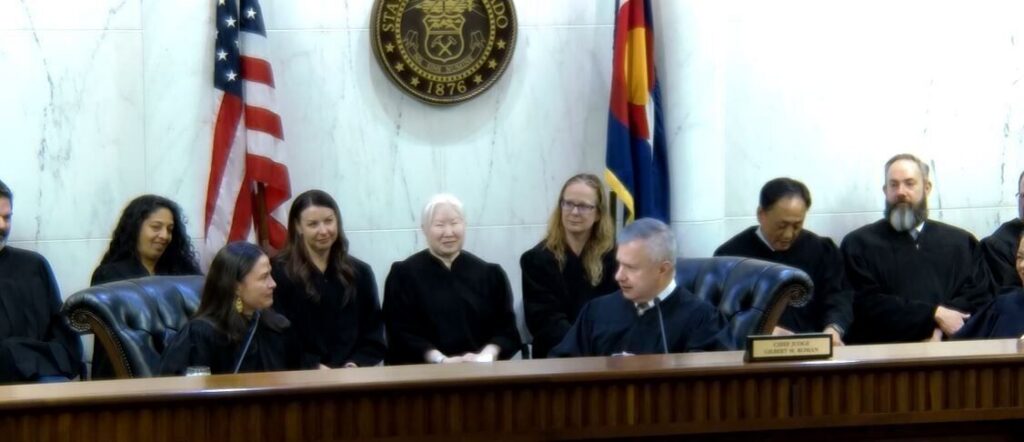
Appeals court agrees defendant’s speech constitutionally protected against El Paso County judge
Michael Karlik
michael.karlik@coloradopolitics.com
Updated 1 day ago
Colorado’s second-highest court agreed last week that a defendant’s critical statements toward an El Paso County judge were constitutionally protected and could not form the basis of a retaliation charge. A three-judge Court of Appeals panel concluded that, in context,...

Colorado justices, 4-3, order new murder trial due to wrongfully excluded evidence
Michael Karlik
michael.karlik@coloradopolitics.com
Updated 2 days ago
The Colorado Supreme Court agreed on Monday that a trial judge incorrectly faulted a defendant for refusing to cooperate in a mental health examination, even though the state’s hospital was the entity that botched its responsibility to evaluate her during...

Overdose deaths from opioids dip in America — but not in Colorado, study says
Jacob Mauk
jacob.mauk@denvergazette.com
Updated 2 days ago
Overdose deaths from opioids rose in Colorado, diverging from the national trend, which has been decreasing, according to a new study from a think tank. In its new report, the Common Sense Institute said synthetic opioid overdose deaths in Colorado...

Error-prone Douglas County judge triggers another reversal of criminal convictions
Michael Karlik
michael.karlik@coloradopolitics.com
Updated 2 days ago
Colorado’s second-highest court overturned a defendant’s Douglas County convictions on Thursday due to the error of a judge whose actions have triggered a disproportionate number of reversals to convictions and sentences in recent years. Since 2021, the Court of Appeals...

Federal judge formalizes injunction blocking USDA’s ‘pilot project’ for Colorado food assistance
Michael Karlik
michael.karlik@coloradopolitics.com
Updated 1 day ago
A federal judge formalized his order on Monday to prevent the U.S. Department of Agriculture from requiring Colorado to participate in a food assistance “pilot project,” finding that it violates the law, the U.S. Constitution, and “the bounds of reasoned...

Colorado justices speak about inner workings of court, analysis of appellate opinions | COURT CRAWL
Michael Karlik
michael.karlik@coloradopolitics.com
Updated 3 days ago
Welcome to Court Crawl, Colorado Politics’ roundup of news from the third branch of government. Members of the state Supreme Court provided an inside look at the workings of their institution, and a Colorado Politics analysis found that some appellate...
PREV
PREVIOUS
With jails overcrowding, Gov. Jared Polis asks for new prisons despite $1B budget shortfall
Colorado budget writers are bracing for a worsening fiscal outlook just as the Polis administration is asking for hundreds of millions of dollars to expand the state’s prison system, setting up a clash between a projected $1 billion shortfall and a growing corrections crisis driven by overcrowding and a backlog of inmates awaiting parole placement. […]
Evacuations remain as officials give updates on 3 wildfires burning in southern Colorado
Containment has started for a Custer County wildfire that prompted several evacuations Wednesday. The wildfire is one of three burning across southern Colorado this week amid dry, dangerous fire weather conditions. All of them were human-caused, officials said. Dubbed by officials as the “Buttermilk fire,” the Custer County fire was sparked Wednesday and has burned […]