

Denver approves $4.6M AI-powered permit review contract

The Denver City Council approved a $4.6 million contract with ComplyAI on Monday for a new online tool intended to speed up the city’s permitting process.
Officials say the platform, CivCheck, uses artificial intelligence automation, machine learning and “intelligent document analysis” to streamline application intake and code-compliance review.
The council approved the five-year contract on a 10-1 vote.
District 7 Councilmember Flor Alvidrez cast the sole dissenting vote, citing concerns about the system’s reliability.
“I appreciate the department’s efforts on how technology can streamline the process,” Alvidrez said. “At the same time, I am growing more concerned because we’re seeing more reporting regarding inaccuracies and limitations of AI systems, especially when they are also asked to interpret complex rules and regulations.”
Alvidrez added that she has also heard from local architects and professionals in the development community who say that current AI tools “may not be ready to handle the full complexity of codes, building codes, and site-specific conditions.”
At-large Councilmember Sarah Parady suggested the city evaluate the program in a year.
“I hope we will check in in a year and make sure that we’re seeing if it’s delivering the kind of results that we’re hoping that it will,” Parady said. “Because this is a lot of money that otherwise could go towards staff, and we know that Community Planning and Development lost a lot of staff in layoffs.”
Robert Peek, development systems performance director for the Denver Permitting Office, has previously described the new platform as a tool to guide applicants through a process and “works like a smart-checklist or validation engine for our customers, and as they submit their construction drawings, it’ll surface any deficiencies.”
As for being ready to deal with the complexity of the city’s codes and regulations, Peek said it would be a gradual process, adding subsequent modules over the life of the contract.
“I think we realize that, as well, and that we need to build up the tool, see the value, and then start to expand from there,” Peek said. “Right now, we see about 37% of our applications get accepted on the first round of submittal, which is quite low.”
Peek said his department aims to increase the number of successful first-round submittals to 80% using the new AI tool.


Colorado needs another Bill Owens — who kept up our roads | Dick Wadhams
Dick Wadhams
dick-wadhams@coloradopolitics.com
Updated 2 days ago
By Dick Wadhams The silence is deafening within the Democratic primary for governor on the need to build and improve roads in Colorado after 20 years of neglect. The Democratic contestants, U.S. Sen. Michael Bennet and Attorney General Phil Weiser,...

If we want to save the chicken, we have to save ranching | Rachel Gabel
Rachel Gabel
rachel-gabel@coloradopolitics.com
Updated 2 days ago
In southeastern Colorado, a slew of green energy projects are being planned — some in partnership with landowners and some despite landowners. At the same time, the lesser prairie chicken is dominating many of my conversations as of late, due...

Trump says the US will ‘guide’ stranded ships from the Strait of Hormuz, starting on Monday
Melanie Lidman
melanie.lidman@associatedpress.com
Updated 11 hours ago
DUBAI, United Arab Emirates (AP) — The United States will launch an effort on Monday to “guide” stranded ships from the Iran-gripped Strait of Hormuz, President Donald Trump said, giving few details about what could be a sweeping attempt to...

We the people are no longer the government of Colorado | Jon Caldara
Jon Caldara
jon-caldara@coloradopolitics.com
Updated 4 days ago
We the people of Colorado no longer control our own state constitution. I found this out the hard way. In Colorado, a government for, by, and of the people is a fib. We lowly citizens no longer have much of...
Wyoming judge blocks law that bans all but earliest abortions | OUT WEST ROUNDUP
The Associated Press
the-associated-press@coloradopolitics.com
Updated 5 days ago
WYOMING Judge blocks broad abortion ban A Wyoming judge has blocked a new state law that bans abortions beyond the earliest stages of pregnancy while a lawsuit challenging the provision moves ahead. It’s the first court ruling affecting the legal...
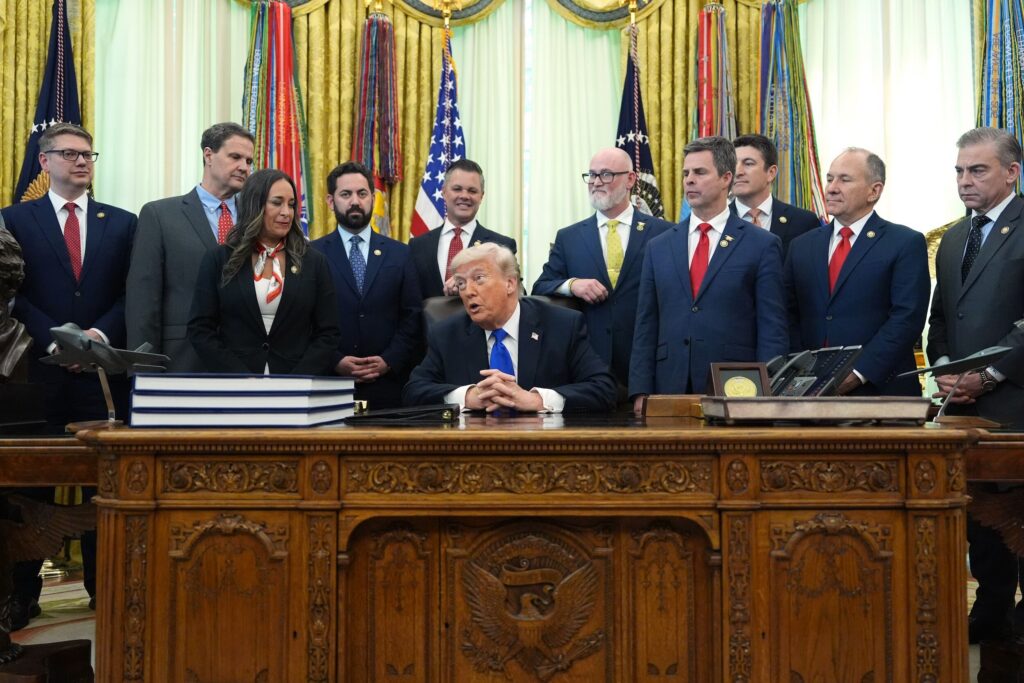
Trump order aims to help more people get retirement savings plans in time for new federal match
Collin Binkley
collin.binkley@associatedpress.com
Updated 2 days ago
WASHINGTON • President Donald Trump signed an executive order on Thursday calling for a new government website where people in the United States can find and compare private-sector retirement savings accounts, aiming to help millions of workers whose employers do not offer such...
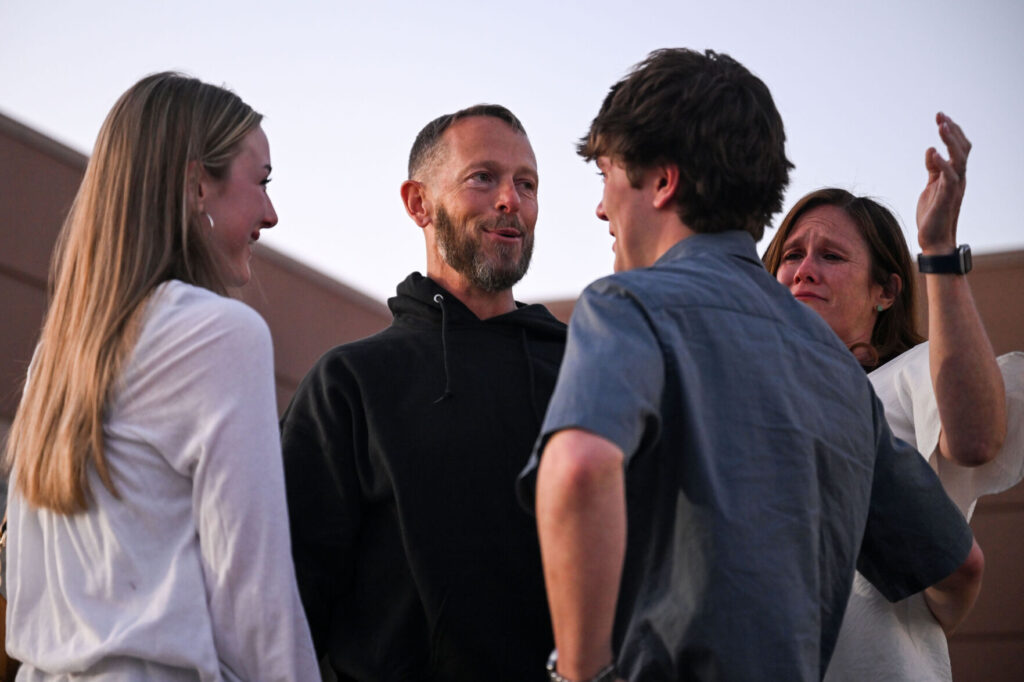
Dismissal sought in Michael Clark’s second trial
Jenny Deam
jenny-deam@coloradopolitics.com
Updated 23 hours ago
The murder conviction of Michael Clark should be dismissed due to a 32-year delay that led to crucial evidence being lost or destroyed, a bungled police investigation and “outrageous conduct” at the state crime lab, according to defense motion filed...

The need for a governor to say “no” to his friends | SONDERMANN
By Eric Sondermann
by-eric-sondermann@coloradopolitics.com
Updated 4 days ago
A wise man once remarked that the real test of a governor is his willingness to turn down and reject the pleadings of political friends and allies. That gentleman knew something of what he spoke. He occupied the corner-office executive...

Gov. Lamm scolds own party over losing modernization battle against GOP | A LOOK BACK
Rachael Wright, Special to Colorado Politics
rachael.wright@coloradopolitics.com
Updated 5 days ago
Forty-Five Years Ago This Week: “The Democratic Party lost the battles of ideas and political technology last November,” Gov. Dick Lamm told the Boulder County Democratic Party at the annual Harry S. Truman Memorial Dinner. Lamm argued that the Democratic...

Colorado Politics Calendar May 4-10
Rachael Wright, Special to Colorado Politics
rachael.wright@coloradopolitics.com
Updated 5 days ago
CoPo’s weekly political calendar will help you find political and public-policy events throughout Colorado. It includes candidate and issue campaign events, public policy meetings, court hearings, state and local party conventions, assemblies, debates, rallies, parades, speaking engagements, traveling dignitary appearances,...