

U.S. Supreme Court strikes down Trump’s tariffs, upending central plank of economic agenda
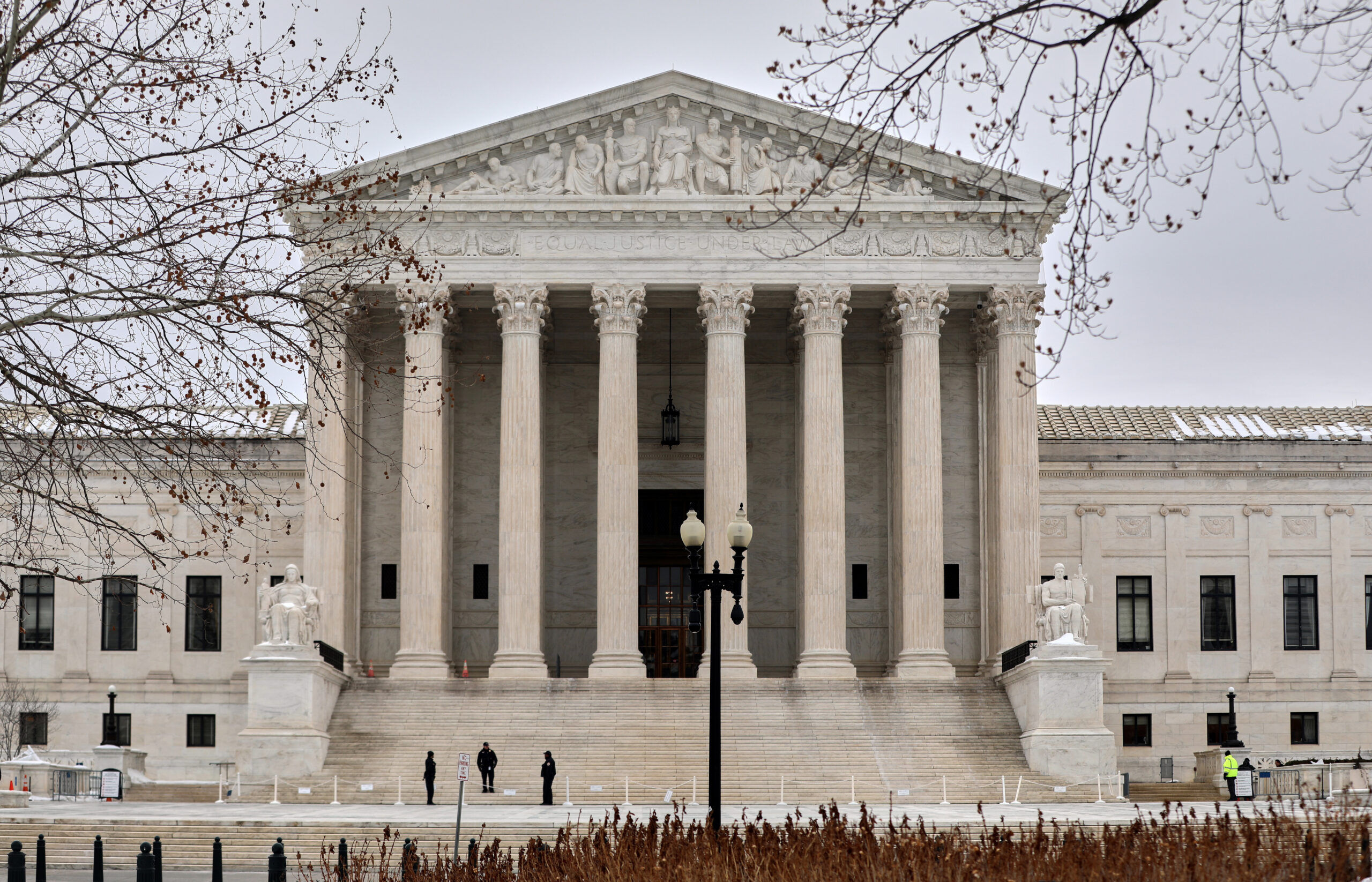
WASHINGTON • The Supreme Court struck down President Donald Trump’s global tariffs on Friday, handing him a major loss on an issue crucial to his economic agenda.
The 6-3 decision centers on tariffs imposed under an emergency powers law, including the sweeping “reciprocal” tariffs the president levied on nearly every other country.
In imposing the tariffs, the Trump administration said they would strengthen the country’s economic position and protect American workers, arguing the large U.S. trade deficits have hollowed out the manufacturing base here and undermined supply chains. The White House also argued that the status quo rendered America’s defense industry “dependent on foreign adversaries.”
It’s the first major piece of Trump’s broad agenda to come squarely before the nation’s highest court, which he helped shape with the appointments of three conservative jurists in his first term.
The majority found that the Constitution “very clearly” gives Congress the power to impose taxes, which include tariffs.
“The Framers did not vest any part of the taxing power in the Executive Branch,” Chief Justice John Roberts wrote.
Justices Samuel Alito, Clarence Thomas and Brett Kavanaugh dissented.
“The tariffs at issue here may or may not be wise policy. But as a matter of text, history, and precedent, they are clearly lawful,” Kavanaugh wrote.
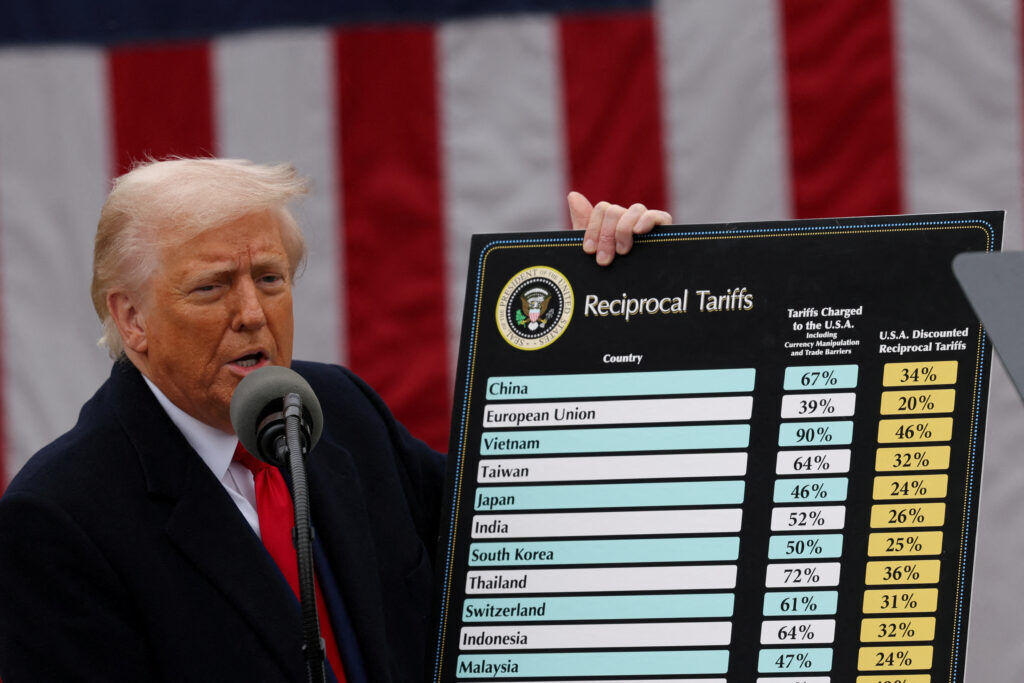
The president called court’s decision “incorrect.”
“But it doesn’t matter because we have very powerful alternatives,” he said.
Reaction from Colorado elected officials rolled in quickly.
“The Supreme Court today made it clear that a federal emergency powers law does not give the president the authority to impose sweeping tariffs on trading partners,” said Colorado Attorney General Phil Weiser in a statment. “Tariffs are taxes passed onto consumers who then pay higher prices for food, appliances, electronics, and other goods. These illegal tariffs also force businesses, farmers, and ranchers to make major decisions to save costs or stay afloat.”
Gov. Jared Polis framed the ruling as good news for Colorado businesses.
“America is back on the global stage,” Polis said in a news release. “Now we can sell our made in America and grown in America products and buy what we want from across the world with lower taxes.”
“Our economy will grow more and we will all prosper from this decision,” he said.
The court’s majority did not address whether companies could get refunded for the billions they have collectively paid in tariffs. Many companies, including the big-box warehouse chain Costco, have already lined up to demand refunds in lower courts. Kavanaugh noted the process could be complicated.
“The Court says nothing today about whether, and if so how, the Government should go about returning the billions of dollars that it has collected from importers. But that process is likely to be a ‘mess,’ as was acknowledged at oral argument,” he wrote.
The Treasury had collected more than $133 billion from the import taxes the president has imposed under the emergency powers law as of December, federal data shows.
The tariffs decision doesn’t stop Trump from imposing duties under other laws. While those have more limitations, top administration officials have said they expect to keep the tariff framework in place under other authorities.
The Supreme Court ruling comes following a series of short-term wins on the court’s emergency docket that have allowed Trump to push ahead with executive powers on issues ranging from high-profile firings to major federal funding cuts.
The Republican president has been vocal about the case, calling it one of the most important in U.S. history and saying a ruling against him would be an economic body blow to the country. Opposition to his tariffs policy crossed the political spectrum, including libertarian and pro-business groups that are typically aligned with the GOP. Polling has found tariffs aren’t broadly popular with the public, amid wider voter concern about affordability.
The Constitution gives Congress the power to levy tariffs. But the Trump administration argued that a 1977 law permitting the president to regulate importation during emergencies also allows him to set tariffs. Other presidents have used the law dozens of times, often to impose sanctions, but Trump was the first president to invoke it for import taxes.
Trump set what he called “reciprocal” tariffs on most countries in April 2025 to address trade deficits, which he had declared a national emergency. The White House said the situation had resulted in a “lack of incentive to increase advanced domestic manufacturing capacity.” Those came after he imposed duties on Canada, China and Mexico, saying the move was meant to address a drug trafficking emergency.
A series of lawsuits followed, including a case from a dozen largely Democratic-leaning states and others from small businesses selling everything from plumbing supplies to educational toys to women’s cycling apparel.
The challengers argued the emergency powers law doesn’t even mention tariffs and Trump’s use of it fails several legal tests, including one that doomed then-President Joe Biden’s $500 billion student loan forgiveness program.
The economic impact of Trump’s tariffs has been estimated at some $3 trillion over the next decade, according to the Congressional Budget Office.
Assistant House Minority Leader Joe Neguse, who chairs an arm of the House Democrats that sued to overturn the tariffs, applauded the ruling in a social media post, calling the court’s decision “a victory for the American people.”
“Our Litigation Task Force fought against President Trump’s unlawful and reckless tariffs every step of the way — from the district court level all the way to the Supreme Court,” the Lafayette Democrat said.
Other Democratic members of Colorado’s congressional delegation made similar points Friday.
U.S. Rep. Jason Crow, D-Aurora, applauded the ruling in a news release, calling the tariffs “a tax on every American.”
“They’ve raised costs on Colorado families, threatened small businesses, and hit working Americans the hardest,” Crow said. “Today’s decision reaffirms what the Constitution has said all along: these tariffs are illegal and unconstitutional.”
In a statement, U.S. Rep. Jeff Hurd of Grand Junction, the only Republican member of the state’s delegation to publicly oppose the tariffs, called them “a useful tool when applied strategically” but added that the ruling “underscores the need for Congress to play its proper role in trade policy.”
Hurd co-sponsored bipartisan legislation last year that would have required congressional approval for certain tariffs imposed by the president, citing a constitutional provision that gives Congress the authority to regulate foreign commerce and impose tariffs. He also voted last week along with a handful of other Republican lawmakers to disapprove of the administration’s tariffs on Canada, giving the measure enough votes to pass the House.
“Strong trade enforcement must be grounded in durable legal footing,” Hurd said Friday, adding that he has heard from businesses in his district concerned about the “uncertainty” created by Trump’s tariffs.
“We must protect American industry and strengthen our leverage — but that leverage must be stable, predictable, and accountable to the American people,” Hurd said. “If tariffs are necessary, Congress should debate them and vote on them directly. That is how our constitutional system is designed to function.”
At the state Capitol in Colorado, two House Republican legislators who supported the tariffs noted how they view Trump’s policy under the lens of their military experience.
Rep. Rebecca Keltie, R-Colorado Springs, a retired U.S. Navy veteran who served overseas, said the policy evens the playing field for America, “which has been the whipping child in the economic world.”
“Tariffs make sure the playing field is level because it needs to be fairer,” she added. “I’ve been all over the world. I’ve seen how Americans are treated in other countries and how they view us. It’s not good, when we do so much.”
Keltie noted the U.S. sends its military to other countries to protect them, arguing for a fair shake, given “everything we do across the globe.”
Rep. Anthony Hartsook, R-Parker, also sees tariffs from the perspective of having served for 26 years in the Army.
America wields a lot of economic and military power, he said. But “if tariffs become a default, that creates a shortage of what we’re able to do around the world,” he said.
That said, tariffs are a leveraging tool, he added.
“Having seen the impacts of tariffs overseas and from a business perspective, tariffs can be a double-edged sword,” Hartsook said. “There are things it can help with and things it can hurt. You have to weigh the cost-benefit analysis. “
He added he believes most of the authority rests with the executive branch, but with a nod to the other two branches of government. If the courts ruled they didn’t like it, so be it, and the executive branch can go back to planning, he said.
“When you see other countries levying tariffs on us, and Americans are hurting because of those tariffs, and we don’t have something to counteract, then we come out on the losing end. That’s where we were going with the tariffs, as a negotiating tool,” he said.
Associated Press writer Mark Sherman, The Denver Gazette and Colorado Politics contributed to this report.


Colorado business leaders, Gov. Jared Polis send warning as companies pack their bags
Mark Samuelson Special to The Denver Gazette
mark.samuelson@denvergazette.com
Updated 18 hours ago
Is Colorado scaring away corporate expansions and entrepreneurs that had once made the state a magnet for high-tech business growth? That’s the assertion of a letter signed by more than 200 business and technology leaders, addressed to Gov. Jared Polis,...

Colorado marijuana regulators pledge crackdown on intoxicating hemp
Christopher Osher
chris.osher@gazette.com
Updated 1 day ago
Citing potential tax avoidance, ‘serious risk to public safety,’ Marijuana Enforcement Division warns companies about swapping illegal chemically converted hemp for marijuana This article was produced for ProPublica’s Local Reporting Network in partnership with The Denver Gazette. Colorado regulators announced...

There was plenty to celebrate at 2026 Theatre of Dreams Gala | NONPROFIT REGISTER
Joanne Davidson Special to Colorado Politics
joanne-davidson-special-to-colorado-politics@coloradopolitics.com
Updated 8 minutes ago
CENTRAL CITY OPERA Central City News: There’s always something to celebrate at the Central City Opera’s signature fundraiser, the Theatre of Dreams Gala, and this year the agenda was packed. For starters, guests at this April 10 dinner and entertainment extravaganza were encouraged to incorporate gold and silver in...
Colorado saw job losses for the first time since pandemic
Bernadette Berdychowski
bernadette.berdychowski@denvergazette.com
Updated 1 day ago
Colorado’s job market last year appears to have been dimmer than it was originally believed to have been, new state data revisions show. The labor market wasn’t slowly growing, but rather it contracted in 2025. The state saw job losses...

Bipartisan Colorado bill targeting AI chatbot risks advances
Tricia Stortz
digital@denvergazette.com
Updated 2 days ago
A bipartisan Colorado bill targeting risks posed by AI chatbots advanced out of committee last week with a 10-3 vote in its first hearing. House Bill 26-1263, which would establish new requirements for “conversational AI” services, cleared the House Business...

Home rule has protected Colorado cities for over 125 years | Cronin and Loevy
Tom Cronin Bob Loevy
tom-cronin-bob-loevy@coloradopolitics.com
Updated 2 days ago
Colorado is currently gripped by a political struggle between the governor plus the legislature in Denver and populous home-rule city governments, mainly on the Front Range, such as Colorado Springs. In the past few years, the legislature has been passing bills that applied to city government policies, which...

Brass Ring 2026: Fashions, fun and a six-figure boost for diabetes research, care | NONPROFIT REGISTER
Joanne Davidson Special to Colorado Politics
joanne-davidson-special-to-colorado-politics@coloradopolitics.com
Updated 5 days ago
CHILDREN’S DIABETES FOUNDATION Denver News: Lisa Corley, who has supported the Children’s Diabetes Foundation and its work on behalf of the Barbara Davis Center for Diabetes for 25 years, received the T1D Changemaker Award on April 7 when the foundation hosted its...
Officials, residents respond to Lakewood rezoning special election results
Sage Kelley
sage.kelley@denvergazette.com
Updated 6 days ago
Nearly 17,000 residents fought back against Lakewood zoning changes on Tuesday, reversing the ordinances put in place that sought to allow for more housing density. The City of Lakewood’s special election regarding the zoning code changes put in place in...
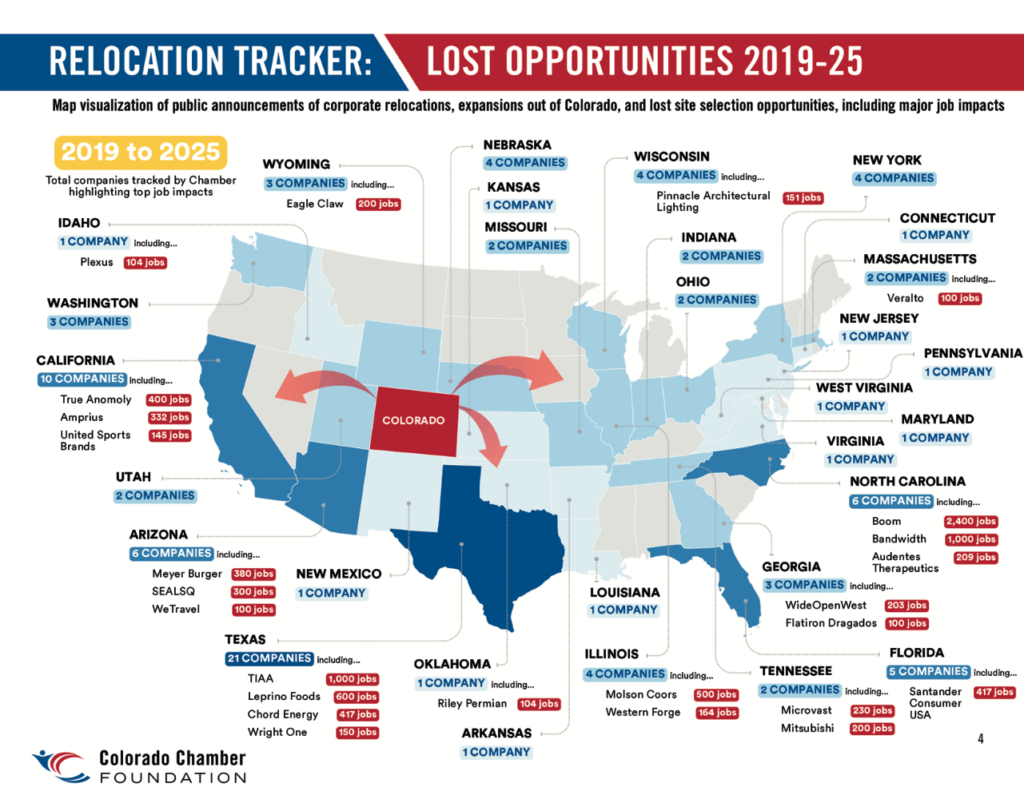
Exit of corporate HQs cited in Colorado Chamber Foundation report
Mark Samuelson Special to The Denver Gazette
mark.samuelson@denvergazette.com
Updated 3 days ago
Amid worries that Colorado has lost its edge in competing for businesses, the Colorado Chamber Foundation has issued a report tracking companies that are relocating out of state. “While Colorado has significant strengths as a state, we are also becoming...

CDOT begins installing 66 new highway cameras
Scott Weiser
scott.weiser@gazette.com
Updated 5 days ago
The Colorado Department of Transportation started construction on a project to install 66 new traffic cameras across the state, many of them in remote mountain areas where real-time highway views help drivers navigate changing conditions. Work began March 30 at...
PREV
PREVIOUS

Federal judge partially allows challenge to proceed against Colorado unclaimed property program
A federal judge allowed some claims to proceed last week against Colorado’s treasurer, based upon alleged constitutional violations flowing from the state’s process for reuniting people with their unclaimed property. Previously, U.S. District Court Judge Charlotte N. Sweeney dismissed the lawsuit by plaintiffs David Knellinger and Robert Storey, reasoning that they failed to sufficiently allege […]

Colorado bill disqualifies former ICE agents from getting job in local law enforcement | Bills in Brief
Colorado lawmakers introduce hundreds of bills each year. Bills in brief cuts through the noise by explaining which proposals matter, what’s at stake, and how decisions at the Capitol could affect everyday life across the state. Colorado legislators are pushing legislation to deny law enforcement certification to former or current immigration or Border Patrol agents, thereby precluding […]