

In legal filing, Denver insists ‘sanctuary policies’ make jurisdictions safer

Denver has joined some 140 cities, counties and elected officials in filing two amicus briefs backing Minnesota and Rochester, New York — jurisdictions sued by the Trump administration’s over their “sanctuary” policies.
In a statement, Denver Mayor Mike Johnston characterized the White House’s actions as “defunding” and “punishing” America’s “sanctuary cities.”
The Trump administration, meanwhile, said sanctuary jurisdictions have stood in the way of enforcing immigration laws.
Johnston’s office described Minnesota and Rochester as “cities that, like Denver, are fighting back against the White House’s baseless attempts to rewrite local and state law in violation of the U.S. Constitution.”
An amicus brief – or friend of the court brief – is a legal document that allows a party not named in the case to provide an outside perspective on an issue under litigation.
At its core, the briefs — filed by the U.S. Conference of Mayors in U.S. v. The State of Minnesota and U.S. v. The City of Rochester — argued that “sanctuary policies” actually make jurisdictions “safer.” The briefs said those policies “either have no statistical effect on crime rates or result in lower crime rates.”
They do so by building trust between law enforcement and residents, strengthening local economies because immigrants play a vital role in the workforce and supporting public health by ensuring access to medical care without fear, according to the briefs.
“Denver’s historic drop in homicides and crime was accomplished by building trust in our communities, not by tearing it down like the Trump administration has done in Minneapolis and across the country,” Johnston said. “All of our residents, immigrant or not, know that if they have a crime to report, our police are here to listen and help. The benefits extend to our economy, which has long enjoyed the brainpower, hard work, and ingenuity immigrants offer. Or as we call them here, Denverites.”
In its lawsuits, the U.S. Department of Justice said many individuals illegally staying in the U.S. have committed “vile and heinous acts against innocent Americans” and the “sanctuary jurisdictions” serve to “obstruct federal law enforcement and celebrate thwarting the constitutional obligation” of the president to execute immigration laws.
The lawsuits also said state and local politicians have “insisted on harboring criminal offenders from federal law enforcement.”
“Such blatant disregard for federal law is not merely a political statement, but jeopardizes the public safety of all Americans,” the lawsuits said.
A Denver City Council committee recently advanced a proposed ordinance banning law enforcement officers, including federal immigration agents, from covering their faces during an arrest or detainment or inside a city facility.
The proposed ordinance also establishes a minimum standard for visible identification during law enforcement actions in Denver and would require officers to provide their name and badge number when asked.
It is among a slew of measures that Democrats are considering at the local and state levels in response to stepped-up enforcement action by the Trump administration, though the operations in Colorado have so far been limited in comparison to Minnesota and some other American cities.
The city has filed five lawsuits and five amicus briefs against the Trump administration over several issues, notably attempts by the White House to withhold funding from “sanctuary” cities.
Last year, Johnston — along with Boston Mayor Michelle Wu, Chicago Mayor Brandon Johnson and New York Mayor Eric Adams — appeared before Congress to answer questions about Denver’s “sanctuary” policies and the city’s response to the illegal immigration crisis, which spilled over from the southern U.S. border into America’s interior cities.
The legal bill for a Washington-based law firm to prepare and advise Johnston and the city topped out at $2 million.
None of the four mayors has been criminally charged or removed from office since. To date, only the City of Boston has faced legal action.

Democrats want to decouple Colorado from federal tax breaks
Marissa Ventrelli
marissa.ventrelli@coloradopolitics.com
Updated 2 hours ago
Democratic members of Colorado’s House and Senate on Tuesday announced the introduction of a slew of bills that would reduce corporate tax deductions and sever Colorado’s tax regime from recent federal changes to the tax code. The federal tax changes...

Ballot measure seeks to enshrine ‘right to know’ government affairs in Colorado constitution
Marianne Goodland
marianne.goodland@coloradopolitics.com
Updated 6 hours ago
A ballot measure filed Friday would enshrine people’s “fundamental right to know” the affairs of governments, thereby overturning a 2024 law that allowed lawmakers to shield their activities from the public. Supported by by groups that aren’t always on the...
Veteran policy advisor Mara Sheldon joins Holland & Knight
Marianne Goodland
marianne.goodland@coloradopolitics.com
Updated 3 hours ago
Mara Sheldon, who has spent more than three decades in public policy and strategic communication, has joined Holland & Knight as a senior policy advisor in its public policy and regulation practice group. Sheldon represented the state Colorado at the...

With the deadline missed, Bureau of Reclamation plans to move forward on Colorado River operations
Marianne Goodland
marianne.goodland@coloradopolitics.com
Updated 1 day ago
Feb. 14 was no Valentine for the seven states of the Colorado River, which failed to come up with an agreement by that deadline on how to manage the dwindling water resource beginning Oct. 1. The U.S. Department of the...

A day in the life of the Capitol: Capitol M | Week of Feb. 14, 2026
Marianne Goodland
marianne.goodland@coloradopolitics.com
Updated 5 days ago
The lighter side of the Capitol, usually. If you were walking around the Capitol on Feb. 12, there was plenty to see and to be amused (or delighted) by. Let’s start with the high school kids from Greeley’s District 6....

Here’s what to know about the Homeland Security shutdown starting this weekend
Deborah Grigsby
deborah.smith@denvergazette.com
Updated 4 days ago
Another shutdown for parts of the federal government is expected this weekend, following an impasse over funding for the U.S. Department of Homeland Security amid a push by Democrats for changes in immigration enforcement. Funding for the federal agency is set to...
Colorado legislators, friends and family pay tribute to late Sen. Faith Winter
Marianne Goodland
marianne.goodland@coloradopolitics.com
Updated 4 days ago
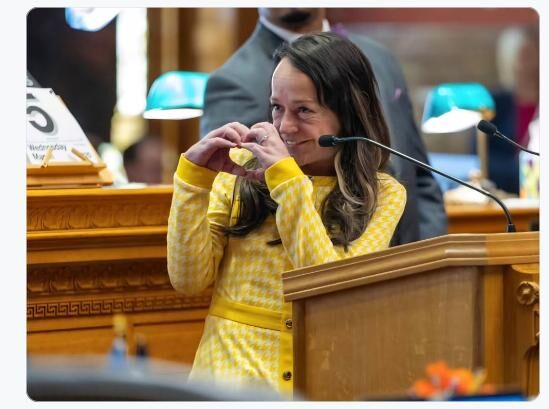
Colorado legislators on Friday, joined by current and former lawmakers, memorialized the late Sen. Faith Winter, noting her contributions to public policy in transportation, family and medical leave, and climate legislation. Winter died in an auto accident on Nov. 26...

Deadlocked: Colorado basin states negotiations collapse
Marianne Goodland
marianne.goodland@coloradopolitics.com
Updated 3 days ago
With the Feb. 14 deadline looming, the seven states in the Colorado River Basin failed to reach an agreement on how to manage the river after the 2026 operating guidelines expire later this year. John Entsminger, Nevada’s chief negotiator, said...

Colorado policymakers scramble with prisons on track to exceed capacity
Marianne Goodland
marianne.goodland@coloradopolitics.com
Updated 4 days ago
Colorado’s prison system is on track to exceed capacity within the next year, driven by a sharp slowdown in parole releases, staffing shortages and an aging inmate population — all as lawmakers grapple with an $800 million general fund shortfall...

Denver advances face covering ban for law enforcement
Deborah Grigsby
deborah.smith@denvergazette.com
Updated 6 days ago
A Denver City Council committee on Wednesday advanced a proposed ordinance banning law enforcement officers, including federal immigration agents, from covering their faces during an arrest or detainment or inside a city facility. The proposed ordinance also establishes a minimum...
PREV
PREVIOUS

Ballot measure seeks to enshrine 'right to know' government affairs in Colorado constitution
A ballot measure filed Friday would enshrine people’s “fundamental right to know” the affairs of governments, thereby overturning a 2024 law that allowed lawmakers to shield their activities from the public. Supported by by groups that aren’t always on the same side, the coalition behind Initiative No. 237 includes the Colorado Press Association, the Colorado […]

Democrats want to decouple Colorado from federal tax breaks
Democratic members of Colorado’s House and Senate on Tuesday announced the introduction of a slew of bills that would reduce corporate tax deductions and sever Colorado’s tax regime from recent federal changes to the tax code. The federal tax changes provide hundreds of millions dollars in tax breaks. Since Colorado conforms to the federal tax […]