

Colorado justices uphold shooting conviction despite jury saying defendant not the shooter
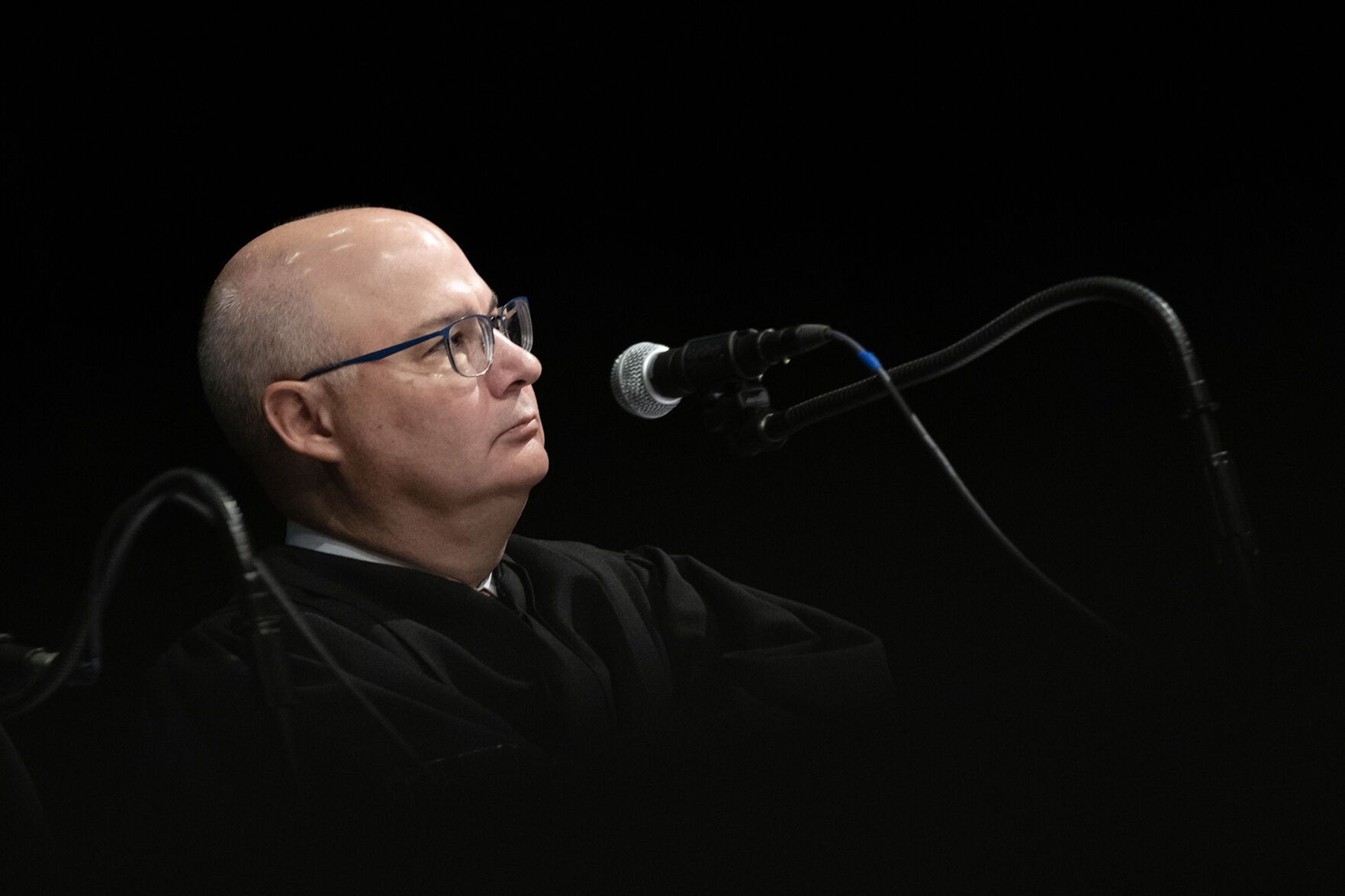
The Colorado Supreme Court ruled on Tuesday that a man can stand convicted of murder, even though jurors found he was not the one who shot the victim and the evidence suggested he was not present for the shooting.
There was no dispute that Terrence G. Davis died by gunshot in an Aurora alleyway in 2017.
At the trial of Davis’ suspected killer, jurors reached two conclusions. First, they believed he was guilty of second-degree murder for causing Davis’ death.
Second, they were asked whether the defendant used a gun. No, said the jury, he did not.
That seeming impossibility led the state’s Court of Appeals to overturn the conviction of defendant Jacob Alexander Shockey in 2023. The only way jurors could have believed Shockey caused Davis’ death without being the shooter, the court determined, was by relying on a legal theory the prosecutor discussed extensively during jury selection and was ultimately not grounds for a conviction.
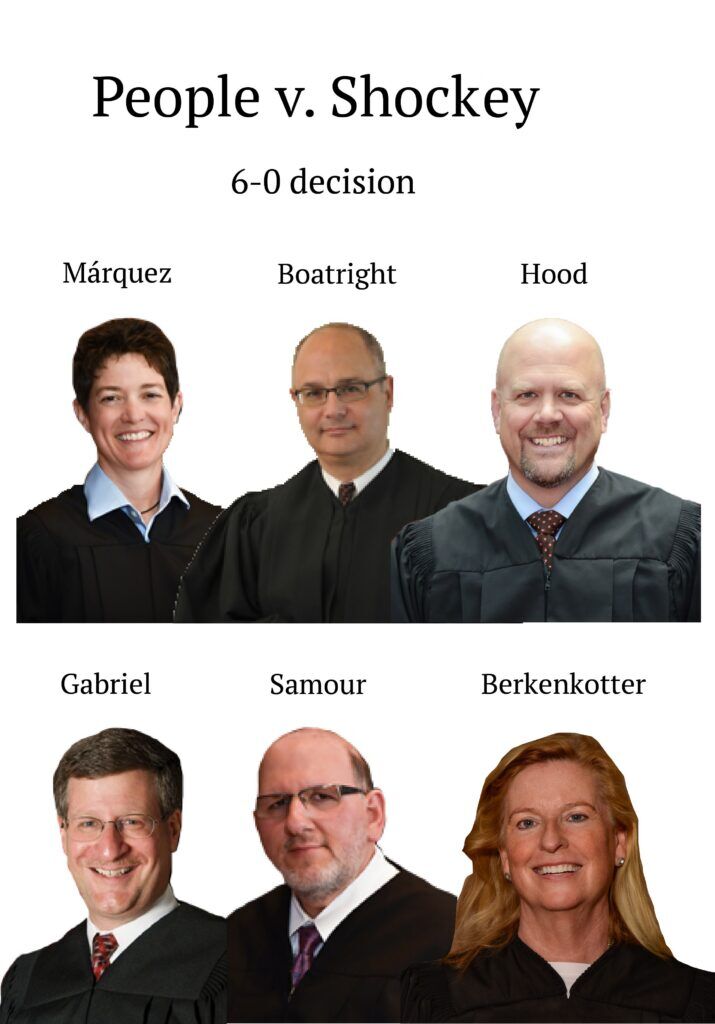
But in a Feb. 17 opinion, the Supreme Court decided it was not problematic that the jury found Shockey had both caused Davis’ death and had not shot him.
A defendant “can commit second degree murder without using a deadly weapon since the crime only requires knowingly causing a person’s death,” wrote Justice Brian D. Boatright, without explaining how Shockey would have caused Davis’ death without using the gun. “By returning a guilty verdict on second degree murder, the jury expressly found that Shockey caused (Davis’) death.”
On the night of Davis’ killing, two men, Shockey and Parus Mayfield, were both present, but each said the other was responsible for shooting Davis. Witness testimony was unreliable and there was evidence suggesting Shockey left the scene prior to Davis’ murder.
Shockey’s jurors convicted him of second-degree murder, but the jury also returned a special form aimed at enhancing Shockey’s sentence, which asked if Shockey used or possessed a deadly weapon. The jury answered no.
The only way jurors could have logically reached that conclusion was by deeming Shockey a “complicitor” — a legal theory holding an accomplice guilty even if another person actually committed the crime.
The idea that Shockey was an accomplice, but not the shooter, arose during jury selection. Although the government advanced the narrative that Shockey alone was the shooter, prosecutor Victoria Klingensmith spent significant time asking jurors to think about and react to the idea of complicity.
She raised the hypothetical scenario of three bank robbers, one of whom is the lookout and another who is the getaway driver. Her goal was to illustrate that they, too, could be guilty of robbery even if they never went inside the bank.
“You’re OK with that?” Klingensmith, who is now a trial judge, asked one juror.
“They’re all still complicit,” the juror acknowledged.
The defense objected on the grounds that jurors would not be asked to evaluate complicity, but then-District Court Judge Michael Spear allowed Klingensmith to continue.
At the end of trial, the prosecution asked Spear to instruct jurors they could find Shockey guilty as an accomplice. Spear refused, reasoning the evidence did not support the idea that Shockey and Mayfield were both involved in the murder.
After the defense sought to vacate Shockey’s conviction, Spear declined to do so while acknowledging the jury apparently relied on the complicity theory to reach its verdict. Two jurors said as much in statements submitted after the fact.
Subsequently, a three-judge Court of Appeals panel agreed Shockey’s conviction could not stand, with the majority believing the jury had functionally acquitted him.
“The prosecution’s entire theory of the case was that Shockey was the shooter,” wrote Judge Rebecca R. Freyre for herself and Judge David H. Yun. “But by finding that the prosecution did not prove beyond a reasonable doubt that Shockey used, possessed, or threatened to use a deadly weapon, the jury inconsistently concluded that the prosecution had not proved that Shockey was the shooter.”
Judge David J. Richman wrote separately to argue prosecutors should be allowed to put Shockey on trial again. In doing so, he detailed the “cascade of errors” that caused the verdict, centered on the discussion of complicity from the outset.
“I understand the inherent discomfort in the inconsistency here,” said Senior Assistant Attorney General Jessica E. Ross during oral arguments to the Supreme Court last year.
“It’s not just inherent discomfort, at least that I have. It’s an inherent fairness,” responded Justice Richard L. Gabriel. “I have a lot of problems with affirming this conviction. Because I think on these facts, Mr. Shockey was convicted on a theory that was never charged and he never got to defend against.”
The Supreme Court upheld Shockey’s conviction.
“We hold that the jury’s finding that Shockey did not use a deadly weapon does not negate an element of his second degree murder conviction, and we can discern the jury’s unambiguous intent,” wrote Boatright. “Hence, no legal or logical inconsistency renders the verdict infirm.”
Mayfield, the other suspect, pleaded guilty to a lesser offense, testified against Shockey and was released on parole in 2021.
The case is People v. Shockey.


Federal judge sides with Mesa County school district in ex-student’s First Amendment claims
Michael Karlik
michael.karlik@coloradopolitics.com
Updated 2 days ago
A federal judge concluded last week that Mesa County Valley School District 51 and three of its administrators did not violate the First Amendment rights of a former student when they imposed minor discipline in response to disruptive behavior. In...
Colorado Supreme Court intervenes in 4 ongoing cases
Michael Karlik
michael.karlik@coloradopolitics.com
Updated 2 days ago
The Colorado Supreme Court recently moved to intervene in four ongoing cases, including two criminal prosecutions, a civil lawsuit, and a child welfare proceeding. At least four of the court’s seven members must agree to hear a case outside of...
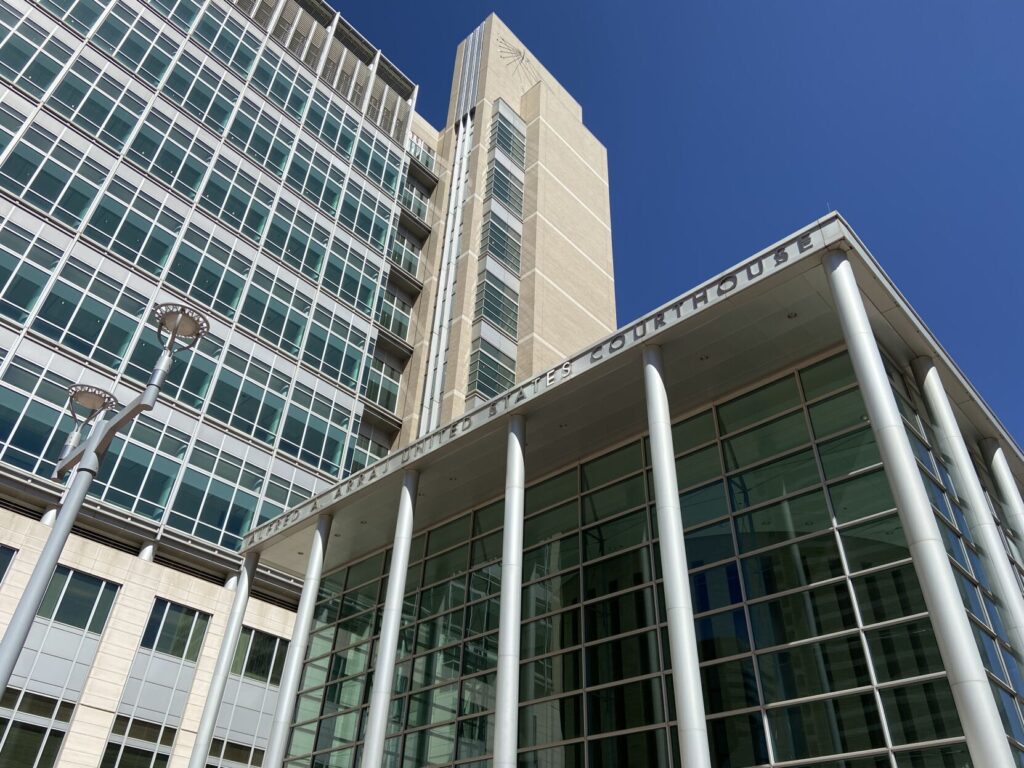
Federal judge releases man immediately as consequence for immigration judge disobeying orders
Michael Karlik
michael.karlik@coloradopolitics.com
Updated 2 days ago
A federal judge ordered a man’s immediate release from immigration detention on Thursday after finding an immigration judge disregarded his prior orders requiring a bond hearing. For the past year, Colorado’s federal district court has faced a flood of “habeas corpus”...
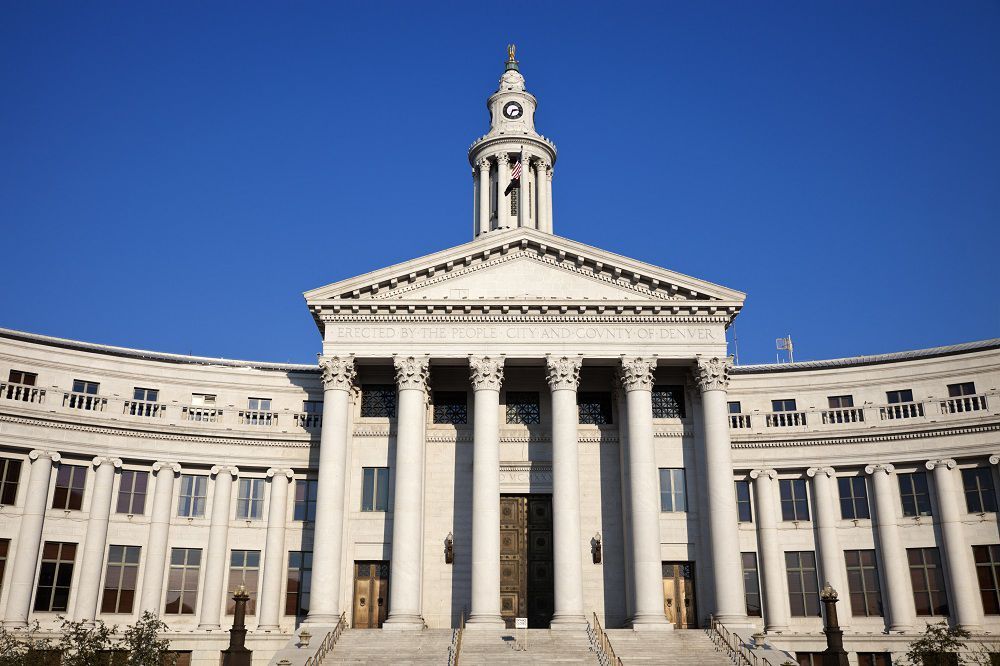
Denver judge denies Gov. Polis request to dismiss ICE-related records case
Marianne Goodland
marianne.goodland@coloradopolitics.com
Updated 1 day ago
A year after blocking the release of state records to federal immigration agents, a Denver judge has now denied Gov. Jared Polis’ effort to end the lawsuit at the center of the dispute. The lawsuit filed against the governor in...
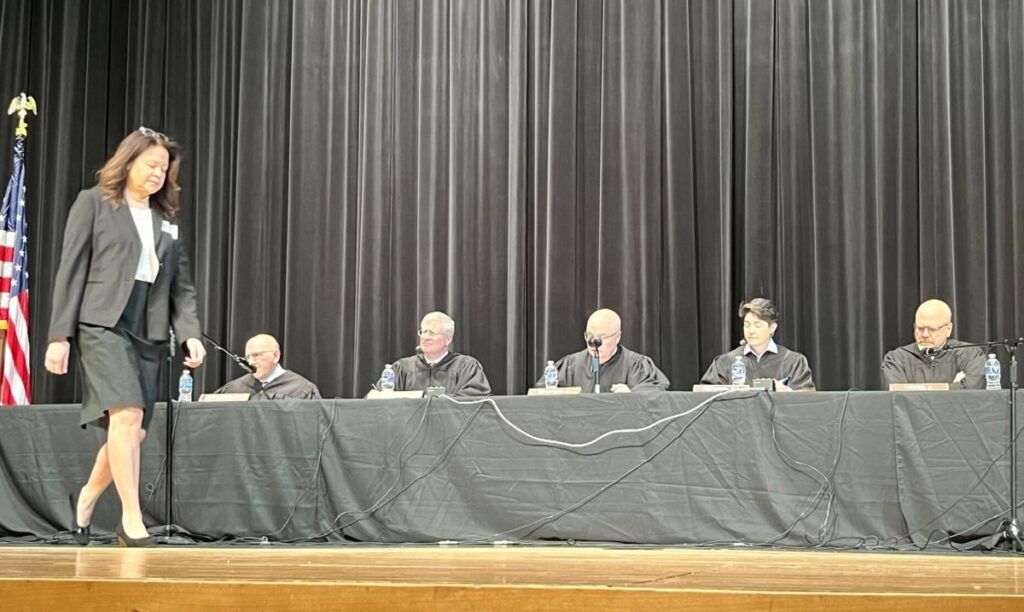
Colorado justices accept appeals on Netflix taxation, children pursuing neglect cases
Michael Karlik
michael.karlik@coloradopolitics.com
Updated 2 days ago
The Colorado Supreme Court announced on Monday that it will decide whether Netflix subscriptions are subject to the state’s sales tax as “tangible personal property.” At least three of the court’s seven members must agree to hear an appeal. The...
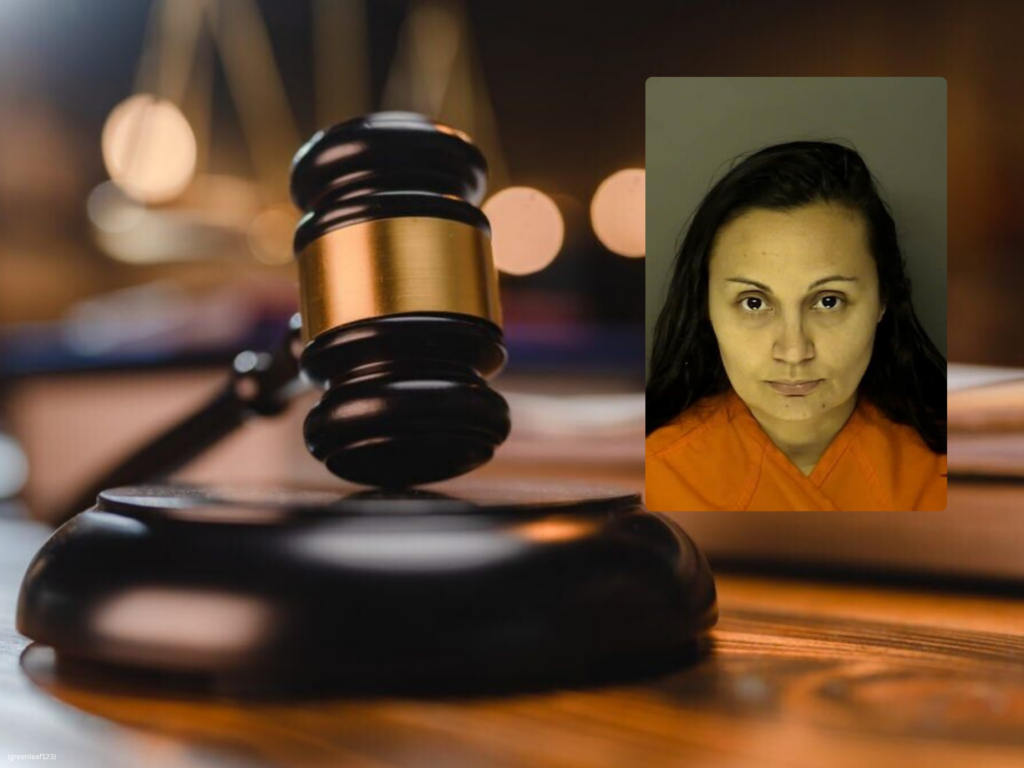
Letecia Stauch murder conviction in stepson Gannon’s death overturned by Colorado appeals court
Nick Smith
nick-smith@coloradopolitics.com
Updated 2 days ago
An El Paso County woman convicted of killing her stepson in 2020, shoving his body in a suitcase, then dumping it in Florida, is getting a new trial. The Colorado Court of Appeals published a 52-page ruling on Thursday, stating...

10th Circuit grants rare all-judges’ review of Colorado banking regulation
Michael Karlik
michael.karlik@coloradopolitics.com
Updated 2 days ago
The Denver-based federal appeals court announced on Thursday that it will hold a rare all-judges review of a recent decision that permits Colorado to require out-of-state banks to abide by the state’s maximum interest rates when they lend to in-state...
Colorado appeals court orders new sentencing for Tina Peters, upholds convictions
Michael Karlik
michael.karlik@coloradopolitics.com
Updated 3 days ago
Colorado’s second-highest court determined on Thursday that a trial judge improperly sentenced former Mesa County clerk Tina Peters based upon her exercise of protected speech, while at the same time upholding her convictions. The three-judge Court of Appeals panel also...

Judge rules that Colorado law makes it too hard for parties to bar unaffiliated voters from primaries
Ernest Luning
ernest.luning@coloradopolitics.com
Updated 3 days ago
A federal judge ruled in favor of the Colorado Republican Party late Tuesday, saying that a portion of the state law that allows unaffiliated voters to cast ballots in party primaries is unconstitutional because it imposes an unrealistic burden on...
10th Circuit upholds regulator’s methodology for Tri-State exit fees
Michael Karlik
michael.karlik@coloradopolitics.com
Updated 3 days ago
The Denver-based federal appeals court upheld a regulatory agency’s methodology for calculating the fee owed by entities seeking to withdraw from Tri-State Generation and Transmission Association last week. Tri-State is a Westminster-based cooperative that provides and transmits electricity to member...
PREV
PREVIOUS

Colorado Senate presses transportation director to increase funding for Morgan County roads
A coalition of state Senators approved a resolution drafted by the Morgan County Board of Commissioners urging the Colorado Department of Transportation to invest more money into fixing roads. Some 70% of Morgan County’s roads have been labeled by the transportation agency as having “low drivability life,” according to the resolution, which was introduced by […]
Divided Colorado Supreme Court rejects defendant's claim of deficient DNA investigation
The Colorado Supreme Court decided on Tuesday, by 4-2, that a defendant failed to allege how uninvestigated, inaccessible DNA evidence would have shown he was wrongly convicted. When Jamale D. Townsell filed a petition from prison seeking postconviction relief, he argued his trial lawyer was constitutionally ineffective for failing to properly investigate DNA evidence that […]