

Colorado justices skeptical that intimate messages relevant to assault case
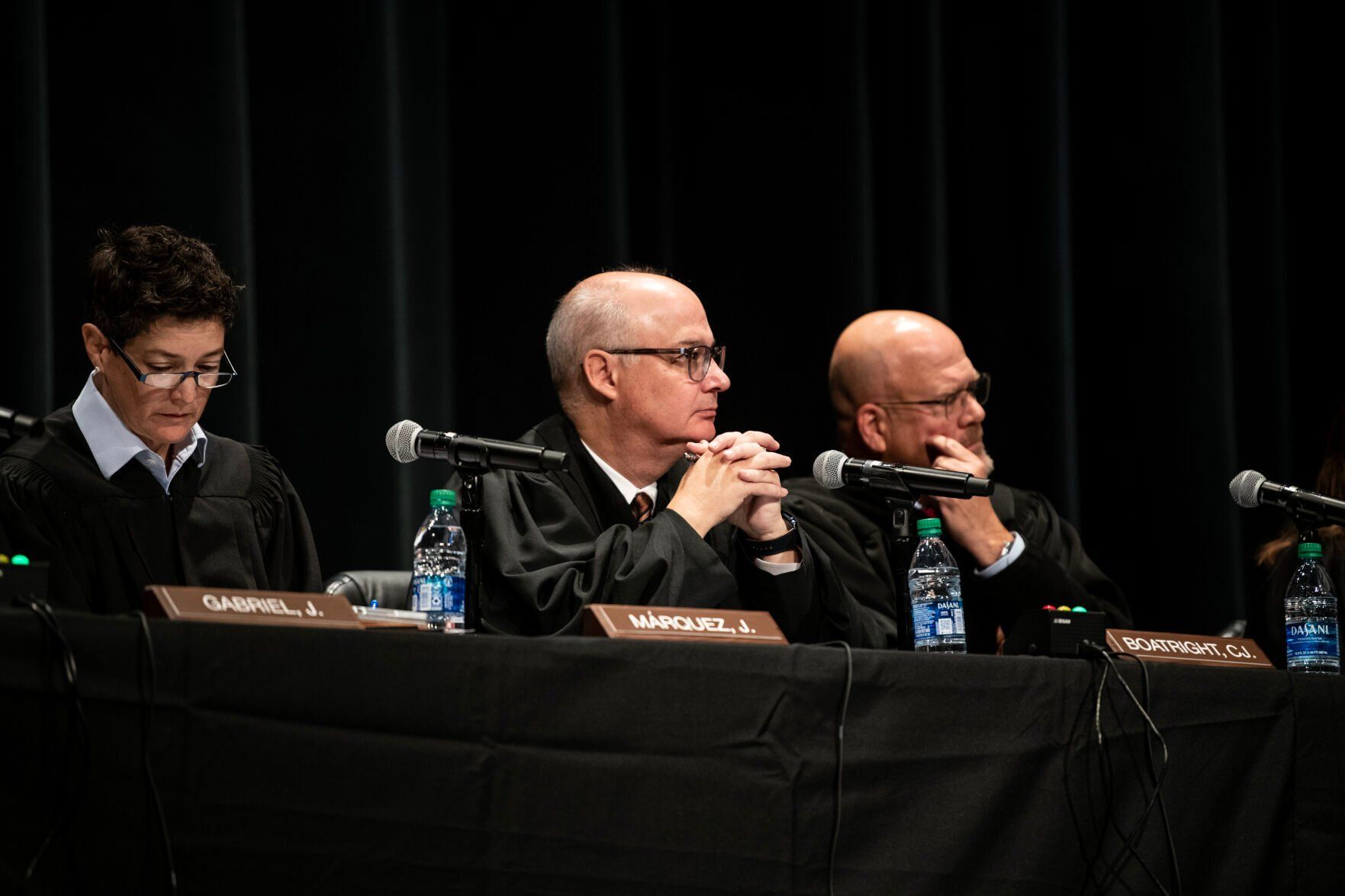
Members of the Colorado Supreme Court seemed to agree on Tuesday that a Douglas County judge acted reasonably by blocking evidence of a defendant’s BDSM-related conversations with the victim in his trial for assault and false imprisonment.
Jurors found Donald Louis Gerle guilty in 2022. In the prosecution’s telling, Gerle began beating his alleged victim following an argument, confined her in a closet for over two days, forced her to use drugs, and continued to assault her. There was no dispute that the victim suffered serious injuries as a result.
However, Gerle sought to show he lacked intent to commit the crime because he and the victim had extensively talked about bondage activity in the prior days. Therefore, while Gerle may have injured the victim recklessly, he did not do so intentionally.
The Court of Appeals previously agreed with Gerle that jurors should have heard about the messages between him and the victim, and it ordered a new trial. But during oral arguments, multiple justices struggled to understand how the references to sexual activity earlier in the week could be relevant to the victim’s severe injuries.
“It’s hard for me to go from ‘soft whip’ to steel-toe boots that fractured ribs,” said Justice Brian D. Boatright.
“What about the evidence that you wished to bring in was similar to what happened here?” added Chief Justice Monica M. Márquez. “As Justice Boatright pointed out, big difference between a soft whip and steel-toe boots and a belt buckle. And I didn’t come across anything that suggested a history of confinement.”
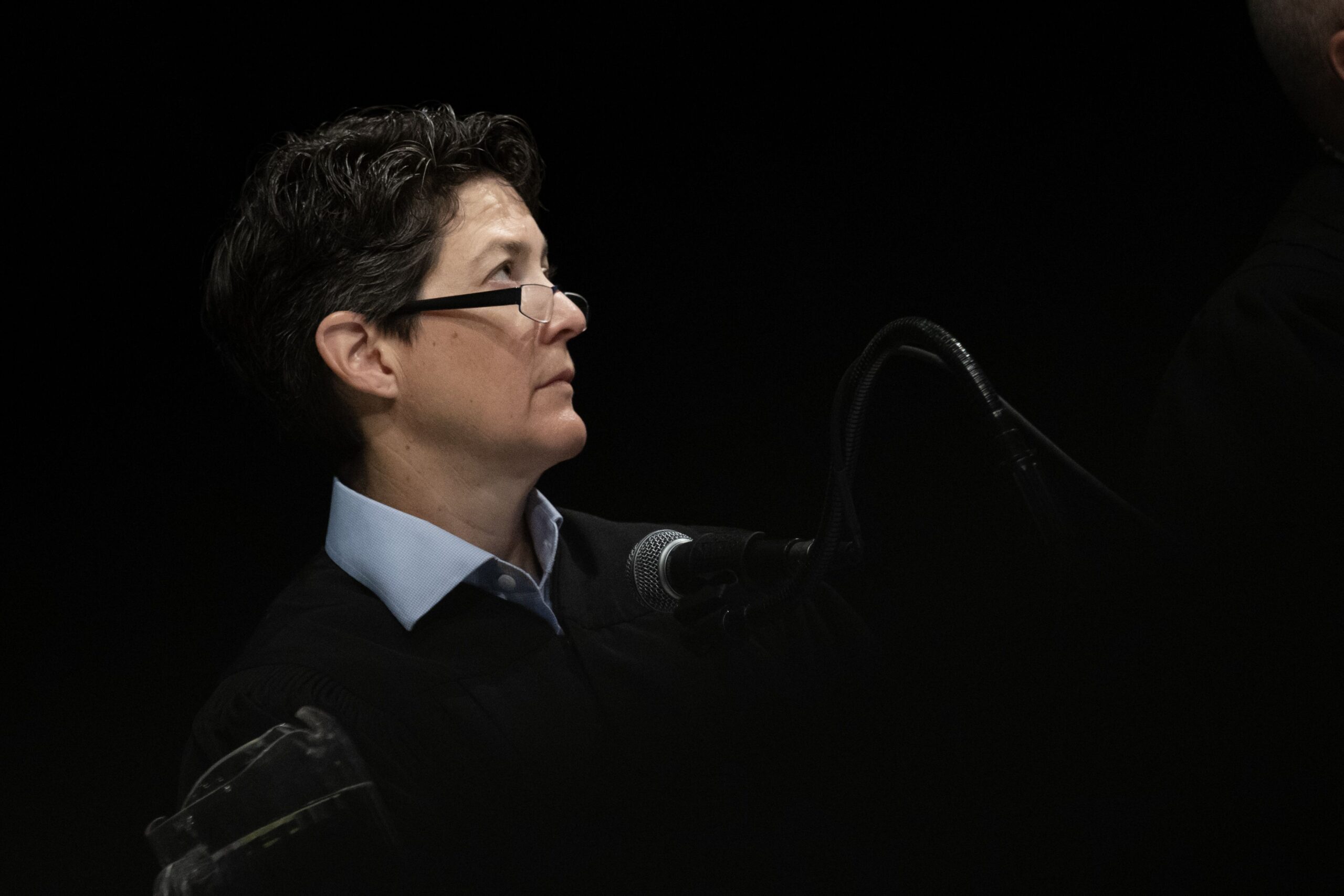
Gerle’s attorney told jurors during opening statements that Gerle and the victim lived “a different lifestyle” involving drug use and “ongoing and regular sexual fantasy role-playing.” The prosecution objected, citing the rape shield law — a framework that generally prohibits explorations of a victim’s sexual history at trial. Then-District Court Judge Patricia Herron agreed the rape shield law applied and told the jury to disregard the defense’s comments.
Later, Herron ruled the defense could ask the victim about her BDSM-related communications with Gerle, but only those connected to the dates of the alleged offenses. Gerle could not question the victim about prior consensual physical encounters and would be “stuck with” her answers.
In appealing his convictions, Gerle argued Herron had effectively torpedoed his ability to defend himself on the grounds that the planned BDSM encounter illustrated he did not have the required criminal intent for injuring and imprisoning the victim.
A three-judge Court of Appeals panel agreed with him, finding the rape shield law did not apply and the communications were relevant.
“Thus, evidence that the couple had previously participated in BDSM role-playing encounters and had just planned another such encounter makes it more probable that the victim consented to at least some of the conduct and makes it less likely that Gerle had the requisite intent,” wrote Judge Christina F. Gomez.
At the Supreme Court, no one disputed that Herron incorrectly applied the rape shield law. But the government maintained that the extent of the victim’s injuries could not support the defense’s claim of reckless behavior.
“This victim was covered from head to toe, plate-sized bruising all over her torso, behind her ears, the tops of her feet, two black eyes, busted lip. In addition to that, she had been complaining that she was losing consciousness, that she couldn’t breathe,” said Assistant Attorney General Jaycey DeHoyos.
However, Justice Richard L. Gabriel wondered about the effect of Herron mistakenly cutting off defense counsel during opening statements.
“It felt to me like that kind of colored the entire rest of the proceeding, in terms of the district court’s view of what came in,” he said. “The defense was not given a chance to develop the facts because the court cut the defense off repeatedly, starting from a wrong premise of the law.”
Brian M. Close, representing Gerle, argued that communications between Gerle and the victim could have prompted additional cross-examination questions about how the physical encounter unfolded.
“If there were any nuances to that that would have led the jury to understand that he didn’t intend to cause serious bodily injury to (the victim) in that moment, then they should have heard it,” Close said.
But the talk of BDSM had to be relevant to the charged assault, said Gabriel.
“The trial court seemed to me to be asking for the link repeatedly. Tell me what the link is to this event,” he said.
“It seems to me that this is just your quintessential game-time call that trial judges are called upon to make all the time, right?” asked Justice William W. Hood III. “The jury already essentially heard some facts about the relationship that invited them to think about the context. And they rejected it.”
The case is People v. Gerle.

Federal judge sides with Mesa County school district in ex-student’s First Amendment claims
Michael Karlik
michael.karlik@coloradopolitics.com
Updated 2 days ago
A federal judge concluded last week that Mesa County Valley School District 51 and three of its administrators did not violate the First Amendment rights of a former student when they imposed minor discipline in response to disruptive behavior. In...

Colorado Supreme Court intervenes in 4 ongoing cases
Michael Karlik
michael.karlik@coloradopolitics.com
Updated 2 days ago
The Colorado Supreme Court recently moved to intervene in four ongoing cases, including two criminal prosecutions, a civil lawsuit, and a child welfare proceeding. At least four of the court’s seven members must agree to hear a case outside of...

Federal judge releases man immediately as consequence for immigration judge disobeying orders
Michael Karlik
michael.karlik@coloradopolitics.com
Updated 2 days ago
A federal judge ordered a man’s immediate release from immigration detention on Thursday after finding an immigration judge disregarded his prior orders requiring a bond hearing. For the past year, Colorado’s federal district court has faced a flood of “habeas corpus”...

Denver judge denies Gov. Polis request to dismiss ICE-related records case
Marianne Goodland
marianne.goodland@coloradopolitics.com
Updated 2 days ago
A year after blocking the release of state records to federal immigration agents, a Denver judge has now denied Gov. Jared Polis’ effort to end the lawsuit at the center of the dispute. The lawsuit filed against the governor in...
Colorado justices accept appeals on Netflix taxation, children pursuing neglect cases
Michael Karlik
michael.karlik@coloradopolitics.com
Updated 2 days ago
The Colorado Supreme Court announced on Monday that it will decide whether Netflix subscriptions are subject to the state’s sales tax as “tangible personal property.” At least three of the court’s seven members must agree to hear an appeal. The...

Letecia Stauch murder conviction in stepson Gannon’s death overturned by Colorado appeals court
Nick Smith
nick-smith@coloradopolitics.com
Updated 3 days ago
An El Paso County woman convicted of killing her stepson in 2020, shoving his body in a suitcase, then dumping it in Florida, is getting a new trial. The Colorado Court of Appeals published a 52-page ruling on Thursday, stating...
10th Circuit grants rare all-judges’ review of Colorado banking regulation
Michael Karlik
michael.karlik@coloradopolitics.com
Updated 3 days ago
The Denver-based federal appeals court announced on Thursday that it will hold a rare all-judges review of a recent decision that permits Colorado to require out-of-state banks to abide by the state’s maximum interest rates when they lend to in-state...
Colorado appeals court orders new sentencing for Tina Peters, upholds convictions
Michael Karlik
michael.karlik@coloradopolitics.com
Updated 3 days ago
Colorado’s second-highest court determined on Thursday that a trial judge improperly sentenced former Mesa County clerk Tina Peters based upon her exercise of protected speech, while at the same time upholding her convictions. The three-judge Court of Appeals panel also...

Judge rules that Colorado law makes it too hard for parties to bar unaffiliated voters from primaries
Ernest Luning
ernest.luning@coloradopolitics.com
Updated 4 days ago
A federal judge ruled in favor of the Colorado Republican Party late Tuesday, saying that a portion of the state law that allows unaffiliated voters to cast ballots in party primaries is unconstitutional because it imposes an unrealistic burden on...
10th Circuit upholds regulator’s methodology for Tri-State exit fees
Michael Karlik
michael.karlik@coloradopolitics.com
Updated 4 days ago
The Denver-based federal appeals court upheld a regulatory agency’s methodology for calculating the fee owed by entities seeking to withdraw from Tri-State Generation and Transmission Association last week. Tri-State is a Westminster-based cooperative that provides and transmits electricity to member...
PREV
PREVIOUS
Second appeals judge voices concerns about new 'reasonable doubt' instruction
Another member of Colorado’s second-highest court registered his concern on Thursday that a portion of the recently revised “reasonable doubt” definition improperly lowers the prosecution’s burden to prove a defendant guilty. Judge Daniel M. Taubman wrote that the current instruction advising jurors to acquit whenever there is “a real possibility the defendant is not guilty” […]

Colorado policymakers scramble with prisons on track to exceed capacity
Colorado’s prison system is on track to exceed capacity within the next year, driven by a sharp slowdown in parole releases, staffing shortages and an aging inmate population — all as lawmakers grapple with an $800 million general fund shortfall that limits options for expanding beds or spending in alternative programs. If projections hold, the […]