

Colorado lawmakers reintroduce union bill, revive other stalled legislation
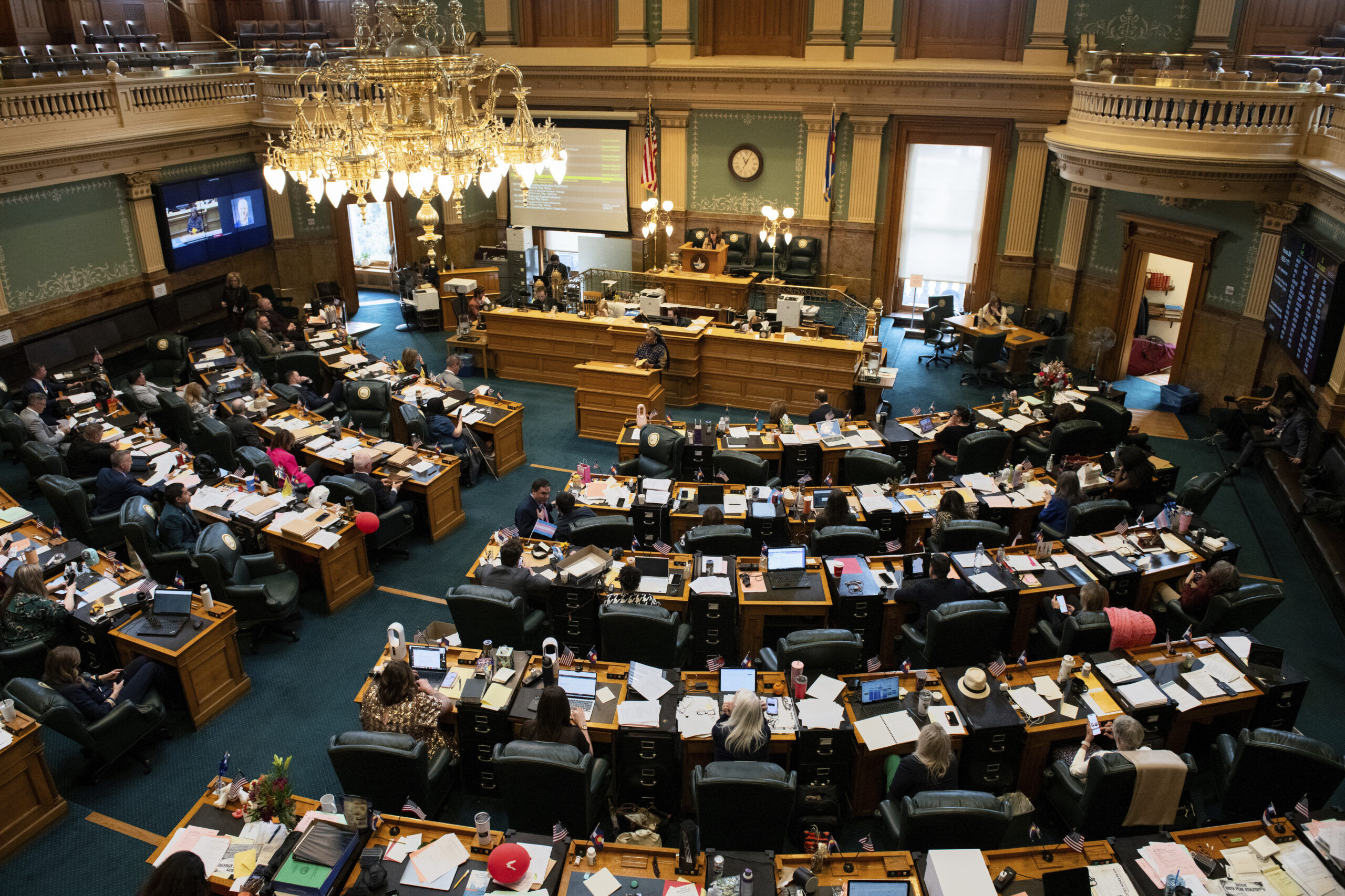
It can take years for a policy to successfully pass through the Colorado legislature, which is why it’s not uncommon to see the same bill or a version of it brought back from the dead several sessions in a row in the hopes it would eventually pass.
Here are a few measures lawmakers are hoping to get to the finish line this year.
Cottage foods
Last year’s bill: House Bill 1190
This year’s bill: House Bill 1033
What’s the same: The bill expands a law that allows certain foods that don’t require refrigeration to be sold directly to consumers without a license or inspection. House Bill 1033 would also allow refrigerated foods to be included in the proposed measure. Last year’s version of the bill, sponsored by Rep. Ryan Gonzalez, R-Greeley, was postponed indefinitely by the House Agriculture, Water and Natural Resources Committee.
What’s different: This year’s version of the bill is more expansive. It includes both refrigerated foods and meat products. The bill would also require sellers of non-refrigerated foods to complete a food safety course.
Additionally, House Bill 1033 allows a local health agency that inspects or investigates homemade food to impose a fine on sellers who violate the Cottage Foods Act’s terms and removes the $10,000 cap on net revenue that a seller can earn under the measure.
Along with Gonzalez, this year’s bill is also sponsored by House Majority Leader Monica Duran, D-Wheat Ridge.
Union dues
Last year’s bill: Senate Bill 005
This year’s bill: House Bill 1005
What’s the same: Both bills seek to eliminate current requirements to hold a second election to establish a “union security” agreement at an already unionized workplace. Under that law, once agreed to by the company and the labor group, non-union workers would be required to pay union fees.
Senate Bill 005 was sponsored by Senate Majority Leader Robert Rodriguez, D-Denver, Sen. Jessie Danielson, D-Wheat Ridge, and Reps. Javier Mabrey, D-Denver, and Assistant Majority Leader Jennifer Bacon, D-Denver.
What’s different: This year’s version of the bill was introduced in the House and emphasizes “good faith” collective bargaining.
This year, Sen. Iman Jodeh, D-Aurora, is sponsoring the bill instead of Rodriguez.
Social media
Last year’s bill: Senate Bill 086
This year’s bill: Senate Bill 011
What’s the same: Last year’s bill would have required social media companies to comply with law enforcement search warrants within 72 hours. During committee hearings last year, sponsors said social media companies like Snapchat have ignored search warrants in certain cases involving drug and firearm sales conducted through their platforms.
The omnibus bill included several other provisions related to social media use by minors, including a requirement that platforms publish information about the policies they have in place to protect minors from certain content.
Gov. Jared Polis vetoed the bill, saying it had good intentions but could threaten privacy, freedom, and innovation, hurt vulnerable people, and require social media to enforce state law rather than law enforcement.
For the first time in over three decades, the Senate voted to override the veto, but the House did not, and the veto was sustained.
What’s different: This year’s bill has a narrower scope, requiring social media companies to comply with search warrants within 72 hours, with the possibility of a judge granting an extension.
The bill also requires online platforms to ensure they provide a “streamlined process” to allow Colorado law enforcement to contact them at all times, including a staffed hotline to provide statuses on search warrant compliance.
Senate Bill 011 is sponsored by Sens. Lisa Frizell and Dylan Roberts, D-Frisco, and Rep. Andrew Boesenecker, D-Fort Collins.
Tax exemption
Last year’s bill: House Bill 1027
This year’s bill: House Bill 1048
What’s the same: House Bill 1027, introduced during the 2024 session, would have created a tax exemption for baby and toddler products, as well as a two-week tax holiday for school supplies and children’s clothing, one in January and one in July. The sponsors of HB 1027, Rep.Ty Winter, R-Trinidad, and Sen. Byron Pelton, R-Sterling, are also sponsoring HB 1048.
What’s different: This year’s bill would establish a weekend-long tax holiday for back-to-school supplies in July of 2027, 2028, and 2029. The bill also limits the cost of each exempt item to $100 for clothing, $50 for each school supply item, and $30 for a learning aid, which the bill defines as a book or toy intended to teach children skills.
Jury duty
Last year’s bill — House Bill 1065
This year’s bill — House Bill 1022
What’s the same: Both bills would allow individuals 72 years or older to temporarily or permanently opt out of serving jury duty.
What’s different: Last year’s version of the bill included a $10,066 appropriation to the judicial department for state courts to use to implement the act. This year’s iteration has no appropriation, most likely due to the state’s budget shortfall. This year’s bill has one sponsor so far, Rep. Carlos Barron, R-Fort Lupton. Barron sponsored HB 1065, alongside Rep. Bob Marshall, D-Highlands Ranch, and Sen. Lisa Frizell, R-Castle Rock.
Housing on education land
Last year’s bill: House Bill 1169
This year’s bill: House Bill 1001
What’s the same: Both bills allow for residential developments to be built on land owned by school districts and higher education institutions.
What’s different: Last year’s version of the bill, sponsored by Reps. Andrew Boesenecker, D-Fort Collins, and Javier Mabrey, D-Denver, and Sens. Julie Gonzales, D-Denver, and Tony Exum, D-Colorado Springs, also included land owned by faith-based organizations, earning it the nickname “Yes in God’s Backyard,” or YIGBY. The bill ultimately stalled in the Senate, as sponsors didn’t believe they had enough votes for it to pass.
This year’s bill, HB 1001, sponsored by the same lawmakers, does not mention faith-based organizations but expands its definition of qualifying properties to include land owned by certain nonprofit organizations, housing authorities, and transit districts.


Colorado to participate in Great American State Fair in Washington
Marissa Ventrelli
marissa.ventrelli@coloradopolitics.com
Updated 11 hours ago
Visitors to Washington, D.C., for the country’s 250th anniversary will have the opportunity to learn about Colorado’s natural beauty and culture during the Great American State Fair, a World’s Fair-style event that opened Thursday at the National Mall. While all...

Phil Weiser leading Michael Bennet in Colorado’s Democratic gubernatorial primary, internal poll finds
Ernest Luning
ernest.luning@coloradopolitics.com
Updated 7 hours ago
Attorney General Phil Weiser holds a lead over U.S. Sen. Michael Bennet among likely voters less than a week before ballots are due in Colorado’s Democratic gubernatorial primary, according to a new poll released Thursday by a group backing Weiser....

Douglas County water plan entering public review phase
Nicholas Fogleman
nicholas.fogleman@denvergazette.com
Updated 16 hours ago
After more than two years of formal work, Douglas County officials are moving into the public review phase of a countywide water plan they say will help guide future development and water resources through 2050. The Douglas County Water Commission...

Douglas County cracks down on illegal scooter, off-road vehicle use
Nicholas Fogleman
nicholas.fogleman@denvergazette.com
Updated 16 hours ago
Douglas County joined a growing list of local governments regulating electric scooters and motorcycles, setting standards and penalties for misuse. County commissioners approved an ordinance Tuesday regulating off-highway vehicles and low-powered scooters following broad community support and a presentation from...
Homeless recruits of ‘The Program’ say they were told to sign NDAs amid investigations in Colorado
David Migoya
david.migoya@gazette.com
Updated 1 day ago
Several formerly homeless people — each drawn into an Aurora-based enterprise known as “The Program” that promised free housing and cash in return for letting a home-health business administer prescriptions they were given — said they were pressed into signing...
Homeless recruits of ‘The Program’ say they were told to sign NDAs amid investigations in Colorado
David Migoya
david.migoya@gazette.com
Updated 1 day ago
Several formerly homeless people — each drawn into an Aurora-based enterprise known as “The Program” that promised free housing and cash in return for letting a home-health business administer prescriptions they were given — said they were pressed into signing...
Colorado repeals attorney immigration attestation law after one year
Nico Brambila
nico.brambila@denvergazette.com
Updated 1 day ago
One year and 12 days. That’s how long a Colorado law requiring attorneys to certify they would not use court data for federal immigration enforcement remained on the books before lawmakers repealed it. Gov. Jared Polis signed the initial legislation,...
Colorado’s ‘right to natural gas’ measure submits signatures to qualify for November ballot
Marissa Ventrelli
marissa.ventrelli@coloradopolitics.com
Updated 2 days ago
A natural-gas rights initiative backed by Advance Colorado is likely headed to the November ballot, triggering a parallel campaign by environmental groups seeking to impose new liabilities on oil and gas operators. Petitions for Initiative No. 177 were turned in...
Colorado’s ‘right to natural gas’ measure submits signatures to qualify for November ballot
Marissa Ventrelli
marissa.ventrelli@coloradopolitics.com
Updated 2 days ago
A natural-gas rights initiative backed by Advance Colorado is likely headed to the November ballot, triggering a parallel campaign by environmental groups seeking to impose new liabilities on oil and gas operators. Petitions for Initiative No. 177 were turned in...
Colorado’s ‘right to natural gas’ measure submits signatures to qualify for November ballot
Marissa Ventrelli
marissa.ventrelli@coloradopolitics.com
Updated 2 days ago
A natural-gas rights initiative backed by Advance Colorado is likely headed to the November ballot, triggering a parallel campaign by environmental groups seeking to impose new liabilities on oil and gas operators. Petitions for Initiative No. 177 were turned in...
PREV
PREVIOUS

Gun rights groups split with Trump administration over Minnesota shooting
The death of Alex Pretti in Minneapolis is opening a new fault line between President Donald Trump and his conservative base, as gun rights groups denounce what they say are a series of anti-Second Amendment statements justifying the shooting. The Trump administration has faced withering GOP criticism after officials argued that Pretti, a 37-year-old ICU […]

Colorado Supreme Court to address child's CCTV testimony
The Colorado Supreme Court announced on Monday that it will review the impact of a victim’s closed-circuit testimony on the prosecution of a juvenile defendant. At least three of the court’s seven members must agree to hear an appeal. There is currently one vacancy, which will be filled next month. The justices also signaled they […]