

Senate Republicans kill war powers resolution — after Trump backlash
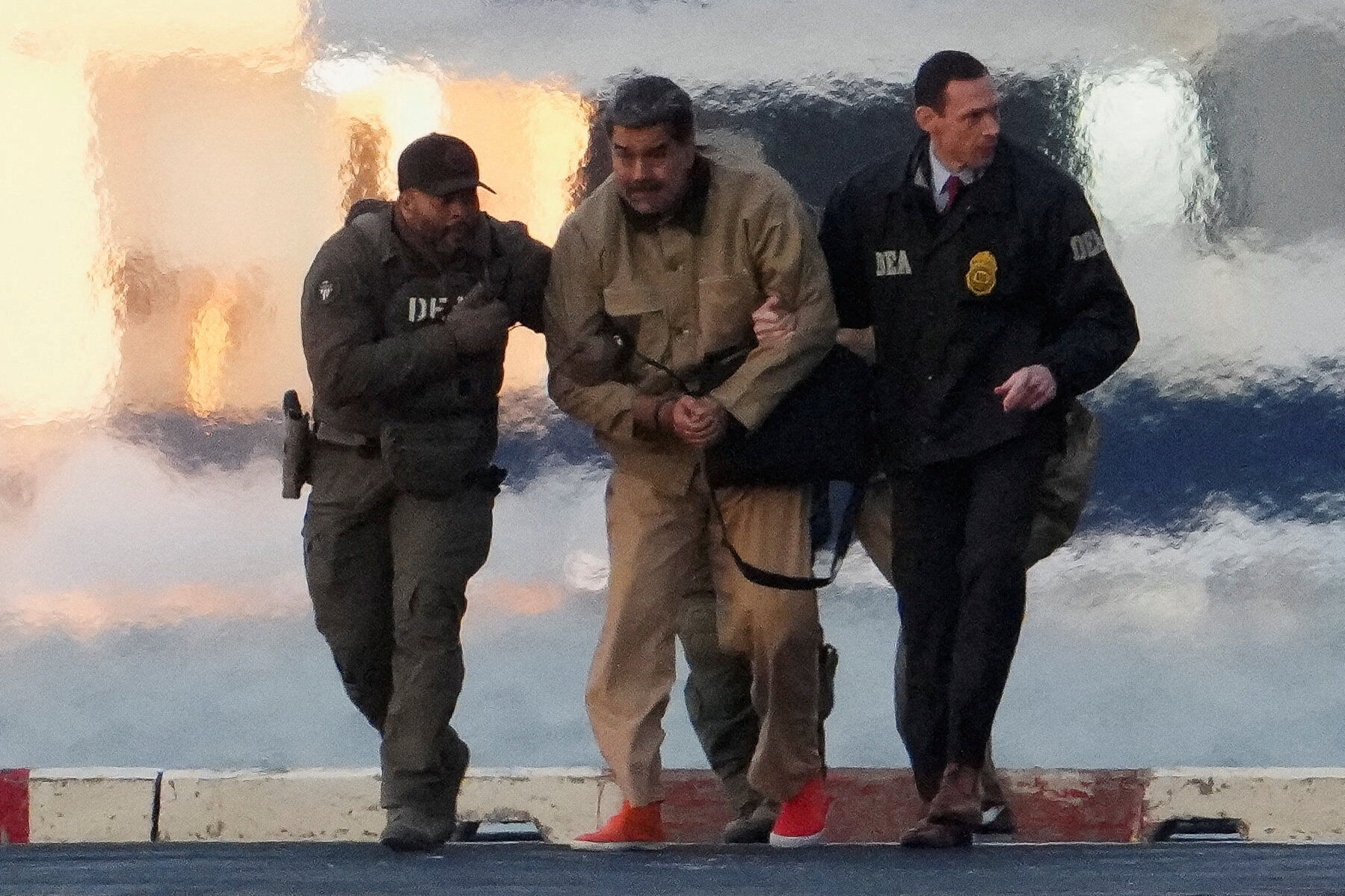
A largely symbolic measure in the Senate to invoke its war powers died Wednesday after two Republican senators withdrew their support.
The war powers resolution that called on President Donald Trump to cease hostilities in or against Venezuela following the capture of former President Nicolas Maduro had garnered support from five Republicans last week, allowing it to move forward.
The Republican support prompted swift backlash from Trump, who said the senators shouldn’t be reelected and other Republicans should be ashamed of them.
Sen. James Risch, R-Idaho, introduced the parliamentary measure to end discussion on the resolution, arguing that there is no need to invoke Congress’ war powers at this time.
“There are no U.S. forces engaged in hostilities in Venezuela,” he said.
The Senate voted 50-50 on his point of order, with Republican Sens. Josh Hawley from Missouri and Todd Young from Indiana withdrawing their support. Vice President JD Vance broke the tie, ending debate.
The resolution, even if passed in the Senate, would have required a vote in the House and support from the president, making it unlikely to take effect.
A main sponsor of the resolution, Sen. Tim Kaine, D-Va., pointed out that the U.S. has about 15,000 troops and large numbers of ships off the coast of Venezuela and has threatened future action against the country. The U.S. is also controlling the country’s oil, its most important asset.
He called for a public debate on the Trump administration’s legal defense for its actions.
“If this legal basis were so righteous and so lawful, the administration and its supporters would not be so afraid to have this debate before the public,” he said.
Maduro’s capture — which involved bombing Caracas’ air defenses and the current maritime brigade — should be considered acts of war, said Sen. Rand Paul, R-Ky., a sponsor of the measure.
“I am not sure how we argue that’s not war,” he said.
Colorado Democratic Sens. Michael Bennet and John Hickenlooper also both supported invoking the Senate’s war powers.
“Americans are struggling to afford groceries and health care here at home under President Trump. They don’t want him throwing us into another forever war to enrich oil executives,” Hickenlooper said.
Secretary of State Marco Rubio has said the U.S. would stabilize Venezuela using oil sanctions. The country is now led by the former vice president of the country, Delcy Rodriguez, who has started releasing people considered political prisoners by the Venezuelan political opposition, according to Reuters.
During the transition process, the U.S. would like to reopen the country’s economy, Rubio said last week.
A Justice Department memo released Tuesday said Trump was within his rights to order the capture of Maduro because it was in the national interest and “does not rise to the level of war in a constitutional sense.”
“We were assured that there is no contingency plan to engage in any substantial and sustained operation that would amount to a constitutional war,” the memo said. “We were further assured that there is no contingency plan that would involve using U.S. forces occupying Venezuela should the removal of Maduro result in civil unrest in that country.”
The memo also noted that the mission would likely constitute an armed conflict under international law. The United Nations charter states that members will not threaten or use force “against the territorial integrity or political independence of any state,” the memo said.
If the U.S. sent ground troops into Venezuela, it could leave those service members with lasting moral injuries from participating in military enforcement that they later find immoral, said Matt Stys, a Colorado Springs Army veteran of the Iraq War, who enlisted and served 12 years, six on active duty and six in the National Guard.
“That amount of mental stress is debilitating, and it’s something that you can never get rid of,” Stys said.
Whether an action is labeled a military action or law enforcement with military support, more people should speak out against aggressive foreign action, he said.
“It’s not the United States’ job to determine who’s a leader of a particular country,” said Stys, an organizer with About Face: Veterans Against the War, a group founded in Colorado Springs to push back on the war in Iraq.

Colorado lawmakers tackle legislation on sexual assault
Jenny Deam
jenny-deam@coloradopolitics.com
Updated 21 hours ago
A panel of Colorado lawmakers on Monday unanimously approved a bill that supporters say will offer protections and support to victims of domestic violence, stalking, sex trafficking and sexual assault, including mandatory training for law enforcement on trauma. The measure,...

More than 20 Colorado counties receive grants to improve land record-keeping systems
Maren Prince
maren.prince@denvergazette.com
Updated 11 hours ago
More than 20 Colorado counties received a total of $2.5 million to improve their land record-keeping systems, according to a Monday news release. The State’s Electronic Recording Technology Board awarded 22 counties with grants ranging from $5,000 to $350,000, according...

Morgan County man accused of killing wife, staging her suicide charged with first-degree murder
Kyla Pearce
kyla.pearce@gazette.com
Updated 9 hours ago
A grand jury announced the indictment of 52-year-old Ronald Lowry, who is accused of killing his wife in October 2023 and staging the crime scene to look like a suicide. Lowry, who was arrested Friday in Morgan County, was charged...

Denver mayor says his commute time tripled following ‘road diet’ change
Mark Samuelson Special to The Denver Gazette
mark.samuelson@denvergazette.com
Updated 2 days ago
Mayor Mike Johnston is pushing back sharply against the claim by Denver councilmembers and bike activists that the city succumbed to lobbying pressure in revising a “road diet” plan for East Alameda Avenue, while noting that his own commute time...

Iranians in Colorado weigh in on Khamenei’s death
Mark Samuelson Special to The Denver Gazette
mark.samuelson@denvergazette.com
Updated 3 days ago
As the joint U.S.-Israeli attack on Iranian targets continued into a second day following the death of leader Ayatollah Khomeini, Iranians living in Denver weighed in, saying they welcome the opportunity for a regime change in the Islamic Republic. “The...

Front Range Passenger Rail pitches to Colorado Springs ahead of possible ballot measure
Savannah Eller
savannah-eller@coloradopolitics.com
Updated 2 days ago
If all goes to plan, a measure for a sales tax to fund passenger rail service could be coming to Front Range ballots in 2026. “We have a plan that we think is viable, and we’ll actually be able to...

Garfield County sheriff illegally collaborated with ICE, cease and desist letter claims
Michael Braithwaite
michael.braithwaite@gazette.com
Updated 4 days ago
A cease and desist letter filed Wednesday alleged that the Garfield County sheriff intentionally violated state law by collaborating with the U.S. Immigration and Customs Enforcement (ICE). The letter, filed by the law firm Towards Justice, claimed that Garfield County...

Toll to sexual assault survivors rises if they feel blamed and disbelieved
Jenny Deam
jenny-deam@coloradopolitics.com
Updated 5 days ago
Natalie, a single mother, dropped off her son at daycare, went to therapy and then returned home. She swallowed a fistful of pills, washing them down with a six-pack of beer. She was ready to end her life. “I just...

Colorado rape cases rarely result in an arrest and prosecution
Evan Wyloge
evan-wyloge@coloradopolitics.com
Updated 1 day ago
Authorities say they are especially difficult cases. In Colorado, most go nowhere. Over the past decade, for every 10 reports of rape, there is only one arrest. Warning: This story contains descriptions of sexual violence. Kiersten May remembered a fuzziness...

As measles cases rise nationally, Colorado braces for imported infections
Nico Brambila
nico.brambila@denvergazette.com
Updated 2 days ago
Colorado has had just one measles case this year, but that doesn’t mean Dr. Michelle Barron sleeps well at night. With spring break around the corner, Barron worries out-of-state travelers will bring more than their luggage to the Centennial State....
PREV
PREVIOUS

Colorado governor pats himself on the back in final state address to lawmakers
Gov. Jared Polis on Thursday took an 82-minute victory lap in his eighth — and final — State of the State address. He touted his work in the areas of early childhood development, education, health care, housing and public safety, pointing to major initiatives he has launched. He sought to paint a picture of a […]

Colorado EDC approves nearly $6 million in tax incentives for 3 companies
The Colorado Economic Development Commission approved a total of nearly $6 million in job growth tax incentives for three companies considering expansions in the state on Thursday. The largest incentive package went to an unnamed quantum company described as “Project Electron.” The EDC doesn’t disclose company names to protect the confidentiality of businesses that may […]