

Colorado Coalition for the Homeless workers rally, citing low pay, high turnover

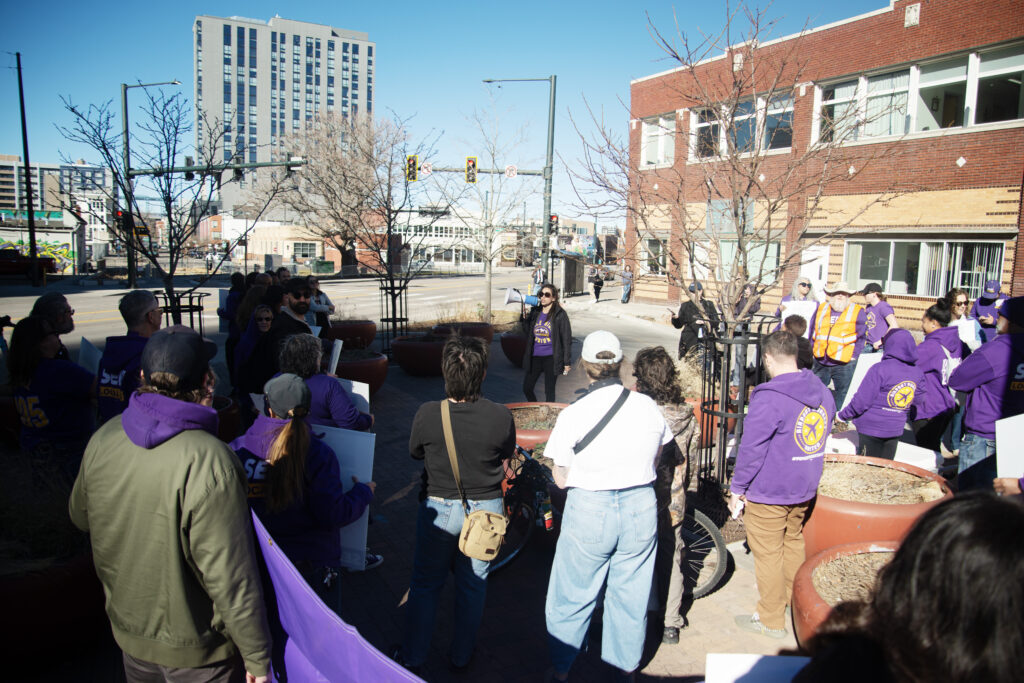
Dozens of Colorado Coalition for the Homeless frontline workers and members of the Service Employees International Union (SEIU) Local 105 rallied Thursday outside of a downtown CCH office building on north Broadway, calling on the nonprofit to address low wages and poor working conditions.
The rally also comes on the heels of the city’s recent consideration of a $6 million contract with CCH to provide housing stabilization, supportive housing, and health services citywide.
CCH is one of the largest providers of housing, health care, and other supportive services for the homeless, including street outreach.
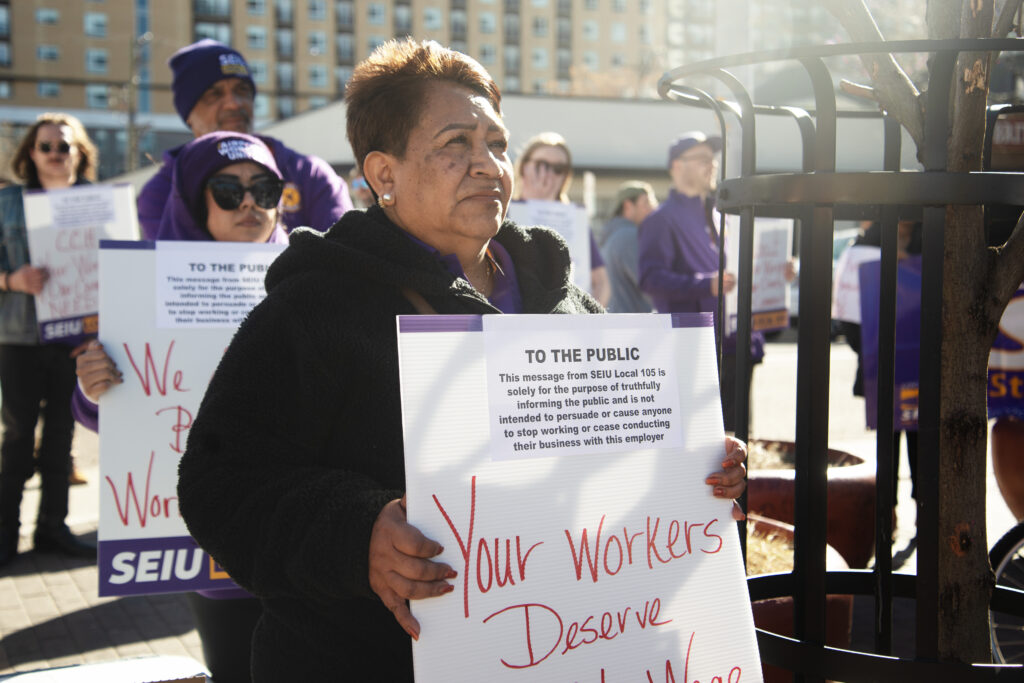
Workers are calling on leadership to bargain respectfully and commit to solutions that strengthen the workforce and improve care outcomes, including trauma and grief support, adequate staffing, improved training, workplace safety, and fair wages that allow workers to remain in their jobs.
Union representatives said efforts to negotiate a “fair first union contract” to address staffing shortages, improve training, and provide basic trauma and mental health support have been met with a lukewarm response.
Cathy Alderman, CCH chief communications and policy officer, confirmed that the organization is currently engaged in collective bargaining with the union and its unionized staff.
“I know we’ve had some difficulties getting some regularly scheduled meetings with them, both because of their availability and ours,” Alderman told the Denver Gazette. “So I think, all in all, maybe we’re a little surprised by the protest activity because we felt like we were negotiating in good faith.”
But workers said CCH leadership has yet to “meaningfully engage” or respond to their proposals for retention, workload, and service quality.
Along with pay, workers said the emotional toll of their job is compounded by the “absence of meaningful systems to help staff process grief and trauma, even as they are expected to continue delivering high-stakes care.”
CCH Care Specialist Robert Johnson spends his time helping clients with substance abuse and mental health issues, and said that the job is becoming increasingly difficult.
He said low wages create a high turnover among staff. That turnover can be upsetting to clients who have built trust with their case managers.
“Our clients have already been through unimaginable trauma, and the biggest complaint we hear from them is that the people supporting them keep disappearing,” said CCH case manager Todd Kaanta, a union organizer. “When workers are overworked, underpaid, and unsupported, turnover is inevitable, and that instability hurts the very people this organization exists to serve.”
“One of the things that we are trying diligently to do in the contracting process with both the city, the state, and even the federal government, when we can, is to build in some compensation increases, because traditionally, those public funding sources don’t often allow for things like cost-of-living adjustments,” Alderman said. “We’re trying to be a little bit more thoughtful about asking our government partners to, you know, help us with some of the compensation issues as well.”
Union reps also said that, on the job, workers routinely must cope with the emotional toll of losing clients due to conditions beyond their control such as substance overdose or violence.
Workers, according to union reps, argue that CCH leadership has failed to adequately support staff by maintaining fair staffing levels, providing proper training, and offering trauma relief.
Johnson said that CCH does offer an Employee Assistance Program for those struggling with trauma or loss, but he would like to see more.
“Maybe like somebody to just come in and talk, like therapy sessions,” he said. “But we have clinicians on the team, and so they offer mental health, but they might need mental health themselves.”
Kaanta said that while he hopes bargaining efforts will prove more productive in the future, he said if they don’t, the union will continue to “apply pressure.”
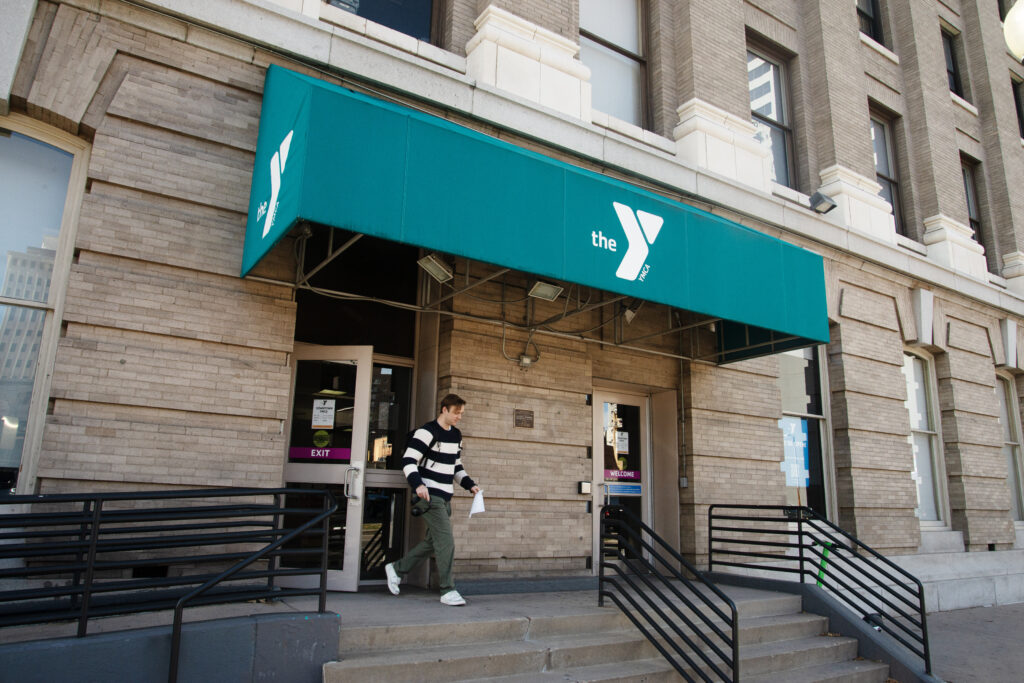
In December, CCH announced the purchase of the Downtown YMCA building for an undisclosed price. The deal is expected to close in early January and allow CCH, which already owns the units above the YMCA, to convert the 120-year-old building into expanded affordable housing.
The YMCA will close its downtown fitness operations.


Gov. Polis, Upper Basin states criticize federal draft plan for managing the Colorado River
Marianne Goodland
marianne.goodland@coloradopolitics.com
Updated 11 hours ago
With no agreement among the seven Colorado River states and federal deadlines now passed, the Upper Colorado River Commission on Monday sharply criticized the U.S. Department of the Interior’s draft plan for managing the river after current guidelines expire this...
Colorado lawmakers tackle legislation on sexual assault
Jenny Deam
jenny-deam@coloradopolitics.com
Updated 19 hours ago
A panel of Colorado lawmakers on Monday unanimously approved a bill that supporters say will offer protections and support to victims of domestic violence, stalking, sex trafficking and sexual assault, including mandatory training for law enforcement on trauma. The measure,...

Denver adopts face mask ban for law enforcement
Deborah Grigsby
deborah.smith@denvergazette.com
Updated 16 hours ago
Members of the Denver City Council unanimously approved an ordinance Monday that prohibits law enforcement officers, including federal immigration agents, from wearing a mask or face covering while interrogating, detaining, or arresting an individual within Denver, including in city-owned buildings....

More than 20 Colorado counties receive grants to improve land record-keeping systems
Maren Prince
maren.prince@denvergazette.com
Updated 10 hours ago
More than 20 Colorado counties received a total of $2.5 million to improve their land record-keeping systems, according to a Monday news release. The State’s Electronic Recording Technology Board awarded 22 counties with grants ranging from $5,000 to $350,000, according...

Denver among top 5 finalist cities for 2028 DNC
Deborah Grigsby
deborah.smith@denvergazette.com
Updated 16 hours ago
Denver is among the five cities that could host the 2028 Democratic National Convention, the Democratic National Committee announced Monday. Along with Denver, Philadelphia, Atlanta, Boston and Chicago have advanced in the application process to host the next DNC, which...
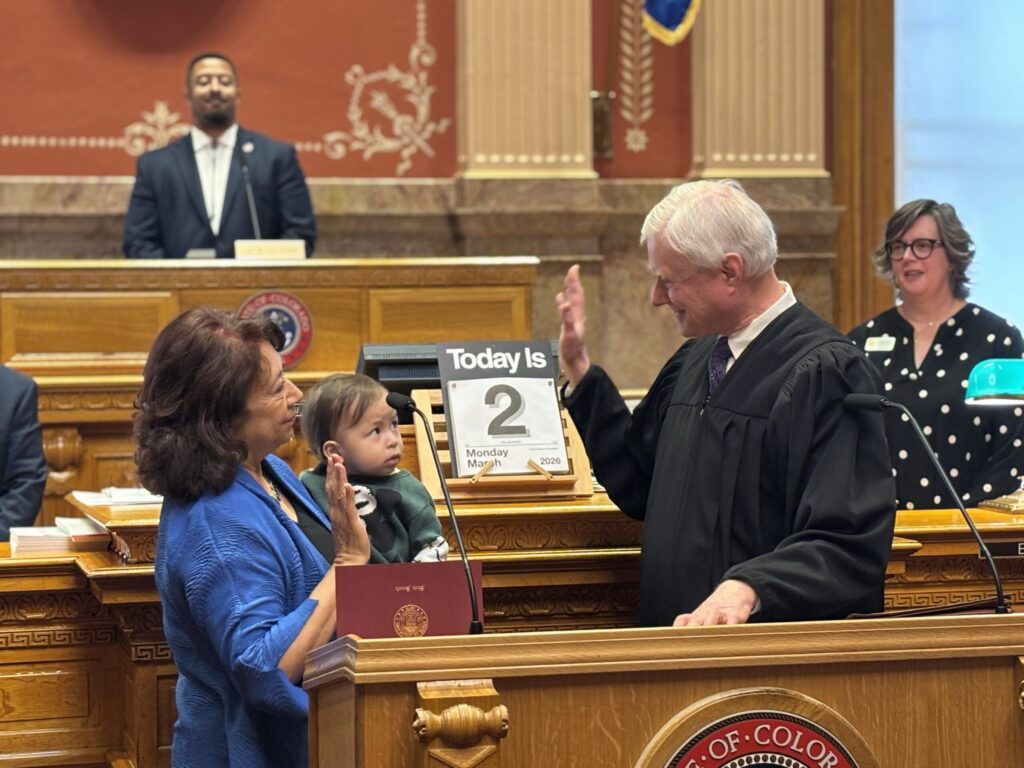
Colorado Senate swears in Adrienne Benavidez after district vacancy win
Marianne Goodland
marianne.goodland@coloradopolitics.com
Updated 1 day ago
Sen. Adrienne Benavidez, a Democrat from Adams County, was sworn in Monday to the Colorado Senate, just four days after winning a vacancy election in District 21. She was sworn in by Colorado Court of Appeals Justice Lino S. Lipinsky...

Denver mayor says his commute time tripled following ‘road diet’ change
Mark Samuelson Special to The Denver Gazette
mark.samuelson@denvergazette.com
Updated 1 day ago
Mayor Mike Johnston is pushing back sharply against the claim by Denver councilmembers and bike activists that the city succumbed to lobbying pressure in revising a “road diet” plan for East Alameda Avenue, while noting that his own commute time...

Rural legislators, Colorado farmers defeat pollinator bill backed by Gov. Polis
Marianne Goodland
marianne.goodland@coloradopolitics.com
Updated 2 days ago
A proposal to limit the use of neonicotinoid-coated crop seeds collapsed in the Senate Agriculture and Natural Resources Committee last week, as rural lawmakers, including two Democrats, joined Republicans to reject what they called an expensive, impractical mandate on farmers....

Competing overtime bills for agriculture workers split Colorado Democrats
Marianne Goodland
marianne.goodland@coloradopolitics.com
Updated 2 days ago
Competing bills setting the overtime threshold for farmworkers have split legislators at the Colorado state Capitol, with one group saying a law passed in 2021 has harmed, rather than helped, farming operations and workers alike, while the other side insists...
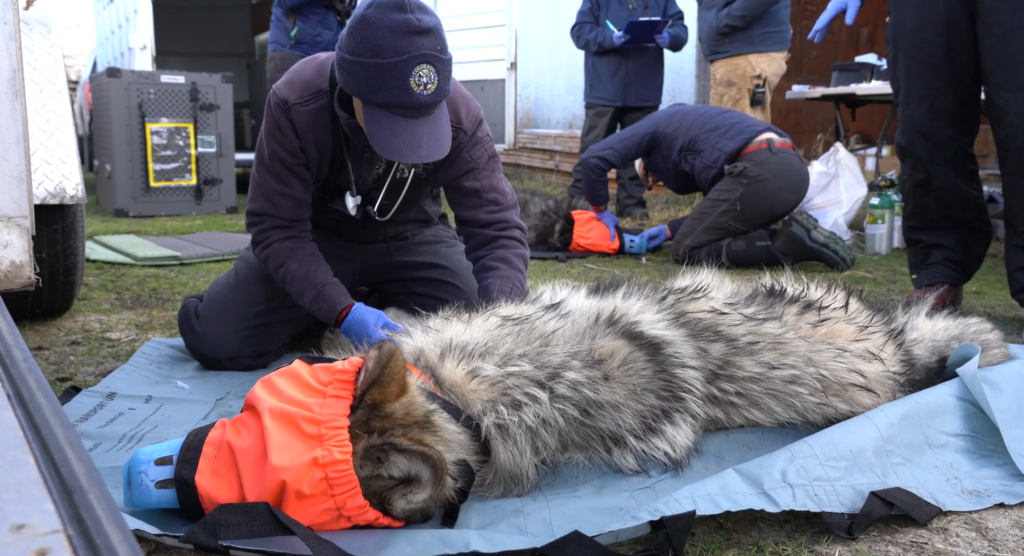
Male wolf dies after capture attempt in Colorado
Marianne Goodland
marianne.goodland@coloradopolitics.com
Updated 2 days ago
One of the original wolves brought to Colorado from Colorado has died after an attempt to capture it, the’s state wildlife agency said. The Colorado Parks and Wildlife identified the wolf as No. 2305 — meaning it was one of...
PREV
PREVIOUS

Colorado academy trains next generation of wildland firefighters
Wildfire activity is on the upswing in Colorado and across the U.S., and state firefighting and incident management agencies are stepping up their efforts to keep up with the changes. “In the past, firefighters gained skills gradually over many seasons,” said Schelly Olson, spokeswoman for the Colorado Wildland Fire and Incident Management Academy. “They no […]

PUC holds firm on ambitious 41% greenhouse gas cut for natural gas utilities
The Colorado Public Utilities Commission refused to ease a greenhouse gas reduction target for natural gas utilities, voting 2-1 to preserve a 41% cut in use by 2035 despite utility requests for a lower number and environmental groups pushing for more aggressive action. Commissioners Tom Plant and Megan Gilman defended the benchmark, adopted by the […]