

Nebraska to be 1st state to implement Trump’s new Medicaid work requirements | OUT WEST ROUNDUP
NEBRASKA
Medicaid work requirements set
Nebraska will become the first state to implement new work requirements for some people with Medicaid health insurance under a law President Donald Trump signed last summer.
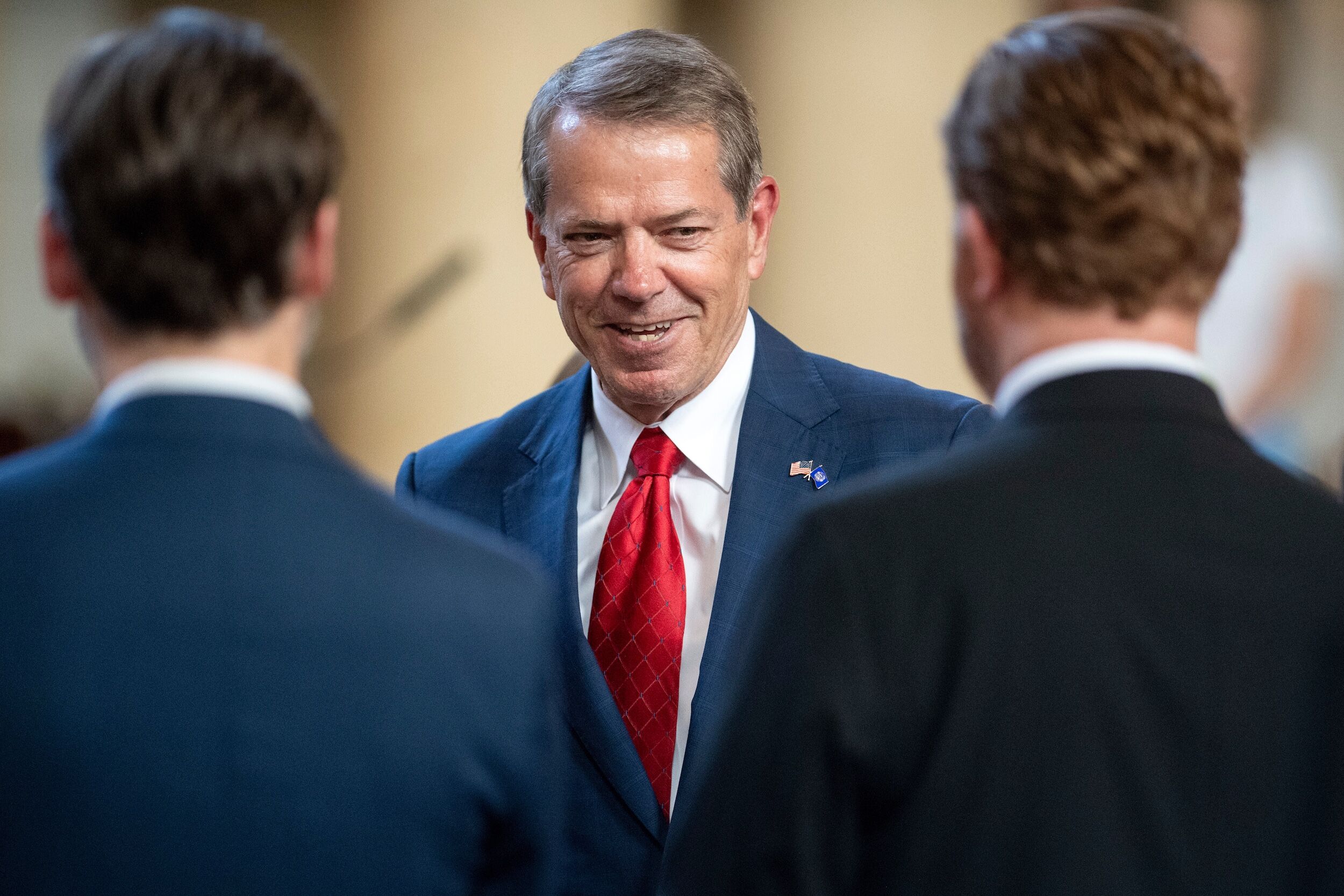
Gov. Jim Pillen, a Republican, announced on Dec. 17 that the requirement would take effect in the state May 1 and could impact about 30,000 people who have slightly higher incomes than traditional Medicaid beneficiaries.
“We’re not out here to take everybody to the curb,” he said. Instead, he said, the aim is “making sure we get every able-bodied Nebraskan to be a part of our community.”
The sweeping tax and policy law Trump signed in July requires states to make sure many recipients are working by 2027 but gave them the option to do it sooner.
The law mandates that people ages 19 to 64 who have Medicaid coverage work or perform community service at least 80 hours a month or be enrolled in school at least half-time to receive and keep coverage.
It applies only to people who receive Medicaid coverage through an expansion that covers a population with a slightly higher income limit.
Of 346,000 Nebraska residents enrolled in Medicaid as of May, about 72,000 were in the higher income expansion group.
Some people will be exempted, including disabled veterans, pregnant women, parents and guardians of dependent children under 14 or disabled individuals, people who were recently released from incarceration, and people getting addiction treatment.
The nonpartisan Congressional Budget Office estimates that the requirement will reduce Medicaid costs by $326 billion over a decade — and that it will result in 7.5 million people losing coverage through 2034. Currently, about 77 million Americans are covered by Medicaid.
Unions oppose $85B rail merger
OMAHA — The proposed $85 billion merger of Union Pacific and Norfolk Southern railroads has lost the support of two unions that represent more than half their workers over concerns it will jeopardize safety and jobs, raise shipping rates and consumer prices, and cause significant disruptions.
The Brotherhood of Locomotive Engineers and Trainmen and the Brotherhood of Maintenance of Way Employes Division are among the most prominent critics of the deal to create the nation’s first transcontinental railroad. When they officially announced their decision Dec. 17, they joined the American Chemistry Council, an assortment of agricultural groups and competing railroad BNSF in raising concerns the merger would hurt competition.
The deal has the support of the nation’s largest rail union, which represents conductors and hundreds of individual shippers, and President Donald Trump has said the deal sounds good to him. The U.S. Surface Transportation Board planned to weigh the opinions of all stakeholders to determine whether the merger is in the public interest.
Union Pacific CEO Jim Vena has argued that creating a railroad that stretches from coast to coast would be good for the economy because without the need for a hand-off between railroads in the middle of the country rail shipments would move faster, meaning it could better compete against trucking.
But after months of meetings with Vena and other executives, the presidents of the Brotherhood of Locomotive Engineers and Trainmen and the Brotherhood of Maintenance of Way Employes Division unions — both affiliated with the Teamsters — said they have serious doubts about the potential benefits. The unions say there’s nothing to keep the companies from transferring jobs hundreds of miles away or to prevent the sale of some UP lines to short-line railroads that pay less.
KANSAS
Tribe ends deal with ICE
A Kansas tribe said it has walked away from a nearly $30 million federal contract to come up with preliminary designs for immigrant detention centers after facing a wave of online criticism.
The Prairie Band Potawatomi Nation’s Dec. 17 announcement came just over a week after the economic development leaders who brokered the deal with U.S. Immigration and Customs Enforcement were fired.
With some Native Americans swept up and detained in recent ICE raids, the deal was derided online as “disgusting” and “cruel.” Many in Indian Country also questioned how a tribe whose own ancestors were uprooted two centuries ago from the Great Lakes region and corralled on a reservation south of Topeka could participate in the Trump administration’s mass deportation efforts.
Tribal Chairman Joseph “Zeke” Rupnick nodded to the historic issues in a video address that called reservations “the government’s first attempts at detention centers.” The Prairie Band Potawatomi has a range of businesses that provide health care management staffing, general contracting and even interior design. Rupnick said in his latest address that tribal officials plan to meet in January about how to ensure “economic interests do not come into conflict with our values in the future.”
The ICE contract initially was awarded in October for $19 million for unspecified “due diligence and concept designs” for processing centers and detention centers throughout the U.S., according to a one-sentence description of the work on the federal government’s real-time contracting database. It was modified a month later to increase the payout ceiling to $29.9 million.
SOUTH DAKOTA
Hotel owner liable for discrimination
SIOUX FALLS — The owner of a South Dakota hotel who said Native Americans were banned from the establishment was found liable for discrimination against Native Americans on Dec. 19.
A federal jury decided the owner of the Grand Gateway Hotel in Rapid City will pay tens of thousands of dollars in damages to various plaintiffs who were denied service at the hotel. The jury awarded $1 to the NDN Collective, the Indigenous advocacy group that filed the lawsuit.
The group brought the class-action civil rights lawsuit against Retsel Corporation, the company that owns the hotel, in 2022. The head of the company, Connie Uhre, passed away in September.
Uhre posted on social media in March 2022 that she would ban Native Americans from the property after a fatal shooting at the hotel involving two teenagers whom police identified as Native American. She wrote in a Facebook post that she cannot “allow a Native American to enter our business including Cheers,” the hotel’s bar and casino.
When Native American members of the NDN Collective tried to book a room at the hotel after her social media posts, they were turned away. The incident drew protests in Rapid City and condemnation from the mayor as well as tribes in the state.

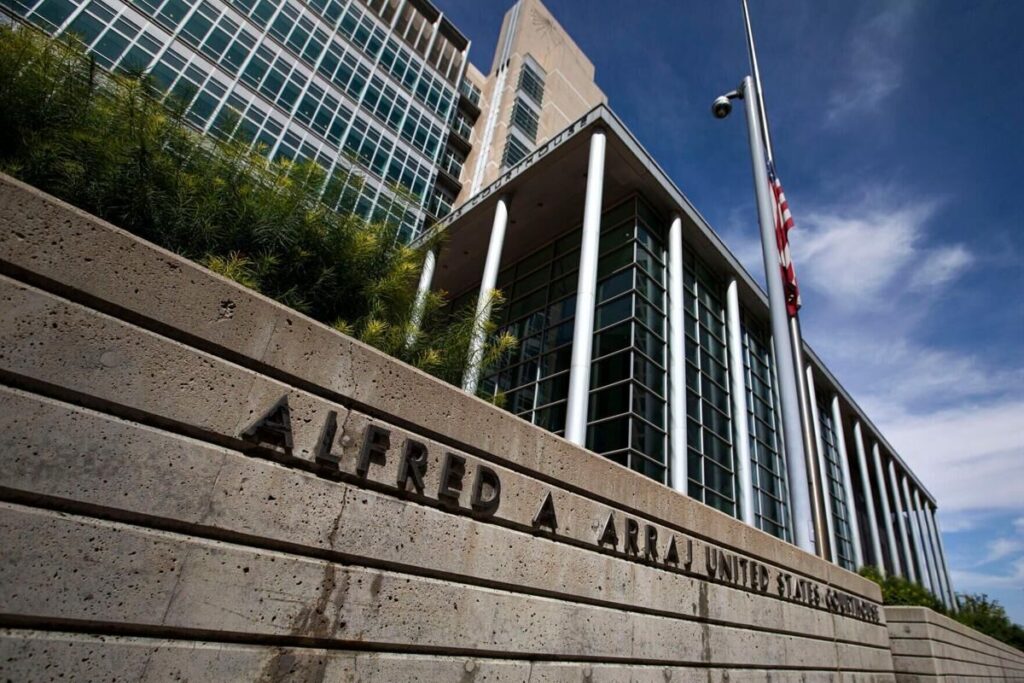
Federal judge directs plaintiff to revise complaint alleging Denver officers’ constitutional violations
Michael Karlik
michael.karlik@coloradopolitics.com
Updated 2 hours ago
A federal judge directed a defendant to revise his allegations on Wednesday to more precisely state what two Denver officers and the city itself allegedly did to violate his constitutional rights by facilitating his prosecution for murder until prosecutors dropped...
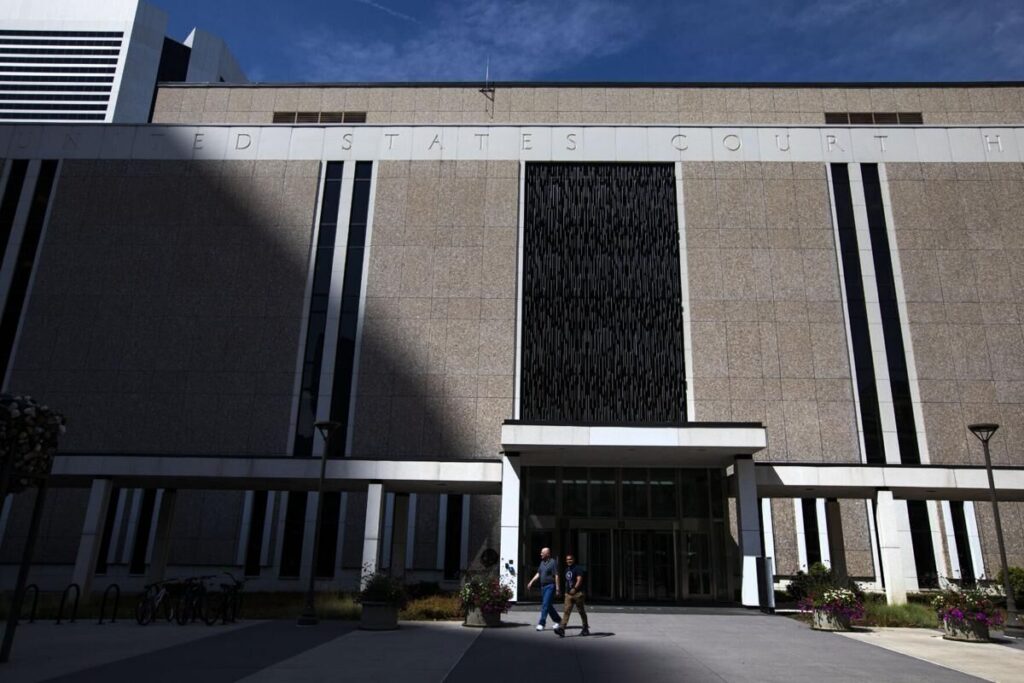
Federal judge explores new sanctions against ex-Colorado judicial discipline director
Michael Karlik
michael.karlik@coloradopolitics.com
Updated 3 hours ago
A federal judge on Wednesday directed Colorado’s former judicial discipline director, for the third time this year, to explain why she should not sanction him for his latest conduct in his litigation against the state’s judiciary. Christopher S.P. Gregory, who served...
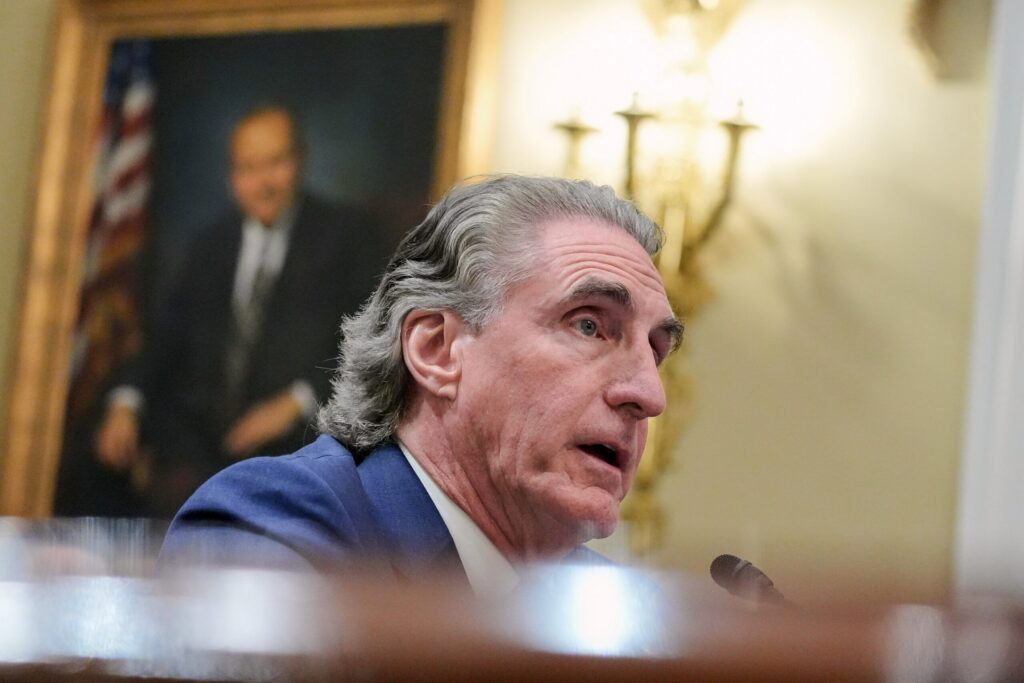
Colorado joins lawsuit challenging changes to Endangered Species Act
Marissa Ventrelli
marissa.ventrelli@coloradopolitics.com
Updated 2 hours ago
Colorado once more joined a coalition of states challenging the Trump administration — this time on proposed rules regarding the Endangered Species Act. The pair of lawsuits challenge new rules made under Interior Secretary Doug Burgum, who earlier said the...

Boebert challenger Eileen Laubacher says she’ll ‘break through the noise’ in Democrat’s 1st TV ad
Ernest Luning
ernest.luning@coloradopolitics.com
Updated 34 minutes ago
Democratic congressional candidate Eileen Laubacher says she’ll take a different approach than her opponent in a campaign ad released Wednesday that opens with a cacophonous series of videos featuring Republican U.S. Rep. Lauren Boebert. “Eileen’s had enough of the noise...

Colorado congressman asks DOJ to investigate violent student ICE walkout
Nico Brambila
nico.brambila@denvergazette.com
Updated 2 hours ago
U.S. Rep. Jeff Crank is asking the Justice Department to investigate violence at last week’s anti-ICE student walkout in Denver, including whether outside organizations helped organize, fund, or influence the demonstration. Crank sent a letter Tuesday requesting the investigation to...
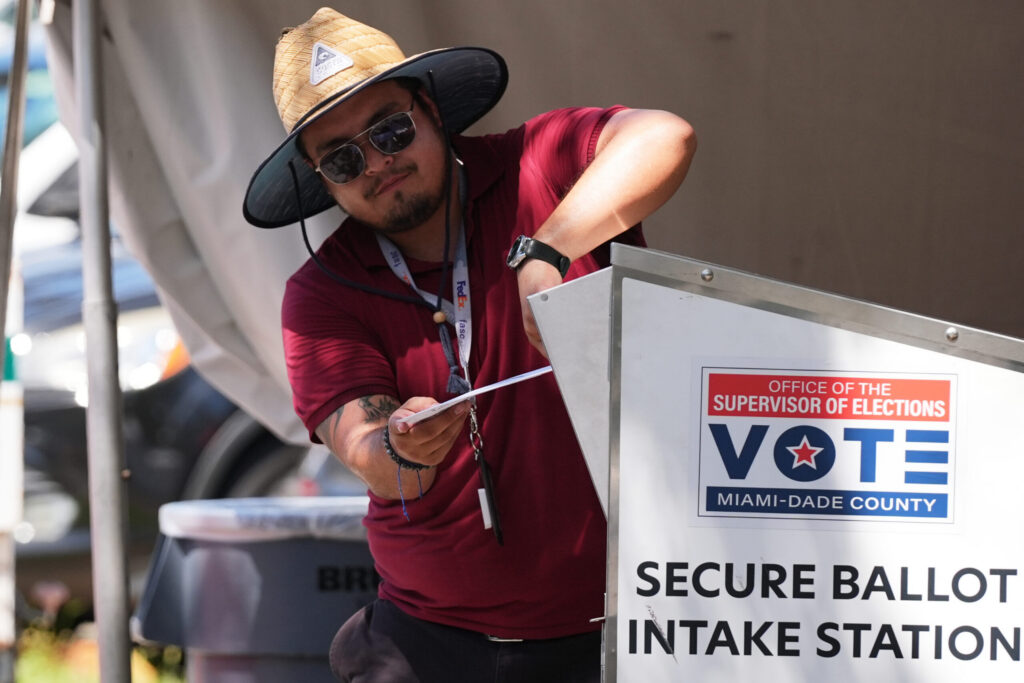
General election season is here. Where does mail-in voting stand?
David Zimmermann
david-zimmermann@coloradopolitics.com
Updated 5 hours ago
As the general election season approaches, the legal question surrounding the new U.S. Postal Service mail-in ballot requirements remains up in the air. With the case playing out in the courts, mail-in voting has not been changed substantially despite President...

10th Circuit orders second look at immunity for Kiowa County deputy over fatal vehicle crash
Michael Karlik
michael.karlik@coloradopolitics.com
Updated 30 minutes ago
The Denver-based federal appeals court directed a trial judge on Tuesday to further analyze whether a Kiowa County deputy and the sheriff’s office may be sued for a fatal vehicle collision. The Colorado Governmental Immunity Act generally shields government entities and public...
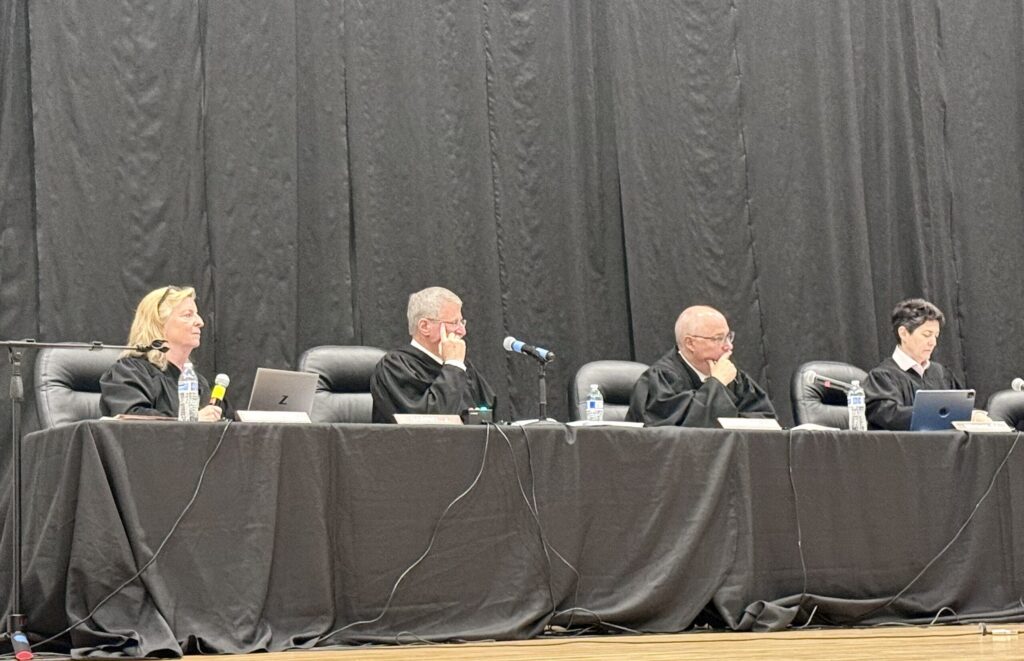
Colorado justices to hear appeal in Kendrick Castillo death lawsuit, ‘fugitive’ rule
Michael Karlik
michael.karlik@coloradopolitics.com
Updated 32 minutes ago
The Colorado Supreme Court announced on Tuesday that it will decide whether it was proper to dismiss a lawsuit over the 2019 shooting death of Kendrick Castillo after the defendants paid the maximum amount of damages available to Castillo’s parents,...

Two more wolves killed by Colorado wildlife staff
Marianne Goodland
marianne.goodland@coloradopolitics.com
Updated 1 day ago
Two yearling wolves from the Copper Creek and Three Creeks packs in Pitkin and Rio Blanco counties, respectively, were killed by Colorado Parks and Wildlife staff on Monday. That brings to 19 the number of wolves that have died under...

Federal judge dismisses Douglas County’s challenge to collective bargaining law
Nicholas Fogleman
nicholas.fogleman@denvergazette.com
Updated 10 hours ago
A federal judge dismissed claims brought by the Douglas County Board of Commissioners alleging that a state law granting county employees the right to organize and join labor unions violates free speech protections and conflicts with federal labor law. Douglas...
PREV
PREVIOUS

Polis, Johnston help unveil mural to the West to kick off Stock Show
The 120th iteration of the National Western Stock Show kicked off Saturday morning by debuting a mural paying tribute to the American West. Unveiled in the second floor of the newly-opened Sue Anschutz-Rodgers Livestock Center, the mural, created by local artist Thomas “Detour” Evans, depicts Colorado’s geography, heritage and agriculture through a mixture of spray […]

CC students and campus officials: Title IX rules do not sufficiently protect alleged assault victims
By Margaret Freeman and Olivia Link Special to The Gazette As an institution that receives federal funding, Colorado College is subject to federal Title IX regulations, which govern everything under the umbrella of gender equality, including discrimination, sexual harassment and sexual assault on college campuses. Title IX policy outlines formal procedures for investigating allegations of […]