

‘The program’ meant free housing and medication for the homeless — and millions in Medicaid dollars for their caretakers

Editor’s Note: This article is part of a Colorado Watch series that looked into how homeless people were offered housing and “donations” from a church in return for becoming clients of a home health care agency that billed Medicaid millions. Read the other stories here.
Barely 5-foot tall on her tip toes, Stephanie Swabacker is a pistol of a woman who’s seen a fair number of bumps in her 51 years.
Tough times and ongoing medical problems have dropped her into a wheelchair attached to an oxygen feed, a constant struggle against the elements. Finding a place to stay had been a challenge for years and her own addictions and life choices simply added to it.
“You get by,” she said firmly.
Not easily trusting, she said her eyes perked when a close friend in early 2024 mentioned “the program,” a way to get free housing without doing much more than getting a prescription and having someone count it out for her. As long as she was on Medicaid, she was told she was a shoo-in.
“She knew I was on oxygen and my knees and back were bad. And I had nowhere to go,” Swabacker told The Denver Gazette. “She said she would get a $500 referral fee that she’d share.”
Swabacker said she quickly saw an opportunity to get what she thought was stable housing.
“You’ll like it, you won’t have to pay rent, it’s a beautiful home,” she said she was told. “I signed up, quick.”

What Swabacker stepped into was a program in which dozens of homeless people’s reliance on Medicaid was exploited as a means to offer them housing and $150 in weekly donations in return for becoming clients of a home health care agency that reaped millions of taxpayer dollars in payments, according to a four-month Denver Gazette investigation into the practice.
With intertwined personal relationships and dozens of company names obscuring the structure, the program put the homeless into at least a half dozen houses scattered across Aurora with promises of cash and a place to stay, while billing Medicaid more than $24 million in its first few years of existence.
At least one state agency has confirmed it is investigating the practice after it was asked about it by The Denver Gazette.
Key to the program is a visit to an Aurora doctor, who was identified by at least a dozen participants, each saying they were taken to see him and prescribed medications whose administration by a home health agency he was affiliated with was covered by Medicaid.
Swabacker said workers at the program — she’s not sure if they were nurses of the agency or for whom they worked — told her of Dr. Arthur Ferrer and of having to see him first.
“You have to see their specific doctor. He checks your weight, your temp and your heart and blood pressure,” she said. “He didn’t have any oxygen there, but did eventually have me on depression, anxiety, heart pills, to stop alcohol cravings. They had me easy on 7 to 9 meds.”
Next was for the Aurora-based home health agency at the center of the program — On Going Home Health Care — to take on Swabacker’s plan of care for administering the prescriptions. Put simply, they counted out her pills.
Although she’d been couch-surfing for months, Swabacker said she was more comfortable on Denver’s north side, instead of at one of the houses On Going HHC offered her in Aurora. Each house held about eight people, generally unrelated and unfamiliar with each other, according to interviews. Bedrooms were added to basements in order to accommodate them, according to interviews. Some slept in living rooms.
The agency agreed to meet Swabacker, still without housing, in north Denver to dispense her medications — at a local McDonald’s.
And with her pills came a new surprise: Money.
$7,000 per month for counting out pills
“That’s the first time they said they’re a home health agency and would like to be my nurse,” Swabacker said, noting the fast-food locale meetings went on for three months. “That’s where I saw them, at the McDonald’s. She’d take my blood pressure, take my temperature and give me $50. It was just easier to meet there and, besides, I’d get breakfast.”
That happened at least three times a week. Other participants interviewed by The Denver Gazette confirmed the amount and frequency they were paid, at first in cash, then via a cellphone app. App payment receipts reviewed by the newspaper showed them labeled as “donation.”
Swabacker said she was told the money “was a donation, that it was charity to help.”
The money, she said she was told by workers, came from a church — Maranatha Indonesian-American Seventh Day Adventist Church in Aurora — that the workers all seems to be associated with.
“Everything was the church this, the church that,” she said, noting that questions were often answered with deference to church leaders.
A church elder told one of the program participants the strong connection between seeing the doctor, the program and the donations, according to a recording of that conversation reviewed by The Denver Gazette.
“This appointment is very important if you want to keep your funding from the church … or else I’m just going to say I’m sorry I can’t fund you because you don’t follow the program,” the elder is heard saying.
Owners of On Going HHC refused to comment about the program or the church. Church leaders referred questions to an elder, who did not respond to efforts to reach him by email or voice messages.
In time, the On Going HHC worker who saw Swabacker at the McDonald’s told Swabacker of one of the houses on Aurora’s east side, where people in the program stayed.
“It was really nice, with vaulted ceilings and stuff,” she said of the house on Rome Street. “The bus stop was like 2 miles away, but it was nice and I really needed a place.”
The donations kept coming and Swabacker said it was easy money. It came in cash at first, then in the Cash App on her cellphone. Finally, it came in gift cards.
“Right from the get-go, it felt really weird, honestly. I don’t know why it didn’t feel funky from the McDonald’s. It never really occurred to me something was wrong,” she said. “How important was that money? I wasn’t working, I didn’t get any disability. I got lured in pretty quick.”
In all, Medicaid has paid On Going HHC nearly $24 million since it was certified to bill for services it provides, according to the Colorado Department of Health Care Policy and Finance, which administers the federal Medicare and Medicaid programs.
It is unclear how much of the money paid to On Going HHC is tied to the homeless health care program.
Swabacker’s Medicaid payment records show the amount On Going HHC was paid for her “home care” at the McDonald’s began in 2024 at about $915 a week, along with a second weekly charge of $290. She said she’s unsure what those amounts were for but that she only received the medications, cursory blood pressure and temperature checks, and something to eat.
Then, in January 2025, when she moved into the Rome Street House, that first amount paid to On Going HHC increased to $1,530 a week. The second charge remained unchanged, records show.
By then, On Going HHC was billing Medicaid about $7,000 a month to count out Swabacker’s tablets. It’s unclear what other services the billing included, but Swabacker said she only had medications dispensed.
But she was curious about one thing: The church that was supposedly providing her with the thrice-weekly donations and free housing.
“I asked about the church, to call for classes, to at least learn about them,” she said of Maranatha. “They wouldn’t let me know where it was, not respond at all about it.”
Pastors identified on the church’s website referred a reporter’s questions to a church elder, who did not return emails or text messages seeking comment.

‘No programs, no classes, no paperwork’
Through public records, interviews and social media pages, The Denver Gazette was able to tie the ownerships of On Going HHC to the Maranatha church and to Better Living, the company that says it operates the houses.
The Cash App donation receipts reviewed by The Denver Gazette show the payments came from a variety of people and businesses, each with ties to the Maranatha church, Better Living and On Going HHC.
Residents said the lines were often fuzzy between who was a nurse handling the administration of their prescriptions and who was tied to the church and its cash donations to them. They described times when one person would handle the two functions and other times when it was different people.
Despite it being called “the program,” The Denver Gazette, through interviews, could not identify whether — aside from the donations, the housing and the home health care visits to count out medications — there was any other type of service provided or offered to the participants.
None described any kind of drug, alcohol or other counseling. There was no religious service offered, group prayer or any outreach to join the Maranatha church or attend its services. There were no job offers, no job training, no therapy, no meetings for addicts or alcoholics.
“There were no programs, no classes, no paperwork, never anything that enabled us to get or do better,” Swabacker said. “They just wanted us to stay at home.”
Another resident, Stacey Fellows, a 50-year-old former floor tiler who’s faced homelessness for years, said he did odd jobs at the houses in return for some additional cash while living there because he didn’t enjoy the idle lifestyle.
“They put me to work putting in toilets, mowing the lawn, stuff like that,” Fellows said of the agency employees. “They didn’t want us working, told us not to work, that’s why I got the odd jobs. I was stir crazy not doing anything. They said we’d lose our Medicaid and wouldn’t qualify to be there anymore if we got a job.”
The medications he was to take were “slipped under my door in a Baggie,” Fellows said of the basement bedroom he occupied. “Everyone in the house, we were all the same, all homeless, off the streets. I even referred a person and (they had) promised me $500 for it. I got $150 instead.”

For Taylor Bellah, the setup “was kinda weird.”
She said she lived at “the Hannibal house” on South Hannibal Street in Aurora, using the terminology residents used to identify which of the seven houses they were in by the street name it was located.
“I told my Mom and she thought I was in some kind of jail. It was kinda tough to explain,” she said. “I wasn’t on any meds until I went there.”
She described visiting Dr. Ferrer.
“He doesn’t really do anything, but does what those nurse chicks say to do,” Bellah said. “They tell him you’re needing these meds and he writes the prescription. It’s not like a real doctor’s appointment.”
Doctor’s son: ‘It seemed very sketchy’
Ian Ferrer is the administrator of Family Medicine of the Rockies, the Aurora clinic owned by his father, Dr. Arthur Ferrer, and where participants universally said they were required by On Going HHC to visit in order to gain entry to the program.
Ian Ferrer expressed concerns about the setup, saying he frequently tried to convince his father “to separate from On Going” because of his “ethical concerns about how things were done.”
He said he would have arguments with On Going HHC “over the ridiculous expectations about what medicine is or is not, about refills for people.”
He would not provide specifics.
“I never really liked it to begin with,” Ian Ferrer told The Denver Gazette of the relationship between his father’s clinic and On Going HHC. “The way (they) operate things, it seemed very sketchy.”
He said On Going HHC “would avoid me because of that. I’m the gatekeeper type and if they end up getting me, there’s an argument.”
Ian Ferrer said he was unaware of where the homeless lived or the donations they were given. His father has had a long-term relationship with the principals of On Going HHC but he didn’t know how it began.
He said all of the plans of care naming On Going HHC as the provider were signed by Dr. Ferrer, which accounted to roughly half of all the plans of care he signed.
Bellah said she didn’t take the medications Dr. Ferrer prescribed to her, but one day she did when the On Going HHC nurse insisted.
“She actually made me take the med. It made me sleep for like two days,” Bellah said.
Like others, Bellah said she had referred at least three people into the program with the promise of $500 for each, money she counted on to pay her first month’s rent when she left the Hannibal house.

Not all participants recruited into the program lived in the houses.
Gage Butler said the nursing visits to his home became routine. Just like the residents in the houses, he said he had to see Dr. Ferrer, he had to get prescriptions and have On Going HHC administer them, and he also got the “donations.”
“Pull out the blood pressure thing, pulse my fingertip, ask how I was doing, hand me the money and leave,” he said. “He’d refill the meds once a week, had a big trash bag in his trunk, whatever meds were on the bottle in my name went into the pill counter.”
Butler noted that most times he didn’t take the pills — “I looked them up and that definitely was not what I was looking for” — and described how the nurse, nevertheless, would sometimes empty them onto the table and recount them back into the dispenser and leave.
“I still have a pile of them around here,” he said, recalling anti-depressant Prozac and Hydroxyzine, an antihistamine, were among the prescriptions given to him. “It was like four pills a day.”
Couple booted from ‘the program’
Jeremy Stout said he came into the program in May 2023 after noticing people dressed in nursing scrubs going in and out of apartments at The Elisabetta building where he was living in north Denver.
The nurses ducked into a neighbor’s apartment, Stout said, so he went by later to ask about them and first heard “the program” mentioned.
“One of them basically said they were being given incentives — money — to be there, to be in ‘the program,’” Stout said, noting it with fingers acting as quotation marks as he spoke. “So, we’re like, ‘Hey, what do you have to do?’ All you have to do is go to the doctor. Their doctor. OK. Sweet.
“They took us, yeah, but … it had to be their guy,” Stout said of the nurses and naming Dr. Ferrer. “There were like a few people in the van going over because I guess they wanted to gather up enough people to fill it up.”
At the time, Stout said, he was suffering from nothing: No pain, no anxiety, no depression, nothing that would require a prescription.
After a quick exam — blood pressure, respiration, temperature — Stout said he was prescribed Ibuprofen for a pinched nerve he told the doctor he had suffered from in the past. Someone else mentioned the need for an additional appointment, he said.
“We needed another step to be in the program, that would be to get referred to another provider for mental health. So, that’s where I went,” he said. “And at that point I’m in the program.”
That visit brought him a referral to Mile High Psychiatry, according to his Medicaid payment records.
Ian Ferrer at Family Medicine of the Rockies said Dr. Ferrer generally made psychiatric referrals to MHP, saying “it’s the first place that pops up for us.”
Stout said the program for him didn’t involve housing at first. Instead, he was placed into a La Quinta motel room in Aurora, along with three other people he didn’t know.
“It was just a room with two beds,” Stout said. “They kept saying they were getting the house ready, and that went on for about three months. I never got any sleep.”
That’s when Stout said a prescription for an anti-depressant appeared.

“I just needed some sleep,” he said.
In time, Stout’s girlfriend, Lisa Francis, was also accepted into the program, except she was staying at a nearby sober living center.
Like Stout, Francis said she wasn’t on any medications or needed to be when she visited Dr. Ferrer — she was also taken there by the staff of On Going HHC. Francis said she understood she needed to have prescriptions in order to qualify for the program.
“I just told them I had anxiety and depression,” Francis said, noting she’d never been diagnosed with either. “My sister had them, so I just made it up and said I had that.
“The nurses from On Going would come to the sober living (center). They’d come see me, take my vitals each day, give me the meds and give me the money,” she said. “A lot of times it was a $50 bill, and other times two $20s and a $10. They just said it was an incentive for going through their doctor and being in the program.”
Eventually the couple moved into the house on Rome Street in Aurora and were assigned a room.
They described living “way far” from the nearest public transportation and “even getting stuff to eat was a trip.”
It wasn’t long before the $50 cash donations were made via Cash App, with payments coming from several different people, according to receipt copies reviewed by The Denver Gazette, some connected to On Going HHC, others with Better Living. Several were from Merry Weather LLC, another business formed by people associated with the other businesses. Each receipt said the money was a “donation.”
When Cash App payments became gift cards, “people were pissed,” Stout said.
“And if you weren’t there when the nurses came, no gift cards, either, no incentives,” Francis said. “We converted those to cash, so it was just as important.”
Francis and Stout said they were tossed from the program late last year without explanation or discussion.
“You’re out of the program and we care about you so much,” Francis dead-panned. “We’re not even going to let you have the meds that were supposedly so important for us to take. Or even a place to go. Get out.”
The couple has been living in a camper, finding parking lots to temporarily stay put for a few days until they’re told to move along.
Francis, 33, is six months pregnant with her fourth child.
Arapahoe County Court eviction papers
Kelli Swainson, who lived in the Rome house with Swabacker, said she frequently asked about Maranatha church without response. Then, without warning, a change began late in the summer of 2025.
“Everything was about the church and they referred to it all the time,” she said. “Then all of a sudden they came in and said the church wasn’t going to be involved anymore, no more donations. That’s when the gift cards started.”
She said she didn’t know if the church or Better Living was behind the gift cards.

Swainson said things she brought with her to the Rome house — it was unfurnished when she moved in — started to disappear, so she locked her room door, only to be told she couldn’t.
“They refused to take any responsibility for security even though they had cameras all over the place,” she said. “I was told remove the locks or leave.”
Text messages she received from workers bear that out. Things were getting tense and Swainson said she was losing her cool because she was threatened with eviction.
In one exchange she recorded, Swainson argued with a nurse and a program worker over new medications they said she should have because, they said, her “mood escalate too quick.”
“You don’t have any medication to help your mental problem,” the Better Living worker told Swainson, according to a copy of the recorded exchange provided to The Denver Gazette.
“I don’t have any mental problems,” Swainson fired back.
“Well, that’s the one we need to talk about,” the On Going HHC nurse said. “You’re not going to be in the program if you don’t have it. Get you to a doctor’s appointment so that way you have some treatment.”
By September 2025, Swabacker and Swainson said they felt they’d worn out their welcome in the program following a few tussles with other residents that left them unhappy with the surroundings.
“I told them I was leaving the program and they throw the eviction on me while I was waiting on finding subsidized housing,” Swabacker said.
When the eviction papers were filed in Arapahoe County Court by Better Living, they alleged Swabacker had not attended “organizational activities and meetings,” was “hysterical” and “disrespectful to staff members when asked to participate” and had threatened them. She also allegedly damaged property.
Swabacker and other residents told The Denver Gazette that there were no programs or activities ever offered.
One Better Living worker, Rily Stewart, told the judge in the eviction case that program participants didn’t seem to appreciate the help they were being offered.
“The reason we have them in the house, so we can help them,” Stewart said, according to a transcript of the hearing provided to The Denver Gazette. “But it seems like they not need our help.”
‘None of us needed it, the health care’
Swainson was Swabacker’s co-defendant in the eviction, records show. The organization accused Swainson of having an “unauthorized guest” in the Rome house who allegedly assaulted another resident. She also allegedly spray-painted a closed-circuit television camera that had been installed in the Rome house to keep watch.
Representing themselves, the women denied the allegations — they said their conduct was little different than anyone else’s who lived there — but also noted what seemed to be a critical problem with being evicted: Not only had neither woman signed a lease, but neither the church nor Better Living or its corporate officers actually owned the houses or had a lease of its own that allowed for sub-leasing, records show.
Property, tax and assessor records show that all seven houses are owned by individuals with no official ties to the church or Better Living. Records show one of the houses, on South Valdai Way, is owned by a principal at On Going HHC.
And, Swabacker purportedly signed the church and Better Living’s “house rules” a month before the eviction — a year after she had moved in — but never an actual lease, records show.
“This was donation housing with behavioral guidelines, not a rental agreement,” the women argued in their eviction challenge, saying there was no landlord-tenant relationship.
Named in court papers as the individuals responsible for the church and Better Living: Michael Longkutoy, who is Seska Bell’s son-in-law, and her husband, Jesse Bell, court papers show.
Seska Bell is the co-founder of On Going HHC.

But two others — Stewart and Jefry Ulaan — appeared in court during the eviction hearing, records show. Ulaan is Seska Bell’s brother and president of Better Living.
Swainson and Swabacker argued in court that their eviction was really tied to a single action: Reporting the whole housing, donation, Medicaid, prescription ordeal to federal authorities. They labeled the eviction “retaliatory.”
“None of us needed it, the health care,” Swainson told The Denver Gazette. “It was put to me as a free place to live, where the housing is provided as a donation to assist folks with homelessness. It was all a façade.”
They also said in court that they couldn’t “safely occupy our rooms due to break-ins and theft by other residents” and were “living in fear.”
Saying she believed the church’s assertion that it owned the property — Ulaan and Stewart had testified the church actually owned all seven houses — County Court Judge Colleen Clark ruled for Better Living and the two women were evicted.
Clark also said the Maranatha church and Better Living “appear to be one in the same.”
Swainson and Swabacker said they wanted to appeal. The judge required a $500 appeal bond from each — money that must be posted as security while an appeal is pending, which neither woman could afford.
Case closed.
Clark also sealed the case from the public, though no one asked her to, saying it was because of “procedural irregularities.” The two women provided copies of the court file to The Denver Gazette, including a transcript of the hearing.
After the eviction, Swabacker spent six months couch surfing while searching for a place to live. She is in subsidized housing in Denver today.
Swainson has been homeless ever since.

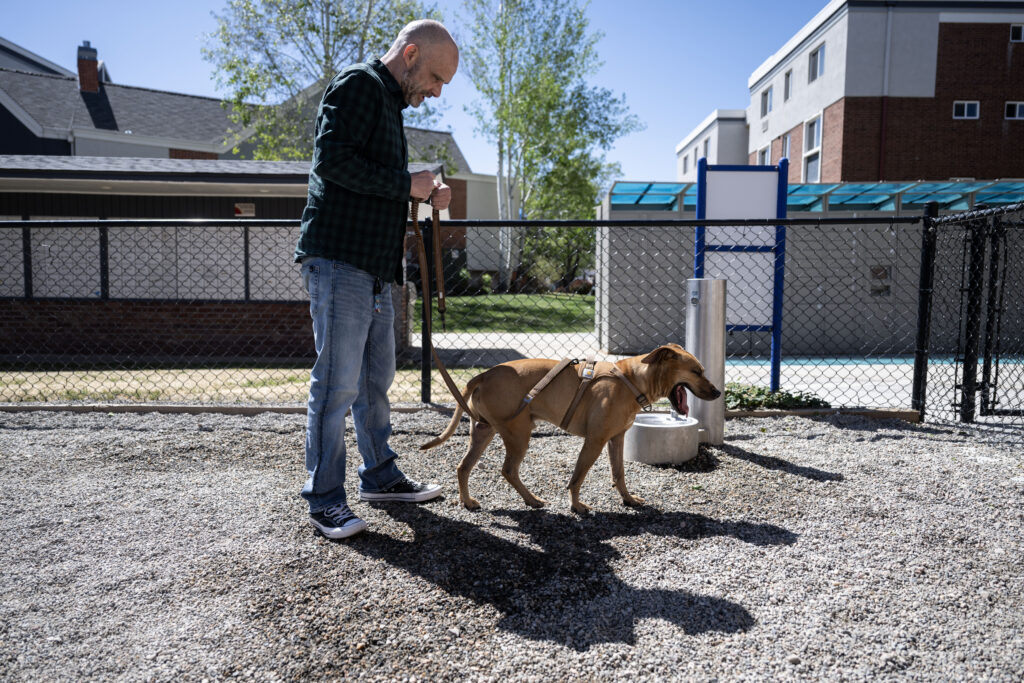
‘The program’: Church’s cash ‘donations’ are an anomaly; requests to attend services were ignored
David Migoya
david.migoya@gazette.com
Updated 9 hours ago
Helping the homeless is at the center of many religious groups’ focus, with outreach coming in the form of soup kitchens, shelters and a variety of programs designed to lend a hand. The Seventh-day Adventist Church, a Protestant denomination with...

‘The program’: Using the homeless to reap Medicaid millions is not new
David Migoya
david.migoya@gazette.com
Updated 9 hours ago
Federal rules prohibit anyone from giving any Medicare or Medicaid beneficiary any remuneration — defined as anything more than $10 in value at a time or $50 in a year — that “is likely to influence the beneficiary’s selection of...
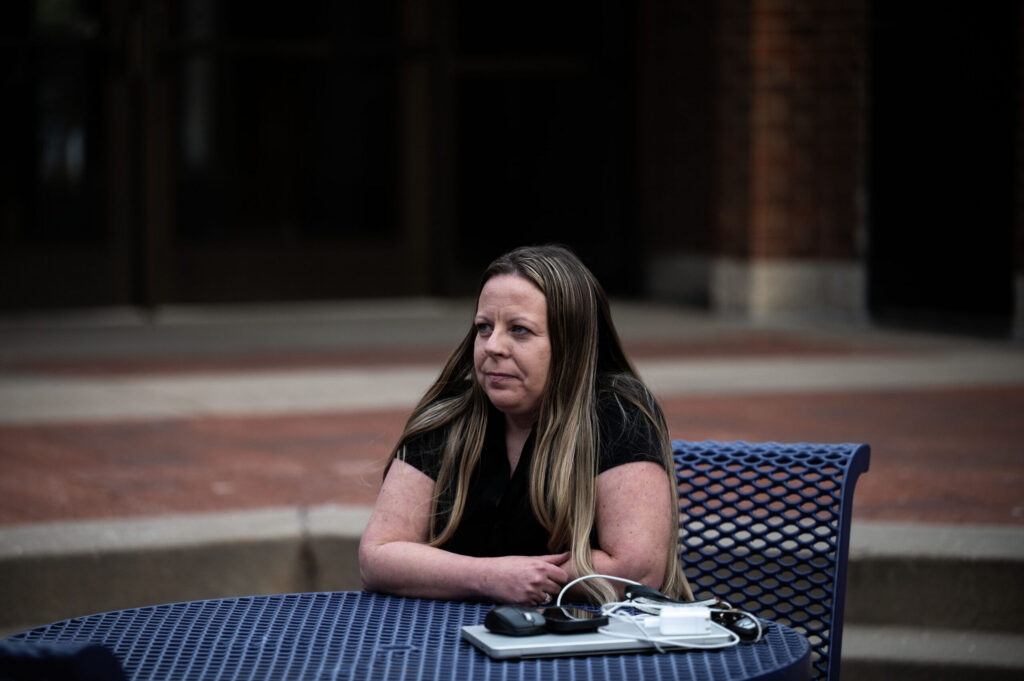
Using housing and cash, ‘the program’ exploits Colorado’s homeless for Medicaid millions
David Migoya
david.migoya@gazette.com
Updated 14 hours ago
Editor’s Note: This story is part of a series. Read about how home health in Colorado is a complex setup and about the group On Going HHC. They call it “the program.” For the past four years, dozens of homeless...

‘The program’: Medicaid for home health in Colorado is complex setup
David Migoya
david.migoya@gazette.com
Updated 21 hours ago
Editor’s Note: This story is part of a series. Read about how “the program” exploits Colorado’s homeless using housing and cash and about the group On Going HHC. Home health care in Colorado is a complicated business. To provide the...

‘The program’: On Going HHC roots deeply intertwined with others
David Migoya
david.migoya@gazette.com
Updated 21 hours ago
Editor’s Note: This story is part of a series. Read about how “the program” exploits Colorado’s homeless using housing and cash, and how home health in Colorado is a complex setup. Seska Bell is a licensed practical nurse who has...

Marijuana cultivator files class-action lawsuit over state ‘distortions’ in excise tax collections
Christopher Osher
chris.osher@gazette.com
Updated 2 weeks ago
Plaintiff says state owes over $100 million in refunds The regulators of Colorado’s first-in-the-nation recreational marijuana market have allowed so many sham transactions in the industry to proliferate that honest cultivators and manufacturers shoulder an unfair excise tax burden, claims...
Colorado legislators pass bill that sponsors say would strengthen sex crime victim protections
Jenny Deam
jenny.deam@gazette.com
Updated 3 weeks ago
A Colorado bill that supporters say would strengthen victim protections and mandate law enforcement training on how trauma can affect survivors of sex crimes and domestic violence is on its way to Gov. Jared Polis’ desk for signing. Senate Bill...

Dismissal sought in Michael Clark’s second trial
Jenny Deam
jenny-deam@coloradopolitics.com
Updated 1 month ago
The murder conviction of Michael Clark should be dismissed due to a 32-year delay that led to crucial evidence being lost or destroyed, a bungled police investigation and “outrageous conduct” at the state crime lab, according to defense motion filed...
Assisted-living facility in Colorado faced minimal fine after death of 73-year-old man
Jenny Deam
jenny-deam@coloradopolitics.com
Updated 1 month ago
On Jan. 6, just after 8:30 p.m., Robert Dutkevitch rolled his wheelchair onto the smoking patio outside The Argyle assisted-living facility in Denver. Minutes later, the 73-year-old suddenly slumped in his chair, his head lolling to the side. He then...

Colorado marijuana regulators pledge crackdown on intoxicating hemp
Christopher Osher
chris.osher@gazette.com
Updated 2 months ago
Citing potential tax avoidance, ‘serious risk to public safety,’ Marijuana Enforcement Division warns companies about swapping illegal chemically converted hemp for marijuana This article was produced for ProPublica’s Local Reporting Network in partnership with The Denver Gazette. Colorado regulators announced...
PREV
PREVIOUS

Democrats Bennet, Weiser square off in spirited Colorado gubernatorial primary debate
The two Democrats running for governor of Colorado agreed on nearly every policy-related topic but vehemently clashed over which of them is best equipped to lead the state through what one described as an “existential moment” in a televised debate Thursday night in Denver. U.S. Sen. Michael Bennet and Attorney General Phil Weiser each made […]

'The program': Using the homeless to reap Medicaid millions is not new
Federal rules prohibit anyone from giving any Medicare or Medicaid beneficiary any remuneration — defined as anything more than $10 in value at a time or $50 in a year — that “is likely to influence the beneficiary’s selection of a particular provider, practitioner, or supplier of Medicare or Medicaid payable items or services.” The […]