

Colorado candidates switch parties, races as midterm election year looms | TRAIL MIX

The final days of 2025 saw an unusually high number of Colorado candidates switch parties and races, reshaping at least a few primaries ahead of this year’s midterm elections.
The state has seen its share of switchers over the years, from the grandaddy of them all, the late former U.S. Sen. Ben Nighthorse Campbell, who became a Republican in 1995 after a decade as a Democratic elected official, to Republican U.S. Rep. Lauren Boebert, who kept her affiliation but switched districts two years ago, half way through her second term, exchanging the Western Slope for Colorado’s Eastern Plains.
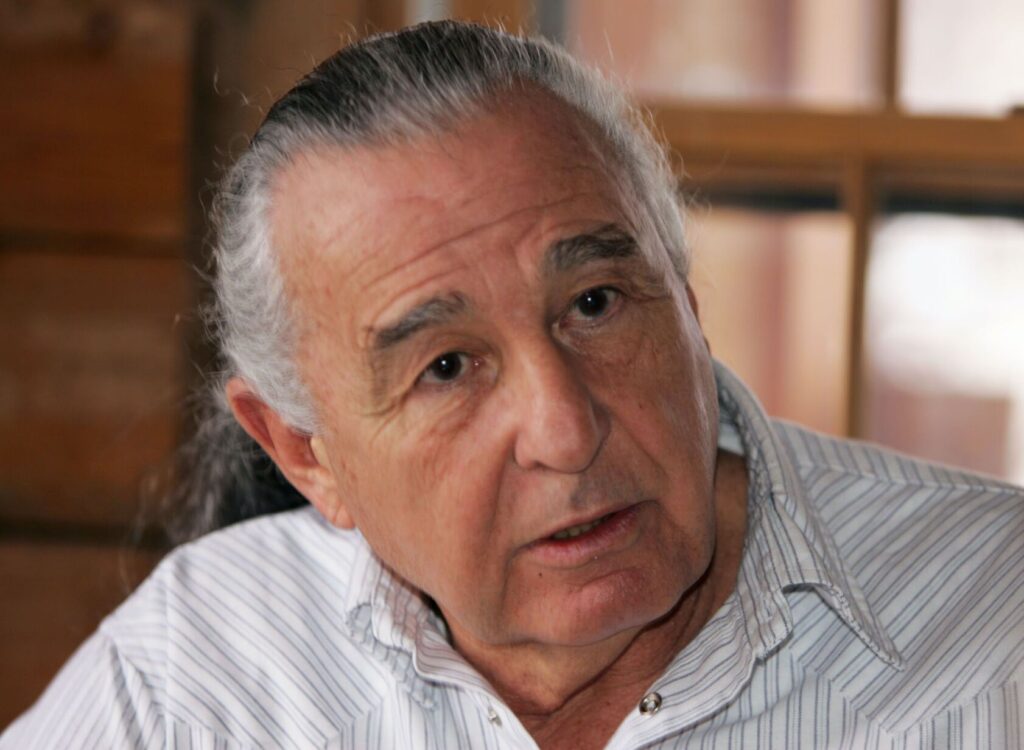
The 92-year-old Campbell, who served as a state lawmaker and two terms in the U.S. House before his election to the Senate as a Democrat in 1992 and was reelected as a Republican in 1998, died on the afternoon of Dec. 30. His legacy included being one of only a few Native Americans to serve in the Senate, along with a streak of fierce independence that left him less than firmly attached to either party.
Campbell made his move the day after the Senate voted down a balanced budget amendment, a move that, contrary to his long-held position, made the veteran lawmaker realize he was no longer comfortable as a Democrat.
“I have always been considered a moderate, much to the consternation of the Democratic Party,” said Campbell, announcing his decision. “My moderacy will now be to the consternation of the right wing of the Republican Party.”
Even as his party switch landed like a lightning bolt in a state where such occurrences were rare, Campbell expressed a theme common to switches in decades to come. He hadn’t changed his values or beliefs, he said, but merely exchanged labels. His new party took a while to warm up to their new top statewide elected official, but voters, it turned out, didn’t mind and reelected him to a second six-year term a few years later.
Boebert announced at the end of 2023 that she was moving across the state to seek a third term in safer territory, swapping the district she’d won a year earlier by the closest margin of any House race in the country for the state’s most solidly Republican seat.
The Democrat who had come close to unseating her, Adam Frisch, had spent the year hauling in more campaign cash than any Colorado candidate had ever seen. Boebert made clear she preferred to take what turned out to be an easier and less expensive route back to D.C., though she did have to navigate a tough primary and is facing similarly well-heeled challengers in this year’s election.
The timing of this cycle’s end-of-year switches wasn’t coincidental, as state law requires that major-party candidates be affiliated with the party that nominates them to the November ballot by the start of the year.
This year’s crop included Matt Cavanaugh, an independent congressional candidate who joined the Democrats, citing the urgency of coalescing opposition to U.S. Rep. Jeff Crank, a Colorado Springs Republican serving his first term in the state’s most rapidly changing but historically reliable Republican seat.
Among the record number of Republicans running for the office held by term-limited Democratic Gov. Jared Polis, two candidates changed course as the new year dawned.
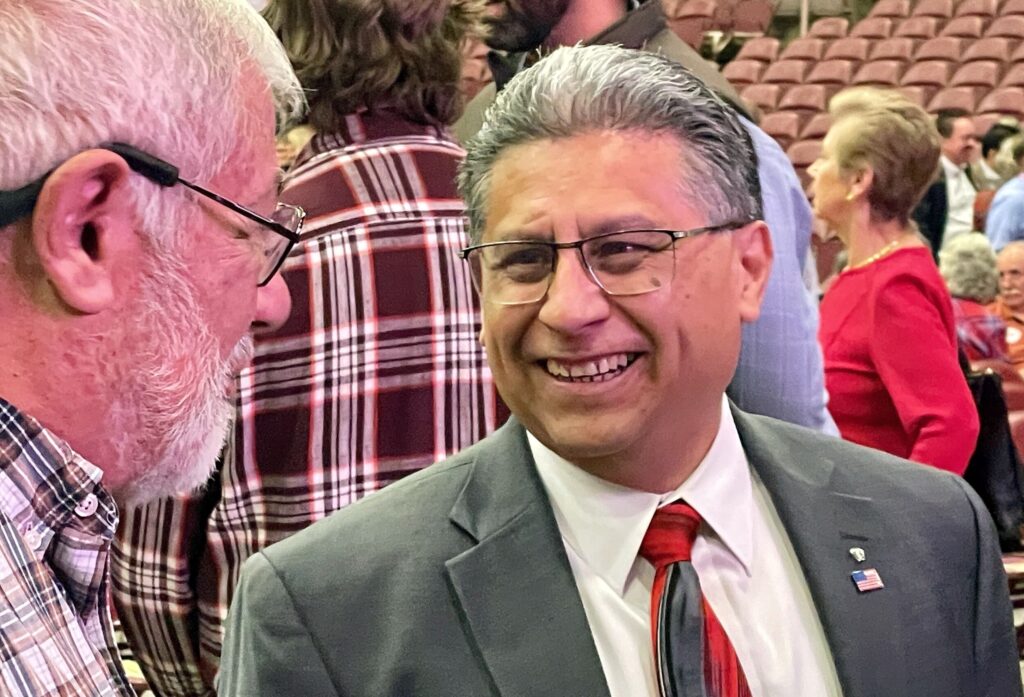
Former U.S. Rep. Greg Lopez, making his third run for governor, dropped his GOP affiliation and declared he was running as an independent. Neither major party had the answers, he said, noting that unaffiliated voters make up nearly half of the state’s electorate but “feel politically homeless.”
Lopez, who won a special election with Boebert’s backing to fill a vacancy in her new district, likened his decision to his change from Democrat to Republican just over 30 years ago, when he was serving as Colorado’s youngest mayor in the town of Parker, around the same time as Campbell’s switch.
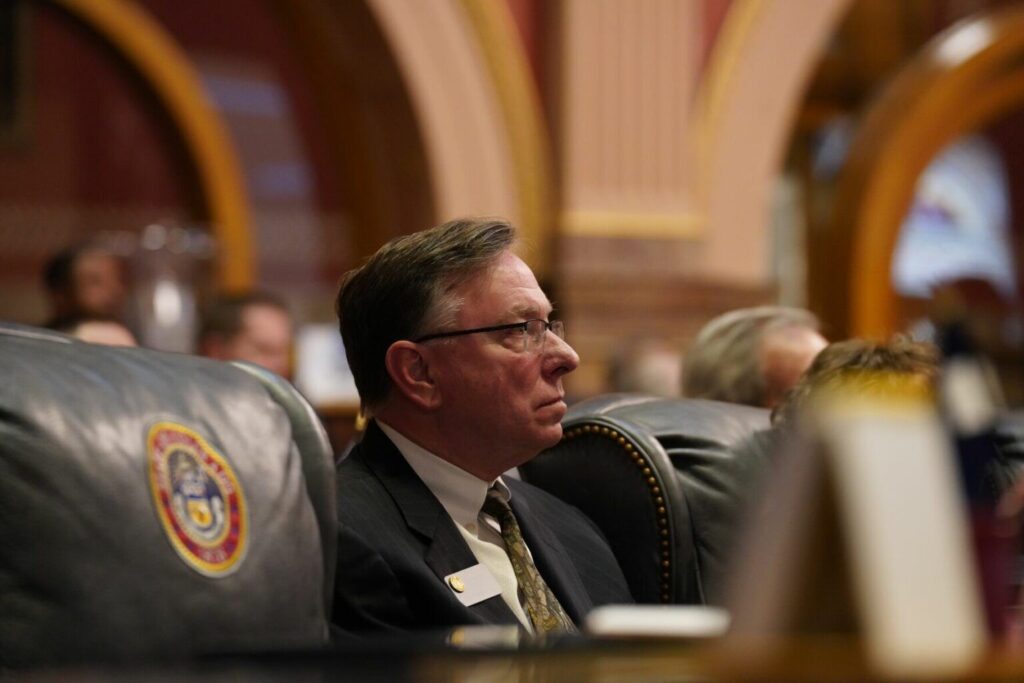
At the same time, State Sen. Mark Baisley, a Woodland Park Republican, jumped from the crowded gubernatorial primary to the sparse field of GOP candidates hoping to challenge Democratic U.S. Sen. John Hickenlooper, the former two-term governor seeking reelection.
Another switch that garnered less attention could have as much impact on the November ballot.
James Wiley, a former executive director of the Colorado Libertarian Party, was a chief architect of the minor party’s deal with state Republicans last cycle to avoid running “spoiler” candidates if the GOP nominees agreed to abide by a set of principles laid out by the Libertarians.
Wiley, who ran in 2024 on the Libertarian ticket for Boebert’s old congressional seat, declared the pact a success after Libertarians stood down in several key races narrowly won by Republicans. Those included Republican Gabe Evans unseating the Democratic incumbent in the state’s most closely divided congressional district and a handful of legislative victories that prevented Democrats from holding a super-majority in the state House of Representatives.
This time around, however, Wiley has been running for secretary of state and, at the end of the year, rebranded himself as a Republican. He also resigned his position as an alternate repressive on the Libertarian National Committee.
Until Wiley’s move, Republicans had not yet fielded an active candidate for the state’s top election official, a position held by term-limited Democrat Jena Griswold, who is running for the open attorney general seat.
He told Colorado Politics that he isn’t abandoning any of his libertarian principles but feels it’s a necessary, pragmatic response to what he describes as “a pragmatic response to the existential threats facing human liberty from election machines.”
“There are certain elements within the political environment that I think have a degree of urgency and importance which is inappropriate to what for the delayed development of the Libertarian Party in order to address and solve,” Wiley said. “So this is kind of a drastic, emergency action that I feel is necessary to take at this time in order to accomplish the specific political goals that I’ve set out with my campaign.”
Those goals, he said, include working to free Tina Peters, the former Mesa County clerk serving a nine-year prison sentence on felony and misdemeanor charges for breaching her county’s secure voting equipment.
He also vows to decertify the state’s electronic voting machines and ballot tabulators, and to mandate hand-counted paper ballots. In addition, he wants to put all of Colorado’s public records — from the voter rolls to property records and birth certificates — on a blockchain ledger, ensuring what he describes as “eternal transparency and auditability.”
“I do not want to be a Republican, but that’s what’s necessary now,” Wiley said. “I’m willing to take that step and form coalition with people typically I wouldn’t agree with politically, in order to achieve what i believe is in both of our interests and a common good.”


House rejects effort to override presidential veto for Colorado Water Project
Marianne Goodland
marianne.goodland@coloradopolitics.com
Updated 1 day ago
The U.S. House of Representatives on Thursday rejected a Colorado-led effort to override a Dec. 30 presidential veto of a measure that would have helped finance the Arkansas Valley conduit. The measure, known as H.R. 131 and sponsored by U.S....
Senate advances resolution to limit Trump’s war powers after Venezuela raid
Joey Cappelletti
joey.cappelletti@associatedpress.com
Updated 1 day ago
WASHINGTON (AP) — The Senate advanced a resolution Thursday that would limit President Donald Trump’s ability to conduct further attacks against Venezuela, sounding a note of disapproval for his expanding ambitions in the Western Hemisphere. Democrats and five Republicans voted...

U.S. House weighs override of Trump veto on Colorado water project
Marianne Goodland
marianne.goodland@coloradopolitics.com
Updated 2 days ago
The U.S. House is expected to consider on Thursday whether to override President Donald Trump’s veto of a bill aimed at helping finance a water pipeline in Colorado. Should it happen, it would be the first attempt at an override...
Former U.S. Rep. Greg Lopez leaves GOP, will run for governor in Colorado as an independent
Ernest Luning
ernest.luning@coloradopolitics.com
Updated 3 days ago
Former U.S. Rep. Greg Lopez, a candidate for governor of Colorado, has left the Republican Party and plans to run as an unaffiliated candidate for the office held by term-limited Democratic Gov. Jared Polis. Lopez, who served six months in...
Colorado Republican Mark Baisley exits gubernatorial race, launches U.S. Senate campaign
Ernest Luning
ernest.luning@coloradopolitics.com
Updated 2 days ago
Republican state Sen. Mark Baisley on Monday withdrew from the Colorado gubernatorial race and announced his candidacy for the U.S. Senate seat held by Democrat John Hickenlooper. His departure leaves 20 Republicans running for the office held by term-limited Democratic...
Ben Nighthorse Campbell was a Colorado original | Vince Bzdek
Vince Bzdek
vince.bzdek@gazette.com
Updated 6 days ago
One day in 1982, Ben Nighthorse Campbell walked into a political caucus in Colorado to kill time after thunderstorms grounded his flight. He ended up volunteering to run for office that day and wound up serving two terms as a...
Four legislative priorities waiting for House members in 2026
Rachel Schilke, Washington Examiner
rachel.schilke.washington.examiner@gazetteedit.wpenginepowered.com
Updated 6 days ago
The House has been out of session for two weeks, and it was clearly time for the holidays after the last few months exposed fault lines within both parties. However, it will not be smooth sailing when lawmakers return on...

US captures Venezuela’s leader and his wife in a stunning operation and plans to prosecute them
Eric Tucker
eric.tucker@associatedpress.com
Updated 6 days ago
CARACAS, Venezuela (AP) — The United States captured Venezuelan President Nicolás Maduro and flew him out of the country in a stunning military operation early Saturday that plucked a sitting leader from office. President Donald Trump insisted the U.S. government...

Independent Crank challenger Matt Cavanaugh joins Democratic primary in Colorado’s 5th CD
Ernest Luning
ernest.luning@coloradopolitics.com
Updated 6 days ago
Matt Cavanaugh, the Army combat veteran and author who has been running an independent campaign to unseat first-term Republican U.S. Rep. Jeff Crank in Colorado’s 5th Congressional District, registered this week as a Democrat and will seek the party’s nomination...

‘Rot in hell’: Trump post reignites feud with Colorado Gov. Jared Polis over Tina Peters
Thelma Grimes
thelma.grimes@coloradopolitics.com
Updated 1 week ago
Heading into the New Year, President Donald Trump said he would like Gov. Jared Polis and others in Colorado to “rot in hell.” The object of the president’s ire is Tina Peters, the former Mesa County clerk convicted of state...
PREV
PREVIOUS
Denver Auditor: Office of Social Equity and Innovation risks mismanaging or losing taxpayer money
Denver’s Office of Social Equity and Innovation has yet to implement half of the 14 recommendations made by auditors in 2024, leaving the city and the Colorado Youth Detention Continuum Program at risk of misusing small-dollar funds. A follow-up report released by City Auditor Tim O’Brien on Thursday noted that, while the office has made […]

Red Carpet Reception proves new home’s a winner for Coors Western Art Exhibit & Sale | NONPROFIT REGISTER
NATIONAL WESTERN STOCK SHOW News: It wasn’t just the art that people were talking about at Thursday night’s Red Carpet Reception for the 34th Coors Western Art Exhibit & Sale. A good number of the 1,000-plus guests were on their first visit to the show’s spacious new location on the second floor of The Legacy, the recently completed, four-story, $100 million world headquarters for the National Western Stock Show. And […]