

Appeals judge urges restraint in labeling new offenses serious across board
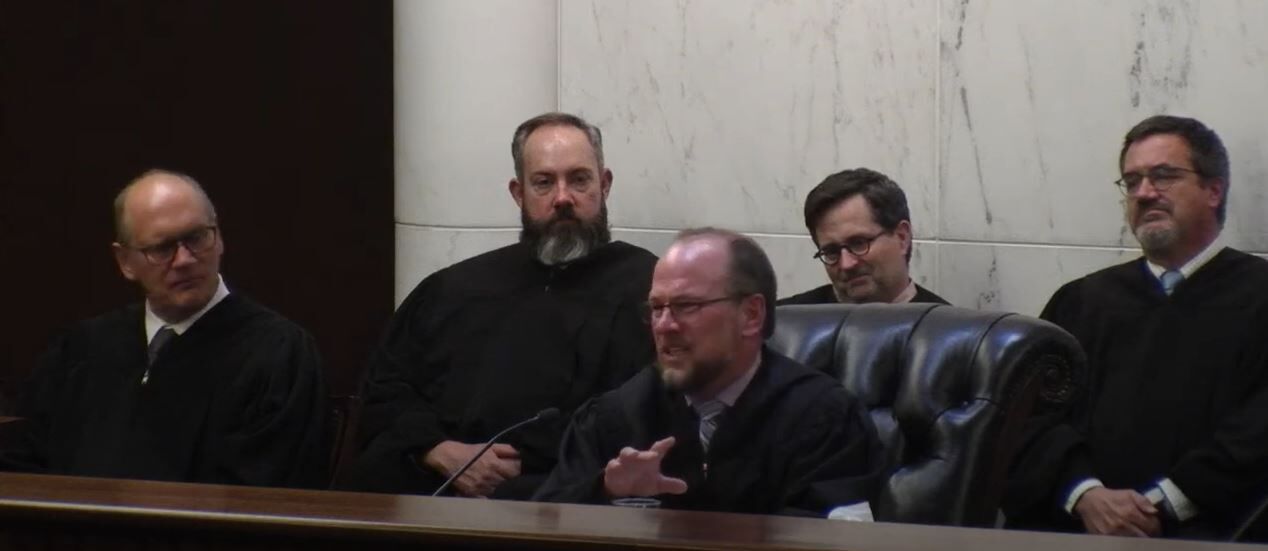
A member of the state’s second-highest court urged his colleagues on Thursday to pump the brakes before declaring new offenses “grave or serious” in every possible scenario.
The Eighth Amendment’s prohibition on cruel and unusual punishment means sentences cannot be grossly disproportionate to the crime. Consequently, when judges in Colorado examine the constitutionality of a sentence, they first consider whether the offense was grave or serious, then assess the harshness of the punishment.
The Colorado Supreme Court has recognized that, if an offense is “per se” grave and serious — meaning serious in all scenarios — and the sentence is within the authorized limits, it is “nearly impervious” to a challenge.
However, last month, two justices suggested that Colorado’s unique method of expediting reviews of certain sentences be abolished in favor of a straightforward analysis of each defendant’s case.
In a Jan. 8 opinion in which a three-judge Court of Appeals panel upheld a defendant’s lifetime sentence for felony murder, Judge Timothy J. Schutz wrote separately to disagree with the panel majority’s decision to label felony murder per se grave or serious, citing the Supreme Court’s mixed signals.
“I am persuaded that judicial restraint is particularly important in creating new classes of ‘per se grave or serious’ crimes,” he wrote, “given the supreme court’s ongoing reflection and disagreement on whether this unique Colorado doctrine should be completely jettisoned.”
Case: People v. Marentes
Decided: January 8, 2026
Jurisdiction: Denver
Ruling: 3-0
Judges: Jerry N. Jones (author)
Matthew D. Grove
Timothy J. Schutz (concurrence)
A defendant is guilty of felony murder if he participates in certain serious crimes, such as robbery or sexual assault, and someone dies as a result. Prior to 2021, life without parole was the punishment for those convicted of felony murder. State lawmakers imposed a maximum sentence of 48 years in 2021, but the change only applied going forward.
Denver jurors convicted Edwin Marentes in 2022 of felony murder. Because his offense occurred before the law change, he received a sentence of life without parole. The trial judge believed he was obligated to impose life imprisonment, but said Marentes’ crime was “as grave and terrible as it can be.”
Marentes appealed, arguing his sentence was constitutionally excessive in light of his youth, his mental state and the legislature’s recent reduction to the severity of the offense.
The appellate panel’s majority, in a non-precedent-setting opinion, concluded felony murder is always grave or serious because it necessarily involves the commission of a violent felony accompanied by someone’s death. Moreover, robbery, which was the offense Marentes was committing when the victim died, is already a per se grave and serious crime in Colorado on its own.
“It would be an odd result indeed to conclude that robbery loses this status when it leads to the death of another person,” wrote Judge Jerry N. Jones for himself and Judge Matthew D. Grove.
Schutz, in his concurring opinion, argued the facts of Marentes’ offense justified his lifetime sentence, and the analysis should end there.
“In my estimation, there is no need to decide whether felony murder is per se grave or serious,” Schutz wrote.
He noted that the Supreme Court had an opportunity in 2024 to say whether felony murder was grave and serious across the board, but it declined to do so.
“Such caution is particularly appropriate in the felony murder context given recent legislation that changed felony murder from murder in the first degree to murder in the second degree,” Schutz added.
Also on Thursday, a different Court of Appeals panel issued a precedent-setting opinion labeling first degree-assault on a peace officer as grave and serious in every scenario. Like Schutz, the panel acknowledged the Supreme Court has encouraged restraint before taking such a step. But because the offense requires the intent to cause serious injury to a law enforcement officer, the panel deemed it serious across the board.
The case is People v. Marentes.


Appeals court overturns Douglas County vehicular homicide conviction due to faulty jury instructions
Michael Karlik
michael.karlik@coloradopolitics.com
Updated 21 hours ago
Colorado’s second-highest court overturned a defendant’s vehicular homicide conviction and 12-year prison sentence on Thursday after determining a Douglas County judge omitted key language from the jury instructions that could have resulted in a different outcome. James Paul McDonald was...

Federal judge dismisses malicious prosecution claim against former Denver prosecutor
Michael Karlik
michael.karlik@coloradopolitics.com
Updated 2 days ago
A federal judge concluded on Monday that a former Denver prosecutor could not be sued for allegedly causing the arrests of two plaintiffs after they failed to appear for trial on the scheduled date, even though the trial had been...

Judicial discipline commission reports increased transparency, increased submissions
Michael Karlik
michael.karlik@coloradopolitics.com
Updated 2 days ago
The Colorado Commission on Judicial Discipline received 473 misconduct complaints about judges in 2025, which was nearly 29% higher than in 2024 and substantially greater than any time in the past decade. However, only 31 complaints were referred to the commission...

Colorado Gov. Jared Polis ignites fierce debate after raising clemency questions in Tina Peters case
Marianne Goodland
marianne.goodland@coloradopolitics.com
Updated 2 days ago
Gov. Jared Polis ignited a political firestorm Tuesday night after weighing in on the prison sentences of two former Colorado officials — a Democrat and a Republican — convicted of attempting to influence a public servant. The comments quickly fueled...

Colorado Supreme Court signals intervention in dispute over treatment for trans children
Michael Karlik
michael.karlik@coloradopolitics.com
Updated 3 days ago
The Colorado Supreme Court ordered Children’s Hospital Colorado on Tuesday to explain why it should not direct the organization to resume providing certain types of services to transgender children in compliance with the state’s non-discrimination law. Last month, a Denver...

Judge nixes latest policy requiring 7 days’ notice for Congress members to visit ICE facilities
Michael Kunzelman
michael.kunzelman@associatedpress.com
Updated 3 days ago
WASHINGTON (AP) — A federal judge agreed on Monday to temporarily suspend the latest version of a Trump administration policy that requires members of Congress to provide a week’s notice before they can visit immigration detention facilities. U.S. District Judge...
Judge nixes latest policy requiring 7 days’ notice for Congress members to visit ICE facilities
Michael Kunzelman
michael.kunzelman@associatedpress.com
Updated 3 days ago
WASHINGTON • A federal judge agreed on Monday to temporarily suspend the latest version of a Trump administration policy that requires members of Congress to provide a week’s notice before they can visit immigration detention facilities. U.S. District Judge Jia...

Colorado Supreme Court clarifies restraining order violations can always support burglary charge
Michael Karlik
michael.karlik@coloradopolitics.com
Updated 2 days ago
The Colorado Supreme Court’s majority ruled on Monday that a violation of a restraining order can also serve as a basis for finding a defendant guilty of burglary. Under state law, a person commits second-degree burglary by unlawfully entering or...

10th Circuit judge creates vacancy, district court gets new chief judge | COURT CRAWL
Michael Karlik
michael.karlik@coloradopolitics.com
Updated 3 days ago
Welcome to Court Crawl, Colorado Politics’ roundup of news from the third branch of government. A longtime member of the Denver-based federal appeals court will give the president a vacancy to fill, plus Colorado’s federal trial court will see a...

Morgan County man accused of killing wife, staging her suicide charged with first-degree murder
Kyla Pearce
kyla.pearce@gazette.com
Updated 3 days ago
A grand jury announced the indictment of 52-year-old Ronald Lowry, who is accused of killing his wife in October 2023 and staging the crime scene to look like a suicide. Lowry, who was arrested Friday in Morgan County, was charged...
PREV
PREVIOUS

Federal judge opens new front in effort to increase magistrate judge handling of civil cases
One of Colorado’s federal judges rang in the new year with a new effort to spread out the U.S. District Court’s civil caseload among its roster of magistrate judges. “NOTICE ENCOURAGING CONSIDERATION OF CONSENT,” Judge S. Kato Crews has written in docket entries across at least nine recently filed civil cases so far. “This district’s […]

Final lap: Gov. Jared Polis outlines his 2026 agenda for Colorado as he nears the end of his term
A year from now, Gov. Jared Polis will wrap up eight years as the state’s chief executive officer and go back to private life. When Polis took office in January 2019, no one could have predicted what was to come. “I don’t think when I was elected I imagined any of those curveballs,” such as […]