

Colorado’s next governor should make kids in foster care a priority | OPINION

By Shari F. Shink
The next governor of Colorado has the chance to improve the lives of thousands of children in foster care and we’re not talking about new legislation. It’s a matter of making these invisible kids a priority and having the willpower to make the system more transparent and accountable.
It might not even require more money, just a reallocation of dollars — and in fact could save resource-strapped Colorado millions of dollars by ensuring more of the 3,500 children and teens in foster care grow up to be taxpayers themselves.
Right now, Colorado’s foster care system is flat-out failing most, if not all, of its young charges. Only 30% will graduate high school, about half the national average. Homelessness is rampant among teens and young adults who age out of the system. Nearly 17% of state and federal prisoners have spent time in foster care. The ugly statistics go on and on.
The nightmare is not news. What would be news is Colorado’s next governor turning the promises elected leaders have been making for decades into actual practice. Yes, the Bill of Rights for Foster Youth that became law earlier this year is symbolically important. But the guarantees on offer — freedom from abuse, access to education, timely court dates, among other laudable goals — are just words on paper unless someone in power insists otherwise.
Whoever is elected governor in November 2026 can be that person. He or she must not back-burner the issue. Foster care should be prioritized in the same way current Gov. Jared Polis emphasized access to early-childhood education.
What happened in Illinois is a good example. In 2019, the new governor commissioned a review of the child welfare system by an academic institute that recommended sweeping changes in the wake of children who died in the state’s care.
To better serve children in foster care who need us, I’d love to see the candidates make these five items top priorities:
A statewide audit
To put it bluntly, legislators are flying blind because the system operates in the dark. Treatments, interventions and relocations are all kept confidential under the guise of privacy rights for minors. A statewide audit would uncover everything from persistent delays in treatment to overlapping treatment programs to how many placements and court hearings a child typically has. Heartache is harder to measure, but it’s just as essential to evaluate the effects of instability and long-term trauma.
Permanency-focused advocacy
It’s politically incorrect to say, but not everyone can parent. Not every mom can overcome a drug addiction and not every dad can learn to control his temper. None of their children should be forced to live in indefinite limbo while they try to control their demons. Finding children a permanent placement within a year, 18 months tops, must be the rule rather than the exception. Take the money spent on people who can’t or won’t parent and give it to families — birth and foster — who not just need help but want it. Get kids a place to call home as quickly as possible.
Results-based accountability
Trying isn’t good enough anymore. The goal must be a safe, healthy, loving environment while birth parents get their own lives together. In order to achieve that, there need to be clear performance measures for every single stakeholder, from the case workers to the lawyers on up to the judge. In other words, they do their jobs, or they don’t have jobs to do anymore. That means being less litigious and more compassionate, mediating differences and heading off conflicts, creating benchmarks for the children to establish what works rather than problem solving after the fact.
Making every dollar count
The budget for the Office of Children, Youth and Families is a little more than $803 million. That’s not small change, and yet it isn’t alleviating big problems. For instance, the money spent on caseworkers is huge, but that job is a revolving door due to high caseloads and limited support. That, in turn, creates more instability for kids, as do inadequate payments to foster parents or relatives willing to take in nieces or nephews. All of it needs to be reviewed and readjusted so every dollar does the most for the kids.
Value and promote relationships
Imagine being 18 or 21 and suddenly on your own, without a single enduring relationship. No parent to ask for advice, no teacher to seek out for guidance, because you’ve changed caseworkers, foster homes and schools a half-dozen times. This is unacceptable. The system must build in community and nurture it throughout a child’s life. One national program now in place helps create partnerships between birth parents and foster families, including in Colorado. The state needs more of that and less of the adults rotating through.
Helping children who are suffering through no fault of their own makes for a pretty good political platform. Whatever your political persuasion, kids are not a partisan issue.
Shari F. Shink is the founder of the Rocky Mountain Children’s Law Center and executive director of Cobbled Streets, which is focused on changing the lives of foster and homeless children.

Colorado legislators, friends and family pay tribute to late Sen. Faith Winter
Marianne Goodland
marianne.goodland@coloradopolitics.com
Updated 5 hours ago
Colorado legislators on Friday, joined by current and former lawmakers, memorialized the late Sen. Faith Winter, noting her contributions to public policy in transportation, family and medical leave, and climate legislation. Winter died in an auto accident on Nov. 26...

No deal: Basin states remain deadlocked as Colorado River negotiations collapse again
Marianne Goodland
marianne.goodland@coloradopolitics.com
Updated 38 minutes ago
With a Feb. 14 deadline looming, the seven states in the Colorado River Basin have not reached an agreement on how to manage the river after the 2026 operating guidelines expire later this year, and John Entsminger, Nevada’s chief negotiator,...
Colorado judges lean left — just look at the numbers | George Brauchler
George Brauchler
george-brauchler@gazette.com
Updated 13 hours ago
Colorado’s judicial selection system is heavily skewed toward Democrats and defendants. It is time to drop the pretense that our system adequately minimizes the impact of partisan political influences on the selection of the judicial branch. In less than two...
‘There will be costs,’ warns Jason Crow after failed indictments for ‘illegal orders’ video | TRAIL MIX
Ernest Luning
ernest.luning@coloradopolitics.com
Updated 28 minutes ago
U.S. Rep. Jason Crow, the Aurora Democrat who represents Colorado’s 6th Congressional District, signaled this week that he’s considering pursuing legal action against members of the Trump administration after a federal grand jury in Washington declined to indict Crow and...
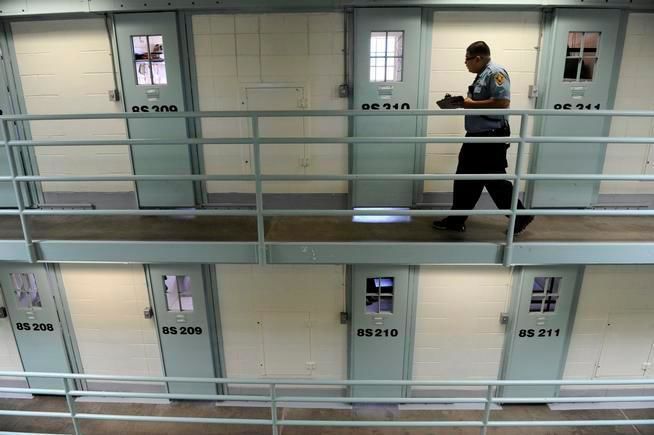
Colorado policymakers scramble with prisons on track to exceed capacity
Marianne Goodland
marianne.goodland@coloradopolitics.com
Updated 5 hours ago
Colorado’s prison system is on track to exceed capacity within the next year, driven by a sharp slowdown in parole releases, staffing shortages and an aging inmate population — all as lawmakers grapple with an $800 million general fund shortfall...
Two front pages, one false choice for Colorado lawmakers | OPINION
Maya Wheeler
maya-wheeler@gazette.com
Updated 12 hours ago
Every day, the headlines remind us how fragile safety can be. Stories of violence, loss, and families searching for answers are becoming far too common — and they demand serious, thoughtful policymaking. Recent reporting on federal immigration enforcement has been...
Hardworking Coloradans deserve dignity, right to access wages they earned | OPINION
Colorado Politics
colorado-politics@coloradopolitics.com
Updated 23 hours ago
By Monica Duran and Sean Camacho Across Colorado, too many families are doing everything right, yet still cannot make ends meet every month. Inflation has driven up the cost of groceries, rent, childcare and gas, while wages remain unchanged. For...
Penny-wise, pound-foolish cut threatens Colorado’s physician pipeline | OPINION
Colorado Politics
colorado-politics@coloradopolitics.com
Updated 13 hours ago
By Stephanie Sandhu The lead in HBO’s hit series “The Pitt” serves as the wise and experienced attending physician in an urban emergency department. Dr. Michael “Robby” Robinavitch, played by Noah Wyle, provides level-headed guidance to residents trying to make...

Colorado lawmakers target ‘ghost networks’ to expand access to mental health care
Marissa Ventrelli
marissa.ventrelli@coloradopolitics.com
Updated 6 hours ago
A few years ago, the U.S. Senate Committee on Finance conducted a “secret shopper” survey on health insurance plans across six states, including Colorado. Of the 120 providers called, one-third were either inaccurately listed in the carrier database, out of...

Hickenlooper, Crow plan to donate campaign cash from Palantir execs to immigrant rights nonprofits
Ernest Luning
ernest.luning@coloradopolitics.com
Updated 1 day ago
Two Democratic members of Colorado’s congressional delegation said this week that they plan to donate more than $100,000 received in campaign contributions from current and former employees of Denver-based firm Palantir Technologies to local nonprofits that assist immigrants and support...
PREV
PREVIOUS

From mental health coverage to bison protection: New Colorado laws that take effect Jan. 1
A new year means new laws in Colorado, covering everything from health insurance and gun shows to “junk fees” and protections for wild bison. Here’s a list of laws passed during the 2025 legislative session that will go into effect when the calendar flips on Wednesday. House Bill 1002: Medical necessity determination insurance coverage This […]

Colorado Republicans at a crossroads on election integrity | OPINION
By Matt Crane For more than two decades, I have worked to make Colorado’s elections accurate, secure and transparent. As Arapahoe County Clerk, I strengthened audits, pushed for transparency, and advocated common-sense safeguards like photo identification. Later, as an election security consultant to the federal government hired during the first Trump administration, I helped states […]