

Mid-decade redistricting and the race to the bottom | SONDERMANN
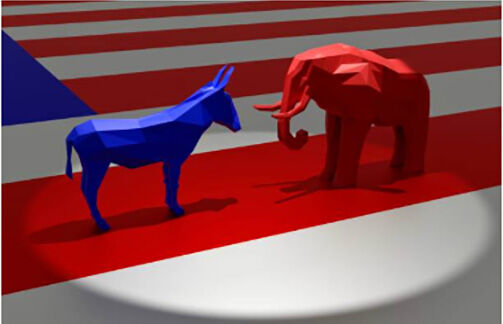
Per Merriam-Webster, one of the definitions of the word “politics” is, “The total complex of relations between people living in society.”
Otherwise put, politics, when managed correctly, constitutes the organization of society for maximum peace, tranquility, prosperity and thriving. It is the art of how disparate people get along.
Of course, the practice of politics involves competition and rivalry in sorting out policy differences. The exercise is often messy. The making of sausage is not for the faint of heart. Similarly, as more than one wag has observed, politics ain’t beanbag, meaning that it can be a rough and unbecoming sport.
Even with those caveats, America is failing this test by virtually any standard. We have replaced all semblance of good faith and mutual care with constant, steroidal ugliness and gamesmanship. We define ourselves by who we are against and regard those on the other side as enemies instead of just wrong-headed.
In short, we have supplanted the constructive resolution of differences with an approach of total war.
Nothing better illustrates these depths than the unwise, unnecessary, unprecedented mid-decade redistricting battles that we have seen recently in state after state.
In our endless game of political tit-for-tat, there is often dispute as to which side started any given battle. Though in this case, there is no doubt. The instigator was President Donald Trump and his chosen venue was Texas.
In June, just five months ago, Trump leaned on Texas Gov. Greg Abbott to convene a special legislative session to redraw congressional district lines. Trump made no secret of his motives. The explicit purpose was to gerrymander his way to a net gain of as many as five new Republican seats in what looks to be a difficult 2026 mid-term election.
Among Trump’s formidable skills, he has a predator’s instinct for sensing weakness and turning it to his advantage. He took stock of Abbott’s obedience and knew he would be eager to please. Ditto for the majority Republicans in both houses of the Texas legislature.
Sure enough, the legislature complied and Abbott signed the new law before August was complete. Despite boasts to the contrary, Texas got messed with by the president.
As night follows day, Trump’s White House pressed its advantage and other red states fell in line. Missouri, Ohio and North Carolina all passed new, Republican-friendly maps in short order. It is under consideration in Kansas and Florida.
Historically, states have redistricted early each decade with fresh census data in hand to comply with one-person, one-vote requirements. Yes, partisan considerations are often at the fore and gerrymandering is too common.
But at least there is a rationale, even a necessity, for this decennial exercise. This mid-decade chicanery lacks any such reason just as it takes place absent any new census information. There is no curtain to pull back here. The sole, exclusive purpose is partisan advantage.
One might think that a few self-respecting Republican governors or state legislators would blow the whistle. If Marjorie Taylor Greene and Lauren Boebert, of all people, can stand up to this president, where is the backbone of other Republicans much lighter on the MAGA loyalty?
A hopeful sign, if rather little and rather late, comes in Indiana where a handful of Republican state senators have refused to engage in the shenanigans despite intense pressure from Trump and toady Gov. Mike Braun.
All of this mischief took an unexpected turn this past week when a three-judge panel overturned the rigged Texas map in favor of the plan in place since 2021. Notably, the decision was written by a Trump appointee to the federal bench. We will soon know if the U.S. Supreme Court intervenes in the matter, though time is short as candidates face a December 8 filing deadline.
Our toxic political brew requires two inputs and Democrats were not going to be silent for long. California Democratic Gov. Gavin Newsom seized the chance to burnish his party credentials by sponsoring a ballot issue to authorize his state to counter the Texas gerrymander with his own.
Let’s wrap up today by bringing this home to Colorado. Voters here, in their wisdom back in 2018, vested the responsibility of Congressional map-making in an independent, non-partisan commission.
By my gauge, Attorney General Phil Weiser is as likely as not to be Colorado’s next governor. A la Gavin Newsom, Weiser sensed opportunity to score points among Democratic partisans by endorsing a repeal of the Colorado amendment to allow for our own mid-decade tomfoolery.
The suspicion is that Weiser knows better. If he is to lead Colorado, we can hope that he has the bearing to resist such enticements and respect the state’s independent character. 71% of Colorado voters approved the 2018 measure, not exactly an ambiguous statement about taking the naked politics out of this process.
The only way to resist a race to the bottom is to refuse to join in the descent.
Eric Sondermann is a Colorado-based independent political commentator. He writes regularly for ColoradoPolitics and the Gazette newspapers. Reach him at EWS@EricSondermann.com; follow him at @EricSondermann


Regime change, this time down Venezuela way | Kelly Sloan
Kelly Sloan
kelly-sloan@coloradopolitics.com
Updated 1 day ago
As luck and the calendar would have it, I penned my annual “state of the world” column two days before the grand fireworks in Caracas took place, and the column was subsequently published two days after. To prove I was...
Lack of accountability in state standardized testing system | NOONAN
Paula Noonan
paula-noonan@coloradopolitics.com
Updated 2 days ago
The General Assembly kicks up its heels this month along with the National Western Stock Show. Both should offer some exciting bull rides. Last General Assembly produced one interesting bill on K-12 public education. It’s HB25-1278 on the education accountability...
Colorado chose politics over public safety and now our communities pay the price | PODIUM
Colorado Politics
colorado-politics@coloradopolitics.com
Updated 3 days ago
By Chris Richardson and Max Brooks This week, federal authorities arrested Jose Barrera-Bolanos in Denver. He is an illegal immigrant who had already been convicted of sexually assaulting a child. That fact alone should stop every parent, grandparent and lawmaker...
Helping close Colorado school children’s literacy gaps | OPINION
Colorado Politics
colorado-politics@coloradopolitics.com
Updated 2 days ago
By Ellen Gelman Imagine being a high school student sitting in a room where everyone around you seems to understand texts that to you feel like a foreign language. Imagine knowing you’re smart, knowing you have ideas worth sharing, but...
Do Coloradans really care about reproductive health? | OPINION
By Tom Perille
by-tom-perille@gazette.com
Updated 4 days ago
Colorado Amendment 79 passed more than one year ago. It ensured access to abortion at any time during pregnancy for any reason. Sixty-two percent of Coloradans who voted for the amendment and the 38% who opposed the amendment both sincerely believed...
Putting power back in the hands of the petty | BIDLACK
Hal Bidlack
hal-bidlack@coloradopolitics.com
Updated 4 days ago
If there is one thing I’m sure my kindly editor does not want right now is yet another column commenting on the recent events in Venezuela (Ed: correct!). You have likely heard all you want to hear about the extraction,...
Thinking through what to expect in the world in 2026 | SLOAN
Kelly Sloan
kelly-sloan@coloradopolitics.com
Updated 4 days ago
It being something of a tradition of mine (and I am ever bound by tradition) to pen my inaugural column of the new year as a tour of sorts of the world scene, let’s begin: We begin in Europe, by...

Are we all post-liberals now? | Luige del Puerto
Luige DelPuerto
luige.delpuerto@gazette.com
Updated 6 days ago
Three decades after the end of World War II, a Japanese soldier finally returned to his home country after holding out in the jungles of the Philippines. Cut off from his unit, Hiroo Onoda had no way of knowing that...
They don’t make ’em like Ben Nighthorse Campbell anymore | GABEL
Rachel Gabel
rachel-gabel@coloradopolitics.com
Updated 5 days ago
There are many things to appreciate about the late Ben Nighthorse Campbell, but one of the items at the top of the list is his belief that it’s more important to kill bad bills than to sign onto a mediocre...

The subtle independence at the heart of Ben Nighthorse Campbell’s shrewd politics | HUDSON
Miller Hudson
miller-hudson@coloradopolitics.com
Updated 5 days ago
To have known Ben Nighthorse Campbell was to like him. He had a knack for putting people at ease, making them look forward to another meeting. I certainly felt that way. It wasn’t just his humor or his mesmerizing intensity,...
PREV
PREVIOUS

Communities across Colorado voted on ballot issues | CRONIN & LOEVY
The results of the November 2025 odd-year elections are well-known. Democrats easily won the Virginia and New Jersey governor elections and, in a number of other state elections, bested the Republicans. In Colorado, the big 2025 election news was a statewide program providing free breakfasts and lunches in public schools for all students, regardless of […]

‘Lights, Camera, Hope Gala’ exceeds fundraising goal | NONPROFIT REGISTER
Hope House Colorado News: Organizers of Lights, Camera, Hope had set a fundraising goal of $635,000 for this gala dinner and auction benefiting Hope House Colorado. When all was said and done, however, the numbers from ticket sales, sponsorships, and live and silent auctions added up to $660,000 – a $25,000 increase over what had been projected. Five hundred friends of Hope House Colorado attended the […]