

The subtle independence at the heart of Ben Nighthorse Campbell’s shrewd politics | HUDSON
To have known Ben Nighthorse Campbell was to like him. He had a knack for putting people at ease, making them look forward to another meeting. I certainly felt that way. It wasn’t just his humor or his mesmerizing intensity, but his lack of pretense. Ben decided to be himself long before he became a United States senator. There was also an element of perpetual astonishment, I suspect, that he found himself serving in high public office and treated with genuine respect by the nation’s movers and shakers. The walls in his Senate office were filled with photos of Ben meeting everyone from the Pope to Magic Johnson, which he displayed not so much to impress his visitors but as reminders of how far he’d come from an orphanage in California’s central valley.
Throughout, his office was furnished with lodgepole chairs and sofas his son, Colin, crafted back in Ignacio. There were Navajo rugs on the floors and Native American art pieces. If you didn’t glance out the window, it felt more like a cozy adobe in southwest Colorado than a center of political power. Ben may have been a Korean War veteran, a proud American Olympian and an elected legislator, but he was also a motorcycle-riding, ponytailed renegade who won fame and fortune as a distinctive Native American jewelry designer. I was departing the Colorado House as he arrived in 1983. The story of his nomination as a candidate at a Democratic Assembly in Durango evolved as Ben repeated it over the years.
I like the version I first heard from him when we met in Colorado’s Capitol in 1983. He was apparently invited to attend the Assembly on behalf of a friend running for sheriff but since he was there, he decided to visit his legislative House District meeting where Democrats were searching for a candidate to challenge the Republican incumbent. As Ben told me, “No one seemed to want the job, although delegates acted excited to have someone attending from Ignacio. I took advantage of a recess to use the restroom and when I returned, I discovered I’d been nominated.” With a wink he added, “That’s the trouble with Democrats, Miller. You leave to take a leak and return to discover they’ve developed expectations for you.” There was a kernel of truth wrapped in this quip which foretold his decision to switch parties a dozen years later. He would never lose an election, twice winning his seat in the legislature, then three terms in Congress followed by two six-year terms in the U.S., Senate — the last as a Republican in 1998.
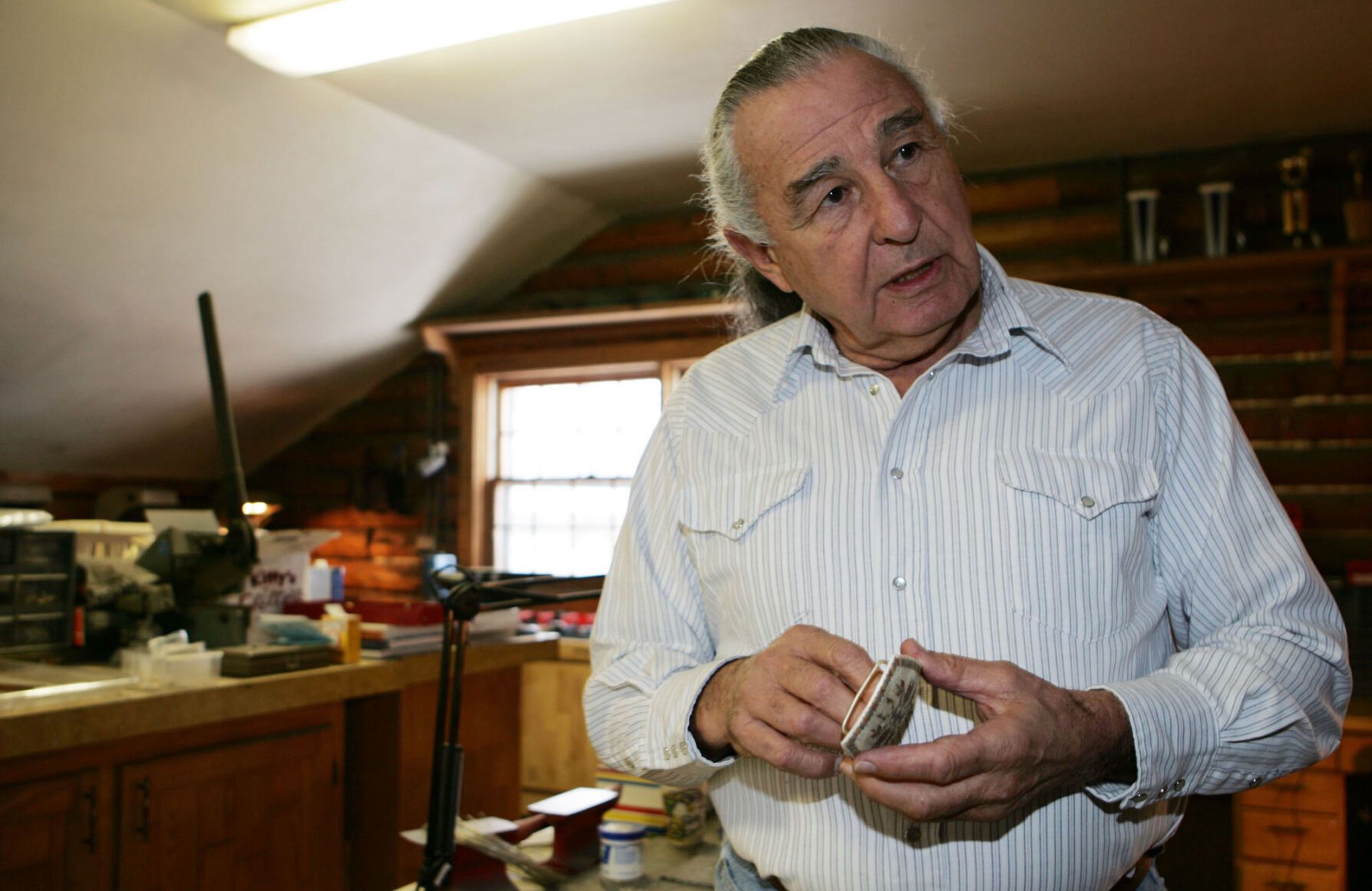
Wearing his own stunning bolos, Campbell was able to force changes to the “tie rule” for men at the legislature and later in Congress and then the Senate. I wonder what he would have had to say about John Fetterman’s hoodies, however. Ben may have been a rancher at heart, but he was a natty dresser. When Gary Hart’s presidential campaign collapsed in 1988 following the Monkey Business scandal, I ran into Ben in Vail one afternoon and he grumbled about the fact he’d cast 50 silver belt buckles for the Hart fundraising team the week before. “What the hell am I going to do with the damned things now?” he exclaimed. Apparently, he must have delivered them anyway as I recently googled a Federal Election Commission (FEC) letter permitting the “Friends of Gary Hart” to disperse 40 buckles to non-political, non-profits for fundraising auctions and distribute 10 to departing staff as they closed their offices. If you ever wonder about bureaucracy, the FEC decision requires four pages of single-spaced explication to approve the campaign request. I imagine the collector’s market would ask a pretty penny for just one buckle today.
When Ben ran for Congress in 1986, he once again grabbed a formerly Republican seat. While he considered running for the Senate in 1990, it became apparent there would be a handful of candidates in the Democratic primary. Ben felt the race would be tough enough without an intramural slugfest and decided to wait for 1992 when another seat would be open. He faced Republican state Sen. Terry Considine who was a moderate Republican I had worked with on Regional Transportation District issues a decade earlier. Terry called me to ask if I would join a “Democrats for Considine” committee. I assured Terry I believed he would make a great Senator, but I would have to pass. I warned him, “Terry, Colorado voters have decided they want to send an Indian to the U S. Senate and there is nothing you can do to stop them.” He would laugh later and tell me, “I should have listened to you. It would have saved me a lot of money.” It was hard to beat a guy whose campaign commercials showed him carrying the American flag at the front of the 1964 U.S. Olympic team in Tokyo.
Sometime during the 1990s, a group of adolescent thugs decided to try and mug Ben as he returned to his Capitol Hill lodgings in Washington. The gray hair and ponytail may have looked like an aging hippie. Bad idea, though. Ben may have been in his early 60s, but he had also once been ranked the No. 4 judo wrestler in the world! After thrashing a pair who had run off, he held their companion for police.
Much has been speculated about Ben’s party switch, but I take him at his word. Republican Scott McInnis, who filled Ben’s congressional seat, often commuted back to the Western Slope with him and certainly played a recruitment role. But Ben had begun to feel he enjoyed better support for Native American concerns on the other side of the aisle. His switch certainly enabled him to successfully cultivate support for authorizing the Smithsonian’s Museum of the American Indian.
I close with a personal story. As a longtime resident on the Western slope, Ben was fully aware of the need for a fast, rail transit link from Denver to the state’s central mountain resorts and then on to Grand Junction. I was the newly appointed manager of the Colorado Intermountain Fixed Guideway Authority (CIFGA) in 1999 when Gov. Bill Owens publicly declared his conviction “every dime spent on transit was a wasted dime.” We had zero chance of securing state funds so I called up Ben who had been given a seat on the Senate Appropriations Committee as a reward for his party switch. A reasonably private person, Ben hadn’t anticipated the trail of petitioners who would be knocking on his door for budget favors.
After commiserating with him, he agreed to try and find me $3 million to $4 million for a feasibility study. This all occurred during the age of earmarks when congressional “appropriators” could steer federal dollars to pet projects. A few months later my phone rang at home after 11 p.m. — meaning Ben was calling me after one in the morning in D.C. I don’t wish to jump to conclusions, but he called from a very noisy place, likely a bar. He informed me, “I’ve found you three-and-a-half million for your monorail study, but I have to ask a favor in return.” “Of course, what is it?”, I replied. “Don’t run around Denver thanking me. No press conferences. No press releases. If reporters ask, tell them you’re happy and surprised the Department of Transportation found merit in your application. Can you do that for me?” I assured him we appreciated his help but inquired what the reason for media silence was. He replied, “I’m already in trouble with the Governor over several of his budget requests, so I need plausible deniability on this one. We’ll apologize that we let it slip past us.”
Beneath his good old boy veneer was a shrewd politician. Rest in peace, Ben. I can only pray the current crop of Republicans in the Senate rediscover his subtle independence.
Miller Hudson is a public affairs consultant and a former Colorado legislator.

Was there ever a Colorado city that required racial segregation by law? | BOB LOEVY
Bob Loevy
bob-loevy@coloradopolitics.com
Updated 1 day ago
The answer is “yes.” The Black Racial Equity Study Commission, led by Colorado Senate President James Coleman, has learned the city of Fruita had laws forbidding black people from being on the city streets at night and from being buried...

Immigration reporting measure fuels debate over Colorado’s role with ICE
Marissa Ventrelli
marissa.ventrelli@coloradopolitics.com
Updated 11 hours ago
A coalition of advocacy groups and several district attorneys rallied outside the Colorado Capitol on Thursday to oppose a ballot measure that, if approved by voters in November, would require state and local law enforcement to cooperate with federal immigration...

Ballot measure aims to shift Colorado sporting goods tax revenue to land, water and wildfire projects
Marissa Ventrelli
marissa.ventrelli@coloradopolitics.com
Updated 11 hours ago
Colorado voters this November will decide whether to direct a share of sales tax revenue from sporting goods — including bicycles and skiing equipment — toward land and water conservation, wildfire prevention and expanding outdoor recreation. Supporters say the measure...

Fighting for every Colorado rural hospital on the eastern plains | GUEST COLUMN
Colorado Politics
colorado-politics@coloradopolitics.com
Updated 2 days ago
By Lauren Boebert After touring Melissa Memorial Hospital in Holyoke and Wray Community District Hospital — two of more than a dozen rural hospitals in my district — I was again reminded why I fight for them in Washington. The...

Fix Colorado without shortchanging taxpayers | GUEST COLUMN
Colorado Politics
colorado-politics@coloradopolitics.com
Updated 2 days ago
By Lisa Frizell If we truly want to fix Colorado, we must respect taxpayers, demand accountability and prioritize classroom results. Proposition NN fails the test. The far left put forth this measure, presenting it as the only way to fund public...

New anti-gun legislation is about preventing firearm ownership, not safety | GUEST COLUMN
Colorado Politics
colorado-politics@coloradopolitics.com
Updated 2 days ago
By Ava Flanell It’s been a little more than a month since the most radical anti-gun legislation went into effect in Colorado history: Senate Bill 25-003. Originally intended as an “assault weapons ban,” Colorado Democrat sponsors settled for a complicated...
Denver sues Trump to block armed ICE agents from polling sites
Deborah Grigsby
deborah.smith@denvergazette.com
Updated 2 days ago
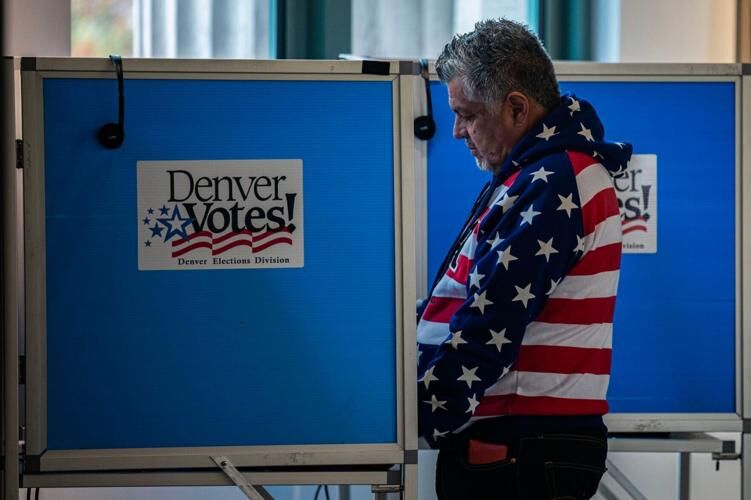
The city of Denver, along with several groups, sued the Trump administration Thursday, seeking to block U.S. Immigration and Customs Enforcement officers who are armed from polling sites during the upcoming midterm elections. In fact, there are no official orders...
Colorado doctors, dentists challenge state law on gender‑transition services in new federal lawsuit
Marissa Ventrelli
marissa.ventrelli@coloradopolitics.com
Updated 8 hours ago
A group of Christian doctors and dentists has filed a federal lawsuit challenging a Colorado law they say requires them to provide gender‑transition services that conflict with their religious and ethical beliefs. The lawsuit, filed by the Christian Medical and...
Colorado ed department must up its competence to prevent waste, fraud, abuse | Paula Noonan
Paula Noonan
paula-noonan@coloradopolitics.com
Updated 3 days ago
The Colorado Department of Education let $24 million fly from its checking accounts from January 2017 through June 2026 to CHE, aka Colorado Homeschool Enrichment. The details show how easily CHE and Education Re-Envisioned BOCES re-envisioned how to convert public...
Remember the injustice of forced unionism | GUEST COLUMN
Colorado Politics
colorado-politics@coloradopolitics.com
Updated 3 days ago
By Mark Mix This Labor Day we celebrated the men and women whose hard work keeps the country running. But in Colorado, many of those same workers face a real threat: pay union dues or lose their job. That’s because...
PREV
PREVIOUS

Colorado's ski bums on strike vs. 'Big Ski' | CALDARA
Hopefully, by the time you read this, the strike up at Telluride Ski Resort is over, ski patrollers are again joyfully sliding down mountains and getting paid for it, and tourists are once again being overcharged for… well, everything. But there are some lessons buried in this story of ski bums going all Norma Rae […]

They don't make 'em like Ben Nighthorse Campbell anymore | GABEL
There are many things to appreciate about the late Ben Nighthorse Campbell, but one of the items at the top of the list is his belief that it’s more important to kill bad bills than to sign onto a mediocre bill in the name of visibility. His time in the statehouse was the era of […]