

Aurora’s new councilmembers to focus on consent decree, decorum, public comment
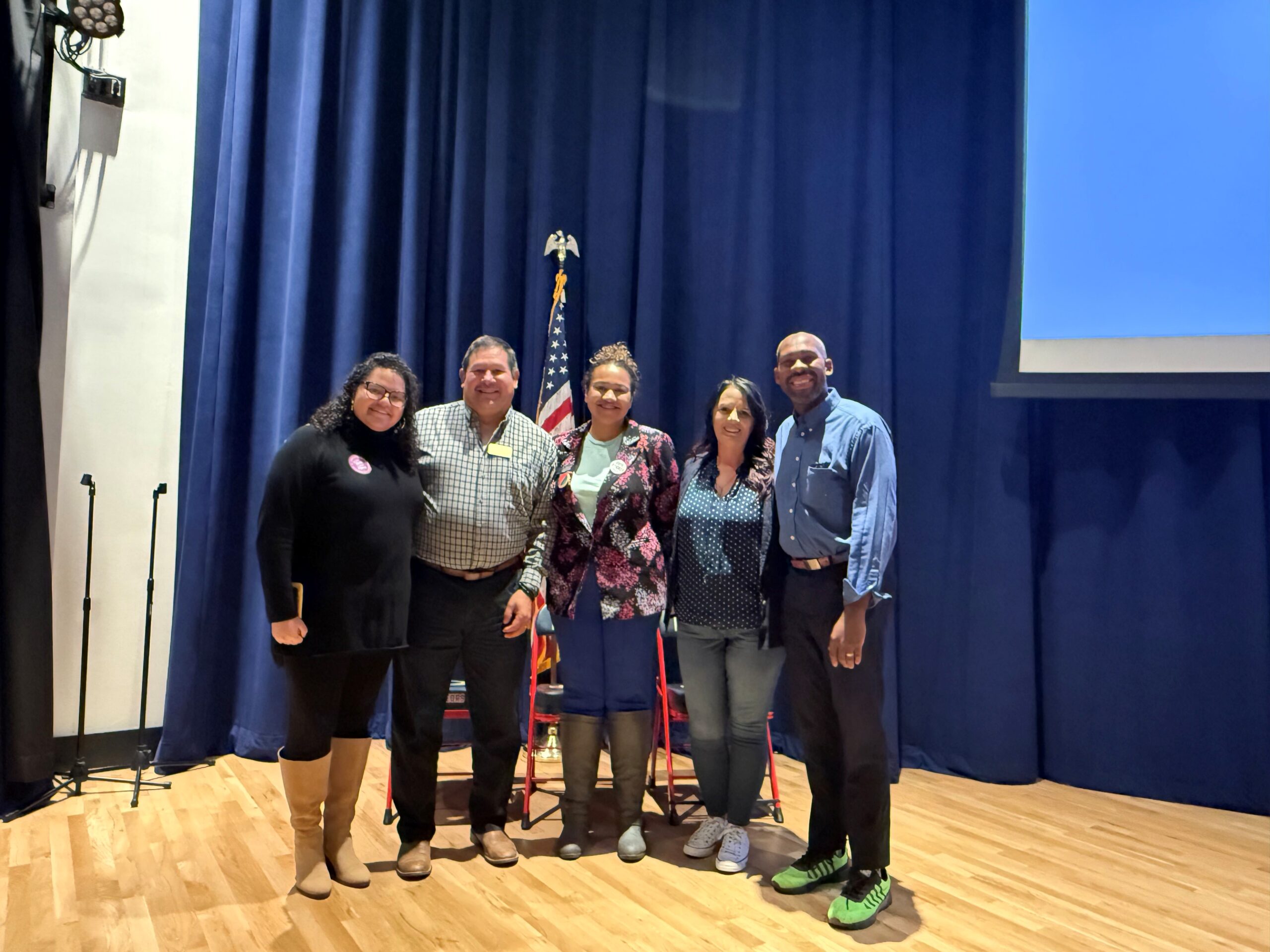
Aurora’s five new councilmembers-elect on Friday discussed policing and the consent decree, decorum among members and public comment.
The five new members, all progressive candidates, shifted Aurora’s previously seven-to-three conservative majority to a six-to-four progressive majority.
While votes are still being counted, Rob Andrews, Alli Jackson, Gianina Horton, Amy Wiles and Ruben Medina hold significant leads over their opponents.
The two new at-large councilmembers, Andrews and Jackson, are ahead of incumbents Danielle Jurinsky and Amsalu Kassaw. As of Thursday evening, Andrews had 32,606 votes (26.4%), Jackson had 32,408 (26.2%), Jurinsky had 26,480 votes (21.4%), and Kassaw had 21,730 votes (17.6%). Watson Gomes trailed with 10,380 votes (8.4%).
In Ward 1, Horton held a strong 34-point lead, with 1,873 votes (61%) over Stephen Elkins, with 824 votes (27%) as of Thursday. Reid Hettich trailed with 380 votes (12%).
Amy Wiles maintained an 18-point lead over conservative incumbent Steve Sundberg in Ward II. Wiles had 5,138 votes over Sundberg’s 4,445.
Incumbent Ruben Medina maintained his Ward III seat by a 30-point margin, with 6,015 votes (65%) over former councilmember Marsha Berzins, who got 3,179 votes.
In a news conference, the five new candidates talked about the future of the council, specifically the Aurora police, the tension over public comments and decorum on the council.
Medina’s first priority in December is nominating Councilmember Alison Coombs as mayor pro tem to get councilmembers more evenly represented on boards and commissions, he said.
In his next term, he will also prioritize mental health resources, financial stability for elderly people and opportunities for youth, he added.
“We are only as strong as our weakest link,” he said. “I want to make sure that we help each other … when we come together as a community, not only do we succeed, but the whole community succeeds.”
With a new council comes the need to review the rules for decorum, Medina said.
Having differences in opinion is OK, but, he said, councilmembers have been “nasty” to each other and that’s not a good way to lead.
“We’ve had people on council who’ve been divisive and don’t want to work with everyone,” Medina said. “I’m hopeful we can bring back some decorum and work together.”
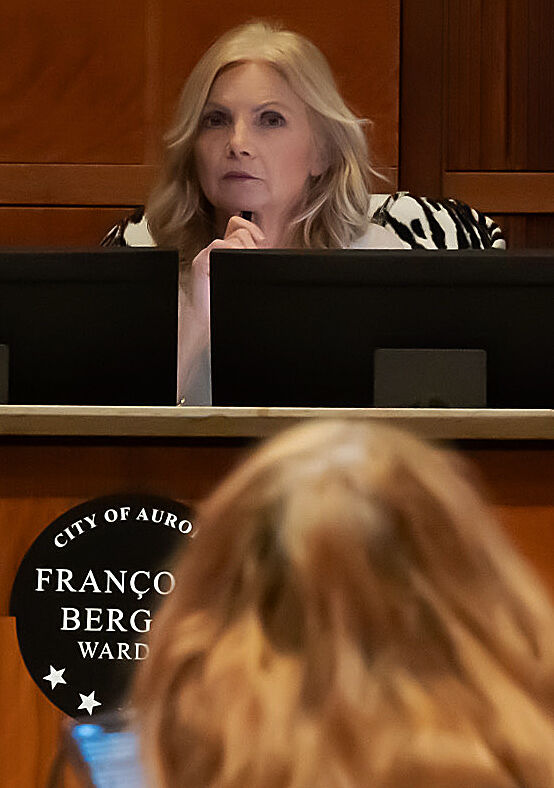
Wiles wants to address public comment first, she said.
The council has been grappling with how to deal with activists protesting the shooting of Kilyn Lewis, who was killed by an Aurora Police officer last year during an operation to arrest him on a warrant for attempted first-degree murder. Lewis was not armed.
The protesters have attended every council meeting for more than a year, often speaking over time limits and interrupting meetings.
The council has gone back and forth with in-person and video conference meetings following the Lewis protests.
“The two minutes that they get to talk right now is an insult to the community and their voices,” Wiles said. “I think we can quickly get rid of that.”
Wiles also wants to transition domestic violence cases back into Aurora Municipal Court, she said. Since July 1, all of Aurora’s domestic violence cases have gone to county courts, rather than to the city’s municipal court. Wiles called the move a “disservice to the victims.”
Aurora City Council passed the resolution in September to stop prosecuting domestic violence cases, pointing to the money the city could save in doing so.
In Ward II, specifically, Wiles wants to focus on infrastructure gaps, she said, specifically pointing to the ward’s food desert.
“We have large infrastructure gaps, we don’t have services and amenities that we need in order to live full, active lives,” Wiles said Friday. “While I love gas station hot dogs at times, we are going to get our community members a grocery store so they can eat healthy food and shop and not have to travel 9 miles away.”
Jackson wants public bathrooms and trash facilities for homeless people and the public both for the sake of helping them and helping businesses with the pressure of street cleanliness, she said.
She will also focus on bringing back full public comment right away, she said. In general, she wants to improve communication between the public and councilmembers, she said.
“As a homegrown Aurora resident, it was very intimidating engaging with City Council,” she said. “I want to break down some of those barriers.”
Horton talked about the Aurora Police Department’s consent decree with the Attorney General’s Office, saying councilmembers and city leaders need to look more closely at what accountable policing looks like.
Andrews also pointed to the consent decree as his top priority, he said.
“I want to look at how we can work on that and make sure that we make policing a little different in Aurora,” he said.
He also pointed to decorum on the city council, saying poor communication among councilmembers has been a roadblock for getting things done for the city.
“When we show up in January, it’s about service,” he said. “This about about how we can support everyone. We have some things going on in Aurora City Council we’re going to have to change … I want to make sure we’re all able to have conversations.”
Mayor Mike Coffman, a Republican, said on social media Wednesday that he looks forward to working with all of the new councilmembers-elect “to make the City of Aurora the best that it can possibly be.”
Initially, Coffman said he was “shocked” by the results.
With the council swinging left, Coffman said on election night that he worries for the city’s business community and law enforcement.
Despite his concerns, he is ready to work with new councilmembers to focus on getting things done in the city, he said. Many of those things, such as the revitalization of Colfax Avenue and the development of the homeless navigation campus, are not necessarily left-and-right issues, he said.
In Friday’s press conference, the candidates-elect all thanked voters.
“This is proof that when you give people something to believe in, they will show up and they will vote and we flipped all five seats,” Jackson said. “To our immigrant neighbors, Latinos, Asians, Palestinians … and beyond, I want you to know Aurora is your home.”

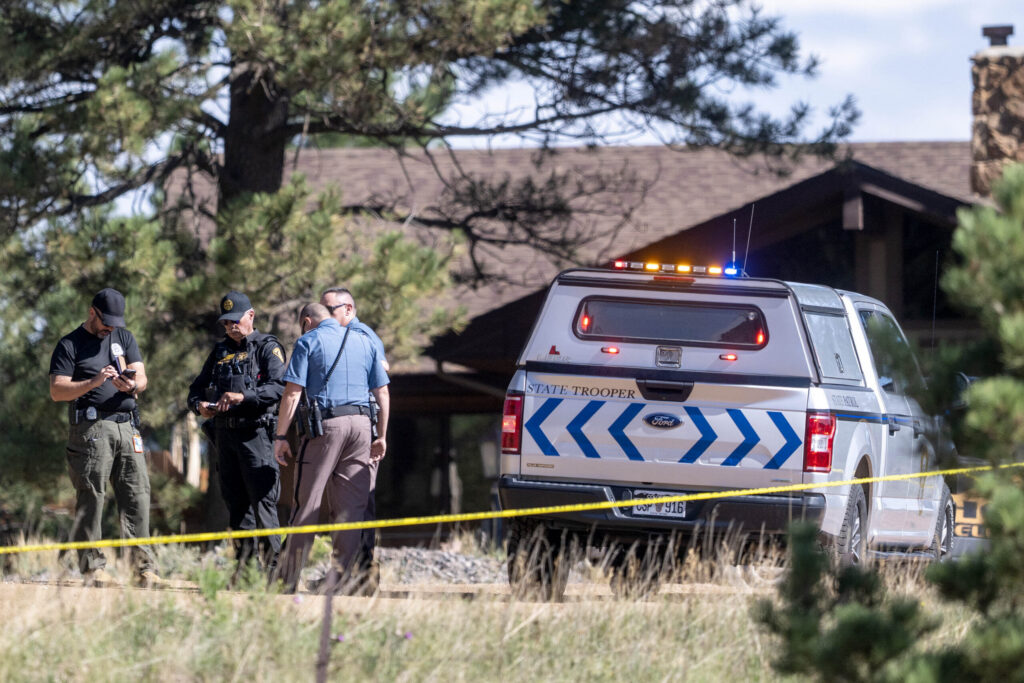
2 Colorado State troopers shot near Woodland Park; suspect killed
DEBBIE KELLEY
debbie-kelley@coloradopolitics.com
Updated 6 hours ago
Two Colorado State Patrol troopers were hospitalized, and a suspect is dead after a shooting during a traffic stop Tuesday. The initial incident happened at about 7:15 a.m., when a resident reported suspicious activity in the area near milepost 286...

Aurora moves forward with data center regulations
Kyla Pearce
kyla.pearce@gazette.com
Updated 6 hours ago
The Aurora City Council approved moving forward with two new regulations on data centers and directed staff to come back at the next study session with others. At a council meeting in early August, council members directed city management to...

Aurora City Council considers stricter food truck regulations
Kyla Pearce
kyla.pearce@gazette.com
Updated 6 hours ago
The Aurora City Council is considering passing laws to limit the number of food trucks on properties in the city and how and when they operate. Councilmember Angela Lawson, who sponsored the ordinance, said she understands the importance of food...

Denver auditor finds oversight failures in $175.6M 16th Street project
Nico Brambila
nico.brambila@denvergazette.com
Updated 6 hours ago
Surprise historic sewer discovery delayed completion a year, cost $18M The Denver Auditor recently found significant oversight and contracting problems with the $175.6 million 16th Street Improvement Project, including an $18 million contract increase and a nearly one-year extension that...

Denver Public Schools welcomes 89,000 students back to the classroom
Elizabeth Pond
elizabeth.pond@denvergazette.com
Updated 6 hours ago
A swarm of students — some happily greeting teachers and reuniting with friends, others nervously clinging to their parents’ legs and rubbing bleary eyes — kicked off the first day of the new school year on Monday at Newlon Elementary...
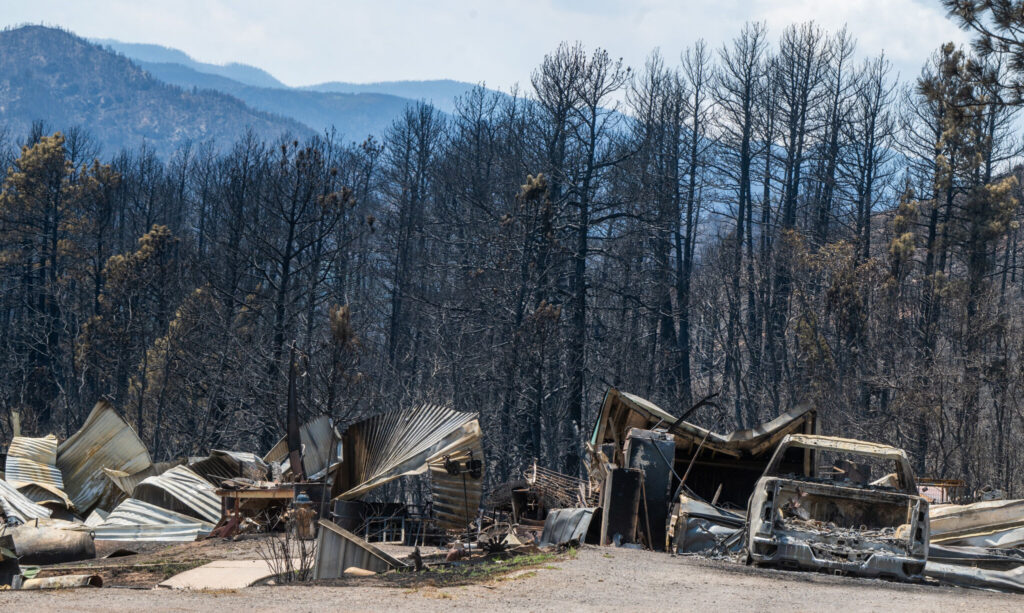
Polis requests federal disaster declaration for Colorado wildfires and floods
9News
9news@coloradopolitics.com
Updated 1 day ago
On Sunday, Gov. Jared Polis officially requested a Major Disaster Declaration from President Donald Trump and the Federal Emergency Management Agency to support recovery from two wildfires and the subsequent flooding and debris flows on both burn scars. Polis requested a declaration...

Operation Foster helps ensure troops can return home to their pets
Mary Shinn
mary-shinn@coloradopolitics.com
Updated 1 day ago
As more troops have been sent overseas, more pets are in need of temporary care while they await their owner’s return home. Operation Foster, a nationwide nonprofit, helps provide some of that care by connecting service members with volunteers willing...
Operation Foster helps ensure troops can return home to their pets
Mary Shinn
mary-shinn@coloradopolitics.com
Updated 1 day ago
As more troops have been sent overseas, more pets are in need of temporary care while they await their owner’s return home. Operation Foster, a nationwide nonprofit, helps provide some of that care by connecting service members with volunteers willing...
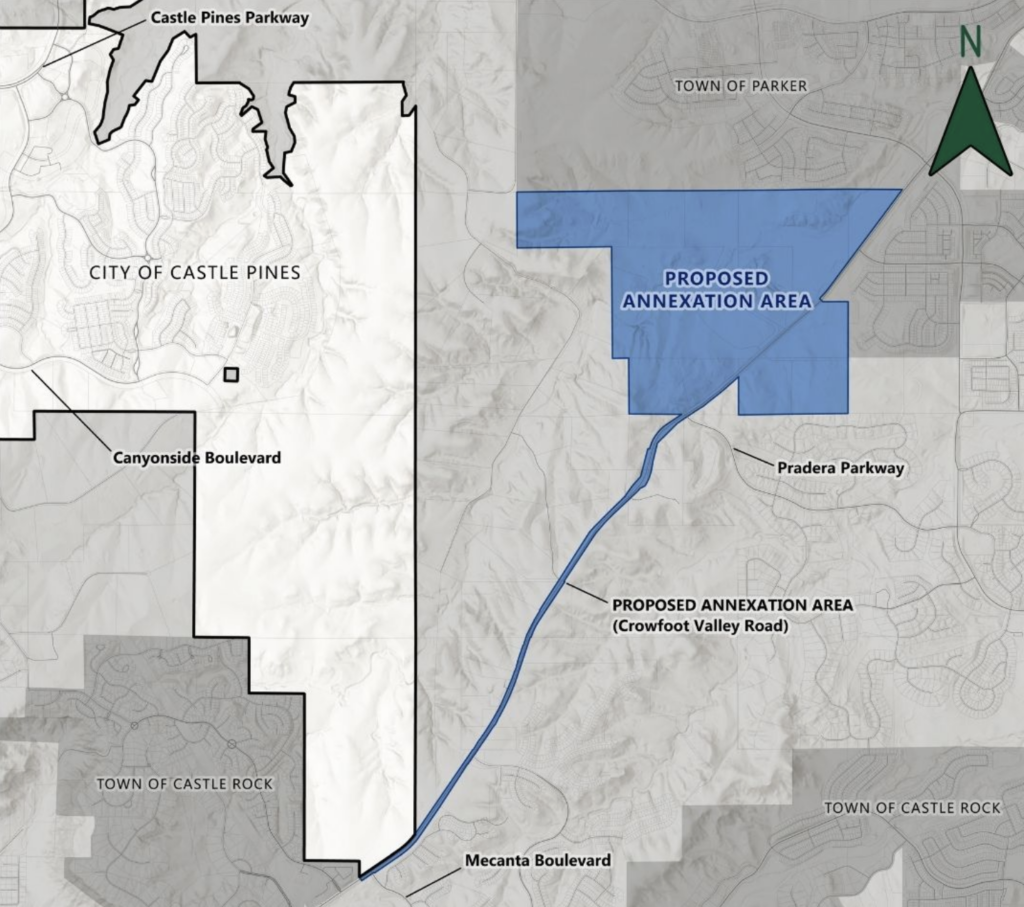
Castle Pines to hear annexation policy following moratorium on new requests
Nicholas Fogleman
nicholas.fogleman@denvergazette.com
Updated 1 day ago
The Castle Pines City Council is set to consider a proposed annexation policy Tuesday that would establish the city’s first formal framework for reviewing future annexation requests. The policy emerged after the Crowsnest annexation proposal prompted significant public debate and...
Aurora lawmakers to discuss first of new data center regulations
Kyla Pearce
kyla.pearce@gazette.com
Updated 1 day ago
Aurora’s lawmakers will discuss the specifics of data center regulations Monday night, specifically focusing on an evaporative cooling ban and zoning changes. At the last council meeting, council members approved a resolution directing city management to update data center development...
PREV
PREVIOUS

Denver City Council expected to approve city budget on Monday
Denver Mayor Mike Johnston announced that he will not exercise his veto authority and accept all 10 of the Denver City Council’s amendments to his proposed 2026 spending plan, which means his proposed $1.66 billion budget, as amended, is poised to become the city’s official budget after an official City Council vote on Monday. The […]
Federal highway funding bill forces Colorado to strengthen DUI laws; Bennet wins state’s most expensive election | A LOOK BACK
Thirty-Five Years Ago This Week: “Coloradans are being held hostage with our own tax dollars,” state Senate President Ray Powers, R-Colorado Springs, wrote in a guest editorial published in the The Colorado Statesman. Powers called the federal government “relentless in its blackmail scheme to force states to adopt federal DUI standards or face the financial […]