

10th Circuit finds judge improperly imposed 25-year mandatory minimum for kidnapping
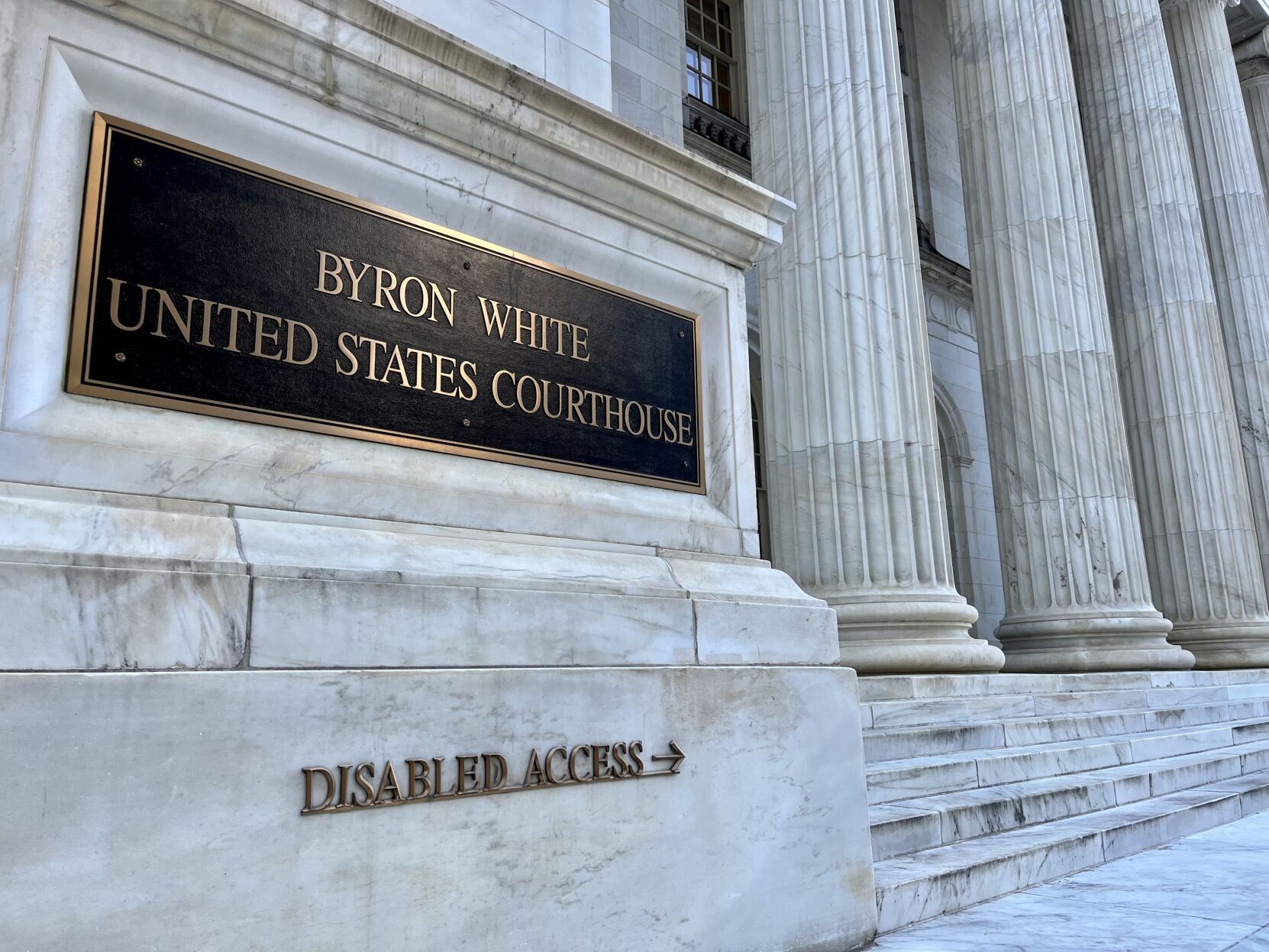
The Denver-based federal appeals court concluded on Tuesday that a judge incorrectly believed he had to sentence a defendant convicted of kidnapping to the 25-year mandatory minimum that applies to violent crime.
A jury originally convicted Killiu Ford on multiple counts of kidnapping and related offenses for his 2009 abduction and robbery of a family. He received 50 years in prison as a result.
A decade later, he successfully obtained a resentencing after the government conceded Ford’s firearm conviction could not stand.
During a November 2023 hearing before U.S. District Court Senior Judge Robert E. Blackburn, he acknowledged he could “simply subtract” the seven-year firearms sentence and leave Ford with 43 remaining years in prison.
However, Blackburn said Ford underwent “significant post-offense rehabilitation” and was “a much different man.”
“In many ways, I wish the world was a different place, and that I could impose a lesser sentence for you,” said Blackburn, but he concluded he had to resentence Ford to the 25-year mandatory minimum applicable to crimes of violence.
On appeal to the U.S. Court of Appeals for the 10th Circuit, Ford argued he should have been eligible for a lesser, 20-year sentence because kidnapping does not fit the test for violent crime.
A two-judge appellate panel agreed.
Case: United States v. Ford
Decided: October 28, 2025
Jurisdiction: U.S. District Court for Colorado
Ruling: 2-0*
Judges: David M. Ebel (author)
Jerome A. Holmes
*Stephanie K. Seymour participated in oral arguments but not the decision
Senior Judge David M. Ebel, in the Oct. 28 opinion, explained that courts must apply a “categorical approach” when determining if an offense is a violent crime. That method does not look at the facts of a given case, but whether the elements of a crime always include the use or attempted use of force.
For kidnapping, the answer was no “because kidnapping can be committed without the use of physical force,” wrote Ebel.
He elaborated that kidnapping occurs when a defendant “seizes, confines, inveigles, decoys, kidnaps, abducts, or carries away and holds for ransom or reward” another person. Although Congress imposed a 25-year mandatory minimum “if the crime of violence is kidnapping” a child, kidnapping is not categorically violent.
Courts “have consistently found that a person can commit kidnapping without the use, attempted use, or threatened use of force,” wrote Ebel. “For example, a person can commit kidnapping by inveigling — that is, luring, or enticing, or leading the person astray by false representations or promises, or other deceitful means.”
Consequently, the panel returned Ford’s case to Blackburn for a second resentencing.
Unusually, the opinion came from a two-judge panel of Ebel and Chief Judge Jerome A. Holmes because the third member, Stephanie K. Seymour, has ceased hearing cases. Seymour became the court’s longest-serving judge this year, and she participated in oral arguments in November 2024 for Ford’s case. However, the 10th Circuit’s clerk said Seymour, who was a semi-retired senior judge with a reduced caseload, since stepped away from the court.
The 10th Circuit permits panels to issue decisions with just two judges when they agree on an outcome. The court’s clerk added that all cases featuring Seymour as a panel member have been decided, and no further two-judge decisions will be issued for that reason.
The case is United States v. Ford.

10th Circuit rejects invitation for full-court review of tax-avoidance case
Michael Karlik
michael.karlik@coloradopolitics.com
Updated 32 minutes ago
The Denver-based federal appeals court declined to reconsider the standards for holding entities liable for their tax-avoidance schemes, with a majority of judges voting against full-court review on Monday. In April, a three-judge panel of the U.S. Court of Appeals...
Colorado judge blasts state forensics lab in dismissing child sex case
Jenny Deam
jenny.deam@gazette.com
Updated 2 hours ago
In a potentially widely consequential action, a Weld County district judge dismissed a child sexual assault case, citing the ongoing scandal at the Colorado Bureau of Investigation’s forensic lab that “has left a dark mark on the history of Colorado...
10th Circuit sympathetic to Colorado consumer protection law governing interest rates
Michael Karlik
michael.karlik@coloradopolitics.com
Updated 1 day ago
Members of the Denver-based federal appeals court appeared sympathetic on Tuesday to Colorado’s assertion that it can lawfully require certain out-of-state banks to abide by the state’s own ceilings on interest rates when they lend to consumers in Colorado. The...

Colorado justices to decide insurance companies’ obligation to disclose relevant policies
Michael Karlik
michael.karlik@coloradopolitics.com
Updated 2 hours ago
The Colorado Supreme Court announced on Monday that it will decide whether an insurance company violated state law by withholding an at-fault driver’s policy for nearly a year when there was no dispute that the policy was not in effect...

Judicial performance evaluations released, Montezuma County judge disciplined | COURT CRAWL
Michael Karlik
michael.karlik@coloradopolitics.com
Updated 2 days ago
Welcome to Court Crawl, Colorado Politics’ roundup of news from the third branch of government. Colorado’s citizen-led judicial performance commissions released their voter narratives for the judges standing for retention in November, plus a disciplinary panel imposed consequences on a...

DA justifies CSPD officers in fatally shooting man at McDonald’s
Cleo Westin
cleo-westin@coloradopolitics.com
Updated 1 day ago
The deadly shooting of a man by Colorado Springs police officers at a McDonald’s was ruled justified by the 4th Judicial District Attorney’s Office on Monday, the office announced in a news release. The ruling determined officers Daniel White, Mitchell...
Federal judge holds off on dismissing formerly bankrupt medical contractor from Jeffco jail death lawsuit
Michael Karlik
michael.karlik@coloradopolitics.com
Updated 22 hours ago
A federal judge declined on Monday to dismiss the formerly bankrupt medical contractor from a lawsuit over a detainee’s death in Jefferson County jail, but indicated she would do so if the plaintiffs’ attorneys go through the process to ensure...
Castle Rock caregiver sentenced after stealing more than $110,000 in jewelry from family
Nicholas Fogleman
nicholas.fogleman@denvergazette.com
Updated 1 day ago
A judge sentenced a Castle Rock caregiver to 90 days in jail after she pleaded guilty to stealing more than $110,000 worth of jewelry from the family of a disabled son under her care. Elsa Montejo-Fuentes, 32, had worked for...
Federal judge green-lights excessive force, retaliation claims for trial against Fort Collins officers
Michael Karlik
michael.karlik@coloradopolitics.com
Updated 4 days ago
A federal judge green-lit a jury trial last week against multiple Fort Collins police officers on claims that they used excessive force on one man who was standing unarmed in his underwear, and retaliated against another man for exercising his...

10th Circuit revives wage violation lawsuit against Papa John’s operator
Michael Karlik
michael.karlik@coloradopolitics.com
Updated 5 days ago
The Denver-based federal appeals court on Tuesday reinstated a former Papa John’s delivery driver’s lawsuit alleging violations of federal and state wage law. Steve Mighell worked for one month at a Denver Papa John’s location in summer 2023. He alleged...
PREV
PREVIOUS

Federal judge awards $10,000 to Supermax prisoner for guard's use of force
A federal judge took the rare step last week of concluding an incarcerated, self-represented plaintiff should be compensated $10,000 by the U.S. government for a prison guard’s unwarranted use of force. After a five-day bench trial in which Khalfan Khamis Mohamed represented himself against the government’s attorneys, U.S. District Court Senior Judge R. Brooke Jackson […]

Douglas County School District candidates rake in tens of thousands
Eight Douglas County School District Board of Education candidates vying to grab four seats raked in tens of thousands of dollars, according to their pre-election campaign finance reports. Douglas County’s school district servers more than 61,000 students among 92 schools. Four of its seven board seats are up for grabs in Tuesday’s election. Clark Callahan […]