

Illegal GLP-1 compounding puts Coloradans at risk | OPINION

By Laura Howard
In 2024, Black or African-American adults were 28% more likely to be obese than adults of the total population. This stark health disparity is one of many concerns the Colorado Council of Black Nurses works tirelessly to address.
Our organization was founded to ensure people of color and all people receive safe, equitable and quality care. We believe empowering Black nurses to not only participate but also actively contribute to the health care system will result in better care for all people. Nurses believe safety is of the utmost importance as we care for our patients, communities and speak out when our communities are suffering.
Obesity is a public health crisis. The medical community is prescribing GLP-1s, as one of many tools that can help medically manage patients’ weight loss needs. However, the increased demand for GLP-1s stateside has been accompanied by foreign actors exploiting Americans.
The popularity of GLP-1s also came with temporary domestic shortages of the active pharmaceutical ingredients (API): semaglutide and tirzepatide. During that time, the FDA allowed bulk compounding to fill the gap. Shortages have since ended, and theoretically, bulk GLP-1 compounding should have ended with it.
But that’s far from the reality.
Compounding is a “break in case of emergency” process meant to personalize a medication to meet patient need. In the most regulated compounding scenarios, there’s still an inherent risk given compounded medications are not FDA-approved.
The current market doesn’t resemble any regulated scenario.
Hundreds of illegal shipments, most containing enough API for millions of GLP-1 doses, are arriving from abroad. Despite laws to prevent these products from being accepted at ports of entry, a recent study showed four out of five illegal shipments were accepted. In the last couple years, more than 230 arrived in the U.S., and a whopping 82% were accepted.
These illicit ingredients are primarily produced and sold by manufacturers not registered with the FDA. The APIs are labeled as “for research only”, and therefore more likely to contain dangerous additives.
In some cases, the ingredients are marketed directly to consumers, who then reconstitute the raw powders and produce their own GLP-1s at home. As a medical professional, I cannot stress enough how dangerous this can be. Nothing is worth the risk to your life, and patients should talk to their primary care physician to ensure they are using FDA-approved GLP-1s.

But in most cases, these shipments are marked for compounding and then moved to telehealth companies and unregulated med spas across the country to be marketed and sold to consumers as a cheap alternative to FDA-approved GLP-1s. But despite the misleading marketing, compounded GLP-1s are not simply a generic or white label version.
What the marketing fails to mention are the serious risks that come with using non-FDA-approved GLP-1s, which don’t receive the same approval, oversight, and safety checks, nor are they required to provide the same instructions or labeling. As of July 2025, the FDA received reports of 17 deaths, more than 100 hospitalizations and more than 1,000 adverse events associated with compounded GLP-1s. These events can be caused by incorrect dosing, the addition or replacement of ingredients, or counterfeit components can lead to infection and even sepsis.
Our federal and state governments must work together to address this. Following several calls to action, including from Attorney General Phil Weiser and members of the Colorado congressional delegation, the FDA instituted a “green list” import alert that will go a long way to stopping new shipments of these dangerous ingredients.
But more can be done to address the companies using APIs already in the country and continuing to sell illegally compounded GLP-1s. The FDA recently sent warning letters to several around the country reminding them of the law. But at a state level, there can also be action, including from law enforcement and the State Board of Pharmacy to enforce laws against these companies’ practices and protect consumers from these predatory practices. This is especially important for communities of color and low-income patients targeted on social media by these companies.
As a health care professional, I cannot overstate enough the dangers associated with this unregulated market. For marginalized communities in particular, who already face barriers to safe and effective health care access, these sellers are taking advantage of people’s real medical needs and vulnerabilities. Patients deserve access to safe, effective FDA-regulated medications and must have transparency in the products being marketed to them. Safety being the number one priority will help to ensure health equity and deny predatory sellers in our community.
Laura Howard has worked in a variety of roles in her registered nursing career and is serving currently as president of the Colorado Council of Black Nurses Inc. (CCBN) and as public information officer for social action and legislation for CCBN. Howard is also a member of Chi Eta Phi, Iota Eta Chapter, a Professional Nursing Organization, and the Colorado Nurses Association.


Rediscovering the shared purpose that brings us Coloradans together again | Miller Hudson
Miller Hudson
miller-hudson@coloradopolitics.com
Updated 15 hours ago
Perhaps a good place to start considering gerrymandering is to take a closer look at Elbridge Gerry, signer of the Declaration of Independence, a member of Congress, Massachusetts governor and fifth vice president of the United States. Born in 1744,...
Colorado Republicans elect software engineer Craig Steiner to fill vacant state chairman position
Ernest Luning
ernest.luning@coloradopolitics.com
Updated 2 hours ago
The Colorado Republican Party on Saturday elected Craig Steiner to fill the party’s vacant state chair position at a state central committee meeting in Buena Vista, just over a week before primary ballots go out to voters and five months...

Pay raises for incompetence at the Colorado Capitol | Jon Caldara
Jon Caldara
jon-caldara@coloradopolitics.com
Updated 2 days ago
By Jon Caldara I am personally responsible for helping overpay socialists to make Colorado unaffordable, overregulated and one windstorm away from a power blackout. I failed you. Colorado legislators already get automatic inflation raises. You know, just like your job...

Founding documents reconnect us to our shared American roots – and rebelliousness | Vince Bzdek
Vince Bzdek
vince.bzdek@gazette.com
Updated 2 days ago
When you first lay eyes on the actual founding documents of our country that, for the first time in history, have traveled together from their gilded cages in Washington to visit us out here in the hinterlands, you’re struck not...

Attorney General Phil Weiser’s underdog campaign for Colorado governor| Cronin and Loevy
Tom Cronin Bob Loevy
tom-cronin-bob-loevy@coloradopolitics.com
Updated 2 days ago
Phil Weiser, 58, Colorado’s attorney general, is in a heated race against U.S. Sen. Michael Bennet, 61, for the Democratic nomination for governor. They are friends and share mostly similar progressive, Democratic policy views. Primary election day is June 30....

Gov. Jared Polis vetoes bill requiring disclosure from administration lobbyists
Marianne Goodland
marianne.goodland@coloradopolitics.com
Updated 2 days ago
Gov. Jared Polis on Friday vetoed a bill that would have required executive branch lobbyists to follow much of the same disclosure rules that already govern other Capitol lobbyists. Lobbyists for organizations are required to state their clients’ position on...

Gov. Jared Polis blocks Colorado Lottery’s move to allow credit card sales
Marianne Goodland
marianne.goodland@coloradopolitics.com
Updated 2 days ago
Gov. Jared Polis on Friday signed legislation to block the Colorado Lottery’s move to allow the purchase of tickets with credit cards, effectively reversing his earlier position. Last November, Polis had said that he supported the decision of the Colorado...

Colorado Democratic attorney general candidates clash over experience and Trump lawsuits
Marianne Goodland
marianne.goodland@coloradopolitics.com
Updated 3 days ago
Colorado’s four Democratic candidates for attorney general clashed sharply Thursday night in a debate that repeatedly returned to one theme — whether the state’s top lawyer should be a courtroom veteran or a political fighter. The contenders additionally sparred over...

Colorado governor signs new regulations on AI chatbots for minors
Marissa Ventrelli
marissa.ventrelli@coloradopolitics.com
Updated 3 days ago
Colorado will impose restrictions on AI chatbots used by minors after Gov. Jared Polis on Friday signed a bill requiring developers to disclose when kids are talking to a machine and block features that can mimic intimacy or encourage addictive...
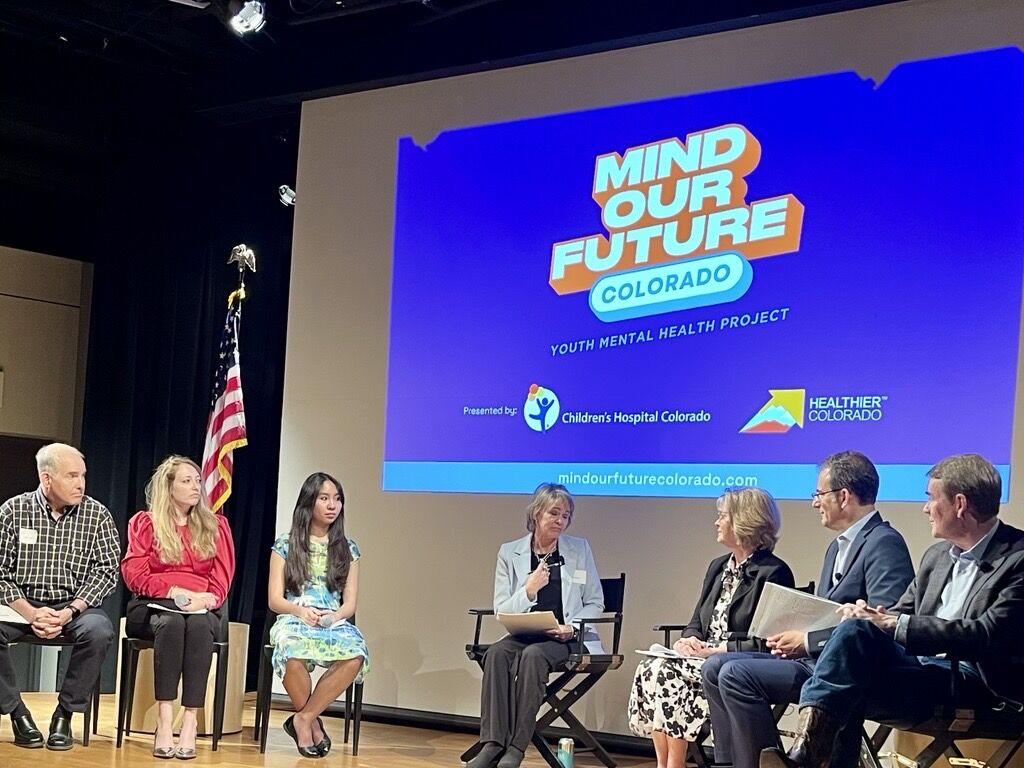
Colorado candidates for governor share plans to tackle youth mental health crisis
Marissa Ventrelli
marissa.ventrelli@coloradopolitics.com
Updated 3 days ago
Three candidates for Colorado’s highest elected office laid out their plans to address the state’s youth mental health crisis during a forum on Thursday. Democratic Attorney General Phil Weiser, U.S. Sen. Michael Bennet, and Republican State Sen. Barbara Kirkmeyer fielded...
PREV
PREVIOUS

US Fish and Wildlife Services tells Colorado: No more wolves from Canada, Alaska
Efforts by Colorado Parks and Wildlife to bring in more wolves from Canada later this year may have hit a snag after the U.S. Fish & Wildlife Service told the state it may not do so. In an Oct. 10 letter, Brian Nesvik, director of USFWS, told Gov. Jared Polis and Jeff Davis, director of […]

Colorado must set bold clean heat targets | OPINION
By Tricia Canonico, Nina Waters, and Jeffrey Woodruff Across Colorado, the effects of climate change are not abstract — they’re already reshaping our communities. In Summit County, drought and fire danger have forced difficult choices about water restrictions and emergency preparedness. In Pitkin County, ranchers along Emma Road negotiated for the last trickle of ditch water […]