

Denver explores possibilities of AI-powered cities of the future

Set to a backdrop of catchy upbeat tunes, local government officials joined global tech and policy leaders in the Denver Art Museum’s Sturm Grand Pavilion in Denver on Monday afternoon for Denver’s second city-led AI Summit.
Sporting a theme of “AI-powered cities of the future,” the high-level conclave aims to explore how governments can leverage technology to modernize government and address challenges such as housing, homelessness, permitting and more.
As major cities, such as Los Angeles and Chicago, struggle to move government forward, experts say many are banking on AI to increase efficiency and cut red tape, thereby boosting revenue.
But some stumbling blocks remain.
“I think there’s a lot of concern people have about using AI for things like benefits determinations, and what I would say is yes, they’re going to make some mistakes in that regard, but you have to remember that humans are making a lot of mistakes,” Code for America Founder Jennifer Pahlka.

Pahlka added that while researchers are working to understand how and where errors may arise, “we do want to be very careful when we are using this technology to make decisions that really impact people’s lives – there are 1000 other ways to use AI that aren’t that one really scary thing.”
Denver currently employs several artificial intelligence platforms to enhance efficiency, including the city’s chatbot, Sunny, which is used to answer questions and direct residents to city resources in more than 72 languages.
The city’s planning department also uses AI technology to map out inspection routes, leveraging the city’s existing geospatial data, saving time and resources.
Other possibilities experts cite include using AI to expedite permitting, evaluate federal tax returns and even plow through historical documents and city code.
Stanford University professor Daniel Ho, an expert on artificial intelligence and regulatory policy, detailed work his organization had done in California, where local counties were grappling with a state law that required each of the county recorders to review all of their historical deed records and identify racially restrictive covenants.
“And some counties approached this just by throwing human beings at it, Ho said. The problem is, in Santa Clara County, that’s 84 million pages of records.”
Ho said a simple AI system was developed that could quickly identify all the provisions for the restricted deeds, significantly reducing the amount of labor required to complete the task.
But looking toward the future, Ho said his hopes would be that there is an essential framework developed for governments “to be able to distinguish AI snake oil from AI to solve real public problems.”
As Denver faces a $200 million budget deficit, technology has been eyed by multiple departments as a way to help plug the hole and compensate for the reduced workforce resulting from recent layoffs.
Colorado education officials, business leaders and technology groups said they are relieved that a new state law regulating artificial intelligence has been delayed by a few months — but they remained frustrated that many of their broader worries remain unresolved.
Last year, Gov. Jared Polis signed the nation’s first law regulating “high-risk” artificial intelligence systems. While he signed the measure, he issued a rare signing statement to the Colorado General Assembly, warning them that, without fine-tuning the new regulation before it goes into effect, it would tamper with innovation in Colorado, inhibit the state’s ability to compete, and put the new technology’s full potential out of reach to residents and businesses here.
“There is the possibility for federal regulations that are consistent across states, that’s much easier for us than the state-by-state framework,” Johnston told the crowd. “What we don’t do, is anything at the state level that disadvantages our ability as a city to attract or keep technology talent across the city.”
The summit continues through Sept 30.


Denver City Council to weigh Xcel franchise, $18M move to liability fund
Deborah Grigsby
deborah.smith@denvergazette.com
Updated 10 hours ago
The Denver City Council will hold a combined courtesy hearing during its regular Monday meeting to consider a previously introduced trio of Xcel Energy measures. The first would ask voters to extend the utility company’s franchise license with the city...

Victor Marx, GOP candidate for governor, faces 100-plus campaign finance complaints
Marianne Goodland
marianne.goodland@coloradopolitics.com
Updated 3 days ago
Victor Marx’s gubernatorial campaign has been hit with more than 140 campaign finance complaints, although most have been consolidated by the state’s election office because they follow similar alleged violations. Marx faces Attorney General Phil Weiser, who won the Democratic...

DOJ sues Colorado to overturn in‑state tuition for students living in the country illegally
Marianne Goodland
marianne.goodland@coloradopolitics.com
Updated 3 days ago
The U.S. Department of Justice has sued Colorado to dismantle a decade‑old law that grants in‑state tuition to students living illegally in the United States, setting up a high‑stakes clash over immigration policy. In 2013, after more than six tries...
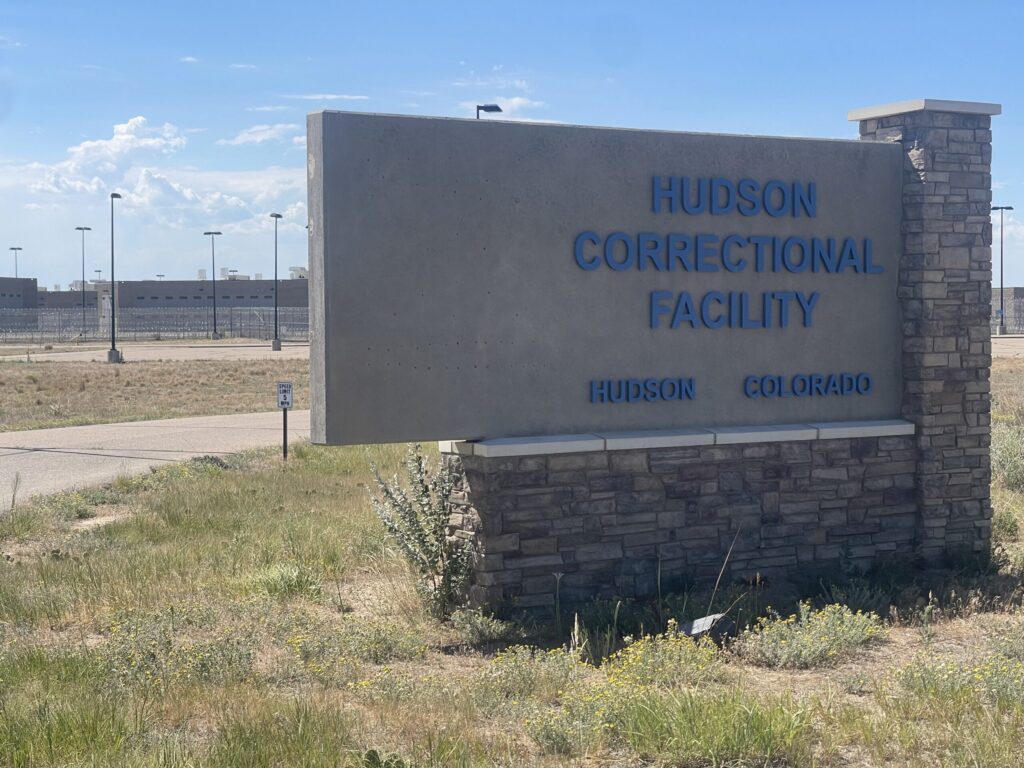
Hudson faces lawsuit over ICE detention facility
Nicole C. Brambila
nicole-c-brambila@coloradopolitics.com
Updated 3 days ago
A nonprofit organization filed a lawsuit against the Town of Hudson Wednesday, challenging plans to reopen a former federal prison in the town as a U.S. Immigration and Customs Enforcement detention facility. Together Colorado, along with Janet E. Carlson, filed...

Jefferson County to fill commissioner vacancy after Dahlkemper tapped for lieutenant governor
Matt Kyle
matt.kyle@denvergazette.com
Updated 4 days ago
Democratic gubernatorial nominee Phil Weiser on Wednesday announced that Jefferson County Commissioner Lesley Dahlkemper would be his lieutenant governor, meaning she would be leaving her commissioner seat open should he win the race in November. However, Dahlkemper’s term was already...

Denver approves new downtown pedestrian bridge connecting LoDo, Ball Arena
Deborah Grigsby
deborah.smith@denvergazette.com
Updated 3 days ago
Denver has approved a no-cost intergovernmental agreement with two metropolitan districts for a new pedestrian and bicycle bridge over Speer Boulevard. The Denver City Council resolution, approved Monday, allows Kroenke Sports and Entertainment Metropolitan Districts No. 2 and No. 3...

Aurora’s largest single water user on track to exceed allocation amid drought restrictions
Kyla Pearce
kyla.pearce@gazette.com
Updated 3 days ago
Aurora’s largest single water user, Niagara Bottling, met with city officials last week to address water allocations amid drought restrictions. The company has not used more than its allotted amount yet this year but is trending in that direction, according...

Castle Rock to review use of Flock license plate readers
Nicholas Fogleman
nicholas.fogleman@denvergazette.com
Updated 3 days ago
The Castle Rock Town Council is reviewing its use of Flock license plate readers after directing staff to prepare a report comparing the company’s data policies with those of its competitors. Councilmember Max Brooks, who raised the issue, emphasized that...

Castle Rock implements mandatory Stage 2 water restrictions
Nicholas Fogleman
nicholas.fogleman@denvergazette.com
Updated 3 days ago
Castle Rock moved into mandatory Stage 2 drought restrictions Wednesday as ongoing dry conditions and continued high water demand strain the town’s water supplies. Under the restrictions, customers must follow a mandatory two-day-per-week outdoor watering schedule. Customer water budgets will...
Details emerge after teen motorcycle parental consent bill is set to become law in Colorado
Marianne Goodland
marianne.goodland@coloradopolitics.com
Updated 4 days ago
Gov. Jared Polis this year signed a bill that requires minors to obtain parental consent for a motorcycle instruction permit — legislation inspired by a young man who almost died in a crash last year. The measure, House Bill 26-1079,...
PREV
PREVIOUS
Congressional leaders leave White House meeting without deal to avoid government shutdown
WASHINGTON (AP) — A government shutdown fast approaching, Democratic and Republican congressional leaders left a White House meeting with President Donald Trump Monday afternoon showing no sign of compromising from their entrenched positions in order to avoid a lapse in funding. If government funding legislation isn’t passed by Congress and signed by Trump on Tuesday […]

House District 14 vacancy process deemed insufficient by Colorado Secretary of State, requires a redo
Colorado Secretary of State Jena Griswold has rejected the nominating paperwork for the vacancy in House District 14. On Sept. 22, a Republican vacancy committee met to choose a replacement for former Rep. Rose Pugliese of Colorado Springs. The issue, according to Griswold’s office, is the notice to inform the vacancy committee about the meeting. […]