

Complaints via RTD app sees drop — here’s what passengers are noticing

Reports of crime and drug use on Regional Transportation District public buses, trains and at stations have been trending downward since the beginning of 2024, though actual citations increased this year, according to police data reviewed by The Denver Gazette.
The increase in citations resulted from a surge in enforcement activities, the data showed.
And, at least once this year, illegal drug use wasn’t the top complaint among riders of metro Denver’s transit system, a drop that authorities attributed to more police visibility and an increase in ridership.
Instead, the “other” category topped the list — at least for the month of June.
“I asked our officers and our security officers to be back on the trains, be visible, checking the fares,” RTD’s police chief, Steve Martingano, told The Denver Gazette.

Between Jan. 1 and June 30 this year, the number of reports tracked on the RTD Transit Watch app averaged about 276 incident reports a month. By comparison, that number was 483 in the first six months of 2024, according to RTD’s security metrics dashboard.
Customers have been reporting suspicious activities via the software on their phones, and the reports are then sent to RTD’s police agency.
The data showed that most incidents reported occurred at bus stops or train stations. Light rail trains, compared to buses or the commuter rail lines, also experienced the most complaints.
“Whatever challenges or problems are happening near a stop or station will most certainly impact the agency’s buses and trains,” RTD General Manager and CEO Debra Johnson said in a March statement responding to a drop in security-related calls.
In the past, RTD officials have said societal woes — crime, drug use, other issues — will seep into transit systems, effectively arguing that the problems occurring on buses or trains reflect the challenges communities face.
Historically, the most popular RTD complaint is illegal drug use.
In the first six months of 2024, illegal drug use complaints averaged 261 reports a month. For the first six months of 2025, that number dropped to 80, which coincided with the overall drop in total complaints.
“The Transit Watch app,” Martingano said, in addition to calls for service, has “become our eyes and ears to let us know what customers are seeing.”
What are RTD customers noticing?
Illegal drug use reports still far exceeded other complaints when looking at the accumulation of data since the beginning of 2024.
In March 2024, for example, RTD’s dashboard showed that number topping at 319. That coincided with a high number of total complaints that month, including drug use and other activities, at 590.
The number of drug use complaints dropped to 99 in March of this year.
Other complaints often deal with safety hazards, fighting, disturbances and suspicious activities, according to RTD’s security database.
The decrease in all incident reports, Martingano said, is collaborated by a “huge reductions in overall criminal incidents throughout our system to begin with.”
RTD’s dashboard categorizes “other” incident reports, which topped at 72 in June — meaning it’s the first time since October that illegal drugs use isn’t the most reported category.
All told, RTD has seen a 70% reduction in drug incidents, 35% reductions in criminal incidents, while fare enforcement increased by 500% since from July of 2024 to July of this year, according to the RTD police chief.
“We’re out there. We’re being visible. We’ve listened to our customers,” Martingano said.
RTD has approximately 100 officers in its police department.
Reports tracked in the RTD security database are solicitation or aggressive panhandling, property crimes, theft, ADA assistance, electric bike or scooter issues, elevator or escalator problems, indecent exposure, noise complaints, property crimes, graffiti, sexual assault, sexual harassment, suspicious activity with a vehicle and unattended bags.
RTD also tracks whenever someone calls security for any reason.
In 2024, RTD’s police agency received 43,000 security-related calls for service. In the first half of 2025, RTD has received 17,402, according to the database.
RTD focuses on fare violations
RTD authorities have amped up its enforcement actions, including fare violations.
In fact, fare violations has become the most popular type of warning or citation issued, according to the RTD police data obtained through a records request by The Denver Gazette.
Between January and June 2024, the number of citations, suspensions and warnings issued had averaged 496 a month. Between July and the end of 2024, those numbers averaged 544.
Between January and the end of June this year, however, RTD averaged 1,052 warnings, citations or suspensions a month.
The vast majority of these enforcement actions are for “failure to present a transit pass,” according to the data.
“RTD has increased its fare checks by over 500% since May 2024 to ensure individuals on light rail and commuter rail trains are customers who have paid fare to board,” an RTD spokesperson told The Denver Gazette.
This year, onboard officers have so far conducted between 300,000 and 400,000 fare checks a month on all rail systems, according to transit officials.
About 6% of rail passengers didn’t pay on RTD light rail or commuter lines in 2024, according to an internal RTD review from last year. First-time fare violators are given a warning, while a second violation means a citation. The third will result in a 30-day suspension from RTD services.
Officials said the increase in fare checks have subsequently led to an increase in warnings and citations.
RTD authorities hand out suspensions for most drug violations, compared to other violations, which are mostly met with just a warning, the data showed.
Reflecting the decrease in total complaints, drug use citations are also trending downward.
In the first six months of 2024, RTD police dished out an average 27 suspensions, citations or warnings a month for drug use or possession. Of the first six months this year, drug-related enforcement actions averaged 18 a month, according to RTD numbers.

Drug reports typically involve fentanyl or other hard drugs, while marijuana reports aren’t as common, according to transit authorities.
“Whether a customer is waiting for a connection or traveling to their destination, RTD is doubling down on its efforts to ensure their journey is seamless, comfortable, and convenient,” Johnson, RTD’s CEO, previously said.


Colorado to get $615M from Meta child safety settlement
Thelma Grimes
thelma.grimes@coloradopolitics.com
Updated 3 hours ago
The parent company of Facebook and Instagram will pay hundreds of millions of dollars to Colorado, part of an $18 billion multistate deal, in which the company also agreed to adopt extensive child-safety changes to its operations. The settlement ended...
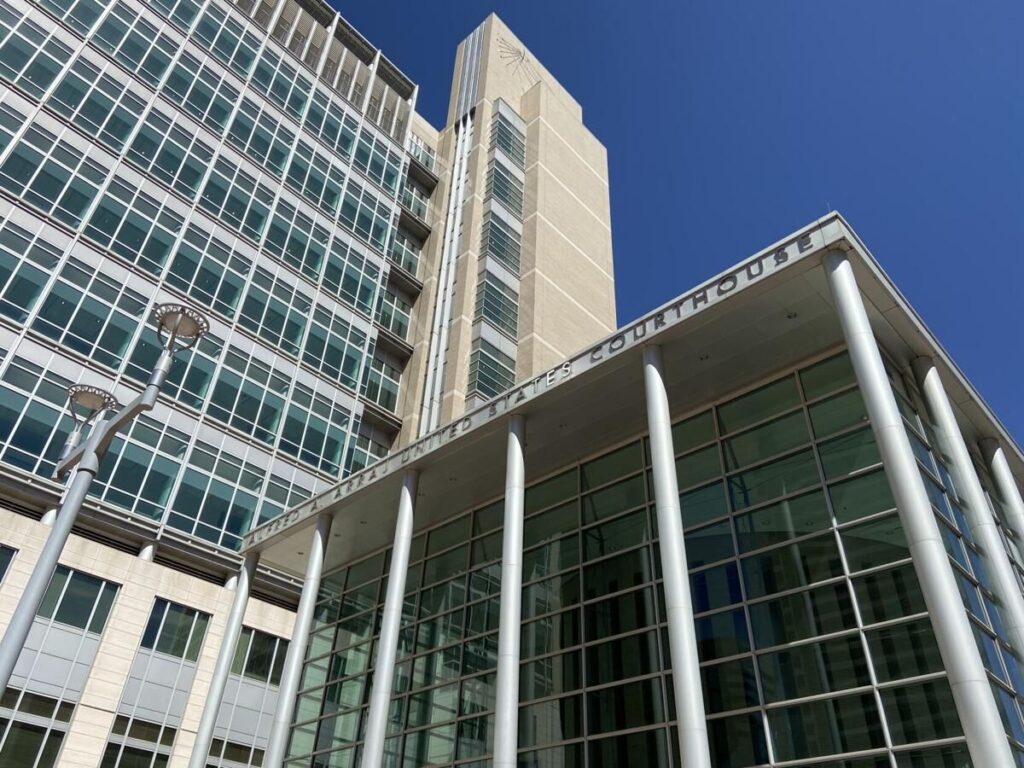
Colorado’s chief federal judge orders return of wrongfully deported man, second judge to explore ‘series’ of violations
Michael Karlik
michael.karlik@coloradopolitics.com
Updated 6 hours ago
Colorado’s chief federal judge took the extraordinary step of directing the government on Tuesday to do everything it can to return a man it deported in violation of his order. At the same time, Colorado’s chief magistrate judge has set...

Counties warn CPW that new comment limits sideline local governments
Marianne Goodland
marianne.goodland@coloradopolitics.com
Updated 3 hours ago
The September meeting of the Colorado Parks and Wildlife Commission will feature newly revised public‑comment rules — changes introduced by chair Jay Tutchton of Bent County, who announced them without first discussing the revisions publicly with the rest of the...

Controversial two-bag furbearer limit heads to CPW meeting under legal threat
Marianne Goodland
marianne.goodland@coloradopolitics.com
Updated 3 hours ago
Next week’s Colorado Parks and Wildlife Commission meeting in La Junta is likely to open under the cloud of threatened legal action. Safari Club International and the Sportsmen’s Alliance Foundation warned the commission this month that its July vote imposing...

Dan Haley on the role of oil and gas in Colorado’s energy future | The OpEdge Podcast
Tony Olivero
tony.olivero@gazette.com
Updated 7 hours ago
Dan Haley, executive director of Coloradans for Responsible Energy Development, joins The OpEdge to discuss the role of oil and natural gas in Colorado’s energy future amid the state’s aggressive push toward “net zero.” Haley tells host and investigative columnist...

Dance pros and their celebrity partners give it their all at 16th Dancing with the Denver Stars | NONPROFIT REGISTER
Joanne Davidson Special to Colorado Politics
joanne-davidson-special-to-colorado-politics@coloradopolitics.com
Updated 7 hours ago
CLEO PARKER ROBINSON DANCE Denver News: Take 13 community and business leaders, pair them with members of the Cleo Parker Robinson Dance Ensemble and its Cleo II dance artists for a four-month intensive course in moving to the music and what do you...

On a night packed with events, this fundraiser did very well | NONPROFIT REGISTER
Joanne Davidson Special to Colorado Politics
joanne-davidson-special-to-colorado-politics@coloradopolitics.com
Updated 7 hours ago
DENVER ZOO CONSERVATION ALLIANCE Denver ews: There were at least three other major events taking place on Aug. 22, the night when the Denver Zoo Conservation Alliance hosted its annual Flock Party: Cleo Parker Robinson’s Dancing with the Denver Stars, the Morgan...

Golden to pay $155,000 to fired city manager
Matt Kyle
matt.kyle@denvergazette.com
Updated 5 hours ago
The Golden City Council on Tuesday approved a roughly $155,000 severance payout to former city manager Scott Vargo, who was fired earlier this month following a “racist incident” at a city fire station. The payout is part of a separation...

Third ‘Pepper ‘Em with Love’ gala gave 500 guests a rockin’ good time | NONPROFIT REGISTER
Joanne Davidson Special to Colorado Politics
joanne-davidson-special-to-colorado-politics@coloradopolitics.com
Updated 7 hours ago
PEPPER’S SENIOR DOG SANCTUARY Littleton News: There was so much to love about Pepper ‘Em with Love, the Aug. 19 fundraising gala for Pepper’s Senior Dog Sanctuary, that it’s hard to know where to begin or what not to overlook. But we’ll try. About...

Trump says the US doesn’t need Canada. America’s economy says otherwise.
The Associated Press
the-associated-press@coloradopolitics.com
Updated 7 hours ago
TORONTO (AP) — U.S. President Donald Trump says his country does not need Canada. But every day, roughly 4 million barrels of Canadian crude oil flow south, helping fuel American cars, trucks and airplanes and supply U.S. industry. And oil...