

Rural Reckoning | Colorado highways are crumbling, and so is the funding to fix them

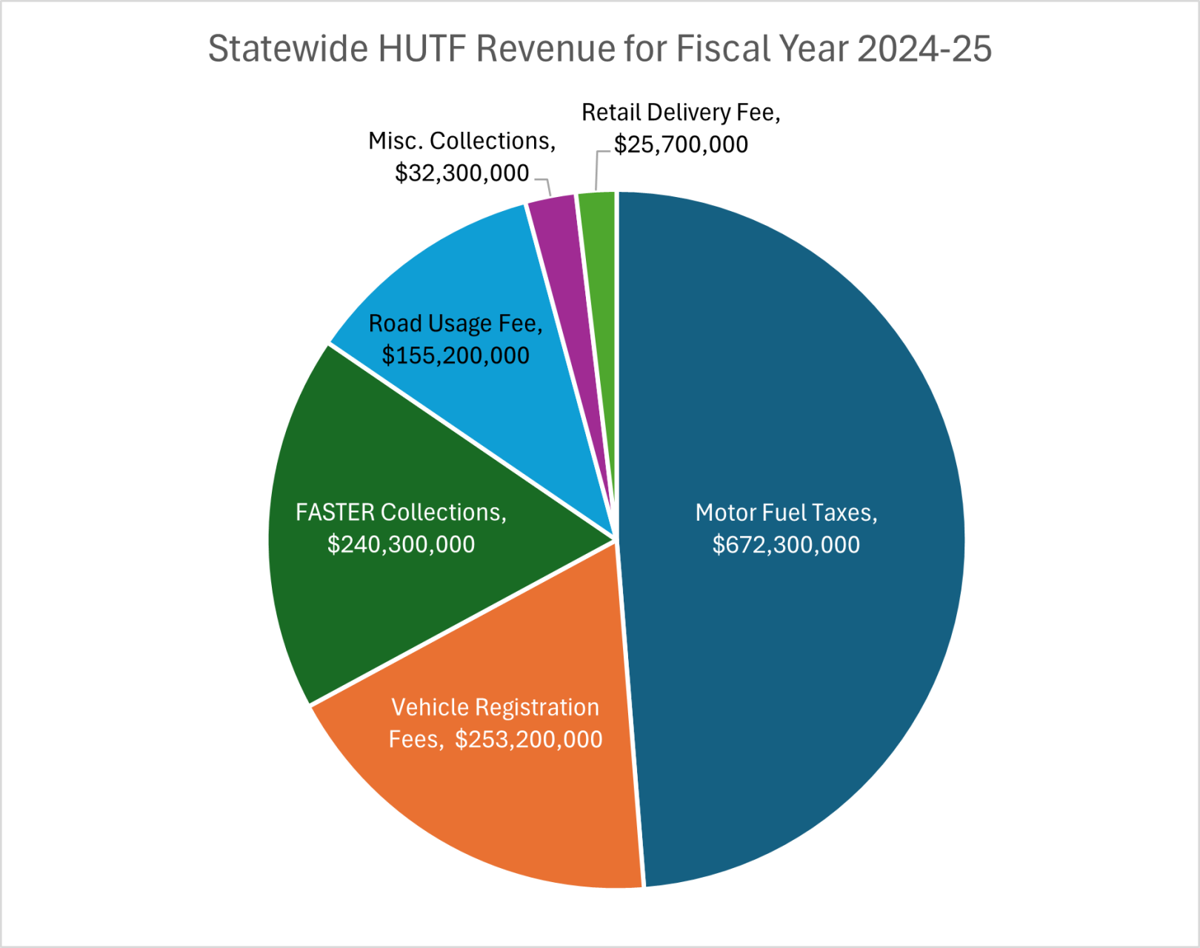
A breakdown of Colorado's Fiscal Year 2024-25 Highway User Tax Fund revenue, data courtesy of the Colorado Department of Transportation. (Michael Braithwaite / The Denver Gazette)
Michael Braithwaite / The Denver Gazette

Rising costs, stagnant funding
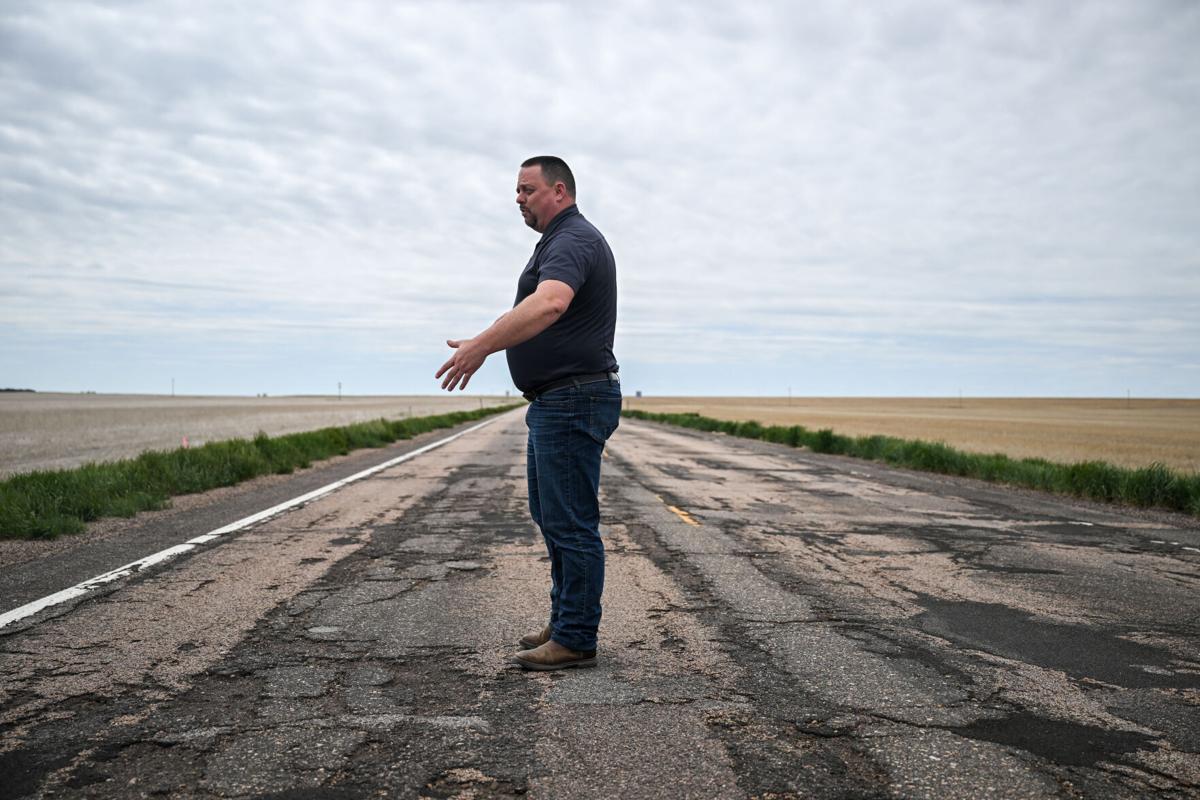
Colorado highways across the state are falling into disarray. Gas tax revenue to fund upkeep has flattened while the cost to maintain and build roads has soared, industry experts said. The state also stripped its infrastructure improvement fund to help plug a $1 billion shortfall in the 2025-26 budget. In March, the state’s Joint Budget Committee slashed more than $140 million initially allocated to the Colorado Department of Transportation (CDOT) for infrastructure improvements, including more than $65 million of state highway funds. While most state departments saw budget reductions due to the deficit, CDOT’s funding suffered the most at a time when, many said, Colorado’s highways are in significant need of repair. In March, the Reason Foundation — a nonpartisan public policy research think tank — published its annual national highway report. Among all 50 states, Colorado’s highway system ranked No. 43 in the country in terms of cost effectiveness and condition. The quality of Colorado’s highways has not always been so poor compared to other states. But Colorado has experienced a steady decline since 2018, when the state was ranked No. 31. On its 2022 Transportation Asset Management Plan, CDOT estimated that it would need an additional $284 million annually to bring 80% of the state’s pavement up to a “high” or “moderate” drivability life within the decade. That estimated need makes up nearly a quarter of the department’s $806 million 2025-26 capital construction budget, which includes all 10-year plans, according to a CDOT budget presentation from March. Since 1991, most of Colorado’s highway funding has come from the state’s motor gas tax of 22 cents per gallon, with the collected revenue deposited into the state’s Highway Users Tax Fund (HUTF). The HUTF acts as a collection point from which money is distributed into the State Highway Fund, as well as local cities and counties for their roadway projects, such as repaving a town’s main street. But that tax rate has not increased in nearly 35 years, even with inflation and a lot more vehicles on the road. While the state’s gas tax income has increased by about $100 million since 2002, Colorado’s total vehicle registrations have more than doubled over the same time frame, according to data from the Bureau of Transportation Statistics. As a result, the state’s annual gas tax revenue per registered vehicle has dropped by more than half over the past two decades — a decline made worse by the growing number of fuel-efficient and electric cars, which also reduces the amount of tax revenue collected. In addition to a more than 50% drop in per-vehicle gas tax revenue over the past 20 years, recent inflation in construction material and labor costs has significantly reduced the purchasing power of that revenue. “Since 2021, we’ve had about 46% construction cost-indexed inflation,” said Tony Milo, executive director of the Colorado Contractors Association. “The money is only going half as far as it used to four or five years ago.”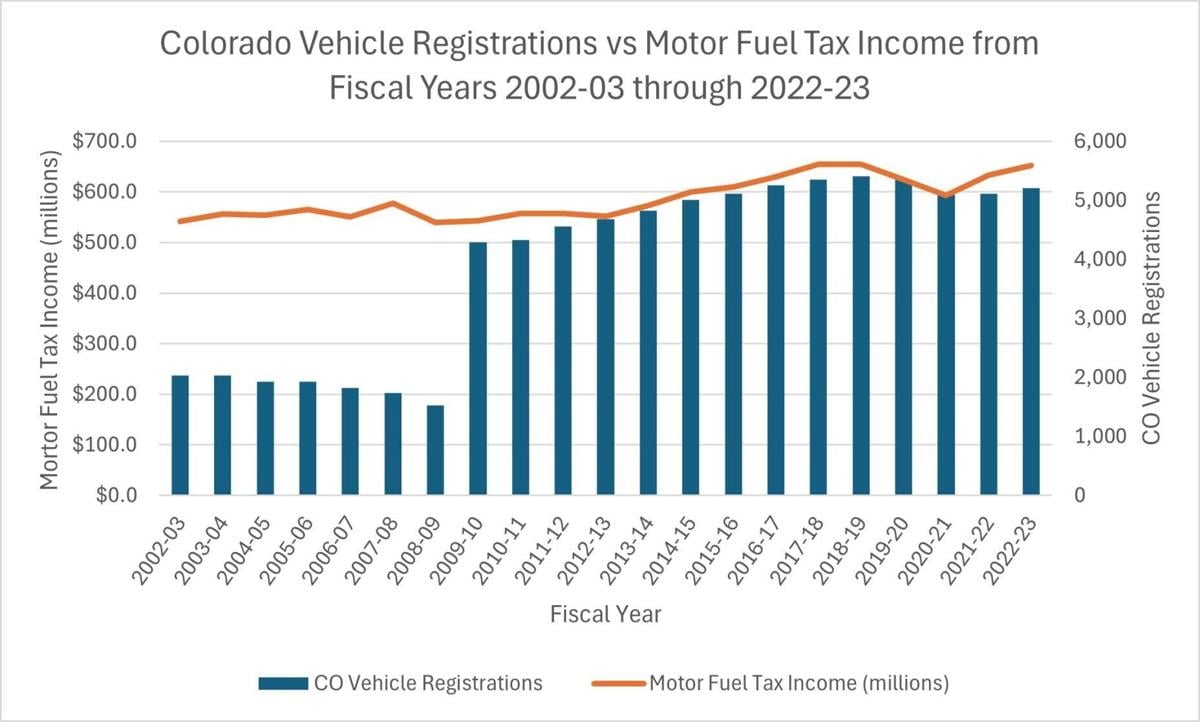
A chart illustrating the comparison between the number of motor vehicles registered each fiscal year in Colorado vs the amount of gas tax revenue collected that year in millions, from fiscal years 2002-03 through 2022-23. Data courtesy of the Bureau of Transportation Statistics and the Colorado General Assembly . (Michael Braithwaite / The Denver Gazette)
Michael Braithwaite / The Denver Gazette

A patchwork of solutions
Contractors play a significant role in the state’s roadway infrastructure projects. By state law, CDOT cannot use its maintenance staff for projects costing more than $250,000, instead sending them out for contractors to bid, said CDOT’s Region 4 Director Heather Paddock. “It’s a lot more expensive for us to hire out contractors, but they can do the jobs faster, they have more resources, they have heavier equipment,” Paddock said. “Those $5 million jobs to the $500 million jobs, we don’t have the staff to source anything like that.” Between a lack of staffing and declining HUTF revenue, CDOT cannot fully complete many roadway projects, Paddock said. “I might have $7 million programmed for a project where we want to get 12 miles done, but when we look at it, we can only do about five miles with the money we have,” Paddock said. “We could pull funds from another project, but if we do that, then we’re killing it to add to this one.”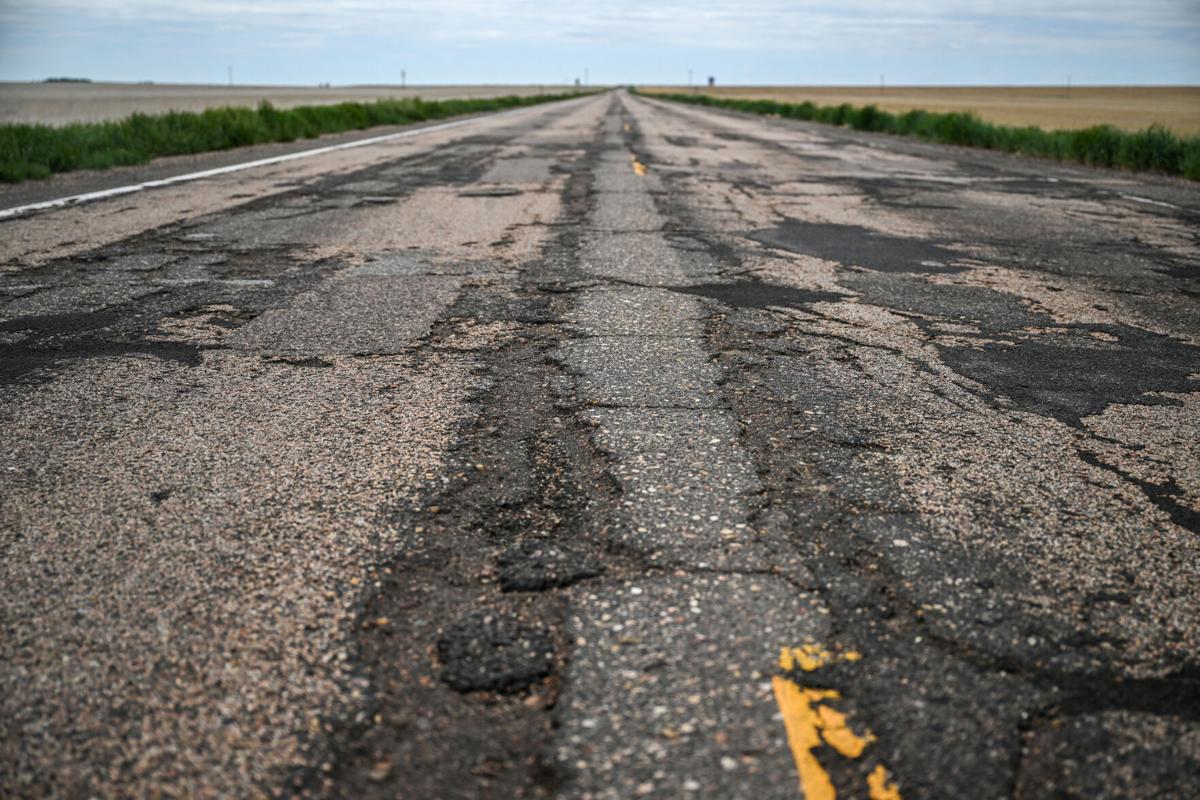
Potholes in the center of Highway 34 near Sterling on Thursday, May 22, 2025. Colorado Senator Byron Pelton (R), led the media on a tour through his district to show the state of the roads. (Stephen Swofford, Denver Gazette)

Colorado Senator Byron Pelton (R), shows the state of Highway 34 in his district on Thursday, May 22, 2025. (Stephen Swofford, Denver Gazette)

- One set of fees was imposed on electric motor vehicles for vehicle registration and road usage.
- Another set was leveled on gas-and-diesel sales, running in conjunction with the standard gas tax, phased in over a decade from fiscal years 2022-23 through 2031-32, with the fees being adjusted at that point to generate the same amount of revenue that would be generated by indexing the existing taxes to the construction cost inflation.
- Additional fees would be imposed on deliveries from motor vehicles that include personal property subject to the state sales tax, collected by the seller from the buyer of the product.
- Gas taxes still made up nearly half of CDOT’s $1.4 billion budget in the 2024-25 HUTF budget, according to a department budget presentation. The combined income from the vehicle registration fee, road usage fee and retail delivery fee made up an additional 31%.
- Fees from the FASTER program — enacted in 2009 to provide additional funding for state roadway safety — make up about 17% of the overall revenue.
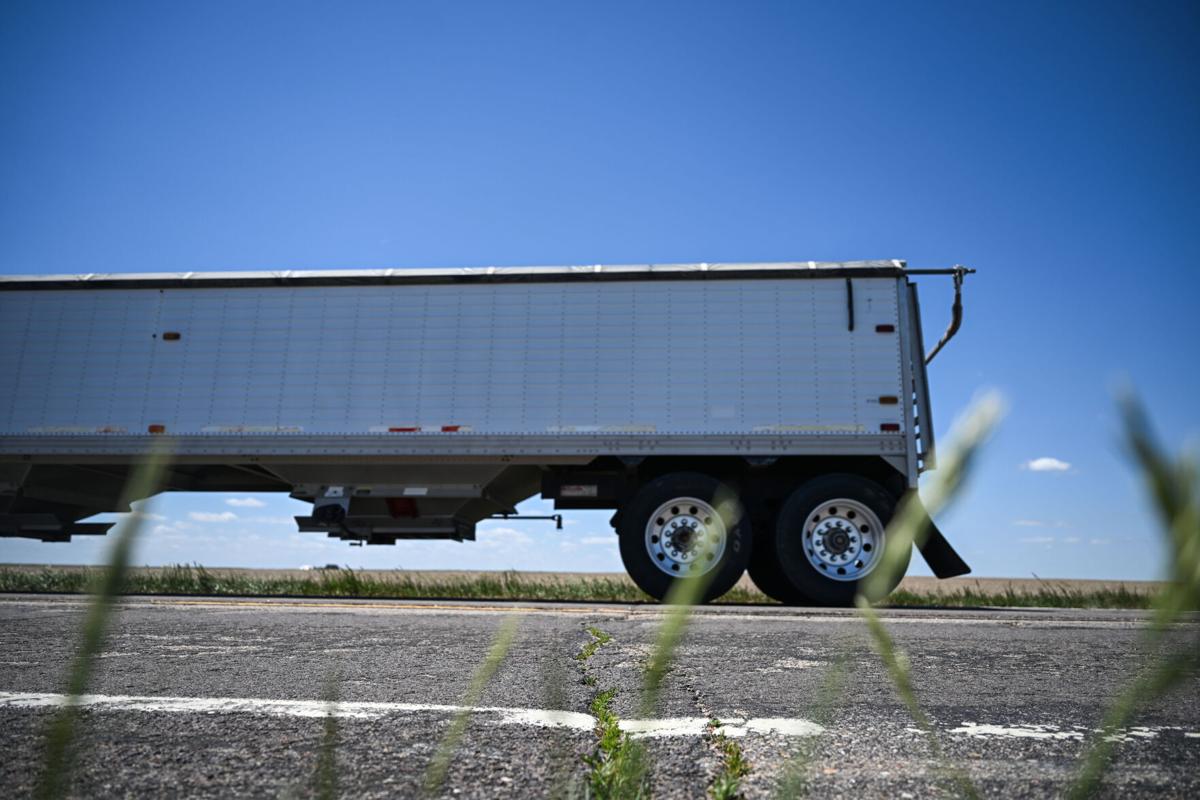
A truck drives over a crack in Highway 61 near Sterling on Thursday, May 22, 2025. Colorado Senator Byron Pelton (R), led the media on a tour through his district to show the state of the roads. (Stephen Swofford, Denver Gazette)

Local agencies pick up maintenance operations
Colorado’s varied geography — from mountainous passes to level plains — makes the state’s terrain relatively inhibitive to roadbuilding compared to other parts of the country. Within the state, extreme temperature swings can sometimes occur within a few hours, sometimes allowing for water to quickly freeze overnight, even during warmer parts of the year. “We have a massive freeze-thaw cycle here in Colorado,” said Andy Heiber, a professor at Colorado State University and longtime veteran of the state’s road construction industry. “Especially in rural areas where not all snow and everything is removed quickly, that cycle is exacerbated.” With that cycle being more pronounced in Colorado, it also leads to more damage more quickly on roadways that are not properly maintained, Heiber added. “There’s a sweet spot on all roadways where you should do maintenance,” Heiber said. “You can get put into a box in a hurry (because) you’ve got to be on a five-year plan, if you’re not in the plan, there’s no chance you’re going to get funding for that roadway.” In addition to teaching, a role he just began in the past year, Heiber works for a company called Rock Salt Consulting Group, which helps staff engineers and inspectors on roadway infrastructure projects. One of the company’s largest clients is CDOT. From his position, Heiber noted that he’s seen a significant shift in the way that CDOT has handled state highway maintenance in recent years. “I used to see eight to 12 projects out of the up-north-part of CDOT that were pure CDOT roadways,” Heiber said. “This year, I was just talking with a co-worker. We’ve got about four CDOT projects but 10 local agency ones. Those local agencies are the ones handling those rural highways a lot of the time.” Part of the reason is that CDOT’s responsibilities for maintaining the roads include a variety of tasks not directly related to the pavement’s condition, Paddock said. “When you look at our maintenance budget, my region has about $40 million annually to tackle 6,700 lane miles,” Paddock said. “In addition to doing pavement repairs, what they spend a lot of time doing is plowing snow, replacing guardrails, mowing grass, refreshing striping … they’ve got a lot of duties.” Paddock added that the department receives a high volume of phone calls every spring after the freeze-thaw cycle ends and the cracks have turned into potholes. He said that, ultimately, they will prioritize projects that allow them to spend efficiently. “We try to put dollars to either the areas with the worst conditions first or where we can get the biggest bang for that dollar, asking what treatment will give us the longevity we’re looking for,” Paddock said. Local agencies having a heavier hand in roadwork makes sense to Pelton, who noted that the awareness of CDOT’s lack of transportation funding has led to skepticism in rural communities that the department will be able to finish projects. “Our No. 1 job as a local municipality is to keep roads and infrastructure in working condition,” Pelton said. “That’s our economy, especially out here in these rural areas.” East of the state’s Front Range, rural parts of Colorado are heavily reliant on agriculture for their economies. Colorado is ranked No. 5 in the country for cattle and third for sheep and lambs, with several crops — barley, beans, and potatoes, to name a few — also in the top 10 list nationwide in terms of production, according to a report from the U.S. Department of Agriculture. Not only are the roads traversing eastern Colorado crucial to an agricultural economy that relies on them for transporting goods, they tend to deteriorate more quickly due to the weight of the vehicles routinely driving on them, when compared to roads in the Denver metro area, Paddock said, who also noted that only a limited number of roads connect eastern Colorado cities and counties. “I will be honest, we just don’t have enough dollars to actually aggressively tackle the problem that exists out there,” Paddock said.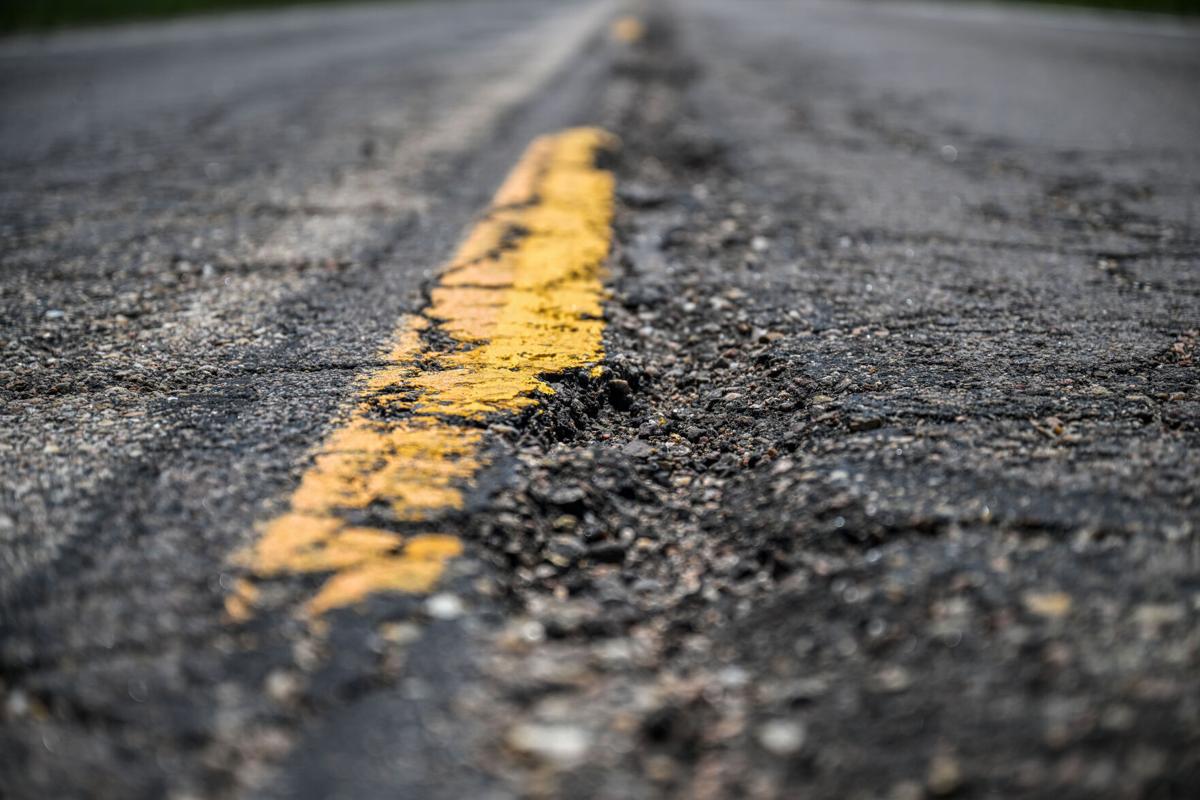
Potholes in the center of Highway 61 near Sterling on Thursday, May 22, 2025. Colorado Senator Byron Pelton (R), led the media on a tour through his district to show the state of the roads. (Stephen Swofford, Denver Gazette)

A rocky road ahead
Even without the JBC’s cuts to CDOT’s budget, the department would still have fallen about $100 million short of the money needed just to maintain the condition of its existing roadways, let alone reconstruct ones that have fallen below a proper maintenance threshold, officials and others in the industry said. Two ballot measures proposing additional funding for the state’s roads, bridges and highways could be headed to the ballot next November. They will be introduced as constitutional amendments, requiring 55% of the vote to pass. For Milo, delaying more funding for CDOT’s roadway projects allows legislators to further kick the can down the road. “The longer we put off maintenance of our roads and bridges, the more expensive it becomes every year,” Milo said. “It’s going to cost more when we do get to it, and it’s going to have long-term effects on Coloradans.” Editor’s Note: This is the fourth and final set of a series examining Colorado’s urban-rural relationship. Follow all the stories in the series here.

Rural hospitals don’t want special treatment, just a chance to care for locals | PODIUM
Colorado Politics
colorado-politics@coloradopolitics.com
Updated 13 hours ago
By Kevin Stansbury As chief executive of Lincoln Health, my responsibility is simple: ensure the people of eastern Colorado have access to high-quality healthcare close to home when they need it most. That mission has never been easy. Rural hospitals...

Trump lowers flags to half-staff for Dolly Parton: ‘The World loves you’
Naomi Lim
naomi-lim@coloradopolitics.com
Updated 16 hours ago
President Donald Trump is honoring the life of country music legend and philanthropist Dolly Parton by ordering federal buildings across the country to lower flags to half-staff for a week. “Very sad to report that Dolly Parton, one of the...
Ted Cruz suggests GOP realignment coming after Trump leaves office
Emily Hallas
emily-hallas@coloradopolitics.com
Updated 16 hours ago
Sen. Ted Cruz (R-TX) on Monday suggested the Republican Party could embrace a directional shift after President Donald Trump leaves office, a transition that promises to leave a gaping hole in the GOP. Cruz is known as a critical ally...
2 Colorado State troopers shot near Woodland Park; suspect killed
DEBBIE KELLEY
debbie-kelley@coloradopolitics.com
Updated 15 hours ago
Two Colorado State Patrol troopers were hospitalized, and a suspect is dead after a shooting during a traffic stop Tuesday. The initial incident happened at about 7:15 a.m., when a resident reported suspicious activity in the area near milepost 286...
Aurora moves forward with data center regulations
Kyla Pearce
kyla.pearce@gazette.com
Updated 16 hours ago
The Aurora City Council approved moving forward with two new regulations on data centers and directed staff to come back at the next study session with others. At a council meeting in early August, council members directed city management to...

Aurora City Council considers stricter food truck regulations
Kyla Pearce
kyla.pearce@gazette.com
Updated 16 hours ago
The Aurora City Council is considering passing laws to limit the number of food trucks on properties in the city and how and when they operate. Councilmember Angela Lawson, who sponsored the ordinance, said she understands the importance of food...
Denver murder conviction reversed for incomplete self-defense instruction
Michael Karlik
michael.karlik@coloradopolitics.com
Updated 14 hours ago
Colorado’s second-highest court reversed a defendant’s murder conviction last week because a Denver judge gave an incomplete instruction to the jury about the man’s right to self-defense. Donald R. Gonzales and Gary McLaughlin met up in a Capitol Hill parking...
Colorado lawmaker, House leaders named in workplace-retaliation lawsuit
Marianne Goodland
marianne.goodland@coloradopolitics.com
Updated 16 hours ago
A former legislative aide has filed a lawsuit alleging she was mistreated, illegally directed to perform campaign work and harmed by a House leadership structure she charged was fragmented, politicized and ineffective at protecting employees. The lawsuit, filed by Jennifer...

Secret Service confirms awareness of Iranian state media video threatening Barron Trump’s life
The Associated Press
the-associated-press@coloradopolitics.com
Updated 21 hours ago
WASHINGTON (AP) — The U.S. Secret Service has confirmed it is aware that Iranian state media has aired a video that appears to threaten the life of Barron Trump, President Donald Trump’s youngest son. “The U.S. Secret Service is aware...
Blue states should avoid disasters | Hal Bidlack
Hal Bidlack
hal-bidlack@coloradopolitics.com
Updated 21 hours ago
Back when I was teaching political science at the U.S. Air Force Academy (and amazingly to me, a week from this column’s publication will mark 20 years since my retirement from active duty. Where the heck did that time go?)...